Content Optimization Best in category 1 results Generative Ai AI Tool

Popular AI tools in the Generative Ai field of Content Optimization include Mention, etc., helping you quickly improve efficiency.

Mention

Mention

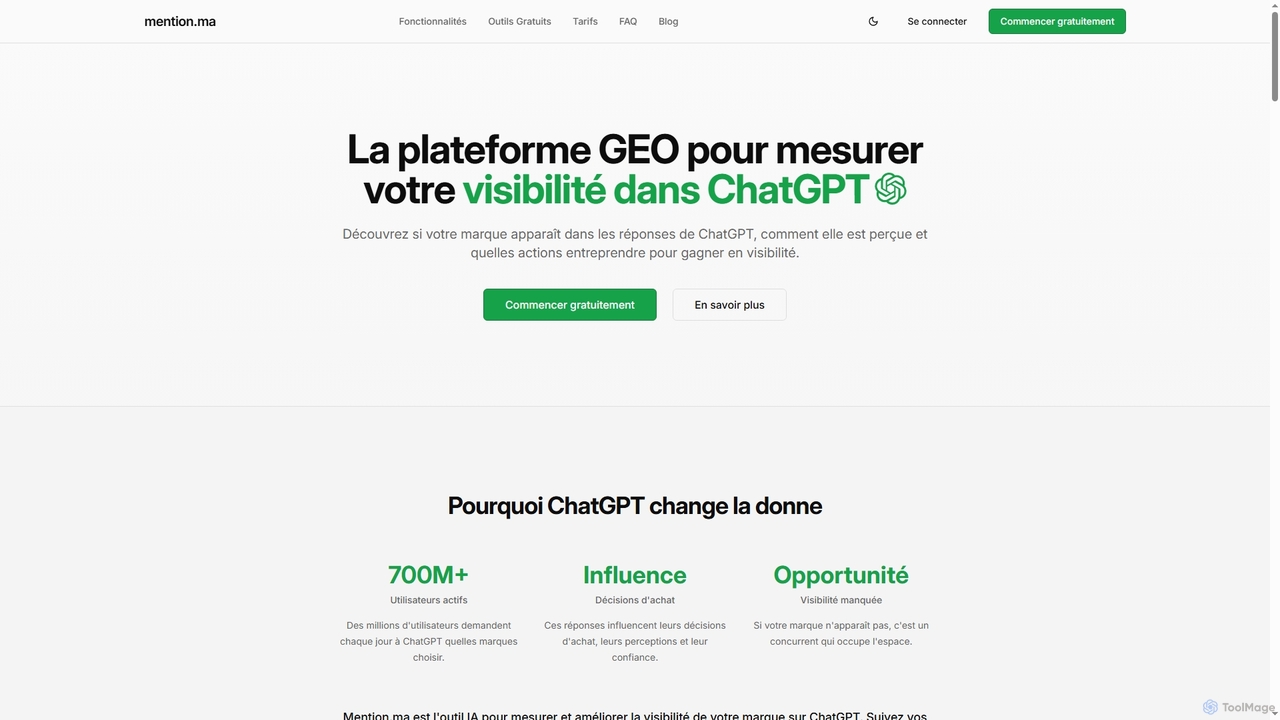
Mention is an AI-powered GEO and AI SEO platform designed to help brands measure, analyze, and improve their …

2.3K

About Generative Ai

Generative AI tools are a class of artificial intelligence designed to create new, original content, such as text, images, code, and audio. These tools leverage large-scale models like LLMs and diffusion models to understand prompts and produce contextually relevant outputs. Within content optimization, their primary role is to generate initial drafts and creative assets, significantly accelerating the content creation lifecycle. This technology enables users to produce diverse and high-quality materials at a scale previously unattainable.

Core Features

  • Text Generation: Creates articles, emails, ad copy, and scripts from simple prompts.
  • Image Synthesis: Produces unique images, illustrations, and art from textual descriptions.
  • Code Generation: Writes functional code snippets, unit tests, or entire functions in various programming languages.
  • Multi-modal Creation: Generates content by combining and processing different data types like text and images.
  • Data Augmentation: Creates synthetic data to train other machine learning models.

Use Cases

Generative AI is widely used in content marketing for creating blog posts and social media updates, in software development for rapid prototyping and code completion, and in design for generating concept art and visual assets. It also serves creative professionals for scriptwriting and music composition, and businesses for personalizing customer communications.

How to Choose

When selecting a Generative AI tool, evaluate the quality and coherence of its output for your specific needs. Consider the range of content types it supports (e.g., text, image, code), its integration capabilities via APIs, the level of customization or fine-tuning available, and the pricing model, which is often based on usage (tokens or generations).

Generative AiUse Cases

1

Drafting Blog Posts and Social Media Content

A content marketer needs to maintain a consistent publishing schedule across multiple platforms. Using a Generative AI tool, they input a topic, target audience, and key points. The AI generates several blog post drafts, social media captions, and headline variations in minutes. This process reduces research and writing time by over 70%, allowing the marketer to focus on refining the content strategy, adding unique insights, and engaging with the audience rather than starting from a blank page.

2

Generating Visual Concepts for Design Projects

A graphic designer is tasked with creating a visual identity for a new brand. Instead of spending hours sketching, they use an image generation AI. By inputting descriptive prompts like "minimalist logo for a coffee brand, earth tones, vector style," the AI produces dozens of unique visual concepts. This allows the designer to quickly explore a wide range of creative directions, present multiple options to the client, and use the generated images as a strong foundation for the final design, accelerating the creative process significantly.

3

Accelerating Software Development with Code Generation

A software developer is building a new feature that requires repetitive boilerplate code and unit tests. They use a Generative AI coding assistant. By describing the required function in natural language, such as "write a Python function to parse a JSON file and extract user emails," the AI generates the complete code snippet instantly. This not only saves significant time but also helps reduce human error in syntax and logic, allowing the developer to focus on more complex architectural challenges and business logic.

4

Creating Personalized Sales Outreach Emails

A sales team needs to contact hundreds of potential leads with personalized messages. Manually writing each email is time-consuming. By using a Generative AI tool integrated with their CRM, they can automate this process. The AI analyzes each lead's profile (industry, job title, company news) and generates a unique, relevant, and engaging outreach email. This results in higher open and response rates, while freeing up the sales team to focus on building relationships and closing deals rather than on administrative writing tasks.

5

Generating Scripts and Storyboards for Video Production

A video creator is planning a new YouTube series but is struggling with writer's block. They use a Generative AI tool to brainstorm ideas. By providing a theme like "a documentary about urban farming," the AI generates multiple episode concepts, narrative outlines, and even draft scripts for voiceovers. Some tools can also generate storyboard images from script scenes. This provides a creative launchpad, helping the creator overcome initial hurdles and structure their production plan much more efficiently.

6

Composing Background Music and Sound Effects

An independent game developer needs a unique soundtrack for their new game but lacks the budget for a composer. They turn to an AI music generation tool. By specifying the desired genre (e.g., '8-bit chiptune'), mood ('adventurous'), and length, the AI composes multiple royalty-free tracks. The developer can then select the best options or ask for variations. This approach provides access to custom audio assets affordably and quickly, enabling small creators to enhance the production value of their projects without specialized skills or high costs.

Generative AiFrequently Asked Questions