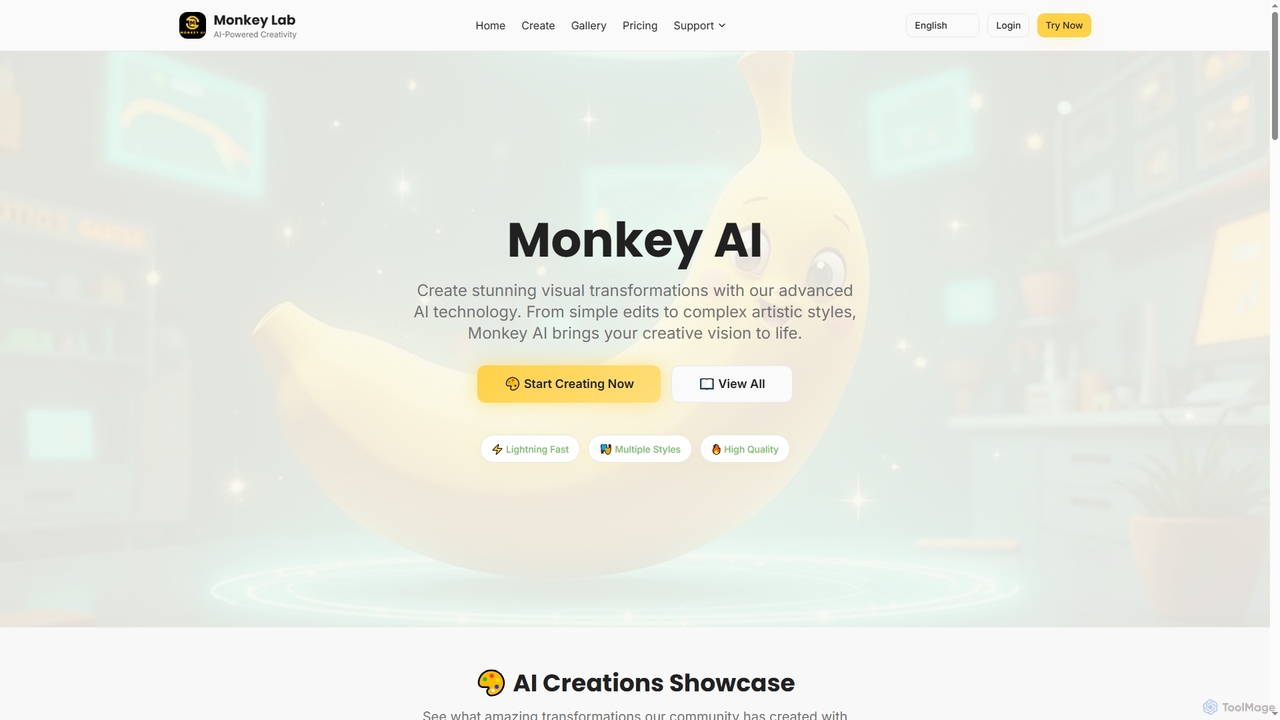
Monkey AI
Monkey AI is an advanced online AI image generator that transforms visual concepts into stunning creations. It offers …
Monkey AI is an advanced online AI image generator that transforms visual concepts into stunning creations. It offers lightning-fast processing, multiple artistic styles, and high-quality outputs, enabling users to perform complex artistic transformations and simple edits with ease, bringing diverse creative visions to life.
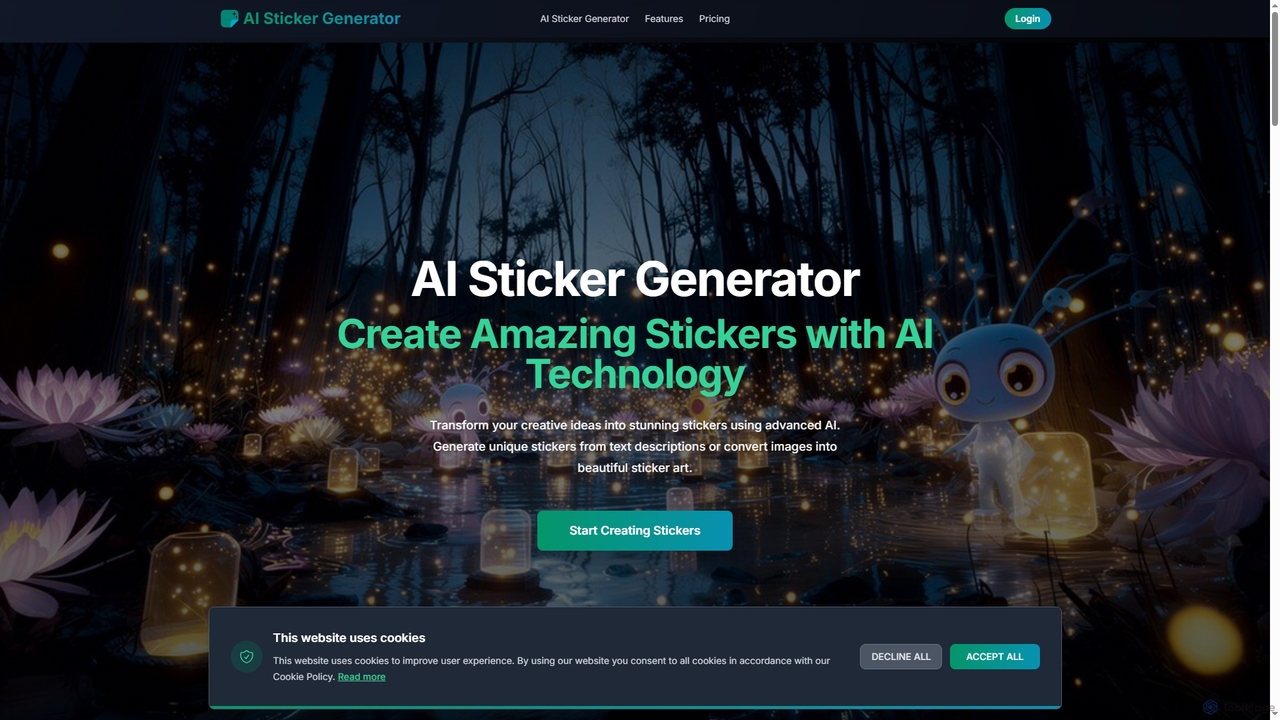
AI Sticker Generator
AI Sticker Generator transforms text descriptions or images into unique, high-quality stickers using advanced AI. Choose from various …
AI Sticker Generator transforms text descriptions or images into unique, high-quality stickers using advanced AI. Choose from various styles like cartoon, emoji, or line art, and get instant, customizable results with commercial rights. Perfect for social media, messaging, and creative projects, no design skills needed.
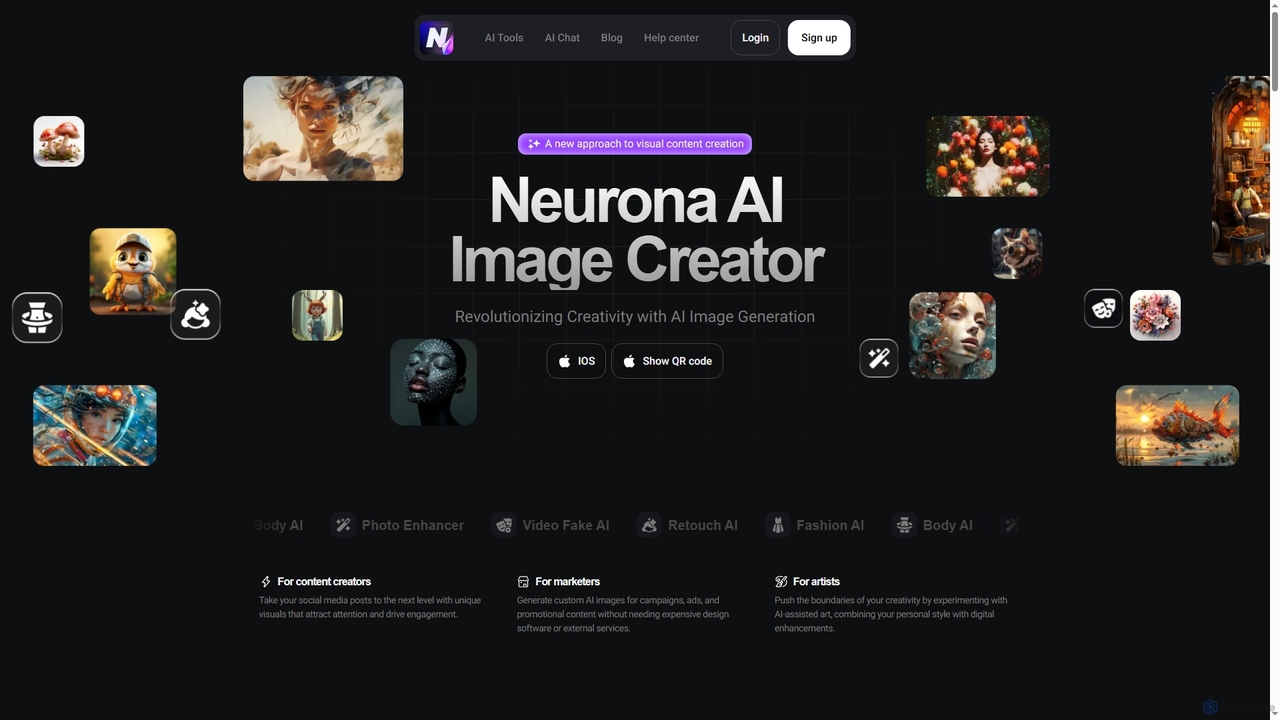
Neurona
Neurona is an AI-powered platform that revolutionizes visual content creation, offering advanced tools for generating high-quality images from …
Neurona is an AI-powered platform that revolutionizes visual content creation, offering advanced tools for generating high-quality images from text prompts, performing realistic face swaps in photos and videos, enhancing image quality, and professional photo retouching. It's designed for creators, marketers, and artists seeking fast, customizable, and stunning visuals.
About Art Generation
AI Art Generation tools are a class of creative software that use artificial intelligence to create novel visual art from textual descriptions or other inputs. These tools leverage generative models, such as diffusion models, to translate natural language prompts into complex and detailed images. This technology empowers artists, designers, and content creators to rapidly prototype ideas, generate unique marketing assets, and explore new aesthetic possibilities. Unlike traditional image editors that modify existing pixels, these tools synthesize entirely new visual content, offering a distinct form of digital creation.
Core Features
- Text-to-Image Generation: Converts written prompts into detailed, original images.
- Style Control: Applies specific artistic styles (e.g., impressionism, cyberpunk) or mimics the work of famous artists.
- Image-to-Image Transformation: Modifies an existing image based on a text prompt, including inpainting and outpainting.
- Parameter Customization: Allows fine-tuning of aspect ratio, resolution, seed number, and generation steps for precise control.
- Model Variation: Provides access to different AI models trained for specific aesthetics like photorealism, anime, or abstract art.
Use Cases
AI Art Generation tools are widely used across various creative fields. Digital artists and illustrators use them for concept art and inspiration, quickly exploring different visual directions. Marketing teams create unique visuals for social media campaigns and advertisements, avoiding generic stock photos. Game developers also utilize these tools to generate textures, environments, and character concepts during pre-production.
How to Choose
When selecting an AI Art Generator, consider the model's output quality and its alignment with your desired aesthetic. Evaluate the level of control and customization offered, such as negative prompts and parameter adjustments. It is crucial to understand the commercial usage rights and licensing for the generated images. Finally, compare pricing models, such as credit-based systems versus subscriptions, to find one that suits your usage volume and budget.
Art GenerationUse Cases
Creating Concept Art for Game Development
A game designer needs to visualize a new character, a 'cyberpunk druid.' They use an AI Art Generator, inputting prompts like 'cyberpunk druid, neon forest, glowing staff, detailed armor, photorealistic.' The tool generates dozens of visual variations in minutes, allowing the team to quickly iterate on the character's look and feel before committing to expensive 3D modeling. This process saves significant time and resources in the pre-production phase.
Generating Unique Marketing Visuals
A social media manager for a sustainable coffee brand needs fresh, eye-catching images for an ad campaign. Instead of using generic stock photos, they use an AI Art Generator with prompts like 'surreal image of a coffee cup growing from a tree in a lush rainforest, morning light, macro shot.' This produces a completely original and on-brand image that stands out in a crowded feed, helping to increase engagement and brand recall without the cost of a custom photoshoot.
Designing Album Covers for Musicians
An independent musician wants a unique album cover for their new electronic music release. They use an AI Art Generator to translate the mood of their music into visuals. Prompts like 'abstract soundwaves, cosmic nebula, vibrant colors, glitch art style, 8k resolution' help them explore various abstract concepts. They can generate and refine ideas until they find a cover that perfectly represents their sound, providing a professional-quality result without needing a large budget for a graphic designer.
Prototyping Architectural Visualizations
An architect is in the early stages of designing a modern residential building. To quickly communicate their vision to a client, they use an AI Art Generator. They input a simple sketch of the building's form and add a text prompt: 'modern minimalist house, concrete and glass, surrounded by a Japanese garden, sunset lighting.' The tool generates realistic renderings, helping the client visualize the final project and provide feedback much earlier in the design process, accelerating approvals.
Illustrating Children's Books
An author writing a children's book needs illustrations but has a limited budget. They use an AI Art Generator with a consistent style prompt, such as 'charming watercolor style, friendly cartoon dragon, whimsical forest.' For each scene, they describe the action, like 'cartoon dragon roasting a marshmallow over a tiny volcano.' This allows them to generate a full set of stylistically consistent illustrations for their story, making professional-quality book creation more accessible.
Creating Custom Patterns for Textiles
A fashion designer is developing a new fabric collection and wants to create unique, seamless patterns. They use an AI Art Generator with prompts like 'seamless pattern, art deco floral design, gold and emerald green, intricate lines.' The tool can generate endless variations, allowing the designer to explore novel concepts that would be time-consuming to draw by hand. They can then select the best outputs to be printed on fabric, creating a truly original textile line.