
Cryptocurrency Best in category 1 results Exchange AI Tool

Popular AI tools in the Exchange field of Cryptocurrency include Baltex, etc., helping you quickly improve efficiency.

Baltex

Baltex

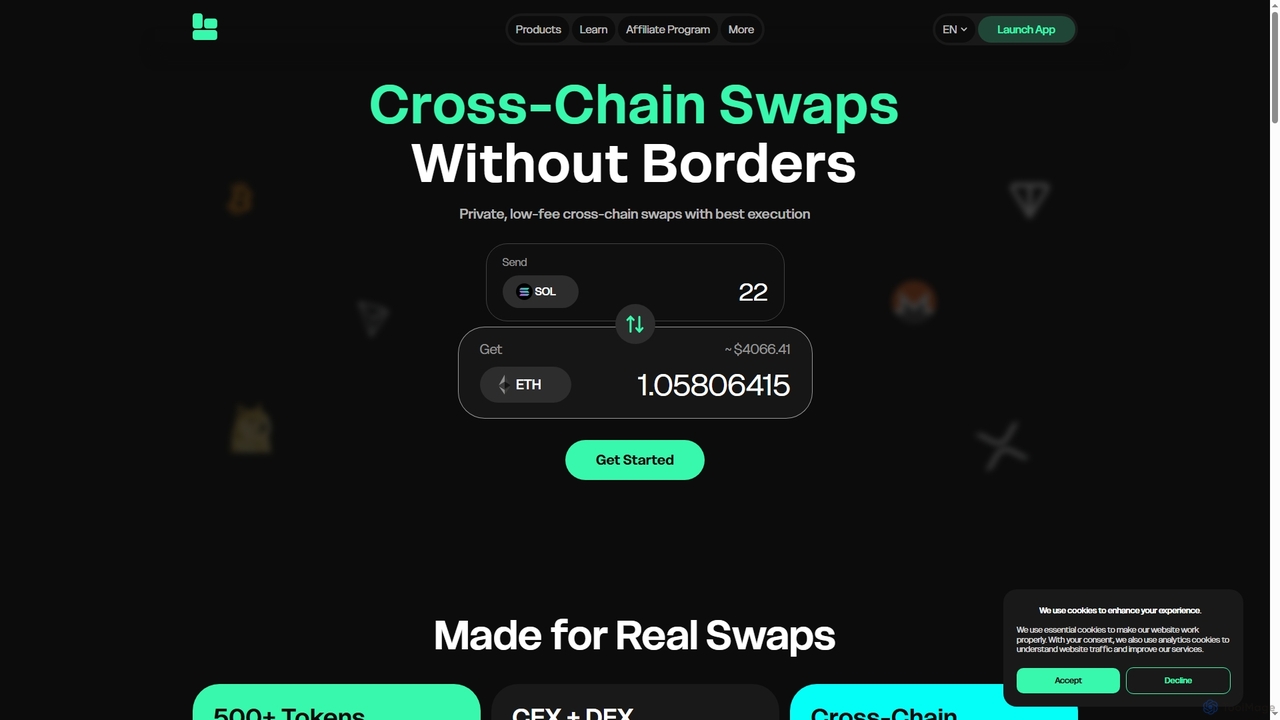
Baltex is a leading cross-chain terminal for instant, secure, and private cryptocurrency swaps. It integrates CEX and DEX …

18.7K

About Exchange

Cryptocurrency Exchanges are online platforms that facilitate the buying, selling, and trading of digital assets like Bitcoin and Ethereum. These platforms function as digital marketplaces, matching buy and sell orders from users through a sophisticated order book system to ensure liquidity. They provide the essential infrastructure for price discovery and enable seamless value transfer within the global crypto ecosystem. For both new investors and seasoned traders, exchanges serve as the primary gateway to the world of digital currencies.

Core Features

  • Spot Trading: Instantly buy and sell cryptocurrencies at the current market price using various order types like market, limit, and stop-limit.
  • Derivatives Trading: Trade financial contracts such as futures and options that derive their value from an underlying cryptocurrency, allowing for hedging and speculation.
  • Staking & Earn Services: Lock up crypto assets directly on the platform to earn passive income as rewards for supporting the network's operations.
  • Fiat On/Off-Ramps: Easily convert traditional fiat currencies (like USD, EUR) into cryptocurrencies and vice versa through bank transfers or card payments.

Applicable Scenarios

Exchanges are utilized by a wide range of users, from individual retail investors making their first crypto purchase to institutional firms executing large-volume trades. Day traders use them for short-term speculation, while long-term holders (HODLers) use them for accumulation and staking. Developers also leverage exchange APIs to build automated trading bots and other financial applications.

Selection Criteria

When choosing an exchange, consider its security measures, including two-factor authentication (2FA) and cold storage policies. Evaluate the fee structure for trading, deposits, and withdrawals. Also, assess the range of supported cryptocurrencies, regulatory compliance in your jurisdiction, and the platform's overall liquidity and user interface.

ExchangeUse Cases

1

First-Time Cryptocurrency Purchase

A new investor wants to enter the crypto market by purchasing their first Bitcoin. They register on a user-friendly exchange, complete the identity verification (KYC) process, and link their bank account. Using the fiat on-ramp feature, they deposit US dollars and place a simple 'market buy' order for Bitcoin. The exchange instantly executes the trade, and the purchased Bitcoin appears in their secure exchange wallet, marking their first step into digital asset ownership.

2

Active Day Trading of Altcoins

An experienced trader aims to profit from short-term price volatility in the altcoin market. They use an exchange's advanced trading interface, which offers real-time charts, technical indicators, and multiple order types. The trader places limit orders to buy a specific altcoin at a low price point and sets corresponding stop-loss and take-profit orders to manage risk and lock in gains automatically. This active strategy relies on the exchange's high liquidity and low-latency order execution to be effective.

3

Generating Passive Income via Staking

A long-term cryptocurrency holder wants to make their assets productive instead of letting them sit idle. They navigate to the 'Earn' or 'Staking' section of their chosen exchange. They select a proof-of-stake cryptocurrency they own, such as Ethereum or Cardano, and commit a certain amount to the staking pool. The exchange handles all the technical complexities of running a validator node. In return, the user receives regular staking rewards, effectively earning a yield on their holdings directly within the exchange platform.

4

Hedging a Portfolio with Crypto Futures

An institutional investor holds a significant amount of Bitcoin and is concerned about a potential short-term price drop. To hedge this risk, they use a crypto exchange that offers derivatives. They open a 'short' Bitcoin futures contract, which will increase in value if the price of Bitcoin falls. This strategy allows them to offset potential losses in their spot holdings without having to sell their actual Bitcoin. The exchange provides the necessary leverage and a liquid market to execute this sophisticated hedging strategy efficiently.

5

Automated Trading via API Integration

A quantitative trading firm develops an algorithmic strategy to capitalize on market inefficiencies. They use the exchange's Application Programming Interface (API) to connect their custom software directly to the trading engine. The algorithm automatically monitors market data, identifies trading opportunities, and executes buy or sell orders at superhuman speed, 24/7. This requires a robust and well-documented API from the exchange, ensuring reliable connectivity and high-throughput order placement for the firm's automated systems.

6

Converting Crypto Earnings to Fiat Currency

A freelance designer living abroad receives payment for a project in Ethereum (ETH). To cover their living expenses, they need to convert this crypto into their local currency. They send the ETH from their personal wallet to their verified exchange account. On the exchange, they place a 'market sell' order for ETH against their local currency pair (e.g., ETH/EUR). Once the sale is complete, they use the exchange's fiat off-ramp feature to withdraw the Euros directly to their linked bank account, completing the cycle from digital earnings to usable cash.

ExchangeFrequently Asked Questions