Best of the Year 4 results Cryptocurrency AI Tools

Popular AI tools in the Cryptocurrency field include Baltex、SeekerClaw、Midex、Kaisel, etc., helping you quickly improve efficiency.

SeekerClaw

SeekerClaw

SeekerClaw is a full-stack, self-aware AI agent designed to run natively on the Solana Seeker phone. It integrates …

2.4K
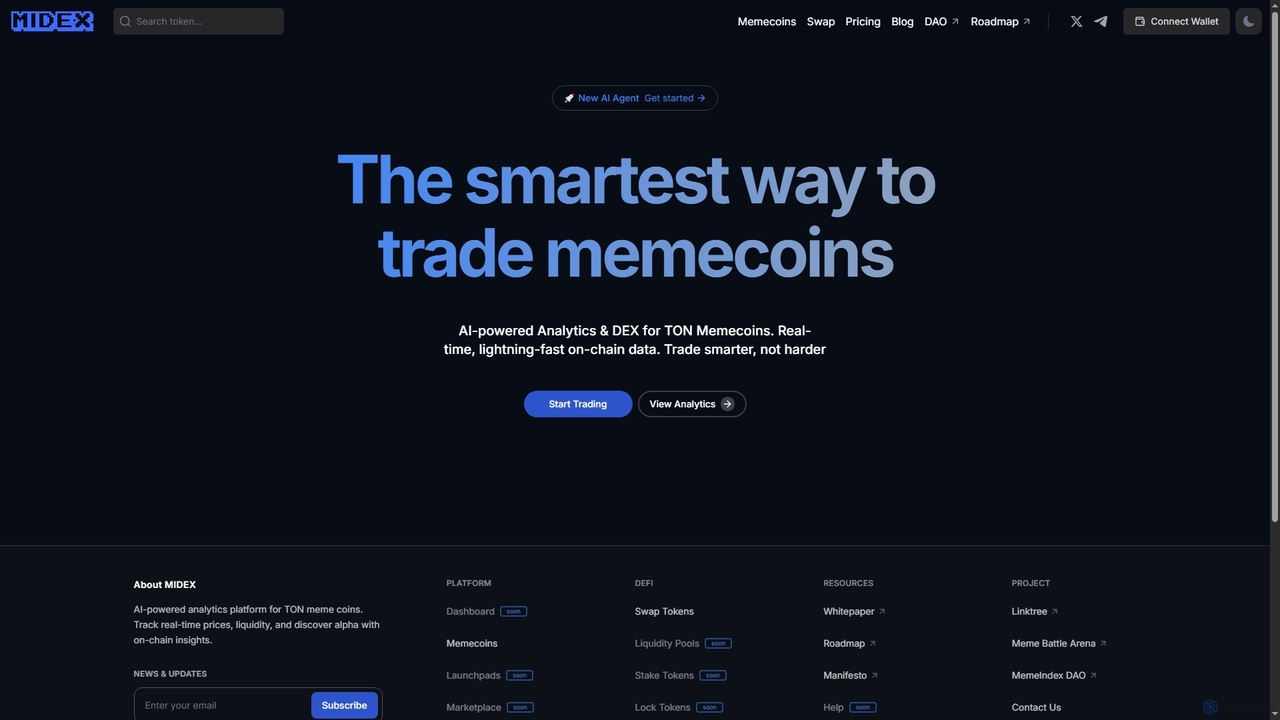
Midex

Midex

Midex is an AI-powered memecoin trading terminal and analytics platform designed for the TON blockchain. It provides real-time, …

2.3K
Kaisel

Kaisel

Kaisel is an AI-powered financial platform designed for everyday users, freelancers, and modern businesses to intelligently manage, spend, …

2.3K
Baltex

Baltex

Baltex is a leading cross-chain terminal for instant, secure, and private cryptocurrency swaps. It integrates CEX and DEX …

18.4K

About Cryptocurrency

AI Cryptocurrency tools are a class of software that leverage artificial intelligence to analyze market data, automate trading, and manage digital asset portfolios. These tools utilize machine learning models, predictive analytics, and sentiment analysis to process vast amounts of information from exchanges, news sources, and social media. They provide traders and investors with data-driven insights to navigate the volatile crypto market, identify potential opportunities, and manage risk more effectively. By automating complex analysis and execution, these tools help users make more informed decisions.

Core Features

  • Predictive Market Analysis: Uses AI models to forecast potential price movements and market trends based on historical data and real-time indicators.
  • Automated Trading Bots: Executes buy and sell orders automatically based on predefined strategies and AI-driven signals, operating 24/7.
  • Portfolio Optimization: Recommends adjustments to asset allocation to maximize returns and minimize risk according to user-defined goals.
  • Sentiment Analysis: Gauges market mood by analyzing data from social media, news articles, and forums to predict sentiment shifts.
  • On-Chain Data Analysis: Interprets blockchain transaction data to uncover insights about whale activity, network health, and token flows.

Use Cases

These tools are widely used by individual retail traders, professional quantitative analysts, and large institutional investment firms. They are applied for high-frequency trading, developing long-term investment strategies based on predictive models, and for dynamic risk management in fluctuating market conditions. Crypto funds also use them for portfolio diversification and alpha generation.

How to Choose

When selecting an AI Cryptocurrency tool, consider the accuracy and transparency of its predictive models. Evaluate the range of supported exchanges and crypto assets. Assess the backtesting capabilities to validate strategies with historical data. Prioritize tools with robust security features, such as API key encryption and two-factor authentication, and consider whether the pricing model aligns with your trading volume and needs.

CryptocurrencyUse Cases

1

Automated Crypto Trading for Retail Investors

A retail investor with a full-time job uses an AI trading bot to participate in the 24/7 crypto market. They connect the bot to their exchange account via a secure API key and select a pre-built strategy, such as grid trading or trend following. The AI analyzes market data in real-time, executing dozens of small trades automatically when conditions match the strategy's parameters. This allows the investor to capitalize on market volatility without constant manual monitoring, aiming to generate passive income while managing risk through automated stop-loss settings.

2

Market Trend Prediction for Analysts

A financial analyst at a crypto investment fund uses an AI platform to forecast market trends. The tool aggregates data from multiple sources, including on-chain metrics, trading volumes, order book depth, and global news sentiment. The AI's machine learning models identify complex patterns and correlations that are invisible to the human eye, generating predictive signals for specific assets. The analyst uses these signals to build investment theses, adjust portfolio weightings, and provide data-backed recommendations to portfolio managers, enhancing the fund's decision-making process.

3

AI-Powered Portfolio Rebalancing

An experienced investor with a diverse crypto portfolio uses an AI tool for automated rebalancing. They set their target asset allocation, for example, 40% BTC, 30% ETH, and 30% in various altcoins. The tool continuously monitors the portfolio's value. When market movements cause the allocation to drift from the target (e.g., BTC grows to 50%), the AI automatically executes the necessary trades to sell the overperforming asset and buy underperforming ones to restore the desired balance. This disciplined approach removes emotional decision-making and helps maintain the investor's intended risk profile.

4

On-Chain Anomaly Detection for Security

A cryptocurrency exchange employs an AI security tool to monitor on-chain transactions in real-time. The AI model is trained on vast datasets of normal and fraudulent transaction patterns. It actively scans for anomalies such as unusually large transfers to new wallets, rapid sequences of transactions indicative of wash trading, or interactions with known scam addresses. When a high-risk activity is detected, the system automatically flags the transaction, alerts the security team, and can temporarily freeze the associated accounts, preventing potential theft and enhancing platform integrity.

5

Sentiment Analysis for Investment Decisions

A crypto trader evaluating a new altcoin uses an AI sentiment analysis tool to gauge market perception. The platform scans Twitter, Reddit, Telegram, and major news outlets in real-time, analyzing posts and articles related to the coin. It assigns a sentiment score (positive, negative, neutral) and identifies key discussion topics and influential voices. By observing a rising positive sentiment score combined with increasing social media volume before a major announcement, the trader can make a more informed decision to enter a position, using social data as a complementary indicator to technical analysis.

6

Generating Crypto Market Research Reports

A market research firm uses an AI tool to accelerate the creation of weekly crypto analysis reports. The analyst inputs a topic, such as 'DeFi Sector Growth Analysis'. The AI then scours the web and proprietary databases for relevant data, including total value locked (TVL), transaction volumes, and developer activity. It synthesizes this information, identifies key trends, generates charts, and produces a structured draft of the report. The analyst then reviews, refines, and adds their expert commentary, reducing the time spent on data collection and initial drafting by over 70%.

CryptocurrencyFrequently Asked Questions