Rock8
Rock8 is an AI-powered bulk calling platform designed for businesses to automate and scale outbound campaigns. It allows …
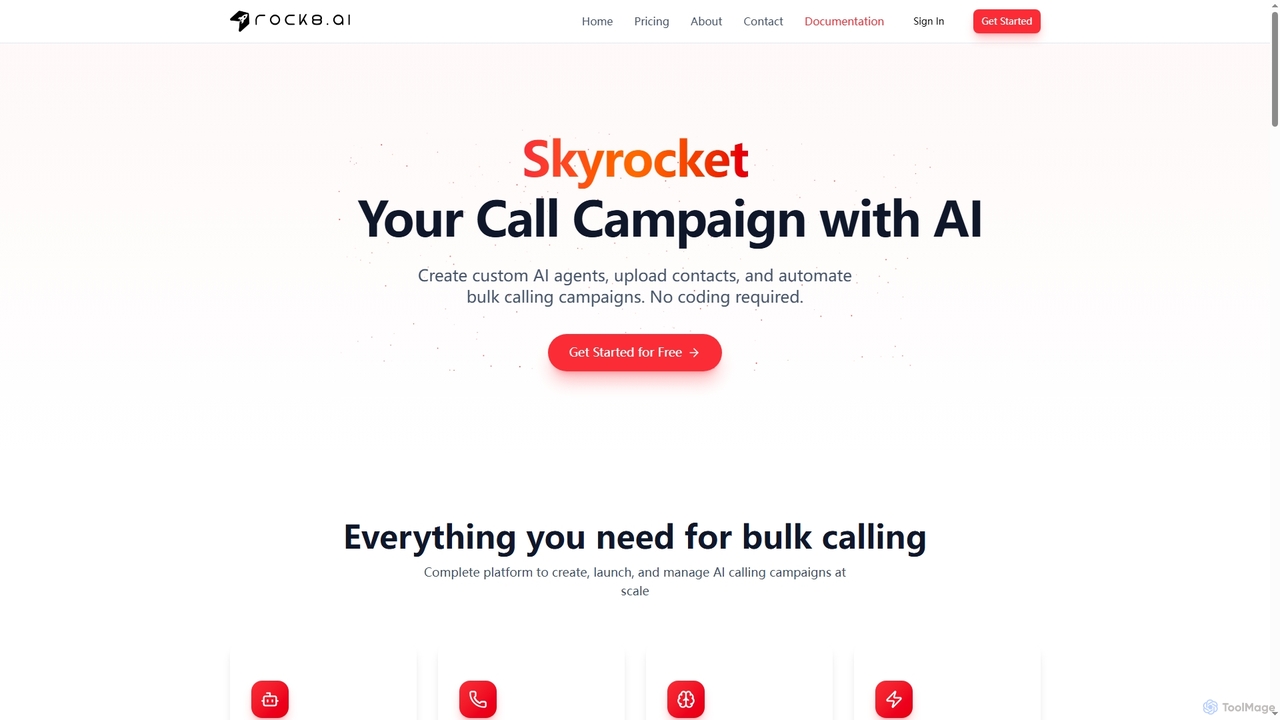
Rock8 is an AI-powered bulk calling platform designed for businesses to automate and scale outbound campaigns. It allows users to create custom AI agents with unique voices and scripts, upload contacts, and manage thousands of concurrent calls without any coding. The platform includes features like a knowledge base, smart automation, and comprehensive analytics to optimize calling efforts.
About Voice Ai
Voice AI refers to artificial intelligence technologies that enable machines to understand, process, and respond to human speech, primarily enhancing customer interactions. These tools leverage advanced speech recognition, natural language processing (NLP), and text-to-speech (TTS) capabilities to create intuitive and efficient voice-driven experiences. By automating routine inquiries, personalizing interactions, and providing instant support, Voice AI significantly improves customer satisfaction and operational efficiency within customer engagement strategies. Its ability to handle complex queries and adapt to user preferences makes it a cornerstone for modern, scalable customer service.
Core Features
- Speech Recognition: Converts spoken language into text for analysis and processing.
- Natural Language Understanding (NLU): Interprets the intent and context of spoken queries, even with varied phrasing.
- Text-to-Speech (TTS): Generates natural-sounding human-like speech from written text.
- Voice Biometrics: Authenticates users based on their unique voice patterns for enhanced security.
- Sentiment Analysis: Detects emotional tone in customer speech to gauge satisfaction and identify issues.
Applicable Scenarios
Voice AI is widely adopted in customer service centers, sales departments, and marketing teams. It empowers businesses to offer 24/7 support, handle high call volumes efficiently, and provide personalized assistance. From automating inbound calls to proactive customer outreach, Voice AI streamlines communication workflows and enhances the overall customer journey.
How to Choose
When selecting a Voice AI solution, consider its accuracy in speech recognition across various accents and languages, its natural language understanding capabilities, and the quality of its text-to-speech output. Evaluate integration options with existing CRM and contact center systems, scalability to handle fluctuating call volumes, and customization features for brand voice and specific use cases. Data security and compliance with privacy regulations are also critical factors.

Voice AiUse Cases
Automated Customer Support via Voicebots
Customer service departments can deploy Voice AI-powered voicebots to handle common inquiries, FAQs, and routine transactions 24/7. For instance, a telecom company uses a voicebot to help customers check their data balance, pay bills, or troubleshoot basic internet issues, reducing wait times and freeing human agents for complex problems. This leads to faster resolution rates and improved customer satisfaction.
Personalized Voice Assistants for Sales
Sales teams utilize Voice AI to create personalized voice assistants that engage potential leads or existing customers. A financial advisor might use a Voice AI tool to proactively call clients, reminding them about upcoming policy renewals or offering tailored investment advice based on their profile, enhancing engagement and conversion rates without manual dialing.
Real-time Call Analysis and Agent Coaching
Contact center managers employ Voice AI to analyze customer calls in real-time, identifying keywords, sentiment, and compliance issues. For example, a Voice AI system flags calls where a customer expresses frustration or mentions a competitor, providing instant alerts to supervisors. This enables immediate intervention and offers data-driven insights for agent training and performance improvement.
Voice-driven Interactive Voice Response (IVR)
Businesses replace traditional, menu-driven IVR systems with Voice AI-powered natural language IVR. Instead of pressing numbers, customers simply state their needs, like "I want to speak to billing" or "I need to reset my password." This significantly streamlines call routing, reduces customer frustration, and provides a more intuitive and efficient self-service experience.
Proactive Customer Outreach and Notifications
Marketing and operations teams leverage Voice AI for automated outbound calls to deliver important notifications or gather feedback. A healthcare provider might use Voice AI to send appointment reminders, lab results, or post-visit surveys to patients, ensuring timely communication and improving patient engagement without requiring human agents for every call.
Accessibility Solutions for Voice-Controlled Interfaces
Organizations integrate Voice AI to make their services more accessible for users with disabilities or those who prefer voice interaction. For example, a banking app could offer voice commands for checking balances, transferring funds, or paying bills, allowing users to navigate and complete transactions hands-free, thereby broadening accessibility and enhancing user experience.