ToolMage
Sign in

Best 1 Outbound Calling AI tools for Sales

Popular Outbound Calling AI tools in Sales include Rock8, helping you work more efficiently.

Rock8
Freemium

Rock8

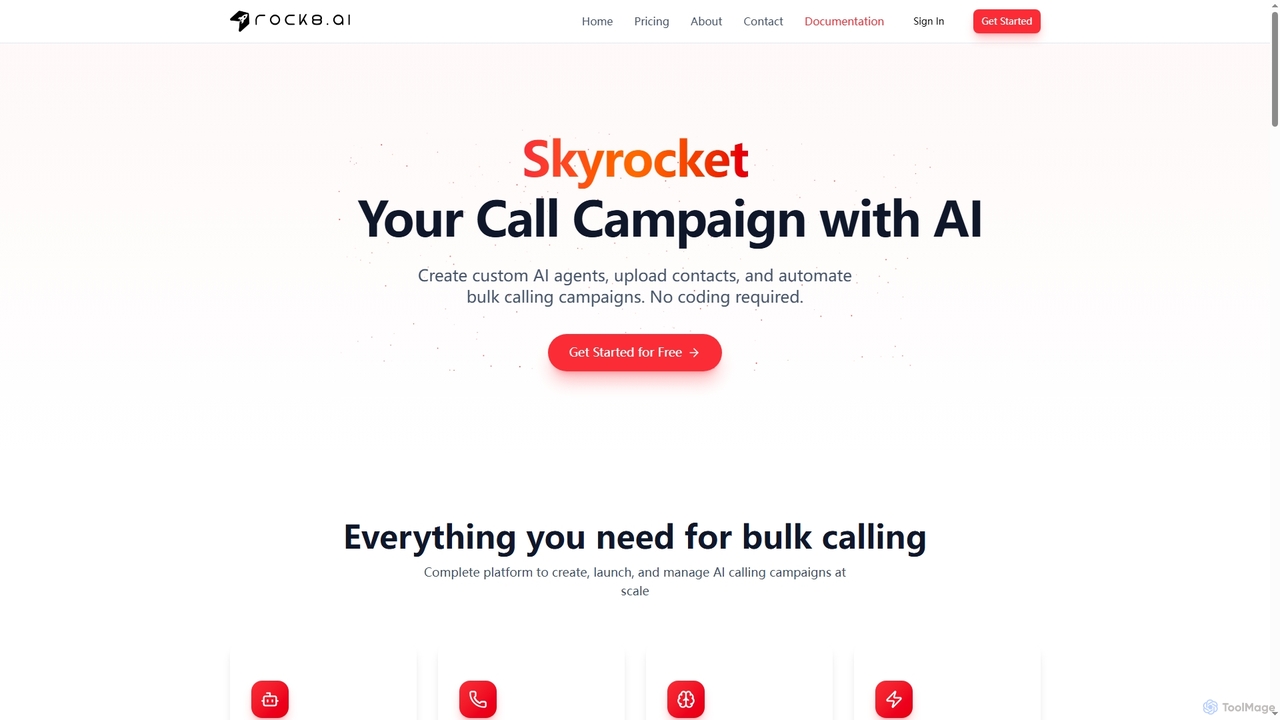
Rock8 is an AI-powered bulk calling platform designed for businesses to automate and scale outbound campaigns. It allows users to create custom AI agents with unique voices and scripts, upload contacts, and manage thousands of concurrent calls without any coding. The platform includes features like a knowledge base, smart automation, and comprehensive analytics to optimize calling efforts.

Voice Ai
Visits 5.7KFavorites 124Likes 138

About Outbound Calling

AI Outbound Calling tools are specialized platforms that automate and enhance the process of making outgoing calls for sales, marketing, and customer service. These tools utilize technologies like predictive dialing, natural language processing (NLP), and conversation intelligence to increase call volume and agent efficiency. They enable teams to connect with more prospects, analyze conversations in real-time, and automate post-call administrative tasks. This approach transforms traditional cold calling into a data-driven, optimized outreach strategy, directly contributing to higher conversion rates within the sales process.

Core Features

  • AI-Powered Dialers: Automatically dial numbers from a list using predictive, power, or progressive modes to maximize agent talk time.
  • Real-time Transcription & Analysis: Transcribes calls live and analyzes sentiment, keyword mentions, and script adherence for immediate insights.
  • Conversation Intelligence: Provides post-call summaries, identifies key topics, and flags coaching opportunities to improve agent performance.
  • Automated Voicemail Drop: Allows agents to drop a pre-recorded voicemail with a single click, saving significant time.
  • CRM Integration: Seamlessly syncs call data, notes, and outcomes with CRM platforms like Salesforce or HubSpot for a unified record.

Use Cases

These tools are primarily used by sales development representatives (SDRs), telemarketing teams, and appointment setters. They are crucial in high-volume environments such as B2B lead generation, fundraising campaigns for non-profits, and proactive customer success check-ins. Any organization that relies on phone outreach to generate leads or engage customers can benefit from this technology.

How to Choose

When selecting an AI Outbound Calling tool, consider its integration capabilities with your existing CRM and sales stack. Evaluate the sophistication of its dialing algorithms and the depth of its conversation analytics. Also, assess its compliance features for regulations like TCPA and GDPR, and ensure the pricing model aligns with your call volume and team size.

Outbound Calling use cases

1

Automate High-Volume Lead Qualification

A Sales Development Representative (SDR) team is tasked with contacting 500 new leads daily. Using an AI Outbound Calling tool with a predictive dialer, the system automatically calls multiple numbers and only connects the SDR to live answers. This eliminates time wasted on unanswered calls, busy signals, and voicemails. The tool's real-time transcription helps the SDR follow the script and capture key information, which is then automatically logged into the CRM. This process allows the team to increase their connection rate by over 200% and focus exclusively on meaningful conversations with qualified prospects.

2

Enhance Sales Agent Coaching with Conversation Intelligence

A sales manager wants to improve the performance of their remote team. They use an AI Outbound Calling platform that provides conversation intelligence. After each call, the system generates a summary, highlights moments where the prospect showed interest or raised objections, and scores the agent's adherence to the sales script. The manager can quickly review these insights without listening to entire call recordings. They identify a common trend where agents struggle with pricing objections and use specific call snippets as examples in their next team coaching session, leading to a 15% improvement in handling objections.

3

Streamline Appointment Setting for Account Executives

An appointment setter's primary goal is to book meetings for senior account executives. They use an AI calling tool that integrates directly with the executives' calendars. The AI dialer efficiently works through a contact list. When a prospect agrees to a meeting, the setter can see available time slots in real-time and book the appointment directly from the call interface. The tool automatically sends a calendar invite to both the prospect and the executive and logs the activity in the CRM. This reduces scheduling errors and administrative overhead, allowing setters to book 30% more appointments per week.

4

Conduct Large-Scale Market Research Surveys

A market research firm needs to gather survey data from thousands of respondents via phone. Manually dialing and conducting these surveys is slow and costly. They deploy an AI Outbound Calling tool to automate the process. The system dials the list and, upon connection, an AI voice agent asks scripted, multiple-choice questions and records the responses using voice recognition. This allows the firm to complete the entire survey campaign in a fraction of the time and cost of a traditional call center, while ensuring consistent question delivery and accurate data capture for analysis.

5

Proactive Customer Success and Renewal Outreach

A Customer Success Manager (CSM) for a SaaS company needs to proactively engage with clients whose contracts are up for renewal in 90 days. They create a targeted list in their CRM and use an integrated AI calling tool to efficiently reach out. The tool's power dialer goes through the list one by one. The CSM uses pre-defined call scripts tailored to renewal conversations. The platform automatically logs the call outcome (e.g., 'Interested in Renewal', 'Requested Demo of New Features') in the CRM, creating a clear and actionable pipeline for the renewals team and increasing retention rates.

6

Efficient Fundraising for Non-Profit Organizations

A non-profit organization is launching a fundraising campaign and needs to contact thousands of past donors. Using an AI Outbound Calling tool, they can quickly work through the donor list. The platform allows them to use an automated voicemail drop feature for unanswered calls, leaving a professionally recorded message about the campaign without tying up volunteers. For live conversations, volunteers can process donations directly within the tool's interface, which integrates with their payment processor. This efficiency allows them to reach their entire donor base in days instead of weeks, significantly boosting campaign contributions.

Outbound Calling FAQ

What are AI Outbound Calling tools?

AI Outbound Calling tools are software platforms designed to automate and optimize the process of making a large volume of outgoing phone calls. Unlike simple auto-dialers, they use artificial intelligence to manage dialing pace, analyze live conversations for insights, automate administrative tasks like note-taking, and integrate deeply with CRM systems. Their primary goal is to increase agent productivity by connecting them to more live prospects and providing data to improve sales effectiveness.

How to choose the right AI Outbound Calling tool?

Choosing the right tool depends on your specific needs. Consider the following factors:

  • CRM Integration: Ensure it seamlessly integrates with your current CRM (e.g., Salesforce, HubSpot) to avoid manual data entry.
  • Dialer Type: Do you need a predictive dialer for high-volume, low-quality lists, or a power/progressive dialer for more targeted outreach?
  • Conversation Intelligence: Evaluate the depth of its analytics. Does it offer sentiment analysis, keyword tracking, and agent coaching features?
  • Compliance: Check for features that help adhere to regulations like TCPA, such as time-zone awareness and Do-Not-Call list management.
  • Scalability and Pricing: Ensure the tool can grow with your team and that its pricing model (per user, per minute, or bundled) fits your budget.
What's the difference between an AI Dialer and a traditional auto-dialer?

A traditional auto-dialer simply dials numbers from a list automatically. An AI Dialer, a key component of AI Outbound Calling tools, is far more advanced. It uses algorithms to predict agent availability and the likelihood of a call being answered, optimizing the dialing rate to minimize agent wait time. Furthermore, AI dialers are part of a larger platform that includes conversation intelligence, real-time transcription, sentiment analysis, and automated data entry into a CRM. In essence, an auto-dialer just automates the dialing; an AI dialer automates and optimizes the entire outbound calling workflow.

Who are the primary users of AI Outbound Calling tools?

These tools are most beneficial for roles and teams that engage in high-volume, proactive phone outreach. The primary users include:

  • Sales Development Representatives (SDRs): For lead generation, qualification, and appointment setting.
  • Telemarketing Teams: For conducting marketing campaigns, surveys, and direct sales over the phone.
  • Account Executives (AEs): For managing and nurturing their pipeline through proactive follow-ups.
  • Customer Success Managers (CSMs): For proactive check-ins, onboarding calls, and renewal discussions.
  • Fundraisers: For non-profit organizations conducting donor outreach campaigns.
Are AI Outbound Calling tools legal to use?

Yes, but their use is subject to strict regulations that vary by country and region, such as the Telephone Consumer Protection Act (TCPA) in the United States and GDPR in Europe. Reputable AI Outbound Calling platforms are designed with compliance in mind. They include essential features like time-zone-aware dialing to avoid calling outside of permitted hours, tools for managing Do-Not-Call (DNC) lists, and options to control the call abandonment rate. It is crucial for users to understand and configure these tools according to the specific laws in their target jurisdictions to ensure legal operation.