ToolMage
Sign in

Best 2 Call Analysis AI tools for Sales

Popular Call Analysis AI tools in Sales include insight7 and Dolphin AI, helping you work more efficiently.

insight7
Freemium

insight7

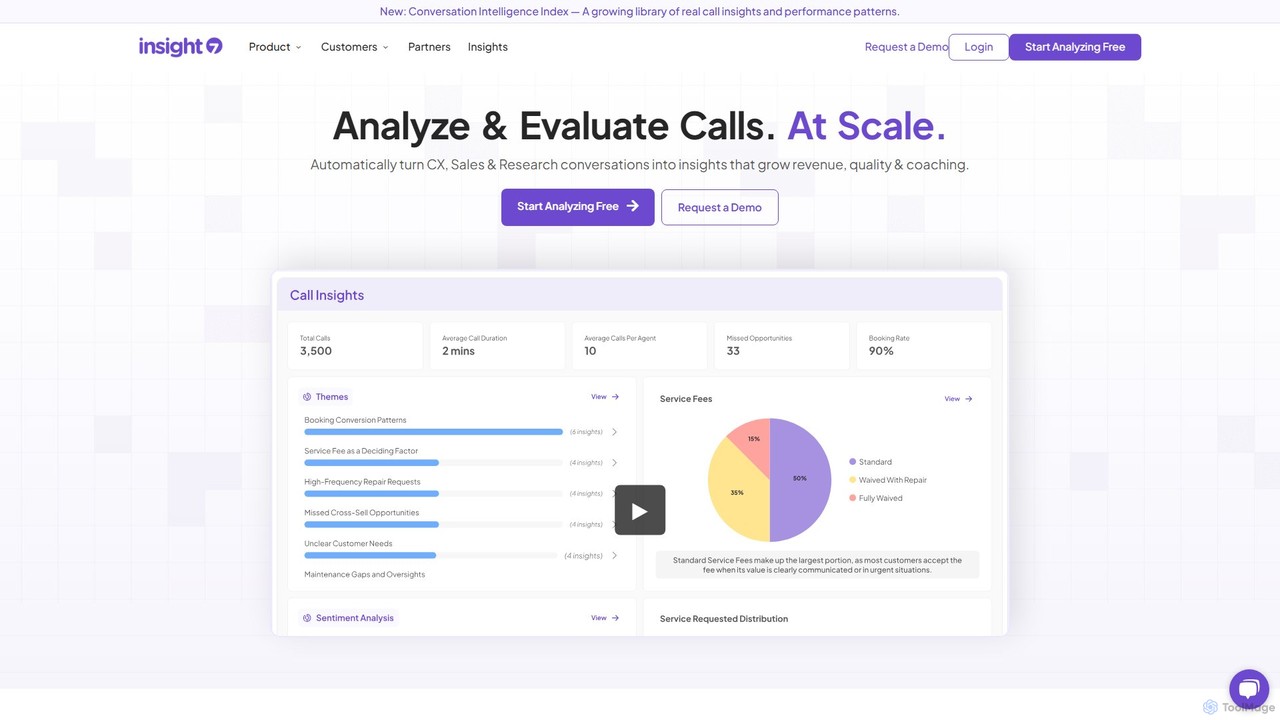
insight7 is an AI-powered platform designed for in-depth qualitative data analysis. It automatically transcribes, analyzes, and visualizes conversations from interviews, sales calls, customer feedback, and surveys. The tool helps teams extract actionable insights, identify key themes, and understand sentiment at scale, accelerating decision-making and eliminating manual analysis.

Market Research
Visits 217.8KFavorites 118Likes 104
Dolphin AI
Freemium

Dolphin AI

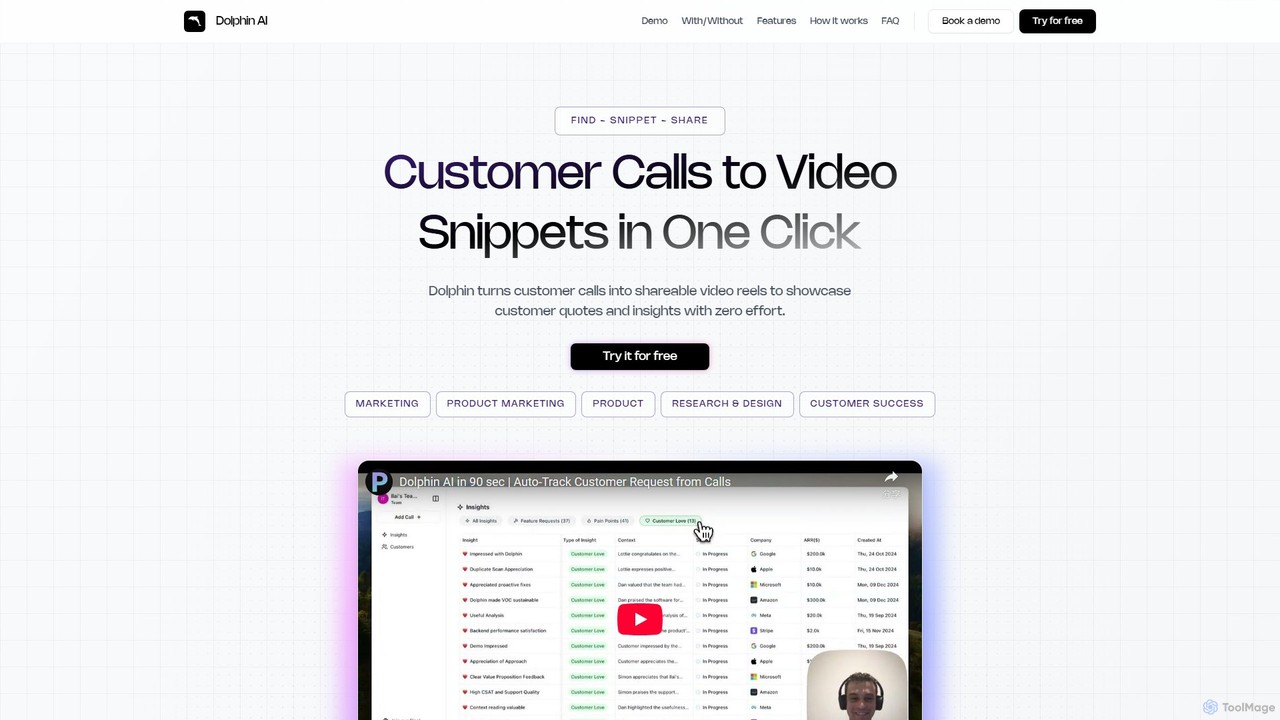
Dolphin AI automatically transforms your customer call recordings from platforms like Zoom and Gong into short, shareable video snippets. It identifies key moments, powerful quotes, and customer insights, allowing marketing, product, and sales teams to leverage authentic customer voice with zero manual effort. Instantly create testimonials, gather feedback, and share proof points.

Voice Of The Customer
Visits 39KFavorites 121Likes 121

About Call Analysis

Call Analysis tools are AI-powered platforms that automatically transcribe, summarize, and extract insights from voice and video conversations. Using advanced speech-to-text and Natural Language Processing (NLP), they transform unstructured call data into structured, searchable information. These tools are essential for sales and support teams to understand customer sentiment, identify key topics, and evaluate agent performance. By providing data-driven feedback, they help organizations optimize their communication strategies and improve customer outcomes.

Core Features

  • Automated Transcription: Converts audio from calls into accurate, time-stamped text with speaker identification.
  • Sentiment Analysis: Detects the emotional tone (positive, negative, neutral) of both the agent and the customer throughout the conversation.
  • Topic & Keyword Tracking: Automatically identifies and tags predefined keywords, competitor mentions, and recurring themes.
  • Interaction Analytics: Measures key metrics like talk-to-listen ratio, monologue duration, filler word usage, and script adherence.
  • AI-Powered Summarization: Generates concise summaries of long conversations, highlighting key points and action items.

Use Cases

Call Analysis tools are widely used in sales departments for coaching reps, in customer support centers for quality assurance, and by product teams to gather direct customer feedback. They enable managers to review more calls efficiently, identify best practices from top performers, and ensure compliance with communication protocols without manual listening.

How to Choose

When selecting a Call Analysis tool, consider its transcription accuracy and support for multiple languages or accents. Evaluate its integration capabilities with your existing CRM and communication platforms (e.g., Zoom, Salesforce). Also, assess the depth of its analytics, the customizability of its reports, and its security and compliance certifications.

Featured tool rankings

Call Analysis use cases

1

Sales Performance Coaching and Training

A sales manager uses a call analysis tool to improve their team's performance. Instead of listening to a few random calls, the manager reviews AI-generated dashboards that highlight key metrics like talk-to-listen ratios and competitor mentions. They can quickly identify a rep who struggles with objection handling by filtering for calls with negative sentiment scores during pricing discussions. The manager then uses specific, time-stamped transcript snippets from these calls to provide targeted, evidence-based coaching, accelerating the rep's skill development.

2

Automating Quality Assurance in Customer Support

A quality assurance specialist in a call center is tasked with reviewing agent interactions for quality and compliance. Manually reviewing even 5% of calls is time-consuming. By using a call analysis tool, they can automatically scan 100% of call transcripts for specific compliance phrases (e.g., 'this call is being recorded') and keywords indicating customer frustration ('disappointed,' 'frustrated'). The system flags non-compliant calls or those with high negative sentiment for immediate review, allowing the QA team to focus their efforts on the most critical interactions and ensure consistent service quality.

3

Extracting Product Feedback and Market Intelligence

A product manager wants to understand how customers are reacting to a new feature. Instead of relying on surveys alone, they use a call analysis tool to search through thousands of recent customer support and sales calls. By creating a topic tracker for the feature's name and related terms, they can instantly access all conversations where it was discussed. The aggregated data reveals common pain points, feature requests, and competitor mentions, providing the product team with unfiltered, direct 'voice of the customer' data to inform the product roadmap.

4

Ensuring Regulatory and Script Compliance

In a highly regulated industry like finance or healthcare, a compliance officer needs to ensure every agent follows mandatory scripts and disclosures. Using a call analysis tool, they can create 'trackers' for required phrases (e.g., 'I am a licensed agent'). The system automatically scans all call transcripts and flags any interaction where the phrase was missed. This automates a critical but tedious compliance check, reduces regulatory risk, and provides a searchable audit trail for all customer conversations.

5

Onboarding and Training New Sales Reps

A sales enablement manager is responsible for onboarding new hires. Instead of just using role-playing, they create a 'best practice' library within the call analysis tool. This library contains calls from top performers that are tagged with specific skills, such as 'effective discovery questions' or 'closing techniques.' New reps can listen to these real-world examples and read the transcripts to understand what excellence looks like in practice. This data-driven approach shortens ramp-up time and helps new hires adopt winning behaviors faster.

6

Identifying Upsell and Cross-sell Opportunities

A sales team wants to proactively identify expansion opportunities within their existing customer base. They configure their call analysis tool to track keywords related to other products in their portfolio or common customer challenges that could be solved by an upgrade. When a customer mentions 'managing a larger team' or 'needing better reporting,' the system automatically flags the conversation and can even create a task in the CRM for the account manager to follow up. This transforms passive customer service calls into proactive revenue-generating opportunities.

Call Analysis FAQ

What is AI Call Analysis?

AI Call Analysis is the process of using artificial intelligence, particularly Natural Language Processing (NLP) and speech-to-text technology, to automatically analyze recorded conversations. These tools transcribe calls into text, identify speakers, detect sentiment, track keywords, and summarize key topics. The primary goal is to transform unstructured voice data from sales or support calls into structured, actionable insights for coaching, quality assurance, and business intelligence.

How do I choose the right Call Analysis tool?

To choose the right tool, consider these factors:

  • Integration: Does it seamlessly connect with your CRM (e.g., Salesforce), VoIP system, and video conferencing tools (e.g., Zoom)?
  • Accuracy: Evaluate the transcription accuracy, especially for industry-specific jargon, different accents, and multiple languages.
  • Analytical Depth: Look for features beyond basic transcription, such as sentiment analysis, topic tracking, and talk-to-listen ratio metrics.
  • Usability: Is the interface intuitive for managers and reps? How easy is it to search, filter, and share call insights?
  • Security & Compliance: Ensure the provider meets industry standards like GDPR, CCPA, or HIPAA if you operate in regulated sectors.
What's the difference between Call Analysis and simple call recording?

Simple call recording merely captures and stores the audio file of a conversation, creating a passive archive. Call Analysis, on the other hand, actively processes that recording. It uses AI to transcribe the audio into searchable text, analyze the content for sentiment and topics, and generate quantitative metrics. In essence, call recording provides the raw material (the 'what'), while call analysis provides the intelligence and insights (the 'so what').

Who benefits most from using Call Analysis tools?

Various roles and departments benefit significantly from call analysis tools. Sales Teams use them for performance coaching, identifying best practices, and onboarding new reps. Customer Support Centers leverage them for quality assurance, compliance monitoring, and understanding customer satisfaction drivers. Product Teams mine conversations for direct user feedback and feature requests. Finally, Marketing Teams can analyze calls to understand the voice of the customer and refine messaging.

How accurate is the transcription in Call Analysis tools?

Transcription accuracy in modern call analysis tools is typically high, often ranging from 85% to over 95%. However, accuracy can be influenced by several factors, including audio quality (background noise, connection issues), speaker accents, overlapping speech, and the use of industry-specific jargon. Leading tools address this by offering features like custom vocabularies, where you can add specific terms to improve recognition, and robust speaker diarization to correctly attribute speech even when people talk over each other.