ToolMage
Sign in

Best 1 Client Management AI tools for Sales

Popular Client Management AI tools in Sales include Scribbl, helping you work more efficiently.

Scribbl
Freemium

Scribbl

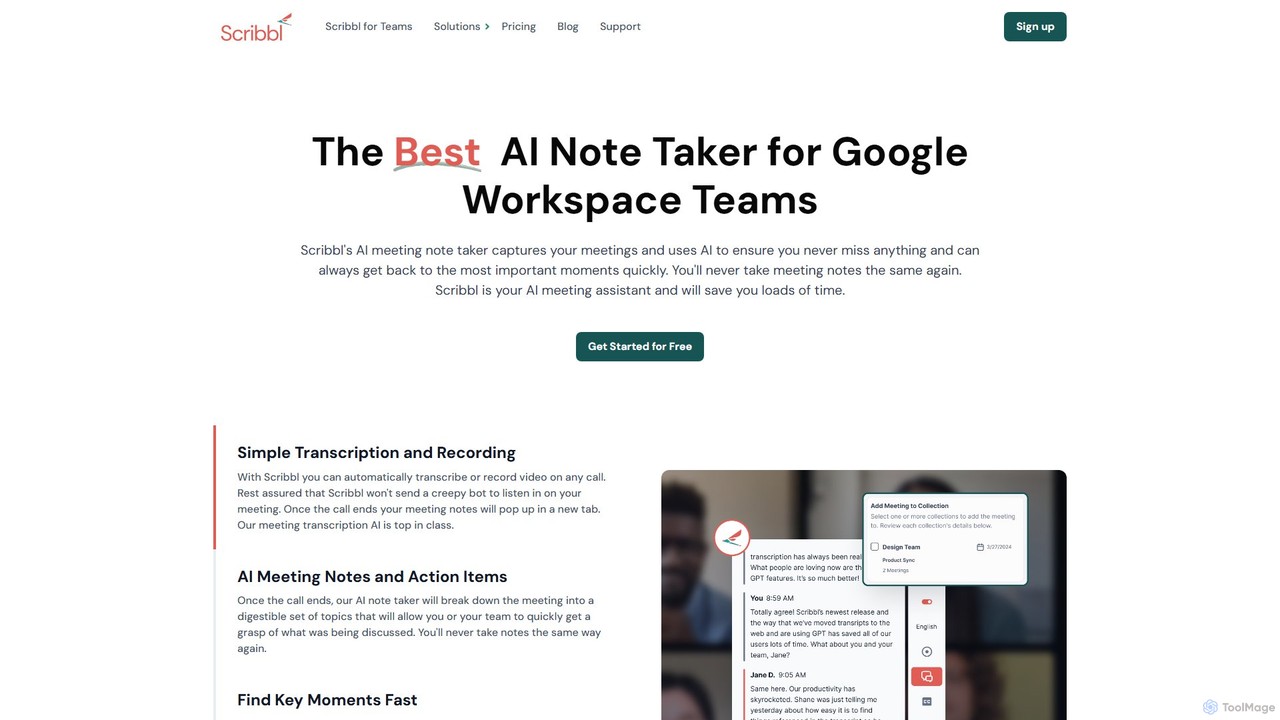
Scribbl is an AI-powered meeting assistant and note-taker designed as a Chrome extension for Google Meet. It automatically transcribes, records, and summarizes your meetings, generating digestible notes, key topics, and actionable items. This tool helps users and teams boost post-meeting productivity by making it easy to find key moments, share insights, and integrate with other workflow tools.

Meetings
Visits 235.4KFavorites 145Likes 146

About Client Management

Client Management AI tools are specialized platforms that leverage artificial intelligence to optimize and automate the processes involved in nurturing and retaining existing customer relationships. These tools utilize machine learning to analyze client data, predict needs, and personalize interactions, enhancing customer satisfaction and fostering long-term loyalty. By streamlining communication, identifying upsell opportunities, and proactively addressing client concerns, they empower businesses to build stronger, more profitable client portfolios.

Core Features

  • Automated Communication: AI-driven systems for personalized email sequences, chatbot support, and timely follow-ups.
  • Client Behavior Analysis: Machine learning models to predict churn risk, identify engagement patterns, and segment clients based on value.
  • Personalized Recommendations: AI suggests relevant products, services, or content tailored to individual client profiles and past interactions.
  • Sentiment Analysis: Tools to gauge client mood and satisfaction from communications, enabling proactive intervention.
  • Workflow Automation: Automating routine tasks like scheduling meetings, updating client records, and generating reports.

Use Cases

Businesses across various sectors, from SaaS providers to consulting firms, utilize Client Management AI tools to enhance their post-sales strategies. They are particularly valuable for customer success teams, account managers, and marketing professionals focused on retention. These tools help maintain consistent engagement, identify opportunities for growth within existing accounts, and ensure clients receive tailored support, ultimately reducing churn and increasing customer lifetime value.

How to Choose

When selecting a Client Management AI tool, consider its integration capabilities with your existing CRM and communication platforms to ensure seamless data flow. Evaluate the depth of its analytical features, such as churn prediction and personalization engines, and assess its scalability to grow with your client base. User-friendliness, customization options for workflows, and the level of support offered are also crucial factors for effective adoption and long-term success.

Featured tool rankings

Client Management use cases

1

Proactive Churn Prevention

A SaaS company's customer success team uses AI client management tools to monitor usage patterns and sentiment across their client base. The AI identifies clients showing early signs of disengagement or dissatisfaction, such as decreased login frequency or negative feedback keywords. This allows account managers to proactively reach out with targeted support, training, or special offers, significantly reducing potential churn rates and improving client retention.

2

Personalized Client Onboarding & Education

A financial advisory firm leverages AI to personalize the onboarding experience for new clients. Based on initial data and client goals, the AI system automatically delivers tailored educational content, relevant market insights, and prompts for necessary documentation. This ensures clients feel understood and well-informed from day one, accelerating their comfort with the service and reducing the workload on human advisors.

3

Identifying Upsell & Cross-sell Opportunities

An e-commerce platform employs AI client management to analyze past purchase history, browsing behavior, and demographic data of its existing customers. The AI identifies patterns and recommends complementary products or services that a client is highly likely to purchase. This enables marketing and sales teams to send highly targeted offers, increasing average order value and expanding client engagement without manual data sifting.

4

Automated Client Feedback Collection & Analysis

A B2B service provider uses AI tools to automate the collection of client feedback through surveys and communication channels. The AI then performs sentiment analysis on the responses, categorizing feedback by topic and urgency. This provides immediate, actionable insights into client satisfaction and pain points, allowing the company to quickly address issues and demonstrate responsiveness, improving overall service quality.

5

Streamlining Client Support & Issue Resolution

A large consulting firm integrates AI client management with its support system to streamline issue resolution. When a client submits a query, the AI analyzes the request, accesses relevant client history, and suggests optimal solutions or directs the query to the most appropriate expert. This reduces response times, ensures consistent support quality, and frees up human agents for more complex, high-value interactions.

6

Automated Client Health Scoring & Prioritization

A digital marketing agency utilizes AI to assign a "health score" to each client based on project performance, communication frequency, and contract status. The AI continuously updates these scores and flags clients whose scores are declining or who require immediate attention. This allows account managers to prioritize their efforts, focusing on at-risk clients or those with high growth potential, optimizing resource allocation.

Client Management FAQ

What are AI Client Management tools?

AI Client Management tools are software solutions that use artificial intelligence, such as machine learning and natural language processing, to enhance how businesses interact with and manage their existing customers. They automate tasks, analyze client data to provide insights, personalize communications, and predict client behavior to improve satisfaction, retention, and overall client lifetime value.

How do AI Client Management tools differ from traditional CRMs?

While traditional CRMs (Customer Relationship Management) primarily serve as databases for client information and facilitate manual processes, AI Client Management tools go a step further. They actively analyze the data within the CRM, predict future client needs or risks, automate personalized engagements, and offer proactive recommendations, transforming data into actionable intelligence rather than just storing it.

What are the key benefits of using AI for client management?

The primary benefits include improved client satisfaction through personalized and proactive engagement, increased client retention by identifying and addressing churn risks early, and enhanced efficiency through the automation of routine tasks. Additionally, these tools can uncover new upsell and cross-sell opportunities, leading to higher revenue and a stronger client portfolio.

What features should I look for in an AI Client Management solution?

Look for features like advanced client data analytics (e.g., churn prediction, sentiment analysis), robust communication automation (e.g., personalized email campaigns, chatbots), seamless integration with existing CRM and marketing platforms, and customizable workflow automation. Scalability, ease of use, and strong data security are also critical considerations.

Who typically uses AI Client Management tools?

These tools are primarily used by customer success teams, account managers, sales professionals focused on retention and growth within existing accounts, and marketing teams responsible for client engagement and loyalty. Businesses of all sizes, particularly those with a significant client base or complex service offerings, can benefit from leveraging AI in their client management strategies.