ToolMage
Sign in

Best 1 Commission Management AI tools for Sales

Popular Commission Management AI tools in Sales include CaptivateIQ, helping you work more efficiently.

CaptivateIQ
Paid

CaptivateIQ

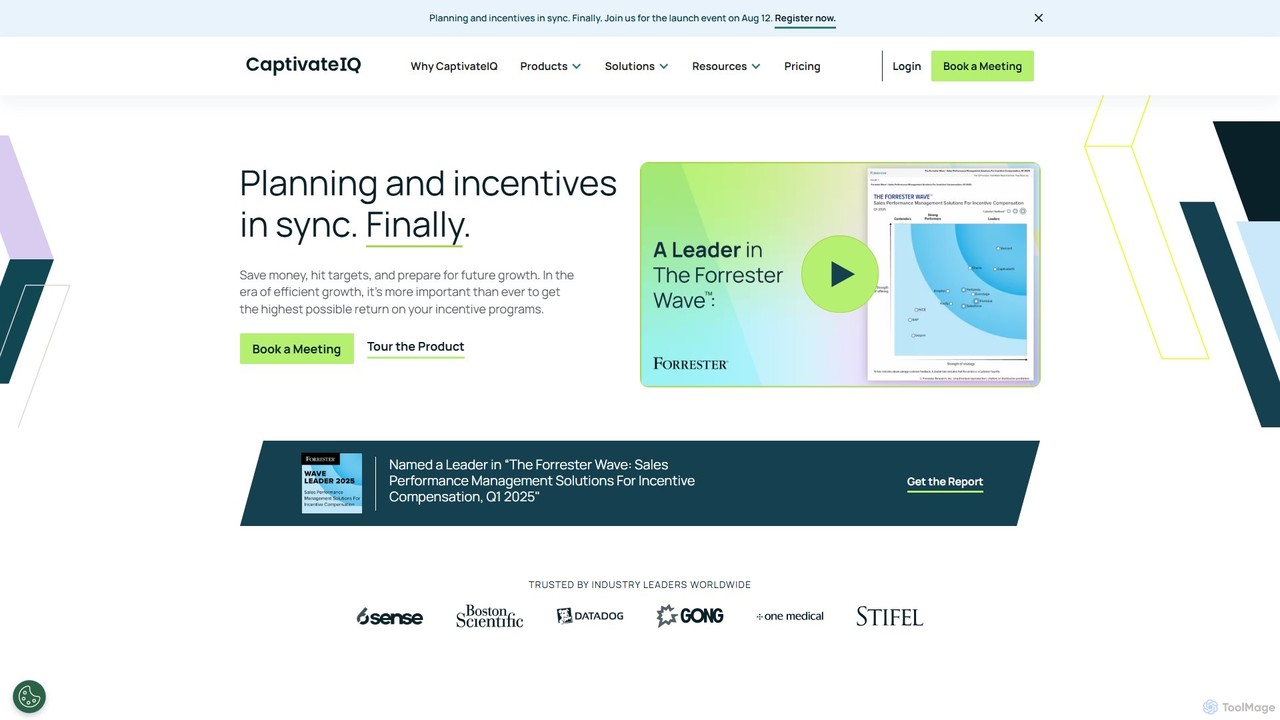
CaptivateIQ is an AI-powered, no-code platform for automating sales commission and incentive management. It helps businesses streamline complex calculations, motivate sales teams with real-time data, and gain strategic insights to drive revenue growth and maximize Return on Incentives (ROI).

Analytics
Visits 166.3KFavorites 146Likes 130

About Commission Management

Commission Management tools are specialized platforms designed to automate and optimize the calculation, tracking, and payment of sales commissions. Leveraging AI and rule-based engines, these tools handle complex commission structures, reduce manual errors, and provide real-time visibility into earnings for sales teams. This automation frees up administrative resources and motivates sales representatives by ensuring accurate and timely compensation, directly linking performance to rewards within the broader sales process.

Core Features

  • Automated Calculation Engine: Processes complex, multi-tiered commission rules, accelerators, and clawbacks without manual intervention.
  • Real-time Dashboards: Provides live tracking of performance metrics and potential earnings for sales reps and managers.
  • CRM & ERP Integration: Syncs sales data from platforms like Salesforce, HubSpot, or NetSuite to ensure calculation accuracy.
  • Dispute Resolution Workflow: Streamlines the process for sales reps to question and resolve commission discrepancies with a clear audit trail.
  • Predictive Analytics: Forecasts future commission payouts and analyzes the effectiveness of different incentive plans.

Applicable Scenarios

These tools are primarily used by sales operations, finance, and HR departments in industries with variable compensation plans, such as SaaS, insurance, real estate, and telecommunications. They are essential for companies scaling their sales teams, aiming to increase transparency, and wanting to motivate high performance through accurate, timely incentives.

Selection Criteria

When selecting a tool, evaluate its ability to handle your specific commission plan complexity. Check its integration capabilities with your existing CRM and accounting software. Consider the user experience for both administrators and sales reps, particularly the clarity of dashboards and reporting. Finally, assess the platform's scalability and pricing model to ensure it aligns with your company's growth.

Commission Management use cases

1

Automating Complex SaaS Commission Plans

A Sales Operations Manager at a growing SaaS company uses a commission management tool to automate their complex compensation plan. This plan includes multi-year contracts with tiered rates, accelerators for exceeding quota, and clawback clauses for early customer churn. By connecting the tool directly to their CRM, sales data flows automatically, triggering calculations in real-time. This eliminates weeks of manual spreadsheet work each quarter, reduces calculation errors by over 95%, and allows for a faster, more accurate month-end financial close.

2

Providing Real-time Earning Visibility for Sales Reps

A field sales representative in the manufacturing industry uses the mobile app of their commission management platform. Between client meetings, they can check their real-time dashboard to see how close they are to hitting their monthly quota, view potential commission earnings from deals in the pipeline, and understand how different product sales impact their total payout. This immediate visibility provides constant motivation, helps them prioritize high-value deals, and builds trust in the compensation process, leading to a 15% uplift in sales performance.

3

Streamlining Commission Payouts for a Large Sales Team

A finance manager at a large telecommunications company is responsible for paying commissions to over 500 sales reps, each with slightly different plans. Using a commission management tool, they set up automated workflows that finalize calculations, generate statements for each rep, and integrate with their payroll system. This automation reduces the payout processing time from five business days of manual work to just a few hours of review and approval, ensuring reps are paid accurately and on time every month, which significantly boosts morale.

4

Analyzing Incentive Plan Effectiveness

The Head of Sales wants to understand if a new tiered commission structure is driving the right behaviors. Using the analytics module of their commission management software, they can compare team performance before and after the plan change. The tool generates reports showing deal size distribution, quota attainment rates, and total payout costs. They discover that while top performers are earning more, the new structure has demotivated the middle 60% of the team. Armed with this data, they can make informed adjustments to the plan for the next fiscal year.

5

Managing Channel Partner Commissions

A Partner Manager at a technology firm needs to manage commissions for a network of resellers and distributors. Each partner has a unique agreement with different commission rates based on product type and sales volume. The commission management tool allows them to create and assign specific plans to each partner. It also provides a dedicated partner portal where resellers can log in, track their referred sales, view their commission statements, and monitor their payment status. This transparency strengthens partner relationships and reduces administrative inquiries.

6

Resolving Commission Disputes Efficiently

An HR compensation specialist receives an inquiry from a sales rep who believes their commission for a large deal was calculated incorrectly. Using the commission management tool, the specialist can access a detailed audit trail for that specific commission payment. They can trace the data from the original deal in the CRM, see which commission rule was applied, and view the final calculation steps. They quickly identify that a manual discount was not properly accounted for, explain the discrepancy to the rep with clear data, and resolve the dispute in hours instead of weeks.

Commission Management FAQ

What are AI Commission Management tools?

AI Commission Management tools are software platforms that automate the entire lifecycle of sales commissions, from calculation to payment and analysis. Unlike manual spreadsheets, they use rule-based engines to handle complex compensation plans accurately. The 'AI' component often refers to predictive analytics for forecasting payouts, anomaly detection to flag potential errors, and providing data-driven insights to optimize incentive strategies and motivate sales teams more effectively.

How to choose the right Commission Management software?

To choose the right software, consider these key factors:

  • Plan Complexity: Can the tool handle your specific rules, such as tiers, accelerators, splits, and overrides?
  • Integrations: Does it seamlessly connect with your core systems like CRM (e.g., Salesforce), ERP, and payroll software?
  • User Experience: Is it intuitive for both administrators who build the plans and for sales reps who need to track their earnings?
  • Reporting & Analytics: Does it provide clear dashboards and reports to analyze plan effectiveness and forecast costs?
  • Scalability: Will the platform support your company's growth in terms of sales team size and plan complexity?
What's the difference between Commission Management software and using spreadsheets?

The primary difference is automation and accuracy. Spreadsheets are manual, highly prone to formula errors, and lack real-time data integration, making them difficult to scale and maintain. Commission Management software automates calculations by integrating directly with data sources like a CRM. It provides real-time visibility for reps, offers audit trails for dispute resolution, ensures data security, and generates advanced analytics that are nearly impossible to replicate in a spreadsheet environment.

Who typically uses Commission Management tools?

These tools serve multiple roles within an organization. Sales Operations and Finance teams are the primary administrators, responsible for setting up and managing commission plans. Sales Managers use them to track team performance and motivate their reps. Sales Representatives are the end-users who benefit from real-time earnings visibility and transparency. Finally, HR and Executive leadership use the analytics to assess compensation strategy and overall sales performance.

Can these tools handle complex, multi-level commission structures?

Yes, handling complexity is a core strength of these platforms. They are specifically designed to manage intricate compensation plans that are difficult to maintain in spreadsheets. This includes:

  • Tiered Commissions: Payout rates that change based on the level of quota attainment.
  • Accelerators & Bonuses: Extra rewards for over-performance or selling specific products.
  • Manager Overrides: Commissions paid to managers based on their team's performance.
  • Splits & Draws: Dividing commissions between multiple reps on a single deal or providing recoverable advances.
  • Clawbacks: Reclaiming commissions if a customer churns within a specific period.