Ergo
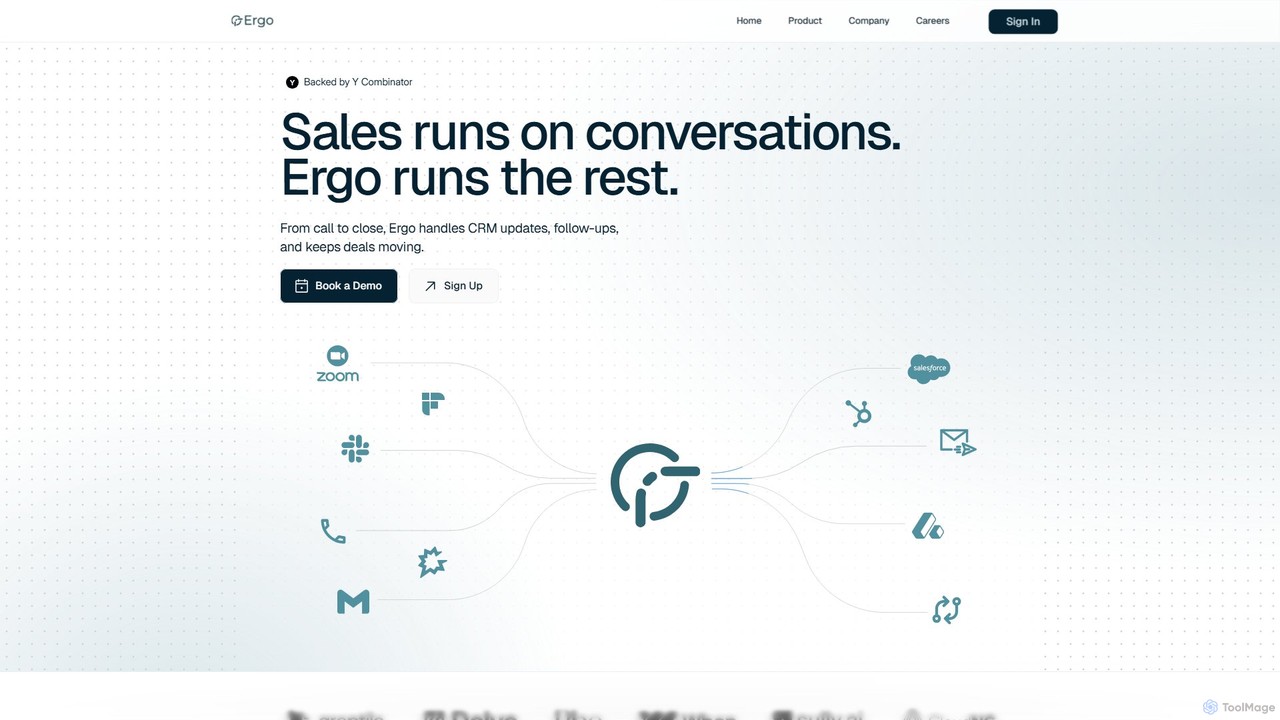
Ergo is a Y Combinator-backed AI sales automation platform that eliminates manual administrative work. It automatically updates your …
Ergo is a Y Combinator-backed AI sales automation platform that eliminates manual administrative work. It automatically updates your CRM, drafts personalized follow-up emails after calls, and revives stale deals, allowing sales teams to focus on building relationships and closing deals faster.
About Sales Intelligence
Sales Intelligence tools are AI-powered platforms designed to gather, analyze, and present data about prospects and customers to enhance sales efforts. These tools leverage advanced algorithms to aggregate information from various sources, providing actionable insights into buyer intent, company firmographics, and contact details. By offering a deeper understanding of potential buyers and market dynamics, Sales Intelligence empowers sales teams to identify high-value leads, personalize outreach strategies, and optimize their sales pipeline for greater efficiency and conversion rates.
Core Features
- Prospect Identification: Automatically discovers and qualifies potential leads based on predefined criteria.
- Buyer Intent Data: Tracks online behavior and content consumption to identify companies actively researching solutions.
- Contact Data Enrichment: Provides comprehensive contact information, including roles, emails, and social profiles.
- Competitor Analysis: Monitors competitor activities, market share, and customer sentiment.
- Predictive Lead Scoring: Uses AI to rank leads by their likelihood to convert, prioritizing sales efforts.
Use Cases
Sales Intelligence is crucial for B2B sales teams, business development representatives, and marketing professionals aiming to refine their targeting and outreach. It helps identify ideal customer profiles, understand their needs, and engage them with highly relevant messaging. Companies across technology, finance, and consulting sectors widely adopt these tools to gain a competitive edge in lead generation and sales execution.
How to Choose
When selecting Sales Intelligence tools, consider data accuracy and coverage, integration capabilities with existing CRMs and sales engagement platforms, the depth of AI-driven insights (e.g., predictive analytics, intent signals), and customization options for specific industry needs. Evaluate the user interface for ease of use and ensure the pricing model aligns with your team's size and data requirements.

Sales IntelligenceUse Cases
Identify High-Potential B2B Leads
Sales development representatives use Sales Intelligence to pinpoint companies matching their ideal customer profile, leveraging firmographic data, technology stacks, and recent funding rounds to build targeted prospect lists. This reduces time spent on unqualified leads and focuses efforts on opportunities with higher conversion probability.
Personalize Sales Outreach at Scale
Marketing and sales teams utilize buyer intent data to understand what topics prospects are researching. They then craft highly personalized emails and messages addressing specific pain points or interests, significantly increasing engagement rates compared to generic campaigns.
Monitor Competitor Activities and Market Trends
Business strategists and sales leaders employ Sales Intelligence to track competitor product launches, pricing changes, and customer reviews. This provides real-time market insights, enabling agile adjustments to sales strategies and competitive positioning.
Enrich CRM Data for Better Account Management
Account managers integrate Sales Intelligence with their CRM to automatically update contact information, identify new decision-makers within existing accounts, and uncover cross-sell or upsell opportunities based on company growth signals. This ensures CRM data remains fresh and actionable.
Prioritize Sales Pipeline with Predictive Scoring
Sales managers use AI-driven lead scoring to rank prospects based on their likelihood to convert, considering various data points like engagement, company size, and industry. This allows sales reps to focus on the most promising leads, optimizing their time and improving overall pipeline velocity.
Segment Markets for Targeted Campaign Planning
Product marketers and sales operations teams leverage Sales Intelligence to segment their total addressable market by industry, company size, geography, and technology adoption. This granular segmentation enables the creation of highly focused marketing campaigns and sales territories, maximizing ROI.