Best of the Year 2 results Customer Research AI Tools

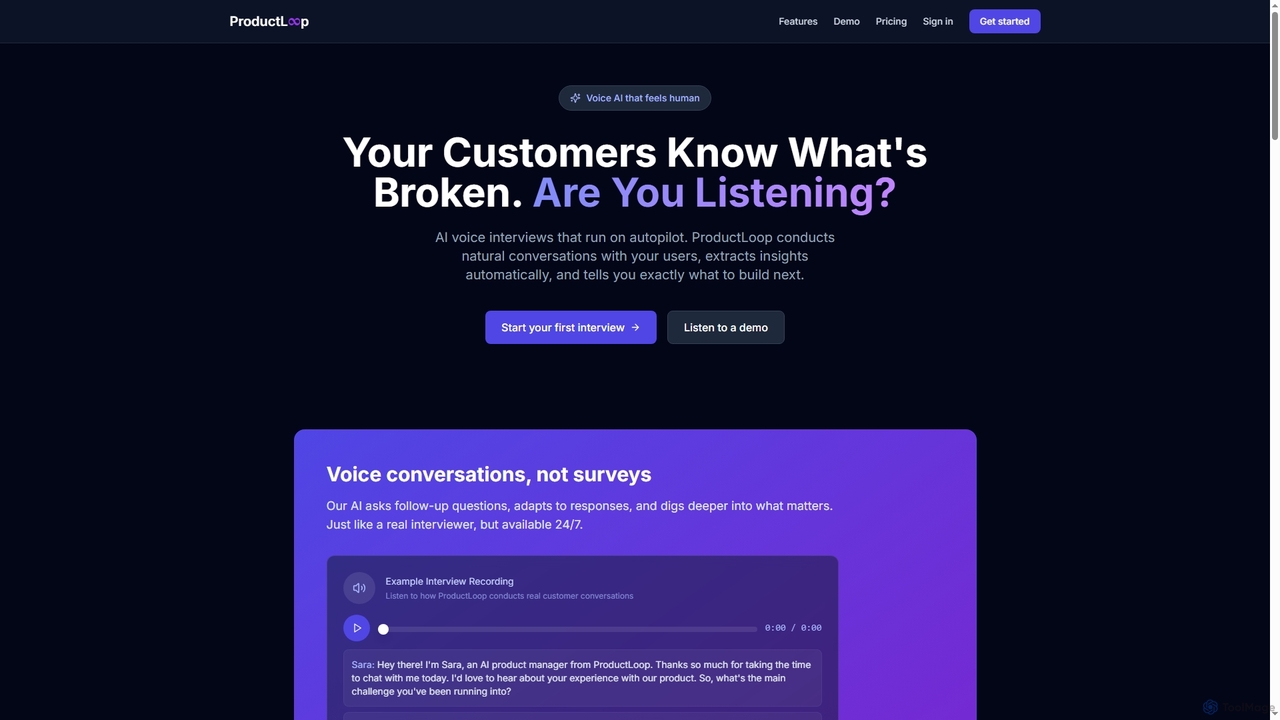
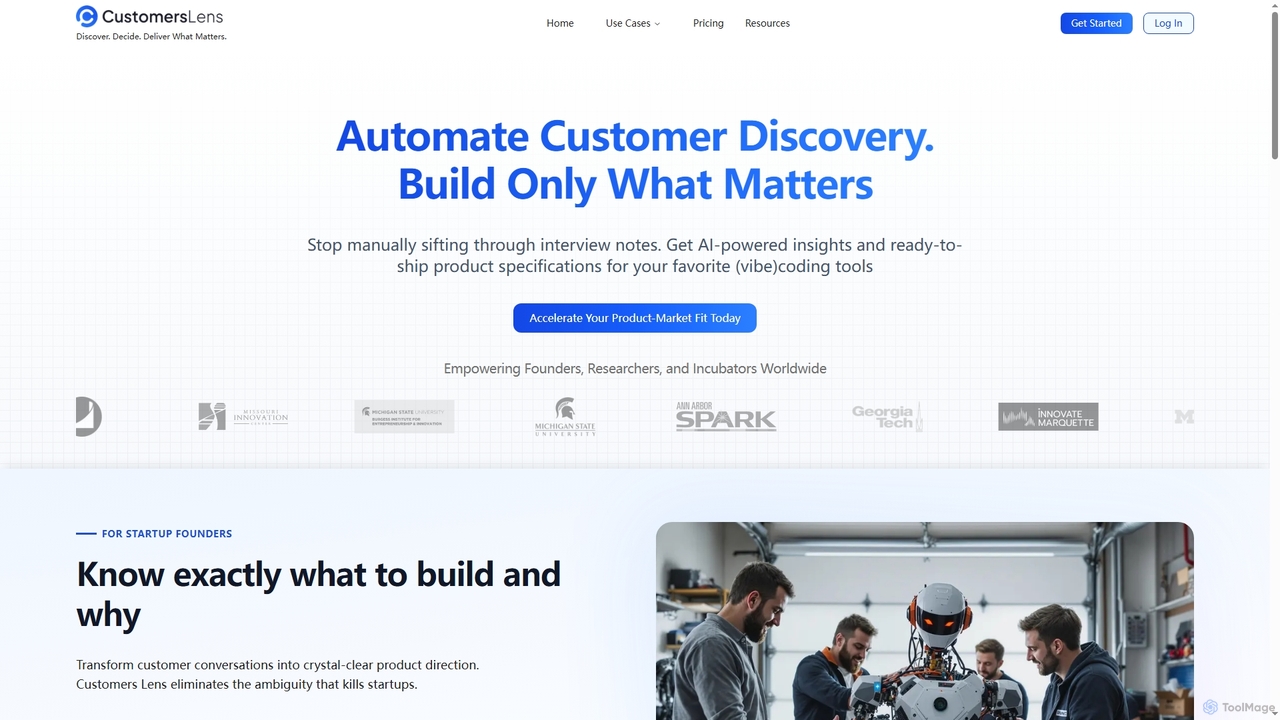
Popular AI tools in the Customer Research field include Customers Lens、ProductLoop, etc., helping you quickly improve efficiency.

Customers Lens

Customers Lens

Customers Lens is an AI-powered platform designed for startup founders, researchers, and incubators to automate customer discovery and …

2.4K
ProductLoop

ProductLoop

ProductLoop is an AI-powered platform that automates customer voice interviews to gather deep, actionable insights for product teams …

2.3K

About Customer Research

Customer Research AI tools are AI-powered platforms designed to help businesses understand their target audience's needs, behaviors, and preferences. These tools leverage advanced natural language processing (NLP), machine learning, and data analytics to extract meaningful insights from vast amounts of customer data. By automating the collection, analysis, and reporting of customer feedback, they enable companies to make data-driven decisions, improve products, and enhance customer experiences. They provide a comprehensive view of the customer landscape, transforming raw data into actionable intelligence.

Core Features

  • Sentiment Analysis: Automatically detect and quantify emotions and opinions expressed in customer text.
  • Topic Modeling: Identify recurring themes and key discussion points from unstructured feedback.
  • Persona Generation: Create detailed, data-backed customer profiles to guide product and marketing strategies.
  • Feedback Categorization: Organize and prioritize customer comments, reviews, and support tickets efficiently.
  • Market Trend Identification: Uncover emerging customer needs and market shifts by analyzing public data.

Use Cases

These tools are invaluable for product development teams seeking to prioritize features based on user demand, marketing departments aiming to tailor campaigns with precise audience insights, and customer service teams looking to identify and address common pain points. They also support strategic planning by providing a deep understanding of market dynamics and competitive positioning.

How to Choose

When selecting a Customer Research AI tool, consider its compatibility with your existing data sources (e.g., CRM, social media platforms), the depth of its analytical capabilities (e.g., advanced NLP, predictive analytics), and the clarity of its reporting and visualization features. Scalability to handle growing data volumes and ease of integration with other business systems are also crucial factors for long-term success.

Customer ResearchUse Cases

1

Product Feature Prioritization

Product managers can utilize Customer Research AI tools to analyze thousands of user reviews, support tickets, and forum discussions. By automatically identifying frequently requested features and common pain points, these tools help prioritize development efforts, ensuring the product roadmap aligns with actual customer needs. This leads to higher user satisfaction and a more competitive product.

2

Optimizing Marketing Campaigns

Marketing specialists leverage these AI tools to gain deep insights into their target audience's language, preferences, and motivations. By analyzing social media conversations, competitor reviews, and survey responses, marketers can craft highly resonant messaging and tailor campaigns that directly address customer desires, significantly improving engagement and conversion rates.

3

Identifying Customer Service Pain Points

Customer success and support teams use AI customer research to automatically process call transcripts, chat logs, and customer surveys. The tools identify recurring issues, common complaints, and areas of dissatisfaction, allowing teams to proactively address systemic problems, reduce support volume, and enhance overall customer satisfaction and retention.

4

Informing New Market Entry Strategies

Business development analysts can employ these tools to research potential new markets. By analyzing local news, social media trends, and public sentiment in specific regions, they can gauge market demand, understand cultural nuances, and assess the competitive landscape. This data-driven approach minimizes risks and informs more effective market entry strategies.

5

Developing Data-Driven Content Strategies

Content creators and strategists use Customer Research AI to discover topics, questions, and keywords that their target audience is actively searching for and discussing. By analyzing search queries, forum discussions, and competitor content, they can generate highly relevant and engaging content ideas, improving content performance, SEO rankings, and audience engagement.

6

Refining Customer Personas

UX designers and researchers utilize these tools to build and refine detailed customer personas. By aggregating and analyzing demographic, behavioral, and psychographic data from various sources, the AI provides a comprehensive understanding of different customer segments. This leads to more accurate persona development, enabling better product design and user experience.

Customer ResearchFrequently Asked Questions