ToolMage
Sign in

Best 1 Call Automation AI tools for Customer Service

Popular Call Automation AI tools in Customer Service include Vex AI, helping you work more efficiently.

Vex AI
Freemium

Vex AI

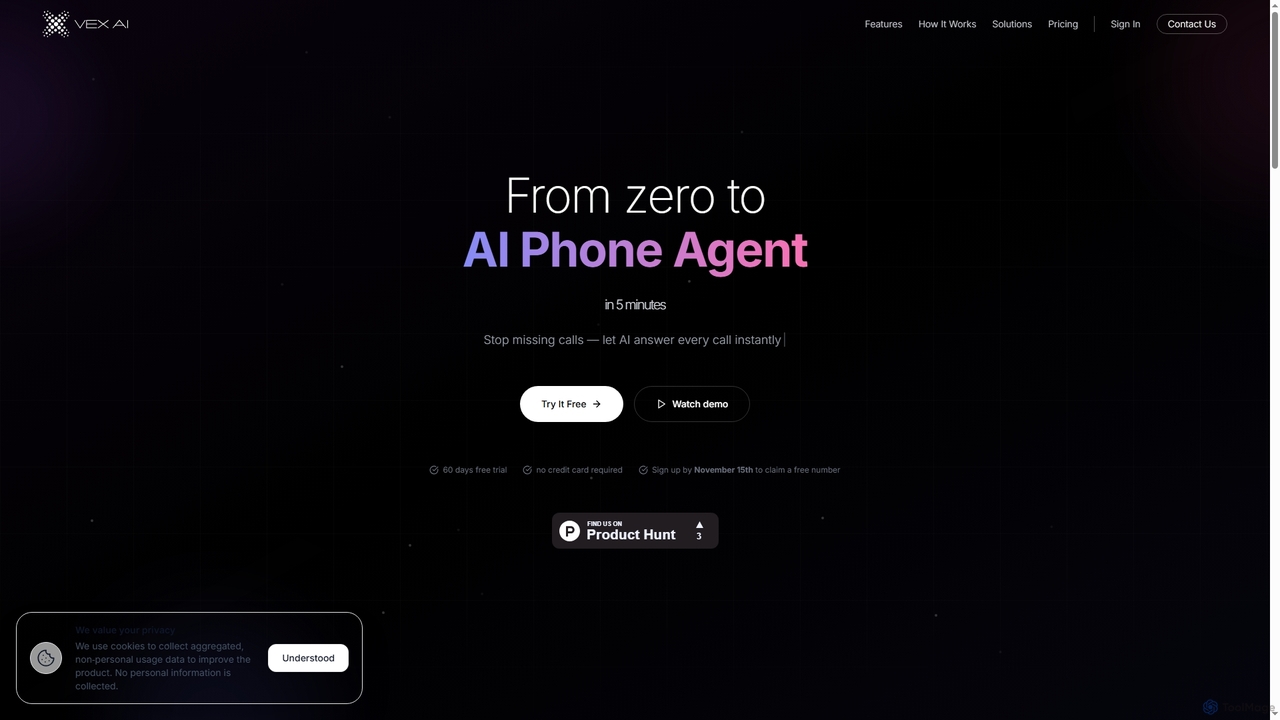
Vex AI is an advanced AI phone agent that automates customer calls, answers FAQs, and schedules appointments 24/7. It provides human-like conversational support, helping businesses streamline communication, reduce wait times, and scale customer service effortlessly. Start with a 60-day free trial.

Voice Ai
Visits 7.2KFavorites 127Likes 145

About Call Automation

Call Automation is a category of AI-powered tools designed to automate and optimize voice interactions within customer service, sales, and operational workflows. These solutions leverage advanced natural language processing (NLP) and speech recognition technologies to understand, process, and respond to human speech. By handling routine inquiries, routing calls, or conducting outbound campaigns, Call Automation significantly enhances operational efficiency, reduces response times, and ensures consistent service quality across various communication channels.

Core Features

  • AI Voicebots: Intelligent virtual agents that can understand natural language, answer questions, and perform tasks without human intervention.
  • Automated Call Routing: Directing callers to the most appropriate department or agent based on their intent, urgency, and historical data.
  • Sentiment Analysis: Real-time evaluation of caller emotion and tone to help agents adapt their approach or escalate critical issues.
  • Post-Call Summarization: Automatically generating concise summaries of call content, key decisions, and follow-up actions for CRM integration.
  • Script Adherence Monitoring: Ensuring agents follow predefined scripts and compliance guidelines during live calls.

Use Cases

Call Automation tools are invaluable for organizations with high call volumes or those seeking to streamline their communication processes. They are widely adopted in large call centers to manage peak loads, in sales departments for lead qualification and outreach, and by customer support teams to provide 24/7 assistance for common queries, freeing human agents to focus on complex issues.

How to Choose

When selecting a Call Automation solution, consider its natural language understanding (NLU) accuracy, integration capabilities with existing CRM and contact center systems, scalability to handle varying call volumes, and compliance features for data privacy and industry regulations. Evaluate the customization options for voicebot personalities and scripts, as well as the analytics and reporting functionalities to measure performance.

Call Automation use cases

1

Automated Inbound Customer Support

For businesses with high call volumes, AI-powered call automation handles routine customer inquiries such as checking order status, updating account information, or answering frequently asked questions. This reduces customer wait times, provides instant 24/7 support, and frees human agents to address more complex or sensitive issues, significantly improving overall customer satisfaction and operational efficiency.

2

Proactive Outbound Sales Prospecting

Sales teams can leverage call automation to conduct initial outreach to a large number of leads. AI voicebots can qualify prospects by asking predefined questions, gather essential information, and even schedule follow-up calls with human sales representatives for interested leads. This streamlines the sales funnel, increases lead conversion rates, and allows sales personnel to focus on high-potential interactions.

3

Appointment Scheduling and Reminders

Healthcare providers, service businesses, and consultants use call automation to manage appointments efficiently. Automated systems can call clients to schedule new appointments, send reminders for upcoming bookings, and confirm or reschedule existing ones. This drastically reduces no-show rates, optimizes resource allocation, and minimizes the administrative burden on staff.

4

Post-Call Analysis and Quality Assurance

Call centers utilize automation for comprehensive post-call analysis. AI tools can transcribe calls, summarize key discussion points, identify customer sentiment, and flag compliance issues or agent performance metrics. This provides valuable insights for training, quality control, and identifying trends, leading to continuous improvement in service delivery and agent effectiveness.

5

Debt Collection and Payment Reminders

Financial institutions and collection agencies deploy call automation for sensitive tasks like sending payment reminders or initiating early-stage debt collection calls. Automated systems can deliver personalized messages, offer payment options, and guide customers through self-service portals, ensuring consistent communication while adhering to regulatory compliance and maintaining customer relationships.

6

Emergency Notification and Crisis Communication

Organizations can use call automation for rapid and widespread dissemination of critical information during emergencies or crises. Automated calls can alert employees, customers, or community members about urgent situations, provide safety instructions, or confirm well-being. This ensures timely communication, minimizes panic, and facilitates coordinated responses in critical moments.

Call Automation FAQ

What is Call Automation?

Call Automation refers to the use of artificial intelligence and related technologies to automate various aspects of voice-based communication, primarily in customer service and sales. It involves deploying AI voicebots or intelligent virtual agents that can understand natural language, engage in conversations, and perform tasks like answering questions, routing calls, or processing requests, significantly enhancing efficiency and customer experience.

How does Call Automation differ from traditional IVR systems?

Traditional Interactive Voice Response (IVR) systems are rule-based and rely on predefined menus and keyword matching, offering limited flexibility. Call Automation, powered by AI and natural language processing (NLP), can understand complex human speech, interpret intent, and engage in dynamic, free-flowing conversations. This allows for more personalized interactions, better problem resolution, and a more natural user experience compared to the rigid structure of IVR.

What are the main benefits of implementing Call Automation?

Implementing Call Automation offers several key benefits, including reduced operational costs by handling routine inquiries without human intervention, improved customer satisfaction through 24/7 availability and faster response times, enhanced agent productivity by offloading repetitive tasks, and valuable data insights from call analytics. It also ensures consistent service quality and compliance across all interactions.

What should I consider when choosing a Call Automation solution?

When selecting a Call Automation solution, prioritize its natural language understanding (NLU) accuracy and ability to handle diverse accents and speech patterns. Evaluate its integration capabilities with your existing CRM, contact center software, and other business systems. Consider scalability for future growth, customization options for voicebot personality and scripts, and robust security and compliance features to protect sensitive data.

Can Call Automation fully replace human customer service agents?

While Call Automation can handle a significant portion of routine inquiries and tasks, it is generally not intended to fully replace human customer service agents. Instead, it acts as a powerful augmentation tool, allowing AI to manage repetitive, high-volume interactions. This frees human agents to focus on complex, empathetic, or strategic issues that require nuanced understanding and human judgment, creating a more efficient and effective hybrid customer service model.