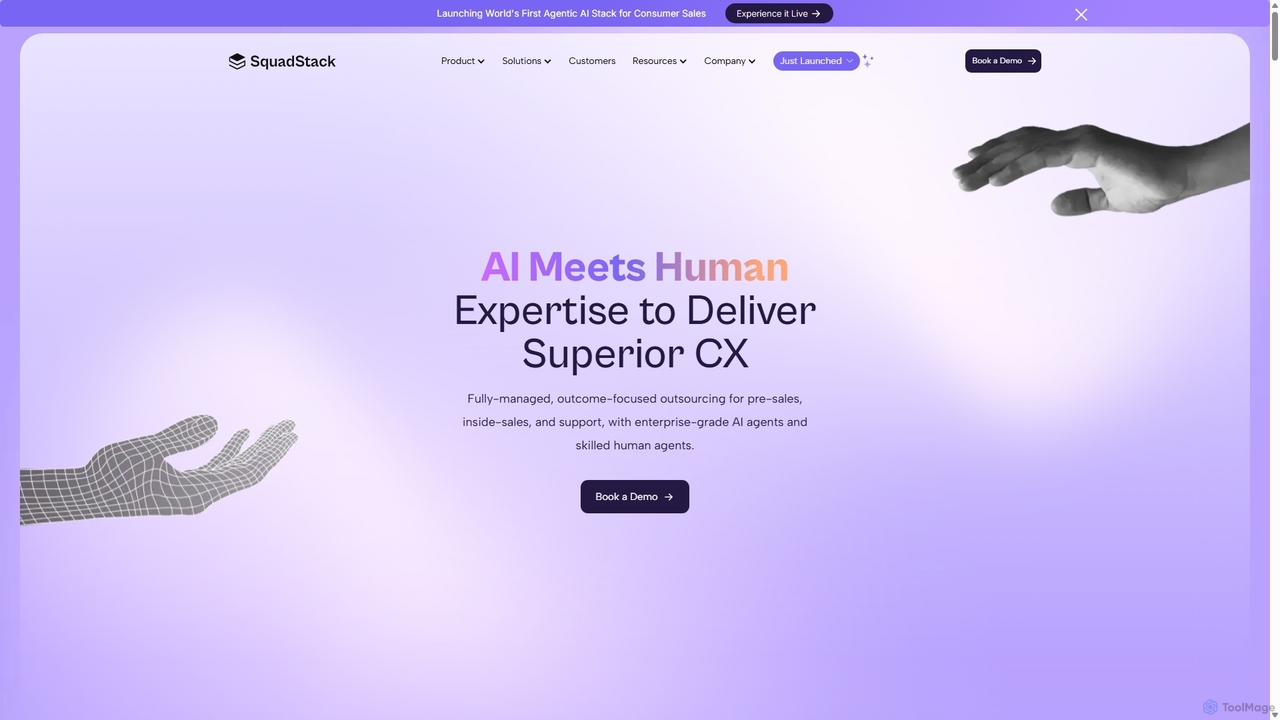
SquadStack
SquadStack is a fully managed platform that combines humanoid AI agents with a network of human experts to …
SquadStack is a fully managed platform that combines humanoid AI agents with a network of human experts to automate and scale sales and customer support operations. It enhances customer experience, reduces costs, and drives measurable business outcomes through intelligent, omnichannel outreach and automation.
Cresta
Cresta is a unified generative AI platform for contact centers, designed to enhance both human and AI agent …
Cresta is a unified generative AI platform for contact centers, designed to enhance both human and AI agent performance. It provides real-time agent assistance, conversation intelligence, and automated AI agents to help businesses reduce costs, increase revenue, and improve customer satisfaction.
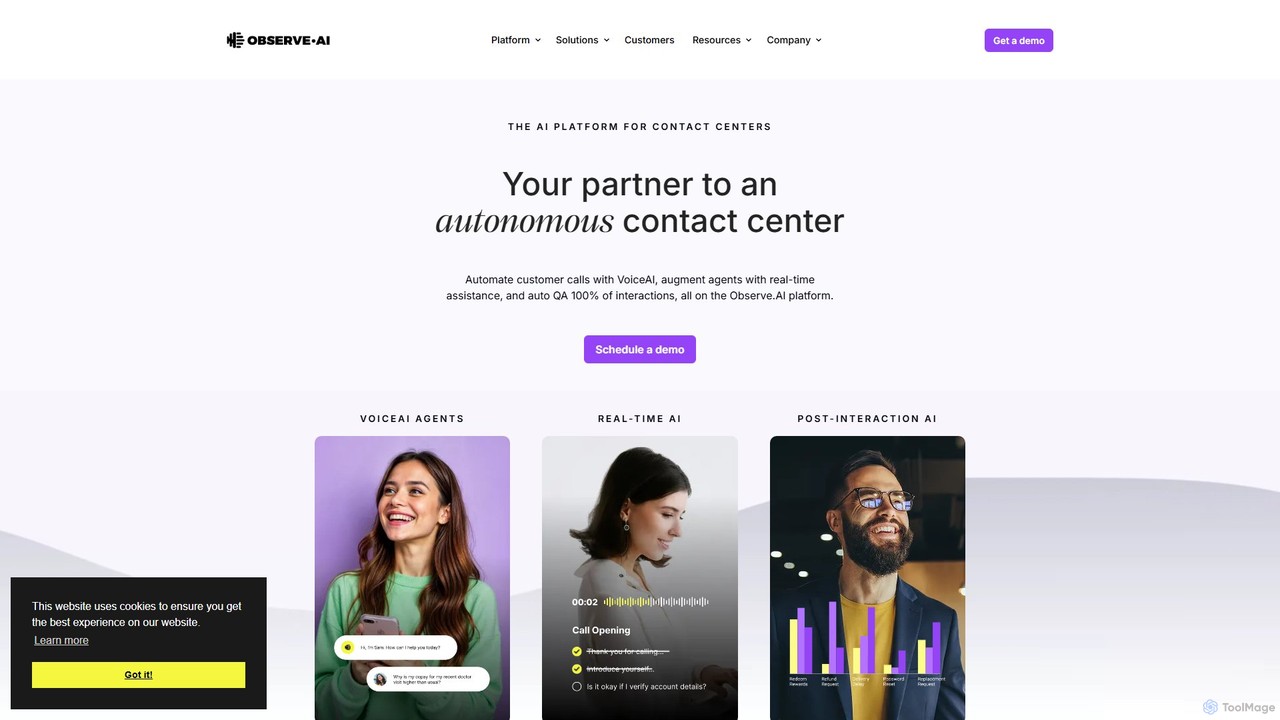
Observe.AI
Observe.AI is a GenAI-powered conversation intelligence platform for contact centers. It automates customer interactions with VoiceAI, assists agents …
Observe.AI is a GenAI-powered conversation intelligence platform for contact centers. It automates customer interactions with VoiceAI, assists agents in real-time, and analyzes 100% of conversations for quality assurance, coaching, and business insights, helping businesses improve efficiency, compliance, and customer experience.
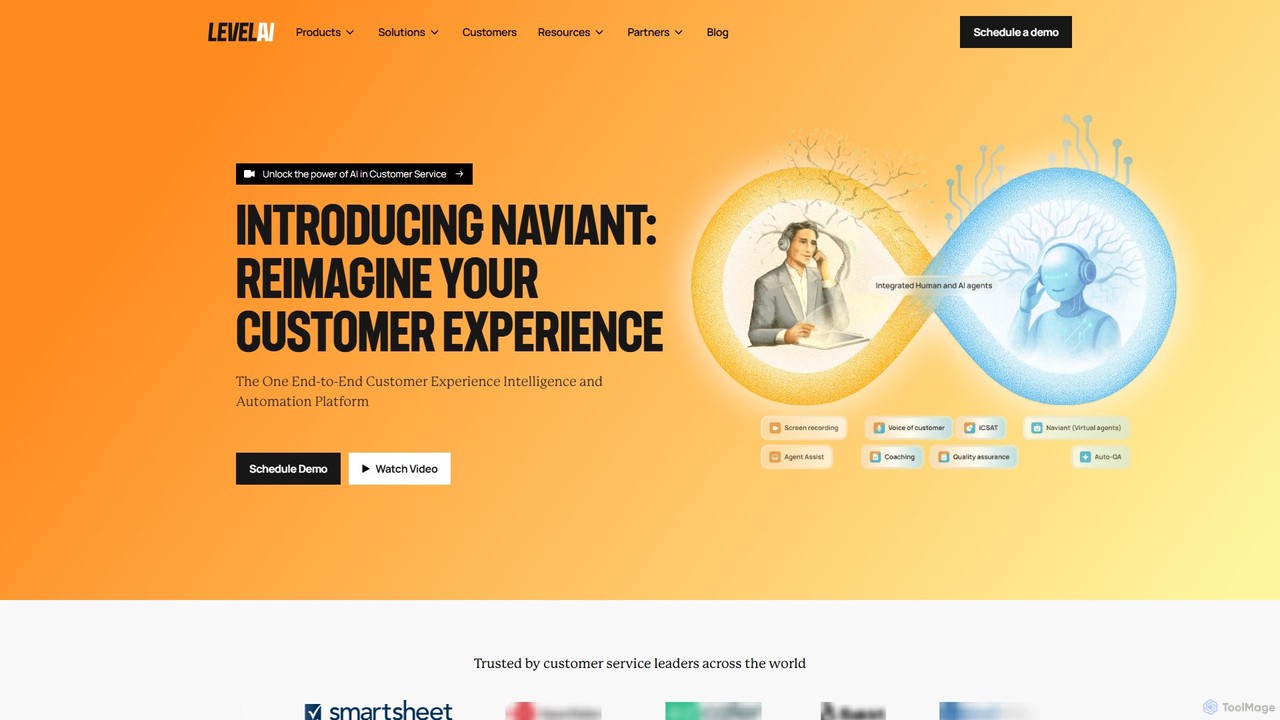
Level AI
Level AI is an end-to-end customer experience intelligence and automation platform for contact centers. It uses generative AI …
Level AI is an end-to-end customer experience intelligence and automation platform for contact centers. It uses generative AI to analyze 100% of customer interactions, automate quality assurance, provide real-time agent coaching, and deliver actionable business insights to enhance both customer and agent satisfaction.
About Contact Center Automation
Contact Center Automation tools are AI-powered solutions designed to streamline and enhance customer interactions within contact centers, forming a specialized subset of broader customer support technologies. They leverage advanced natural language processing (NLP), machine learning, and robotic process automation (RPA) to automate routine tasks, provide instant support, and optimize agent workflows. These tools significantly improve operational efficiency, reduce response times, and elevate overall customer satisfaction by handling inquiries more effectively and consistently.
Core Features
- AI Chatbots & Virtual Agents: Provide instant, 24/7 self-service support by understanding natural language and answering common queries.
- Intelligent Call Routing: Uses AI to analyze caller intent and sentiment, directing calls to the most appropriate agent or department.
- Agent Assist & Co-pilot: Offers real-time suggestions, knowledge base lookups, and script guidance to human agents during live interactions.
- Sentiment Analysis: Monitors customer emotions and satisfaction levels across channels to prioritize urgent cases and improve service quality.
- Automated Post-Interaction Summaries: Generates summaries of calls or chats, reducing agent after-call work and improving data accuracy.
Applicable Scenarios
Contact Center Automation is crucial for large enterprises and growing businesses with high call volumes, seeking to scale their customer service without proportional staff increases. It's particularly valuable in industries like e-commerce, telecommunications, banking, and healthcare, where rapid, consistent, and personalized customer support is essential. It also empowers smaller teams to manage customer inquiries more efficiently, allowing them to focus on complex problem-solving.
How to Choose
When selecting a Contact Center Automation solution, consider its integration capabilities with your existing CRM and communication platforms, ensuring seamless data flow. Evaluate the accuracy and customizability of its NLP models for your specific industry's terminology. Assess its scalability to handle future growth and peak demand, and look for robust analytics and reporting features to measure performance. Finally, prioritize solutions with strong security protocols and compliance features to protect sensitive customer data.
Contact Center AutomationUse Cases
Automating FAQ Responses with AI Chatbots
For e-commerce businesses or service providers, AI chatbots can handle common customer inquiries about order status, shipping, product details, or service terms 24/7. By deploying a chatbot on their website or messaging apps, customers receive instant, accurate answers without needing agent intervention, reducing call volumes by up to 40% and freeing human agents for complex issues.
Intelligent Call Routing for Complex Inquiries
In a large telecommunications contact center, an intelligent call routing system uses AI to analyze a customer's spoken intent and historical data during the initial IVR interaction. Instead of generic routing, it directs customers with billing disputes directly to a specialized billing agent, or those with technical issues to a tech support specialist, significantly reducing transfer rates and improving first-call resolution by 15-20%.
Enhancing Agent Productivity with Real-time Assistance
A customer service agent in a financial institution uses an AI-powered agent assist tool during live calls. The tool listens to the conversation, instantly pulls up relevant customer information, suggests knowledge base articles for common queries, and even drafts personalized responses for chat interactions. This reduces average handling time (AHT) by 10-15% and ensures agents provide accurate, consistent information, especially for new hires.
Proactive Customer Engagement via Sentiment Analysis
A social media support team uses AI-powered sentiment analysis to monitor customer posts and comments across platforms. When a customer expresses high frustration or dissatisfaction, the system automatically flags the interaction and creates a high-priority ticket, allowing an agent to proactively reach out and address the issue before it escalates, improving customer retention and brand reputation.
Automating Post-Call Summaries and Data Entry
After a customer service call, an AI automation tool automatically transcribes the conversation, identifies key topics, extracts relevant customer information (e.g., updated address, product issue details), and generates a concise summary. This summary is then automatically logged into the CRM system, saving agents 5-10 minutes of manual data entry per call and ensuring consistent, accurate record-keeping for future interactions and compliance.
Personalized Self-Service through AI-Powered Knowledge Bases
A software company implements an AI-powered knowledge base that not only stores articles but also understands user queries in natural language. Customers can type questions like, "How do I reset my password for product X?" and the system provides the most relevant article or even a step-by-step guide, reducing the need for direct agent contact by 20-30% and empowering users to find solutions independently.