ToolMage
Sign in

Best 2 Conversation Intelligence AI tools for Customer Support

Popular Conversation Intelligence AI tools in Customer Support include Perspective AI and Wonderway, helping you work more efficiently.

Perspective AI
Paid

Perspective AI

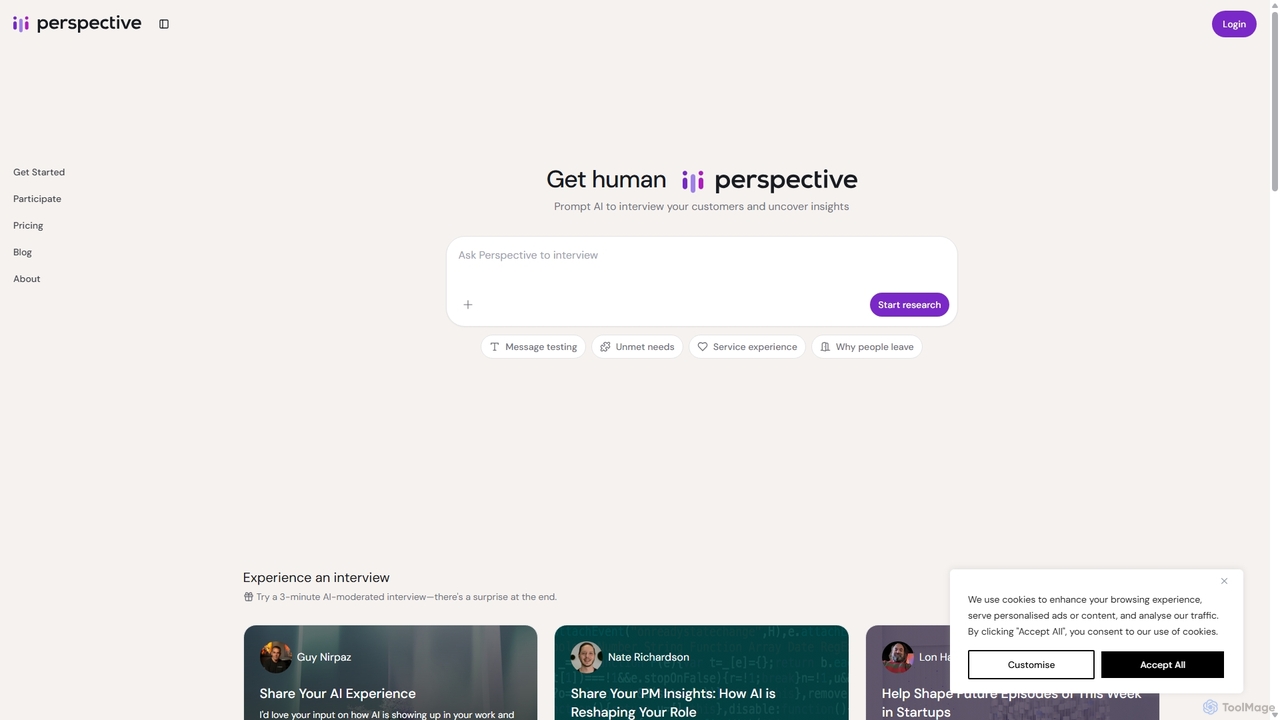
Perspective AI is an advanced conversation intelligence platform that uses AI to analyze customer interactions at scale. It automatically transcribes, summarizes, and extracts key insights from sources like calls, emails, and chats. This helps businesses understand customer sentiment, identify emerging trends, and improve agent performance, ultimately driving product improvement and customer satisfaction.

Conversation Intelligence
Visits 18.2KFavorites 153Likes 166
Wonderway
Paid

Wonderway

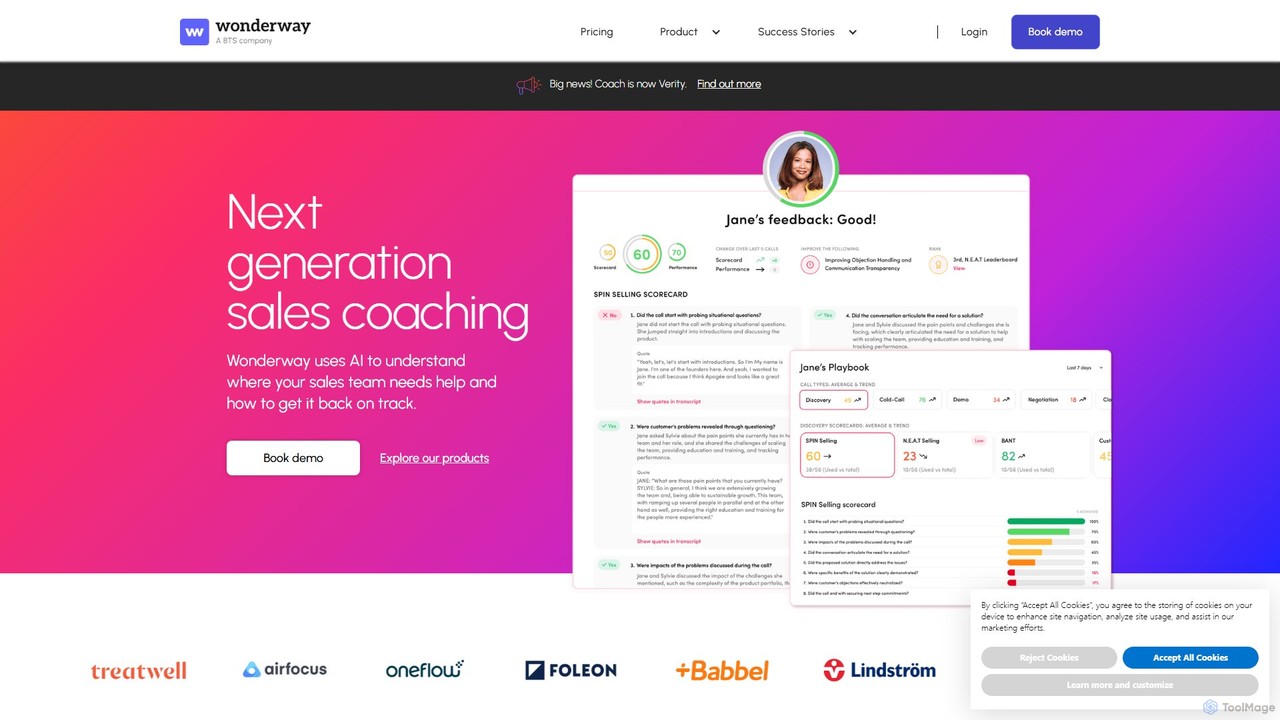
Wonderway is an AI-powered sales coaching and training platform that automatically analyzes sales calls, provides personalized feedback, and offers a comprehensive Learning Management System (LMS). It helps sales teams improve performance, accelerate onboarding, and increase revenue by delivering data-driven insights and targeted training at scale.

Conversation Intelligence
Visits 12.9KFavorites 158Likes 168

About Conversation Intelligence

Conversation Intelligence tools are a class of AI-powered software that automatically records, transcribes, and analyzes customer conversations across calls, meetings, and emails. They leverage Natural Language Processing (NLP) to extract key insights, identify trends, and evaluate communication patterns. This technology transforms raw interaction data into structured, actionable intelligence, enabling sales and support teams to understand the voice of the customer at scale. By uncovering sentiment, topics, and agent performance metrics, these platforms provide a data-driven foundation for coaching, process improvement, and strategic decision-making.

Core Features

  • Automated Transcription & Diarization: Accurately converts audio to text and identifies different speakers in the conversation.
  • Sentiment & Emotion Analysis: Gauges customer and agent sentiment (positive, negative, neutral) throughout the interaction.
  • Topic & Keyword Tracking: Automatically identifies and tracks mentions of products, competitors, pricing, and custom keywords.
  • AI-Powered Call Scoring: Objectively scores agent performance against predefined scorecards to automate quality assurance.
  • Actionable Insights & Coaching: Provides data-backed feedback and highlights coachable moments for team improvement.

Use Cases

Primarily used by sales and customer support teams in B2B and B2C environments. Sales teams use it to refine pitches and replicate top-performer behaviors. Support teams leverage it for quality assurance automation and identifying root causes of customer issues. Product and marketing teams also mine these conversations for unfiltered customer feedback and market intelligence.

How to Choose

When selecting a Conversation Intelligence tool, evaluate its integration capabilities with your existing CRM and communication platforms. Assess the accuracy of its transcription, especially for industry-specific terminology. Consider the depth of its analytics, the flexibility of its reporting dashboards, and its compliance with data security standards like GDPR or SOC 2.

Conversation Intelligence use cases

1

Enhance Sales Team Coaching and Performance

A sales manager uses a Conversation Intelligence platform to analyze the calls of their entire team. The AI automatically flags calls where a top competitor was mentioned or where a key value proposition was missed. The manager can then review these specific moments, create playlists of best-practice examples from top performers, and provide targeted, data-driven coaching to reps who are struggling, reducing ramp time and improving quota attainment.

2

Automate Customer Support Quality Assurance

A contact center manager needs to ensure consistent service quality across hundreds of agents. Instead of manually listening to a random 2% of calls, they use Conversation Intelligence to automatically score 100% of interactions based on a custom scorecard. The system checks for script adherence, proper disclosure statements, and empathy expression, flagging non-compliant or low-sentiment calls for human review, saving significant QA time.

3

Capture Unfiltered Product Feedback

A product manager wants to understand how customers are reacting to a new feature. They set up trackers in the Conversation Intelligence tool to monitor all mentions of the feature's name and related terms. The platform aggregates this feedback from support calls and sales demos, revealing common pain points, feature requests, and user praise, providing direct, unbiased customer insights without relying on surveys.

4

Improve Marketing Message Resonance

A marketing team is preparing for a new campaign and wants to use language that resonates with customers. They analyze thousands of sales conversations to identify the exact words and phrases customers use to describe their problems. This 'voice of the customer' data is then used to craft more effective ad copy, landing pages, and email campaigns that speak directly to the target audience's needs.

5

Mitigate Compliance and Legal Risks

In a highly regulated industry like finance or healthcare, a compliance officer uses Conversation Intelligence to monitor 100% of customer interactions for potential risks. The AI is configured to flag specific phrases, unauthorized promises, or failures to read mandatory disclosures. This proactive monitoring helps the company identify and address compliance breaches quickly, reducing the risk of fines and legal action.

6

Inform Executive-Level Business Strategy

A CEO wants a high-level understanding of market trends and the competitive landscape. The Conversation Intelligence platform provides executive dashboards that summarize key metrics from all customer conversations. This includes tracking the frequency of competitor mentions over time, identifying emerging customer concerns, and measuring overall market sentiment, offering a real-time pulse on the business that informs strategic planning.

Conversation Intelligence FAQ

What is Conversation Intelligence?

Conversation Intelligence (CI) is AI technology that analyzes customer conversations from calls, video meetings, and emails to uncover actionable insights. It goes beyond simple recording by using Natural Language Processing (NLP) to transcribe, identify topics, analyze sentiment, and score interactions. The primary goal is to turn unstructured conversation data into structured intelligence for improving sales, support, and product development.

How does Conversation Intelligence differ from call recording software?

Call recording software simply captures and stores audio or video of a conversation for later manual review. Conversation Intelligence is an analytical layer on top of that recording. It automatically transcribes the call, identifies who is speaking, analyzes what was said (topics, sentiment, keywords), and provides data-driven insights and reports. In short, call recording is for storage; Conversation Intelligence is for analysis and action.

Who benefits most from using Conversation Intelligence tools?

While many departments can benefit, the primary users are typically revenue-generating and customer-facing teams. This includes:

  • Sales Teams: For coaching, deal intelligence, and replicating successful strategies.
  • Customer Support & Success Teams: For automating quality assurance, understanding customer satisfaction drivers, and reducing churn.
  • Marketing & Product Teams: For gathering voice-of-the-customer data and competitive intelligence.

What are the key features of a Conversation Intelligence platform?

Essential features to look for include highly accurate speech-to-text transcription, speaker identification (diarization), sentiment analysis, and the ability to track custom keywords and topics. Also, consider its AI-powered call scoring for QA, robust analytics dashboards, and seamless integrations with your CRM (like Salesforce) and communication tools (like Zoom or contact center software).

Is my company's conversation data secure with these tools?

Reputable Conversation Intelligence providers prioritize data security. When choosing a tool, verify its compliance with major security standards such as SOC 2 Type II, ISO 27001, and data privacy regulations like GDPR and CCPA. They should offer features like data encryption both in transit and at rest, role-based access controls, and options for redacting sensitive personal information (PII) from transcripts and recordings.