LIFEDATA
LIFEDATA is an enterprise-grade AI data platform designed to transform WhatsApp into a powerful business operations and revenue …
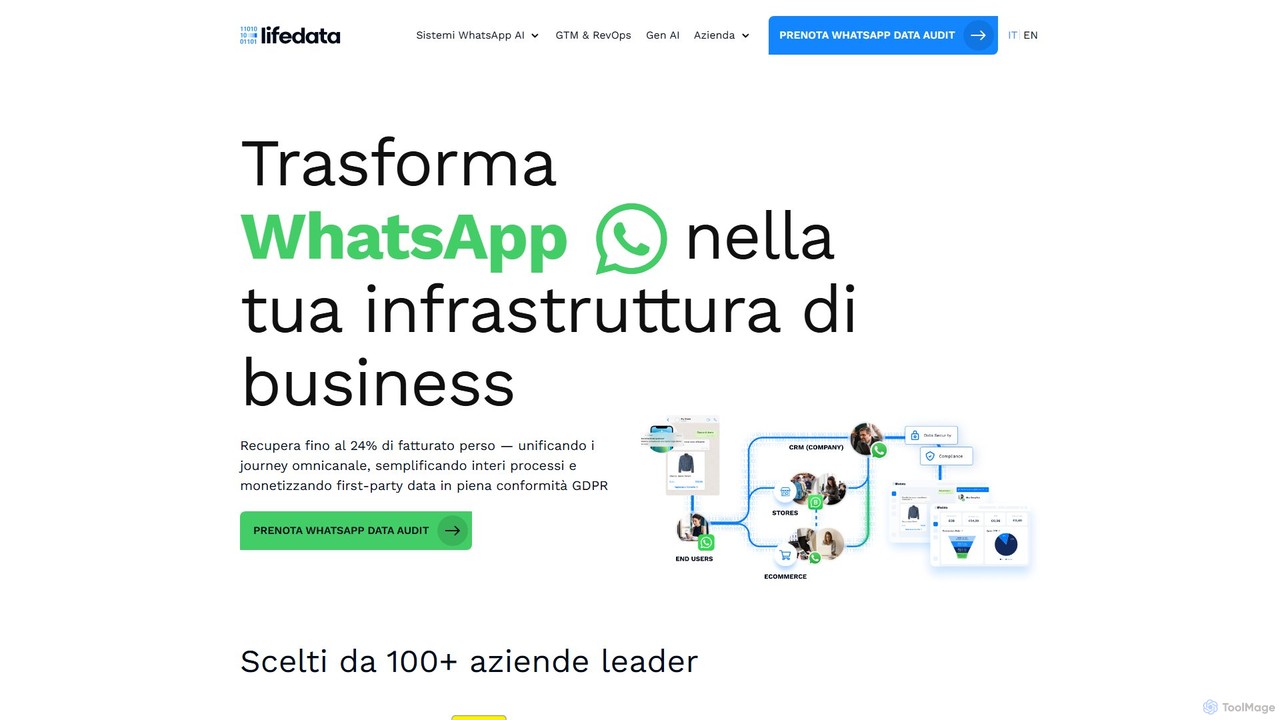
LIFEDATA is an enterprise-grade AI data platform designed to transform WhatsApp into a powerful business operations and revenue generation tool. It captures, normalizes, and analyzes WhatsApp conversations, enabling businesses to deploy generative AI agents, orchestrate omnichannel customer journeys, and manage sales, marketing, and customer service processes directly within WhatsApp. It focuses on data governance, GDPR compliance, and seamless integration with existing CRM and e-commerce systems to unlock the full potential of conversational commerce.
About Conversational Commerce
Conversational Commerce refers to AI-powered tools that integrate chat and messaging platforms directly into the sales and customer journey, enabling interactive and personalized shopping experiences. These solutions leverage natural language processing (NLP) and machine learning to automate interactions, guide customers through product discovery, and facilitate transactions. By bringing sales and support into a single, seamless conversation, they enhance customer engagement and streamline the purchasing process, serving as a dynamic extension of traditional customer support.
Core Features
- Personalized Product Recommendations: AI analyzes user preferences and browsing history to suggest relevant products or services in real-time.
- Automated Sales Assistance: Chatbots answer product queries, provide detailed information, and guide customers through the sales funnel without human intervention.
- Order Management & Tracking: Users can place orders, modify details, and track shipments directly within the conversational interface.
- Integrated Payment Processing: Securely handle transactions and payments within the chat environment, simplifying the checkout process.
- Customer Support Handoff: Seamlessly transfer complex queries from AI to human agents, ensuring continuous support.
Use Cases
Conversational Commerce tools are widely adopted across various sectors to enhance customer interactions. In e-commerce, they assist shoppers with product discovery and checkout. For service providers, they automate appointment bookings and service inquiries. They also serve B2B companies by qualifying leads and providing instant information to potential clients, significantly reducing response times and improving conversion rates.
How to Choose
When selecting a Conversational Commerce tool, prioritize its integration capabilities with existing CRM, e-commerce platforms, and messaging channels (e.g., WhatsApp, Messenger). Evaluate the AI's natural language understanding (NLU) for accurate intent recognition and personalization features. Consider scalability to handle varying customer volumes and the ease of customization for brand-specific workflows and content. Finally, assess the security measures for payment processing and data privacy.

Conversational CommerceUse Cases
Automating Product Discovery and Sales in E-commerce
An online retailer uses a conversational AI assistant on their website and messaging apps (e.g., WhatsApp) to greet customers. The AI asks about preferences, suggests products based on past purchases or browsing, answers detailed product questions, and guides them through the checkout process, significantly reducing cart abandonment and increasing conversion rates by providing instant, personalized assistance 24/7.
Streamlining Lead Qualification for B2B Sales Teams
A B2B software company deploys a conversational commerce bot on its website to engage visitors. The bot asks qualifying questions about company size, industry, and specific needs. Based on the responses, it provides relevant case studies, schedules a demo with a sales representative, or directs them to appropriate resources, ensuring sales teams receive pre-qualified leads and saving valuable time.
Facilitating Appointment Booking and Service Inquiries
A healthcare clinic or beauty salon integrates a conversational commerce solution into their messaging channels. Patients or clients can chat with the AI to check service availability, book, reschedule, or cancel appointments, and receive automated reminders. This reduces administrative workload for staff, minimizes no-shows, and provides a convenient, accessible booking experience for customers.
Enhancing Post-Purchase Support and Order Management
After a customer makes a purchase, a conversational commerce bot handles common post-purchase queries. Customers can ask about their order status, track shipments, initiate returns or exchanges, and receive instant answers without needing to call customer service. This improves customer satisfaction, reduces the volume of inbound support tickets, and builds trust through proactive communication.
Personalized Financial Advisory and Product Upselling
A bank or financial institution uses conversational AI to offer personalized advice and upsell financial products. Customers can inquire about account balances, transaction history, loan options, or investment products. The AI, integrated with customer data, can suggest suitable products (e.g., a higher-interest savings account or a new credit card) based on their financial profile and needs, driving cross-selling opportunities.
Collecting Customer Feedback and Market Research
Businesses utilize conversational commerce platforms to conduct interactive surveys and gather feedback. After a purchase or service interaction, the bot engages customers in a natural conversation to collect opinions on product quality, service experience, or new feature ideas. This method often yields higher response rates than traditional forms, providing valuable insights for product development and service improvement.