treble.ai
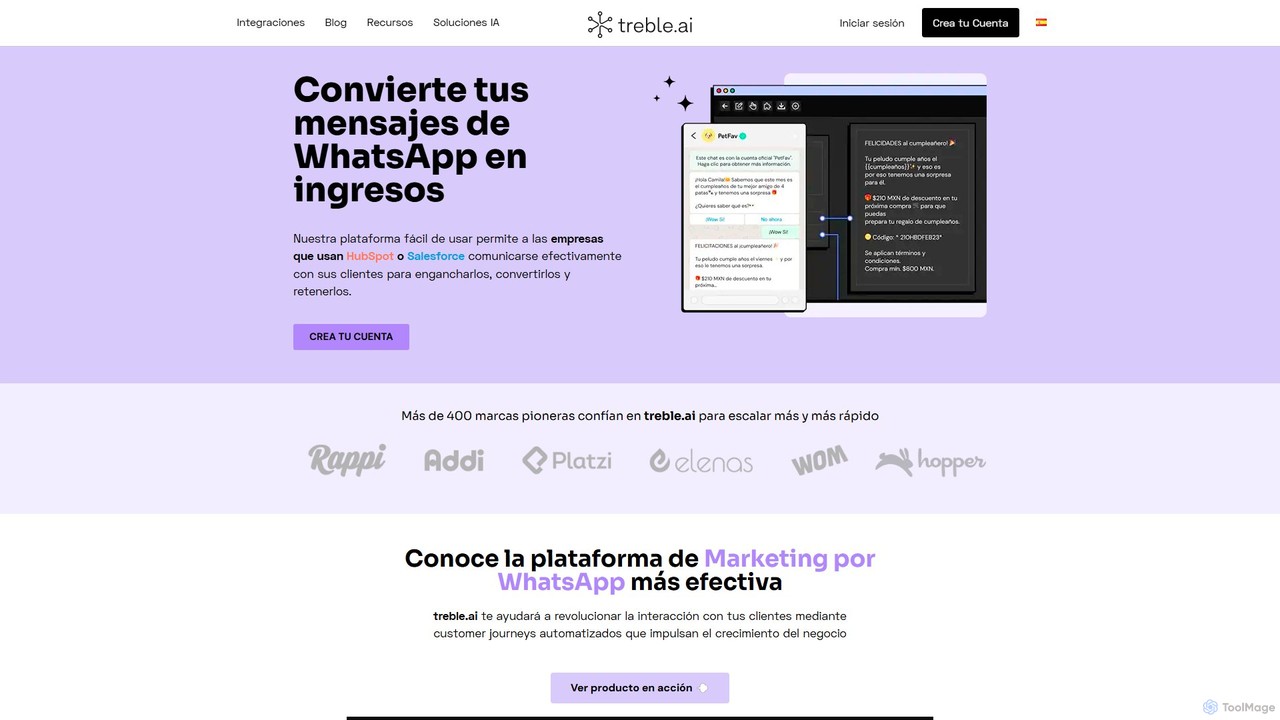
treble.ai is a powerful WhatsApp Marketing platform that helps businesses automate customer journeys and conversations. It integrates seamlessly …
treble.ai is a powerful WhatsApp Marketing platform that helps businesses automate customer journeys and conversations. It integrates seamlessly with HubSpot and Salesforce to engage, convert, and retain customers, turning WhatsApp into a primary revenue channel.
About Conversational Support
Conversational Support tools are AI-powered platforms designed to automate and enhance customer interactions through natural, human-like dialogue. These tools leverage Natural Language Processing (NLP) and machine learning to understand user intent, context, and sentiment in real-time. They provide instant, 24/7 responses to customer queries, resolve common issues, and escalate complex problems to human agents. Unlike traditional rule-based chatbots, modern conversational support systems can handle complex, multi-turn conversations and personalize interactions to improve service efficiency and customer satisfaction.
Core Features
- Natural Language Understanding (NLU): Accurately interprets user intent, entities, and sentiment, going beyond simple keyword matching.
- Automated Workflows: Guides users through processes like troubleshooting, order tracking, or appointment booking without human intervention.
- Seamless Human Handoff: Intelligently transfers complex conversations to a live agent with full context and history.
- Omnichannel Deployment: Provides a consistent support experience across various channels like websites, mobile apps, and social media messengers.
- Analytics & Insights: Offers detailed reports on conversation topics, resolution rates, and customer satisfaction to identify improvement areas.
Use Cases
Conversational Support tools are widely used in industries like e-commerce, SaaS, finance, and healthcare. Customer service teams use them to automate responses to frequently asked questions, sales teams deploy them for lead qualification, and IT departments use them for internal helpdesk support. They are ideal for any business looking to scale its support operations and provide immediate assistance around the clock.
How to Choose
When selecting a Conversational Support tool, evaluate its NLP accuracy and its ability to handle industry-specific jargon. Assess its integration capabilities with your existing CRM and helpdesk systems. Consider the ease of use of its conversation builder and workflow automation features. Finally, review its analytics dashboard to ensure it provides actionable insights into performance and user behavior.

Conversational SupportUse Cases
Automate E-commerce Order & Return Inquiries
E-commerce support teams often face a high volume of repetitive questions like "Where is my order?" and "How do I make a return?". By deploying a conversational support tool on the website and social media, businesses can automate these interactions. The AI integrates with platforms like Shopify or Magento to fetch real-time order statuses and provide step-by-step return instructions. This can deflect up to 70% of common inquiries, allowing human agents to focus on more complex issues such as damaged goods or payment disputes, significantly improving response times and operational efficiency.
Provide 24/7 IT Helpdesk Support for Employees
Corporate IT departments can use conversational support tools to provide instant, round-the-clock assistance to employees. An internal bot deployed on platforms like Slack or Microsoft Teams can handle common requests such as password resets, software access permissions, and basic troubleshooting. The AI can authenticate users, execute automated scripts for resets, or create detailed support tickets for complex issues. This provides immediate resolution for common problems, reducing employee downtime and freeing up the IT team to focus on strategic projects rather than repetitive support tasks.
Qualify and Route Sales Leads from a Website
Sales and marketing teams can leverage conversational support AI to engage website visitors proactively. Instead of a static contact form, a chatbot can initiate conversations, answer product questions, and ask qualifying questions (e.g., company size, role, budget). Based on the responses, the AI can route high-value leads directly to a sales representative's calendar for a demo or add mid-funnel leads to a nurturing sequence. This process increases lead conversion rates by engaging prospects immediately and ensures that the sales team spends their time on the most promising opportunities.
Onboard New Software Users Interactively
For SaaS companies, effective user onboarding is critical for retention. A conversational support tool can be embedded within the application to act as an interactive guide. It can proactively offer tips, walk users through setting up their account, and answer "how-to" questions contextually as they navigate the platform. This provides immediate, in-context help that reduces user frustration and accelerates their time-to-value. By automating the initial guidance, customer success teams can focus on more strategic engagement with established users, improving overall product adoption and reducing early-stage churn.
Automate Appointment Booking for Service Businesses
Service-based businesses like clinics, salons, or consultancies can automate their entire booking process with a conversational AI. Instead of manual scheduling via phone or email, a bot on the website or social media can check calendar availability in real-time, offer open slots to the user, collect necessary client information, and confirm the booking automatically. It can also handle rescheduling and send automated reminders to reduce no-shows. This frees up administrative staff from time-consuming scheduling tasks and allows customers to book appointments conveniently 24/7.
Provide Multilingual Customer Support at Scale
For global companies, providing consistent support across different languages and time zones is a major challenge. Conversational support tools with built-in translation capabilities can instantly address this. A single AI model can be trained to understand and respond in dozens of languages, automatically detecting the user's language to provide a seamless experience. This allows businesses to offer 24/7 support to their international customer base without the need to hire a large, multilingual support team. It ensures consistent service quality and improves satisfaction for non-native English speaking customers.