ToolMage
Sign in

Best 3 Whatsapp Marketing AI tools for Marketing

Popular Whatsapp Marketing AI tools in Marketing include treble.ai, Growby, and Amara, helping you work more efficiently.

treble.ai
Paid

treble.ai

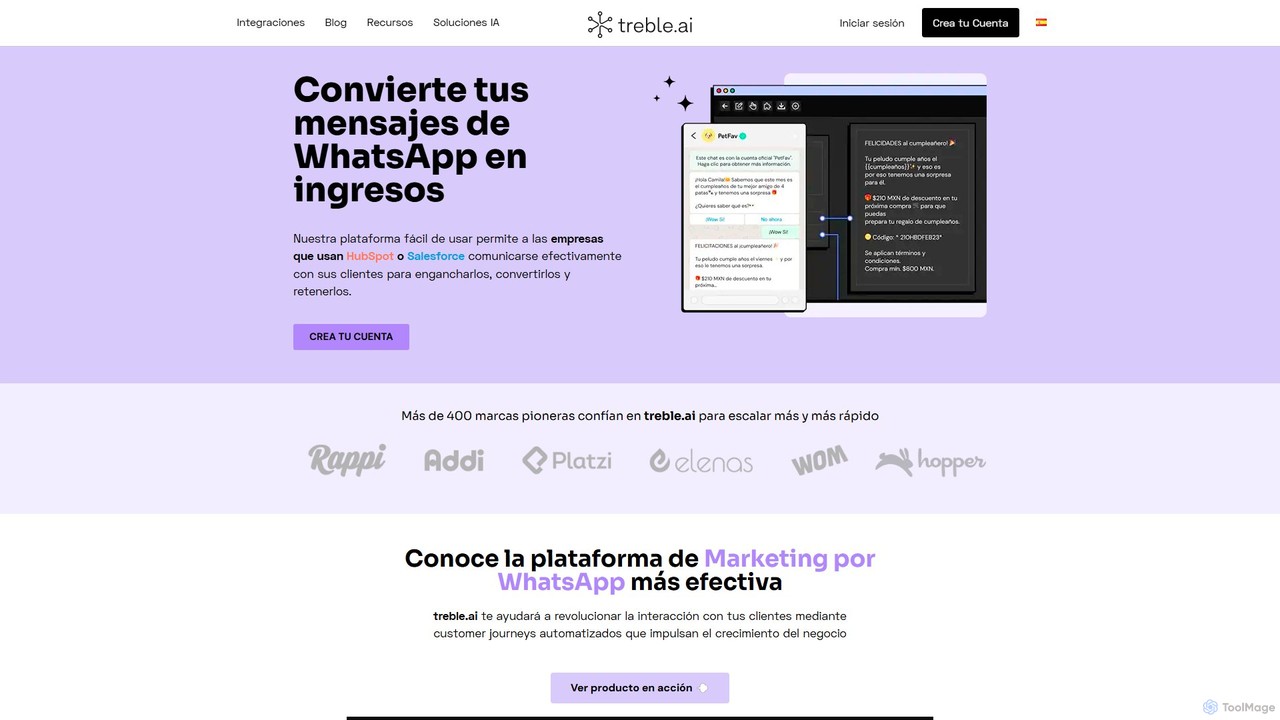
treble.ai is a powerful WhatsApp Marketing platform that helps businesses automate customer journeys and conversations. It integrates seamlessly with HubSpot and Salesforce to engage, convert, and retain customers, turning WhatsApp into a primary revenue channel.

Conversational Support
Visits 124.9KFavorites 132Likes 120
Amara
Freemium

Amara

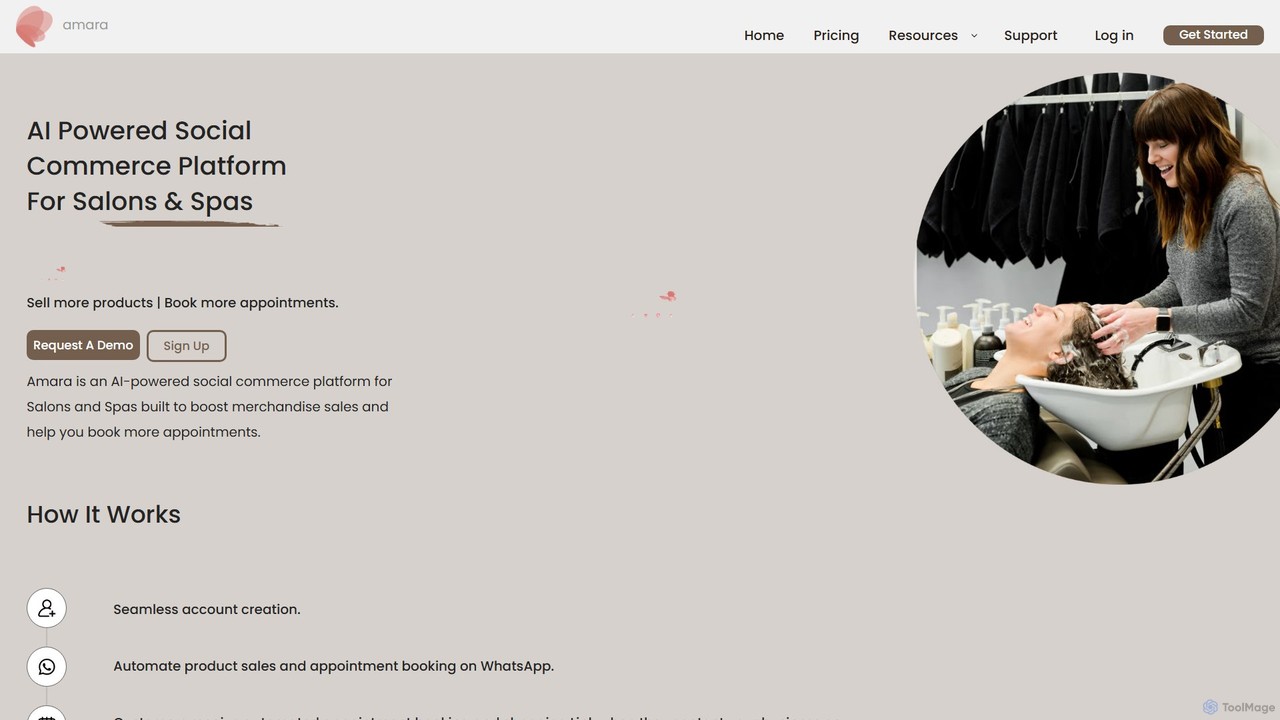
Amara is an AI-powered social commerce platform designed for salons and spas. It boosts merchandise sales and appointment bookings by automating customer interactions on WhatsApp, providing a custom online store, and leveraging AI analytics for business optimization.

Salon Management
Visits 7.2KFavorites 145Likes 135
Growby
Paid

Growby

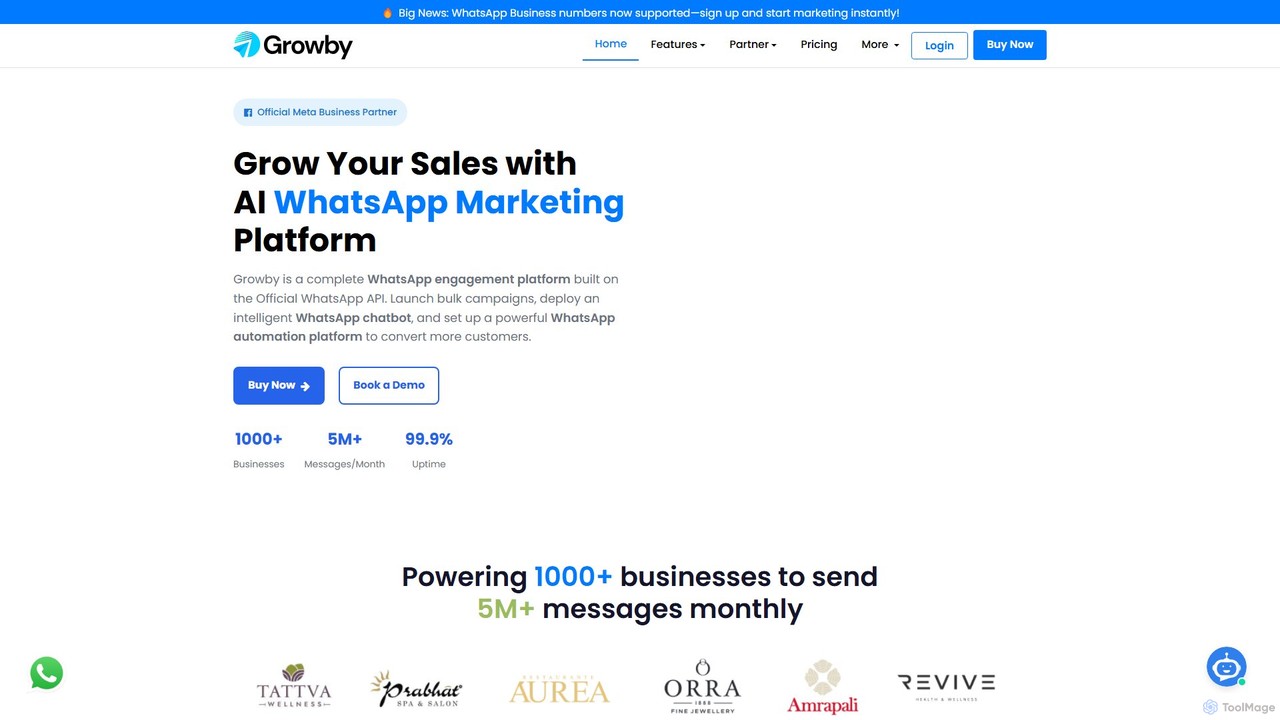
Growby is an AI-powered WhatsApp marketing platform built on the official WhatsApp Business API. It enables businesses to send personalized bulk messages, automate communication, and engage customers with rich media. Features include anti-block technology, Zapier integration, and advanced personalization to boost sales and customer relationships.

Automation
Visits 10.6KFavorites 140Likes 137

About Whatsapp Marketing

WhatsApp Marketing tools are specialized platforms designed to automate and scale customer communication through the WhatsApp Business API. These tools leverage AI-powered chatbots and automation workflows to engage users, nurture leads, and provide support directly within the world's most popular messaging app. Their primary value lies in capitalizing on WhatsApp's high open and engagement rates to build direct, personal relationships with customers. This approach allows businesses to deliver timely notifications, personalized promotions, and instant customer service at scale.

Core Features

  • AI Chatbot Builder: Create and deploy automated conversational flows to answer FAQs, qualify leads, and guide users without human intervention.
  • Bulk Messaging & Broadcasts: Send personalized, template-based messages to large, segmented contact lists who have opted in.
  • Shared Team Inbox: Allows multiple agents to manage customer conversations from a single WhatsApp number, with features for assigning, tagging, and internal notes.
  • CRM & E-commerce Integration: Sync contact data and automate messaging based on triggers from external systems like Shopify, Salesforce, or HubSpot.
  • Campaign Analytics: Track key performance metrics such as delivery rates, read rates, and response rates to measure campaign effectiveness.

Use Cases

These tools are widely used in e-commerce for abandoned cart recovery and order notifications. In the education sector, they automate admission inquiries and course updates. Healthcare providers use them for appointment reminders and patient follow-ups, while real estate agents leverage them for lead qualification and property viewing schedules.

How to Choose

When selecting a WhatsApp Marketing tool, first verify that it uses the official WhatsApp Business API to ensure stability and compliance. Evaluate the sophistication of its chatbot builder and automation capabilities. Check for essential integrations with your existing CRM or e-commerce platforms. Finally, understand the pricing model, which typically includes a platform fee plus Meta's per-conversation charges.

Whatsapp Marketing use cases

1

Automate E-commerce Abandoned Cart Recovery

An e-commerce manager for an online fashion store aims to reduce a high cart abandonment rate. Using a WhatsApp Marketing tool integrated with their Shopify store, they set up an automated workflow. When a customer leaves items in their cart for over an hour, the system automatically sends a personalized WhatsApp message. The message includes the customer's name, an image of the cart item, and a friendly reminder. If there's no response after 24 hours, a second message is sent with a limited-time 10% discount code to incentivize purchase completion. This strategy directly engages customers on a high-visibility channel, leading to a measurable increase in recovered sales.

2

Qualify Real Estate Leads with an AI Chatbot

A real estate agency receives hundreds of inquiries daily through their website. To manage the volume, they deploy a WhatsApp chatbot. When a user clicks the WhatsApp icon on their site, the chatbot initiates a conversation, asking qualifying questions such as:

  • Are you looking to buy or rent?
  • What is your preferred location?
  • What is your budget range?
  • How many bedrooms do you need?
Based on the answers, the chatbot segments the lead and either schedules a viewing appointment directly or assigns the conversation to a specialized agent in the shared inbox. This automates the initial screening process, saving agents' time and ensuring they focus on high-intent leads.

3

Send Bulk Event Reminders and Updates

An event organizer is hosting a large online webinar. To maximize attendance, they use a WhatsApp Marketing platform to communicate with registered participants. Two days before the event, they send a broadcast message to all attendees with the event agenda and a link to the login page. On the day of the event, an automated reminder is sent one hour before the start time. This direct and timely communication method ensures that information is not lost in crowded email inboxes, significantly improving the attendance rate compared to email-only reminders.

4

Provide 24/7 Automated Customer Support

A SaaS company wants to offer instant support for common user queries without increasing headcount. They implement a WhatsApp support channel powered by an AI chatbot. The chatbot is trained on their knowledge base to answer questions like "How do I reset my password?" or "What are your pricing plans?". For complex issues, the chatbot collects the user's details and the problem description, then creates a support ticket in their Zendesk system. The conversation is then seamlessly handed over to a human agent in the shared inbox. This provides immediate assistance to users around the clock and filters inquiries, allowing the support team to focus on high-priority tickets.

5

Distribute Product Launch Announcements

A consumer electronics brand is launching a new smartphone. They have built an opt-in subscriber list on WhatsApp through a QR code on their website. On launch day, they send a broadcast to this exclusive list, revealing the new product with high-quality images, a short video, and a link to the product page. The message also includes a special launch-day discount for their WhatsApp community. This direct marketing approach creates a sense of exclusivity, drives immediate traffic to their website, and generates a significant spike in initial sales, leveraging the instant and personal nature of WhatsApp.

6

Collect Customer Feedback and Surveys

A local restaurant wants to gather feedback to improve its service. After a customer pays their bill, the point-of-sale system triggers an automated WhatsApp message asking them to rate their experience on a scale of 1-5. If the rating is 4 or 5, the system thanks them and sends a link to leave a public review on Google. If the rating is 3 or lower, an automated follow-up asks for specific feedback on what could be improved. This conversation is then flagged for the manager's review in the shared inbox. This proactive approach helps collect valuable insights in real-time and manage negative feedback privately before it becomes a public review.

Whatsapp Marketing FAQ

What are AI WhatsApp Marketing tools?

AI WhatsApp Marketing tools are software platforms that use the official WhatsApp Business API to enable businesses to conduct marketing, sales, and customer support activities at scale. They are distinct from the standard WhatsApp or WhatsApp Business app. Their core capability is automation, using AI-powered chatbots to handle conversations, and allowing for scheduled, personalized bulk message broadcasts to opted-in contacts. Key features typically include a shared team inbox, contact segmentation, detailed analytics, and integration with other business systems like CRMs.

How to choose the right WhatsApp Marketing tool?

Choosing the right tool involves evaluating several key factors. First, ensure the provider is an official WhatsApp Business Solution Provider (BSP) using the official API to avoid the risk of being banned. Next, assess the platform's features:

  • Automation: How intuitive is the chatbot builder? Does it support complex workflows?
  • Integrations: Does it connect seamlessly with your CRM, e-commerce platform, and other essential tools?
  • Usability: Is the interface for the shared inbox and campaign manager user-friendly for your team?
  • Pricing: Understand the complete cost, including the platform's subscription fee and Meta's conversation-based charges.
Prioritize tools that align with your specific business needs, whether it's for sales, support, or marketing.

What's the difference between the WhatsApp Business App and API-based tools?

The main difference is scale and automation. The free WhatsApp Business App is designed for small businesses to manage conversations manually on a single device (or up to four linked devices). It has basic features like quick replies and labels. In contrast, API-based WhatsApp Marketing tools are built for medium to large businesses. They allow for:

  • Automation: Deploying AI chatbots to handle unlimited conversations simultaneously.
  • Scalability: Sending broadcast messages to thousands of users at once.
  • Team Collaboration: Using a shared inbox for multiple agents on one number.
  • Integration: Connecting WhatsApp to a wider ecosystem of business software (CRM, analytics, etc.).
Essentially, the API unlocks the ability to programmatically send and receive messages, enabling advanced automation and integration that the standard app cannot support.

Is it legal to send bulk messages on WhatsApp?

Yes, it is legal and compliant when done correctly through the official WhatsApp Business API. There are strict rules set by Meta to prevent spam. The most important rule is that businesses must receive explicit, prior consent (opt-in) from users before sending them any messages. Additionally, initial messages sent by businesses (known as Business-Initiated Conversations) must use pre-approved message templates. Using unofficial tools or sending unsolicited messages can quickly lead to your number being banned by WhatsApp. Therefore, always choose a platform that strictly adheres to these official policies.

What kind of analytics can I get from WhatsApp Marketing tools?

WhatsApp Marketing platforms provide detailed analytics that are not available in the standard app. These insights help you measure the performance of your campaigns and chatbot interactions. Common metrics include:

  • Message Metrics: Number of messages sent, delivered, read, and failed. This helps you monitor deliverability.
  • Engagement Rates: The percentage of users who read your message (read rate) and replied or clicked a link (response/click-through rate).
  • Conversation Analytics: Data on conversation volume, response times, and resolution rates, often broken down by agent.
  • Chatbot Performance: Metrics on how many conversations the chatbot handled, common user queries, and handover rates to human agents.
These analytics are crucial for optimizing your messaging strategy and improving customer engagement.