Xylo
Xylo is a real-time customer intelligence platform that uses behavioral AI to analyze customer communications. It helps B2B …
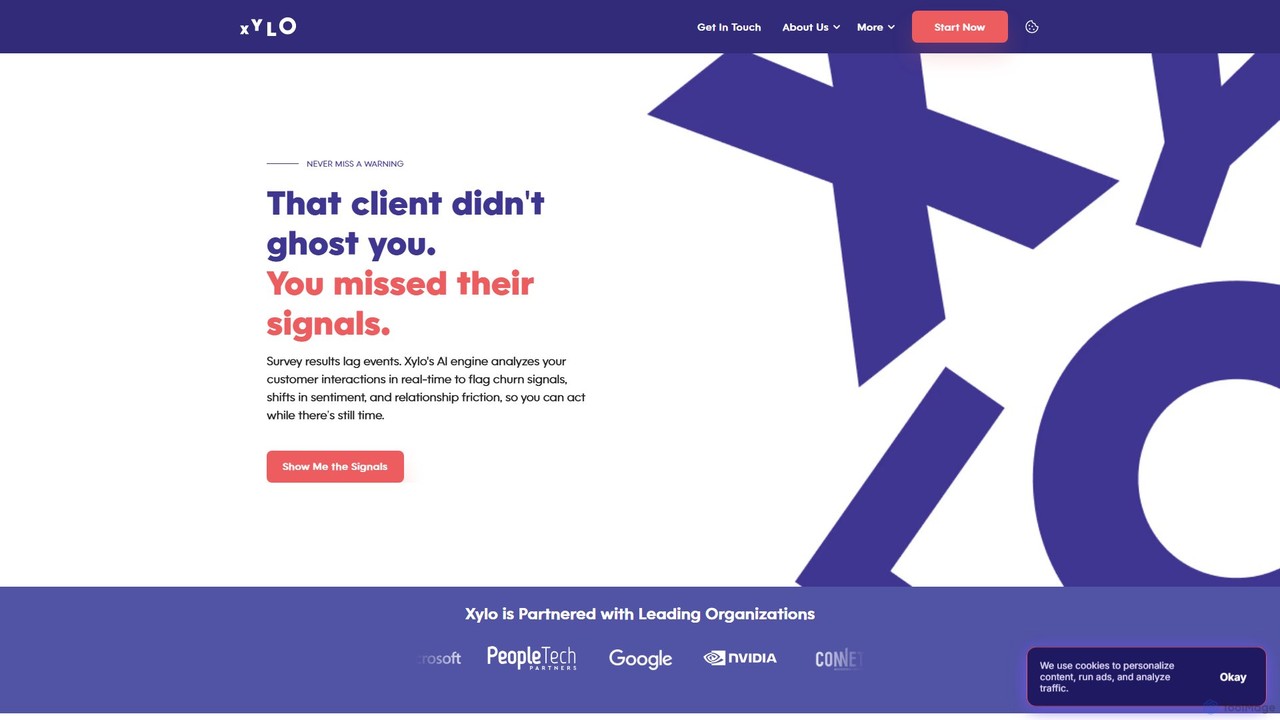
Xylo is a real-time customer intelligence platform that uses behavioral AI to analyze customer communications. It helps B2B teams proactively detect churn risks, understand customer sentiment, and improve retention by surfacing critical insights from emails and meetings without relying on surveys.
About Customer Intelligence
Customer Intelligence tools are AI-powered platforms designed to collect, analyze, and interpret vast amounts of customer data to generate actionable insights. Leveraging machine learning and natural language processing, these tools go beyond basic reporting to understand customer behavior, preferences, and sentiment across various touchpoints. They enable businesses to move from reactive customer support to proactive engagement, fostering personalized experiences and optimizing strategies across the entire customer journey.
Core Features
- Data Aggregation: Gathers customer data from diverse sources like CRM, social media, web analytics, and support interactions.
- Sentiment Analysis: Analyzes text and speech data to gauge customer emotions, opinions, and satisfaction levels.
- Behavioral Analytics: Tracks and interprets customer interactions, journey paths, and engagement patterns to identify trends.
- Predictive Modeling: Forecasts future customer actions, such as purchase intent, churn risk, or likelihood of engagement.
- Customer Segmentation: Automatically groups customers into distinct segments based on shared characteristics, behaviors, and value.
Applicable Scenarios
Marketing teams utilize these tools to personalize campaigns and identify high-value customer segments for targeted outreach. Product development teams gain insights into feature demand and pain points directly from customer feedback, guiding product roadmaps. Customer service managers leverage intelligence to proactively address potential issues, improve agent training, and enhance overall service delivery.
How to Choose
When selecting a Customer Intelligence tool, consider its compatibility with your existing data sources (CRM, support systems, marketing platforms) to ensure seamless integration. Evaluate the depth of its analytical capabilities, including sentiment analysis, predictive modeling, and behavioral tracking. Assess the clarity and actionability of its reporting and visualization features, and ensure it offers scalability and customization options to adapt to your evolving business needs.

Customer IntelligenceUse Cases
Predicting Customer Churn Risk
A subscription-based service uses Customer Intelligence to analyze user engagement, support interactions, and sentiment data. The tool identifies patterns indicating potential churn, such as decreased activity or negative feedback, allowing the customer success team to proactively intervene with targeted offers or support, thereby improving retention rates.
Personalizing Marketing Campaigns
An e-commerce retailer employs Customer Intelligence to segment its customer base based on purchase history, browsing behavior, and demographic data. This enables the marketing team to create highly personalized email campaigns and product recommendations, leading to higher conversion rates and increased customer lifetime value.
Optimizing Product Feature Development
A software company leverages Customer Intelligence to analyze feedback from support tickets, user reviews, and social media mentions. By identifying recurring pain points and feature requests, the product team can prioritize development efforts, ensuring new features directly address user needs and enhance product satisfaction.
Enhancing Proactive Customer Support
A telecommunications provider uses Customer Intelligence to monitor network performance and customer sentiment in real-time. If a localized service disruption is detected alongside a spike in negative social media mentions from that area, the system alerts the support team to proactively communicate with affected customers, reducing inbound call volume and improving satisfaction.
Identifying High-Value Customer Segments
A financial institution utilizes Customer Intelligence to analyze transaction data, investment patterns, and engagement with financial advisors. This helps them identify their most profitable and loyal customer segments, allowing for tailored wealth management advice and exclusive service offerings to strengthen these crucial relationships.
Analyzing Customer Journey Bottlenecks
An online travel agency uses Customer Intelligence to map the customer journey from initial search to booking completion. By analyzing drop-off points, common search queries, and user feedback, they identify friction points in the booking process, such as complex forms or unclear pricing, enabling them to optimize the user experience and increase conversion rates.