Question Base
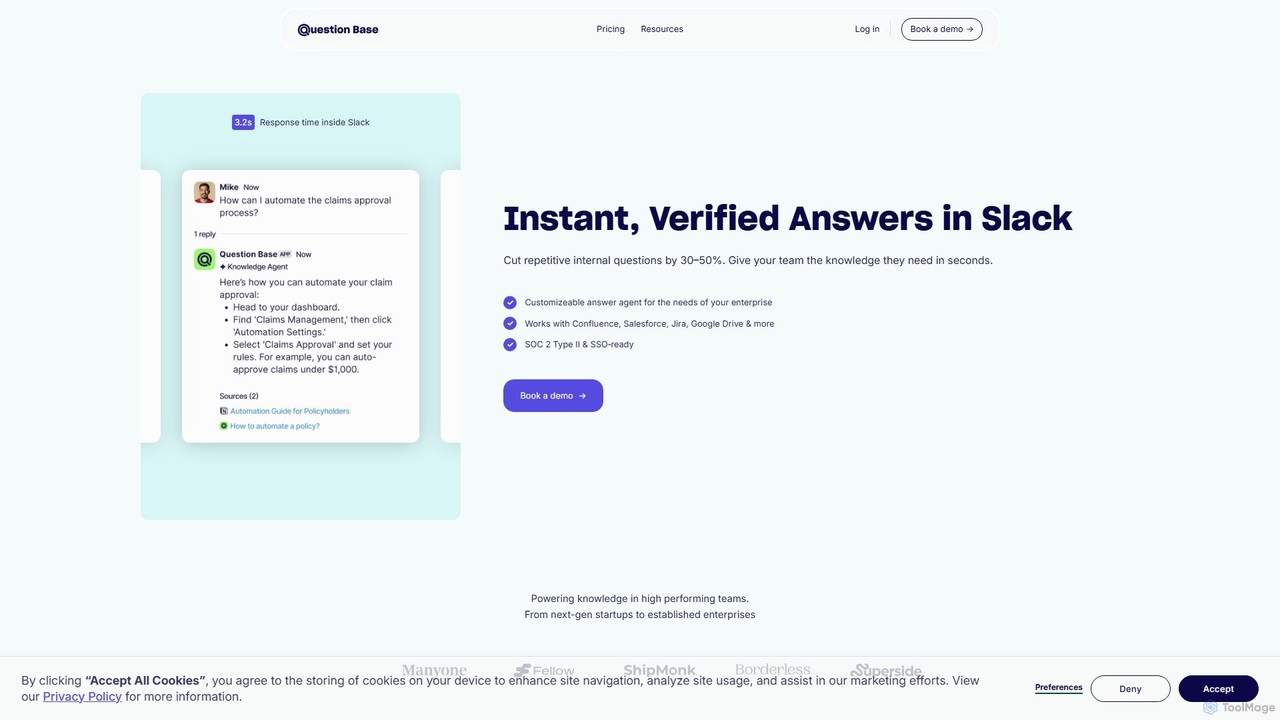
Question Base is an AI-powered knowledge base built directly into Slack. It intelligently captures expert answers from conversations, …
Question Base is an AI-powered knowledge base built directly into Slack. It intelligently captures expert answers from conversations, automatically responds to repetitive employee questions, and centralizes company knowledge from various sources like Notion and Google Docs.
Ariv
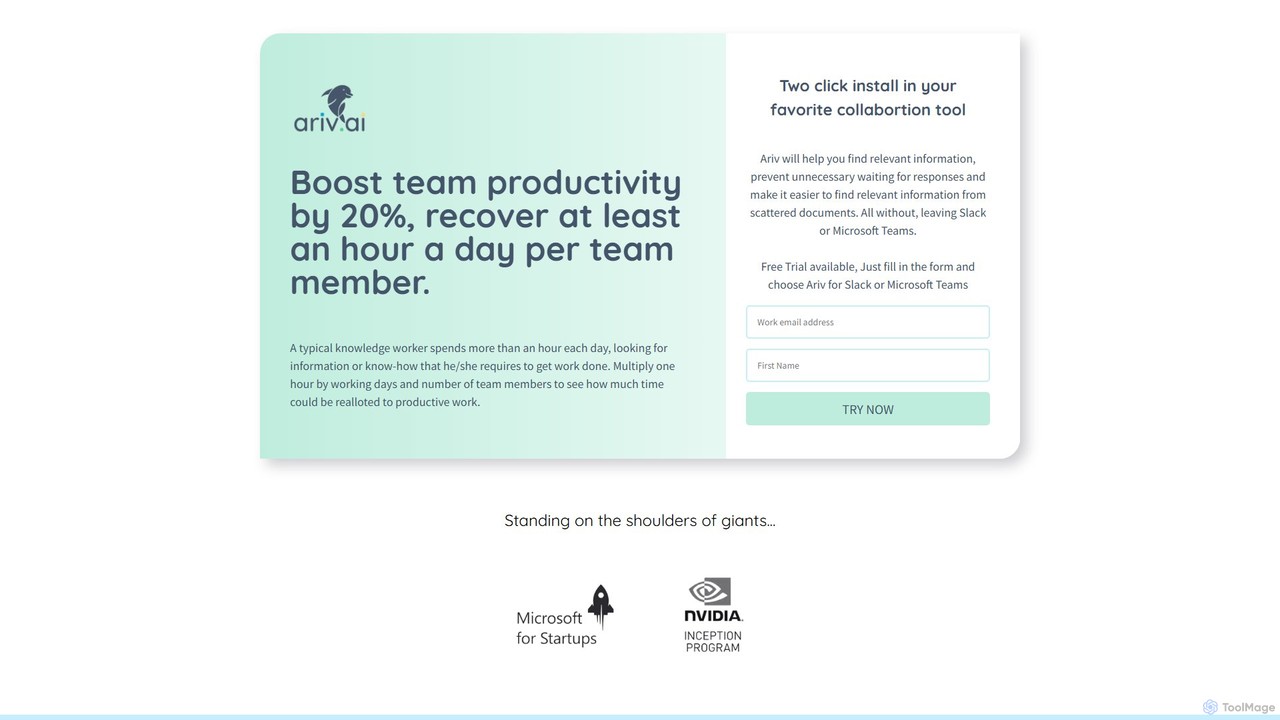
Ariv is an AI-powered knowledge management platform designed to supercharge internal support channels. By centralizing and structuring your …
Ariv is an AI-powered knowledge management platform designed to supercharge internal support channels. By centralizing and structuring your company's knowledge from documents and FAQs, Ariv provides instant, accurate answers to team questions directly within Slack and MS Teams. It's tailored for HR, Sales, and IT support, automating responses, reducing repetitive tasks, and ensuring your entire workforce has the information they need, when they need it.
About Internal Helpdesk
AI Internal Helpdesk tools are platforms designed to automate and streamline support for a company's own employees. These systems use Natural Language Processing (NLP) to understand employee queries from channels like Slack, Microsoft Teams, or email, providing instant answers from a centralized knowledge base. The primary value is in accelerating the resolution of internal issues, such as IT problems or HR questions, which frees up support staff to focus on more complex tasks. Unlike external customer support tools, they are specifically tailored for internal workflows, security protocols, and company-specific knowledge.
Core Features
- Automated Ticket Resolution: AI analyzes incoming employee requests, provides instant answers for common questions, and intelligently routes complex issues to the appropriate human agent.
- AI-Powered Knowledge Base: Acts as a central, searchable repository for all company information, allowing employees to find answers to policy, IT, and HR questions on their own.
- Conversational AI Interface: Enables employees to get support directly within their existing communication tools like Slack or Microsoft Teams, using natural language.
- Workflow Automation: Automates multi-step internal processes such as employee onboarding, access requests for software, or hardware procurement approvals.
Use Cases
AI Internal Helpdesks are widely used by IT departments to handle common requests like password resets and software troubleshooting. HR teams use them to answer frequent questions about payroll, benefits, and company policies. Operations and facilities teams also leverage these tools to manage maintenance requests and office logistics, creating a more efficient internal support ecosystem.
How to Choose
When selecting an AI Internal Helpdesk, first evaluate its integration capabilities with your company's primary communication platforms (e.g., Slack, Teams, Gmail). Assess the AI's ability to understand context and learn from past interactions. Also, consider the ease of building and maintaining the knowledge base, as well as the robustness of the analytics for tracking resolution times and identifying common employee issues.

Internal HelpdeskUse Cases
Automating IT Password Resets and Account Unlocks
An employee is locked out of their account before an important meeting. Instead of creating a manual ticket and waiting, they message the IT helpdesk bot on Slack. The AI bot initiates a secure, multi-factor verification process. Once identity is confirmed, it automatically unlocks the account or guides the employee through a password reset in under two minutes. This resolves the issue instantly, 24/7, without any human IT intervention, reducing ticket volume for the IT team by up to 30% for this common issue.
Streamlining HR Onboarding Queries for New Hires
A new hire has numerous questions about benefits enrollment, payroll dates, and company policies during their first week. They access the internal helpdesk portal and ask, 'How do I sign up for health insurance?'. The AI provides a step-by-step guide, links to the correct forms, and provides the HR contact for complex cases. This self-service approach empowers new employees to find information independently, ensuring a consistent onboarding experience and reducing the repetitive query load on the HR team.
Managing Software Access Requests via Workflow Automation
A project manager needs to grant a team member access to a new analytics tool. They submit a request through the internal helpdesk, specifying the user and the required software. The AI tool automatically initiates a predefined workflow: it sends an approval request to the department head, and upon approval, creates a ticket for the IT team to provision the license. The system tracks the entire process, keeping the project manager informed of the status at each step, reducing manual follow-up and accelerating access to critical tools.
Centralizing Facilities and Office Management Requests
An employee in a satellite office notices a flickering light. They open the company's internal support channel in Microsoft Teams and type, 'The light in meeting room 3B is broken.' The AI helpdesk automatically parses the message, identifies the location (Room 3B) and the issue (broken light), creates a maintenance ticket, and assigns it to the local facilities team. The employee receives an immediate confirmation that their request has been logged and will be notified upon resolution, creating a seamless and trackable process for office maintenance.
Providing Instant Answers to Company Policy Questions
A sales representative preparing for a business trip needs to know the daily meal allowance. Instead of searching through lengthy PDF documents or emailing HR, they ask the helpdesk bot, 'What is the per diem for travel in New York?'. The AI instantly scans the official travel policy stored in its knowledge base and provides the exact amount and any related rules. This provides employees with immediate, accurate information and ensures consistent application of company policies across the organization.
Analyzing Employee Support Trends for Proactive Improvements
An IT support manager reviews the analytics dashboard of the internal helpdesk. They discover that 25% of all tickets in the past month were related to VPN connection issues from remote employees. This data-driven insight allows them to take proactive measures. They create a more detailed VPN troubleshooting guide for the knowledge base and schedule a training session. This reduces future ticket volume, improves the remote work experience, and shifts the support team's focus from reactive problem-solving to proactive improvement.