ToolMage
Sign in

Best 1 Internal Support AI tools for Customer Support

Popular Internal Support AI tools in Customer Support include EnhanceDocs, helping you work more efficiently.

EnhanceDocs

EnhanceDocs

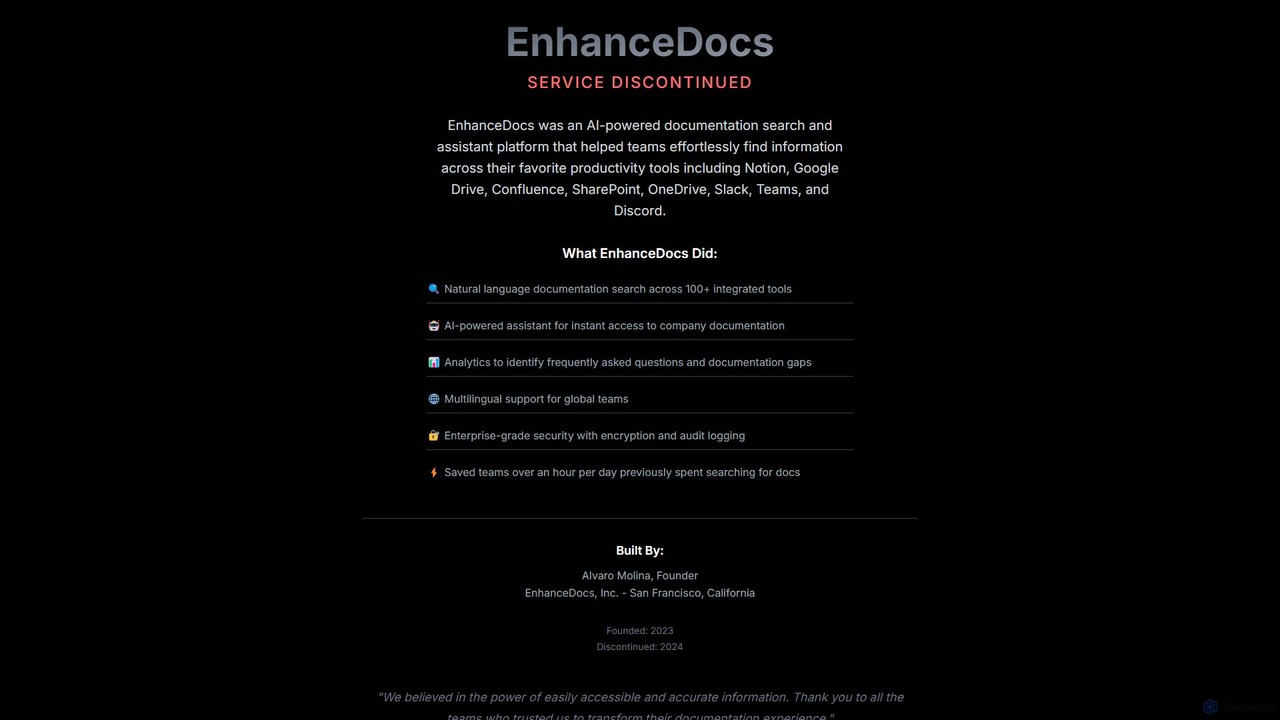
EnhanceDocs was an AI-powered documentation search and assistant platform. It unified knowledge from over 100 tools like Notion, Google Drive, and Slack, allowing teams to find information instantly using natural language. (Note: This service has been discontinued).

Enterprise Search
Visits 7KFavorites 104Likes 122

About Internal Support

Internal Support AI tools are designed to empower internal teams, such as customer service agents, IT staff, and sales representatives, by providing instant access to critical information and automating routine tasks. These AI-powered solutions leverage natural language processing and machine learning to create intelligent knowledge bases, agent assist systems, and automated workflows. Their primary goal is to enhance employee productivity, reduce resolution times, and ensure consistent, high-quality service delivery across the organization.

Core Features

  • Intelligent Knowledge Bases: AI-driven platforms that organize, update, and retrieve internal documentation, FAQs, and best practices, making information easily searchable for employees.
  • Agent Assist Tools: Real-time AI suggestions and recommendations for agents during customer interactions, including relevant articles, script snippets, and next-best actions.
  • Automated Workflow Support: AI-powered automation of internal processes like ticket routing, data entry, and task assignment, reducing manual effort for support staff.
  • Performance Analytics: AI-driven insights into agent performance, common support issues, and knowledge base gaps to continuously improve internal support operations.

Applicable Scenarios

Customer service centers utilize Internal Support AI to equip agents with immediate answers to complex customer queries, reducing call handling times and improving first-contact resolution rates. IT helpdesks deploy these tools to automate responses for common technical issues and guide support staff through troubleshooting steps, ensuring faster problem resolution for employees. Sales teams can also leverage internal AI to quickly access product information, pricing details, and competitor analysis during client calls.

How to Choose

When selecting Internal Support AI tools, consider the breadth of integration with existing CRM, helpdesk, and knowledge management systems. Evaluate the AI's natural language processing capabilities for understanding complex queries and providing accurate suggestions. Assess the ease of content creation and maintenance for the internal knowledge base, and look for robust analytics features to track performance and identify areas for improvement.

Internal Support use cases

1

Real-time Agent Guidance for Customer Service

Customer service agents use AI agent assist tools to receive instant, context-aware suggestions for responses, relevant knowledge articles, and next steps during live customer interactions. This helps new agents quickly get up to speed and ensures experienced agents maintain consistency and efficiency, leading to faster resolution times and improved customer satisfaction.

2

Automating IT Helpdesk Ticket Resolution

IT support staff leverage internal AI systems to automatically categorize incoming support tickets, suggest diagnostic steps, and even provide pre-approved resolution scripts for common technical issues. This significantly reduces the manual workload on IT teams, allowing them to focus on more complex problems and improve overall employee uptime.

3

Empowering Sales Teams with Instant Product Knowledge

Sales representatives utilize AI-powered internal knowledge bases to quickly access up-to-date product specifications, pricing, inventory levels, and competitor comparisons during client calls or presentations. This ensures they have accurate information at their fingertips, enhancing their credibility and improving sales conversion rates.

4

Streamlining HR Policy and Benefits Inquiries

HR departments deploy internal support AI to create self-service portals where employees can find answers to common questions about company policies, benefits, and payroll. The AI can guide employees to relevant documents or initiate automated workflows for specific requests, reducing the volume of direct inquiries to HR staff.

5

Onboarding New Employees with AI-Guided Training

New hires use internal support AI platforms to navigate company resources, learn about internal processes, and find answers to initial questions during their onboarding period. The AI acts as a personalized guide, providing structured learning paths and immediate support, accelerating their integration into the team.

6

Enhancing Field Service Technician Efficiency

Field service technicians access AI-powered internal knowledge bases on mobile devices to quickly diagnose equipment issues, retrieve repair manuals, and order necessary parts while on-site. This reduces the need for back-office calls, minimizes downtime for customers, and improves first-time fix rates.

Internal Support FAQ

What are Internal Support AI tools?

Internal Support AI tools are AI-powered solutions designed to assist and empower internal teams, such as customer service agents, IT staff, and sales representatives. They leverage technologies like NLP and machine learning to provide instant access to information, automate routine tasks, and offer real-time guidance. Their primary goal is to enhance employee productivity, reduce operational costs, and improve the overall quality and consistency of internal and external service delivery.

How do Internal Support AI tools differ from external Customer Support AI?

While both fall under the broader Customer Support category, Internal Support AI focuses on empowering employees and agents, providing them with tools like intelligent knowledge bases and agent assist features to serve customers more effectively. External Customer Support AI, such as chatbots or virtual assistants, directly interacts with end-customers to resolve issues or answer queries. The key distinction lies in the primary user: internal staff versus external customers.

What are the key benefits of implementing Internal Support AI?

Implementing Internal Support AI offers several significant benefits. It drastically reduces agent training time by providing instant access to information, improves first-contact resolution rates by offering real-time guidance, and boosts overall agent productivity by automating repetitive tasks. Additionally, it ensures consistent service quality, reduces operational costs, and frees up human agents to focus on more complex and empathetic interactions.

What features should I look for in an Internal Support AI solution?

When evaluating Internal Support AI solutions, prioritize features such as a robust, AI-driven knowledge management system with easy content creation and search capabilities. Look for real-time agent assist functionalities that offer context-aware suggestions and next-best actions. Integration capabilities with existing CRM, helpdesk, and communication platforms are crucial. Also, consider advanced analytics for performance tracking and continuous improvement, and ensure the solution offers strong security and data privacy features.

Who typically uses Internal Support AI tools?

Internal Support AI tools are primarily used by various internal teams within an organization. This includes customer service agents who need quick access to information during calls, IT helpdesk staff automating ticket resolution, and HR departments streamlining employee inquiries. Sales teams also benefit from instant product knowledge, and even field service technicians can use these tools for on-site diagnostics and repair guidance. Essentially, any department that relies on quick access to information or repetitive task automation can benefit.