ToolMage
Sign in

Best 4 Omnichannel AI tools for Customer Support

Popular Omnichannel AI tools in Customer Support include Respond.io, Bird, taptalk, and 1440.io, helping you work more efficiently.

1440.io
Paid

1440.io

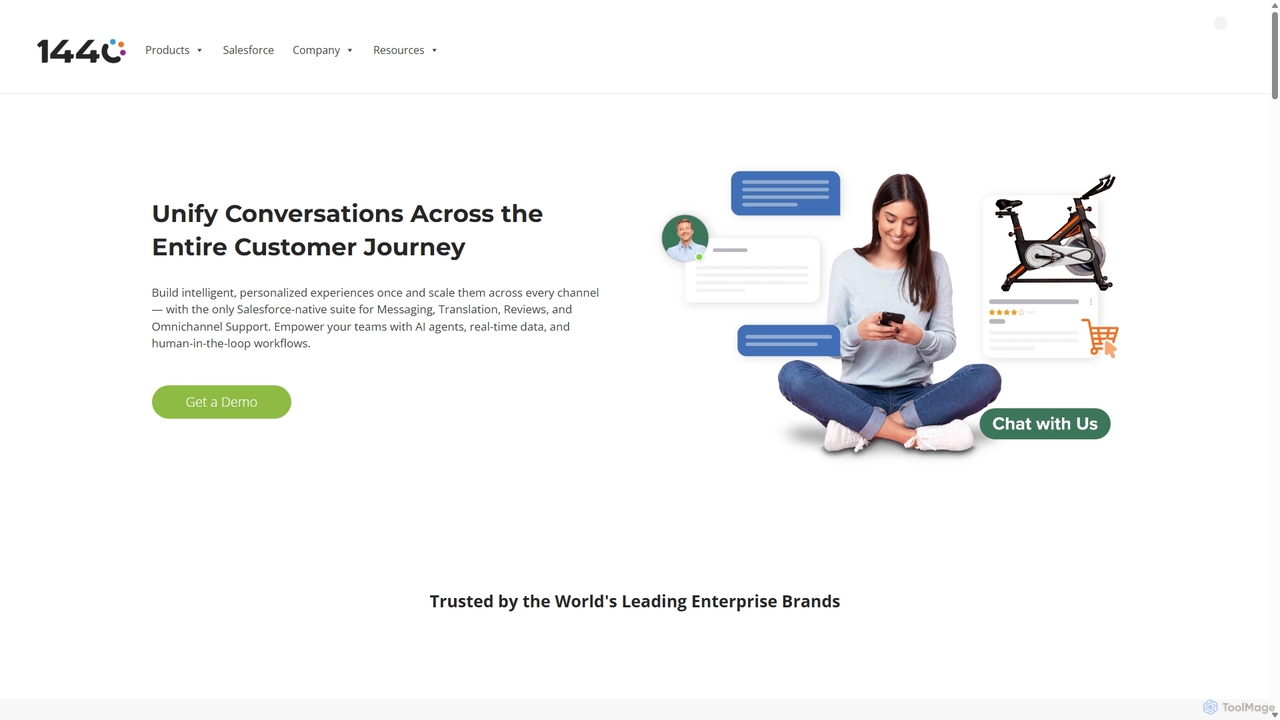
1440.io is an AI-powered, omnichannel engagement suite built natively for Salesforce. It unifies customer conversations across messaging, translation, reviews, and commerce, empowering teams with AI agents, real-time data, and automated workflows to deliver personalized experiences at scale.

Omnichannel
Visits 13.3KFavorites 139Likes 157
Respond.io
Freemium

Respond.io

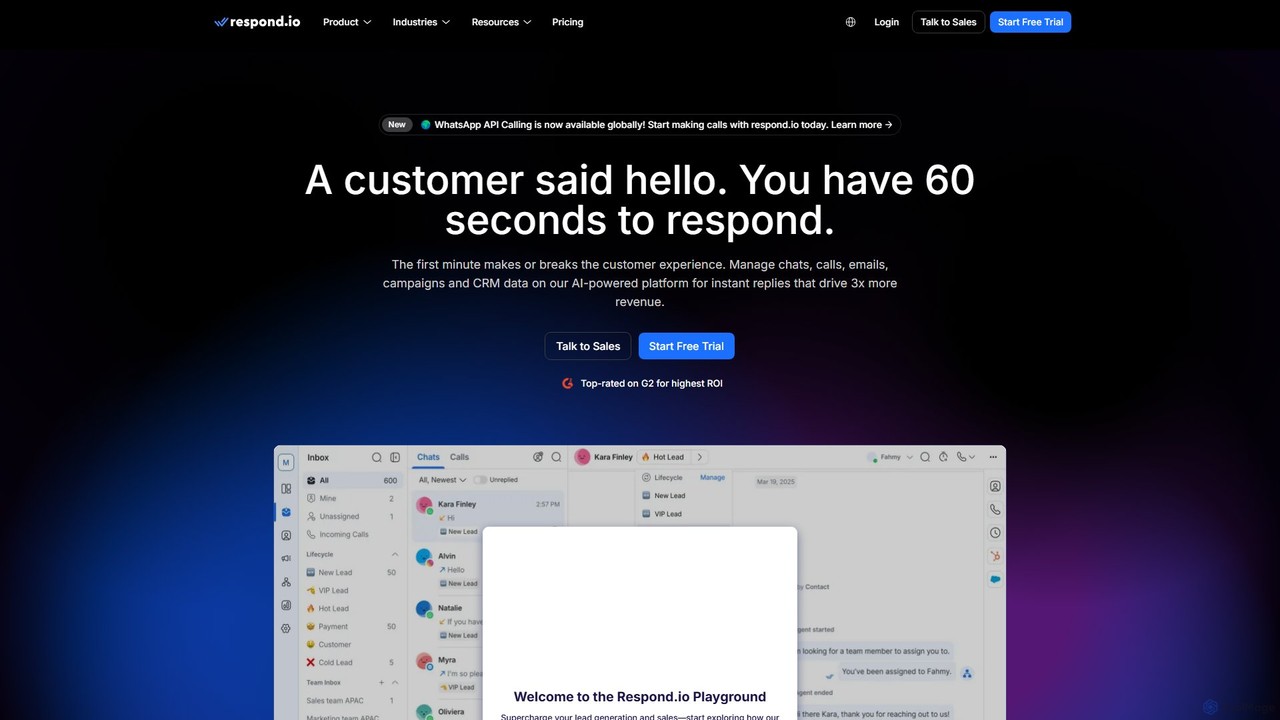
Respond.io is an AI-powered customer conversation management platform that unifies all communication channels like WhatsApp, email, and social media into a single inbox. It helps businesses supercharge lead generation, accelerate sales, and enhance customer support through powerful automation, AI assistance, and seamless CRM integrations. Designed for scalability, it enables teams to manage conversations efficiently, automate workflows, and drive revenue growth by turning every interaction into an opportunity.

Omnichannel
Visits 1.9MFavorites 140Likes 137
taptalk
Paid

taptalk

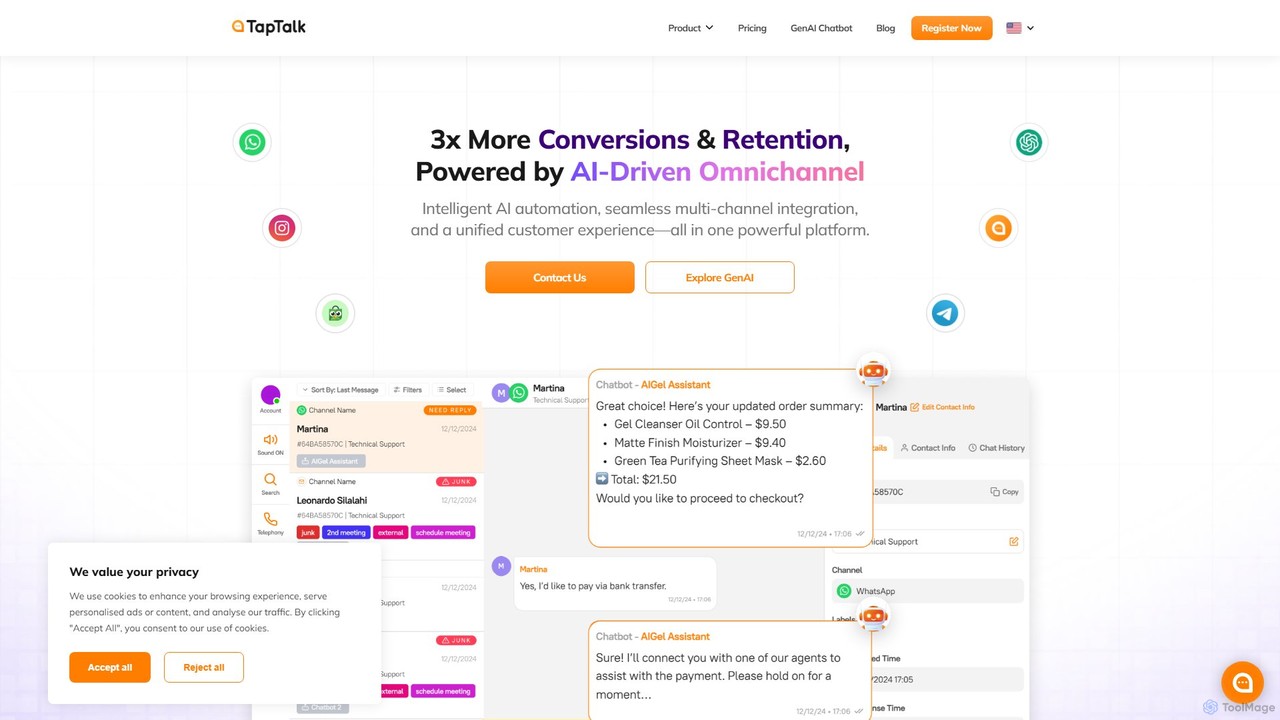
TapTalk is an all-in-one omnichannel chat solution designed for businesses to enhance customer communication across sales, marketing, and support. It unifies popular messaging channels like WhatsApp, Instagram, Facebook Messenger, and more into a single dashboard. Powered by AI and ChatGPT, TapTalk offers advanced chatbots, in-app chat SDKs, and social commerce features to streamline interactions, improve customer satisfaction, and drive business growth.

Omnichannel
Visits 17.4KFavorites 143Likes 131
Bird
Freemium

Bird

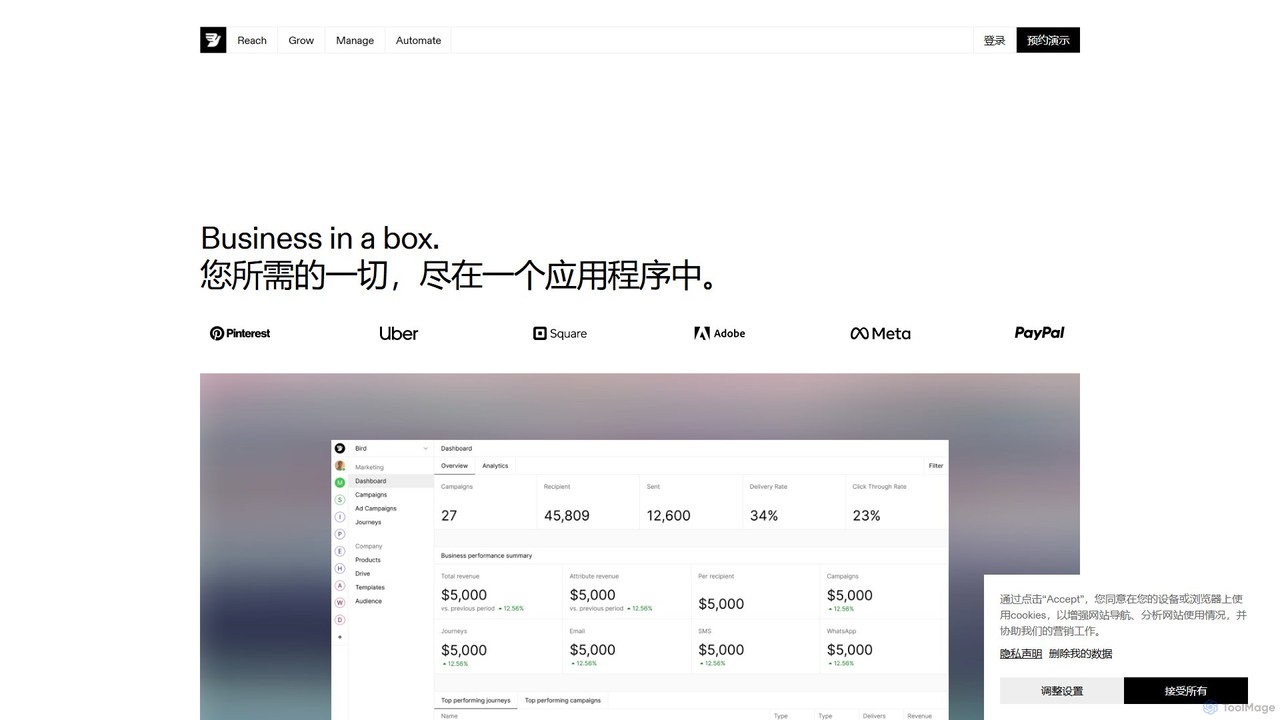
Bird is an all-in-one, AI-powered CRM platform that unifies marketing, sales, customer support, and payments. It integrates omnichannel communication channels like Email, SMS, and WhatsApp into a single, intuitive interface, helping businesses automate workflows, gain customer insights, and scale operations efficiently without juggling multiple tools.

Omnichannel
Visits 332.9KFavorites 120Likes 127

About Omnichannel

Omnichannel AI tools are a category of AI-powered solutions designed to create a seamless and integrated customer experience across all touchpoints. These tools leverage artificial intelligence to unify customer interactions from various channels like chat, email, social media, and phone, ensuring consistent context and personalized support. They enable businesses to provide continuous, context-aware service, significantly enhancing customer satisfaction and operational efficiency within the broader customer support ecosystem.

Core Features

  • Unified Customer View: Consolidates all customer interactions and data from disparate channels into a single, accessible profile.
  • AI-Powered Routing: Intelligently directs customer inquiries to the most appropriate agent or automated system based on context and channel.
  • Cross-Channel Automation: Automates responses and workflows that span multiple communication channels, maintaining consistency.
  • Context Preservation: Ensures that customer interaction history and preferences are carried over seamlessly between different channels and agents.
  • Integrated Analytics: Provides comprehensive insights into customer journeys and channel performance across the entire omnichannel landscape.

Applicable Scenarios

Omnichannel AI tools are crucial for businesses aiming to deliver superior customer service and engagement. They are widely adopted in retail for consistent shopping experiences, in banking for secure multi-channel support, and in telecommunications for unified technical assistance. These tools help customer service teams manage complex inquiries that often start on one channel and continue on another, ensuring no context is lost.

How to Choose

When selecting Omnichannel AI tools, prioritize robust integration capabilities with existing CRM and communication platforms. Evaluate the breadth of supported channels and the sophistication of AI for context understanding and automation. Consider scalability to accommodate future growth and the quality of cross-channel analytics for actionable insights. User-friendliness for agents and ease of setup are also vital for successful adoption.

Omnichannel use cases

1

Seamless Customer Support Handoff

A customer initiates a query via a website chatbot, then decides to call customer service. An Omnichannel AI tool ensures the live agent immediately accesses the full chat transcript and customer history, eliminating the need for the customer to repeat information. This provides a smooth transition and reduces customer frustration, leading to faster resolution times and improved satisfaction.

2

Personalized Marketing Campaigns Across Channels

A marketing team uses Omnichannel AI to analyze customer behavior across website visits, email opens, and social media engagement. The AI then tailors product recommendations and promotional offers, delivering them consistently via the customer's preferred channel (e.g., an in-app notification for a frequent user, an email for a less active one), maximizing conversion rates and brand loyalty.

3

Unified Sales Engagement and Lead Nurturing

Sales professionals leverage Omnichannel AI to track lead interactions across CRM, email, phone calls, and LinkedIn. The AI provides a holistic view of each lead's engagement, suggesting optimal next steps and preferred communication channels. This ensures sales outreach is always relevant and timely, improving lead qualification and accelerating the sales cycle by maintaining a consistent narrative.

4

Proactive Customer Service and Issue Resolution

An e-commerce company uses Omnichannel AI to monitor social media mentions, forum discussions, and website behavior for signs of customer dissatisfaction or emerging issues. The AI can then proactively trigger an outreach via the customer's preferred channel (e.g., a personalized email or a direct message on social media) to offer assistance before the customer even contacts support, turning potential complaints into positive experiences.

5

Cross-Channel Feedback Collection and Analysis

A product development team utilizes Omnichannel AI to gather and analyze customer feedback from diverse sources such as in-app surveys, email responses, social media comments, and call center transcripts. The AI unifies this data, identifies recurring themes and sentiment, providing a comprehensive view of customer needs and pain points. This enables data-driven product improvements and a more customer-centric development cycle.

6

Automated Order Status Updates and Query Handling

An online retailer implements Omnichannel AI to provide consistent order status updates. Customers receive notifications via their preferred channel (SMS, email, or in-app) about shipping, delivery, or delays. If a customer replies with a query, the AI can understand the context and provide an immediate, accurate response or seamlessly escalate to a human agent with all relevant order details, ensuring a smooth post-purchase experience.

Omnichannel FAQ

What are Omnichannel AI tools?

Omnichannel AI tools are advanced solutions that integrate artificial intelligence to unify customer interactions across all communication channels, such as chat, email, social media, and phone. Their core purpose is to provide a seamless, consistent, and context-aware customer experience, ensuring that customer history and preferences are maintained regardless of how or where the interaction takes place. This leads to more personalized and efficient customer support.

What's the difference between Omnichannel and Multichannel AI?

While both Omnichannel and Multichannel AI involve using multiple communication channels, the key difference lies in their integration and customer experience. Multichannel AI provides customers with various independent channels to interact, but these channels often operate in silos. Omnichannel AI, however, integrates all channels, ensuring that customer context and history are seamlessly shared across them. This creates a unified, continuous customer journey where interactions can transition smoothly from one channel to another without loss of information, leading to a truly consistent experience.

What are the key benefits of using Omnichannel AI tools?

The primary benefits of Omnichannel AI tools include significantly improved customer satisfaction due to consistent and personalized interactions across all touchpoints. They also boost operational efficiency by automating routine tasks and intelligently routing complex queries, reducing agent workload. Furthermore, these tools provide a unified view of customer data, enabling better insights into customer behavior and preferences, which supports data-driven decision-making for marketing, sales, and product development.

What are the common challenges in implementing Omnichannel AI?

Implementing Omnichannel AI can present several challenges. A major hurdle is integrating disparate legacy systems and data silos, which often requires significant technical effort. Ensuring data consistency and accuracy across all channels is also complex. Additionally, managing organizational change and training staff to adapt to new workflows and AI-powered tools can be difficult. Overcoming these challenges is crucial for realizing the full potential of an omnichannel strategy.

What features should I look for in an Omnichannel AI platform?

When evaluating Omnichannel AI platforms, look for robust integration capabilities with your existing CRM, ERP, and communication tools. Essential features include a unified agent desktop for a single customer view, AI-powered routing and automation across channels, and advanced analytics for comprehensive customer journey insights. Scalability, strong security protocols, and customizable workflows are also critical. Prioritize platforms that offer natural language processing (NLP) for understanding customer intent and sentiment across diverse interactions.