Customer Support Best in category 1 results Self Service Portals AI Tool

Popular AI tools in the Self Service Portals field of Customer Support include Marketrix, etc., helping you quickly improve efficiency.

Marketrix

Marketrix

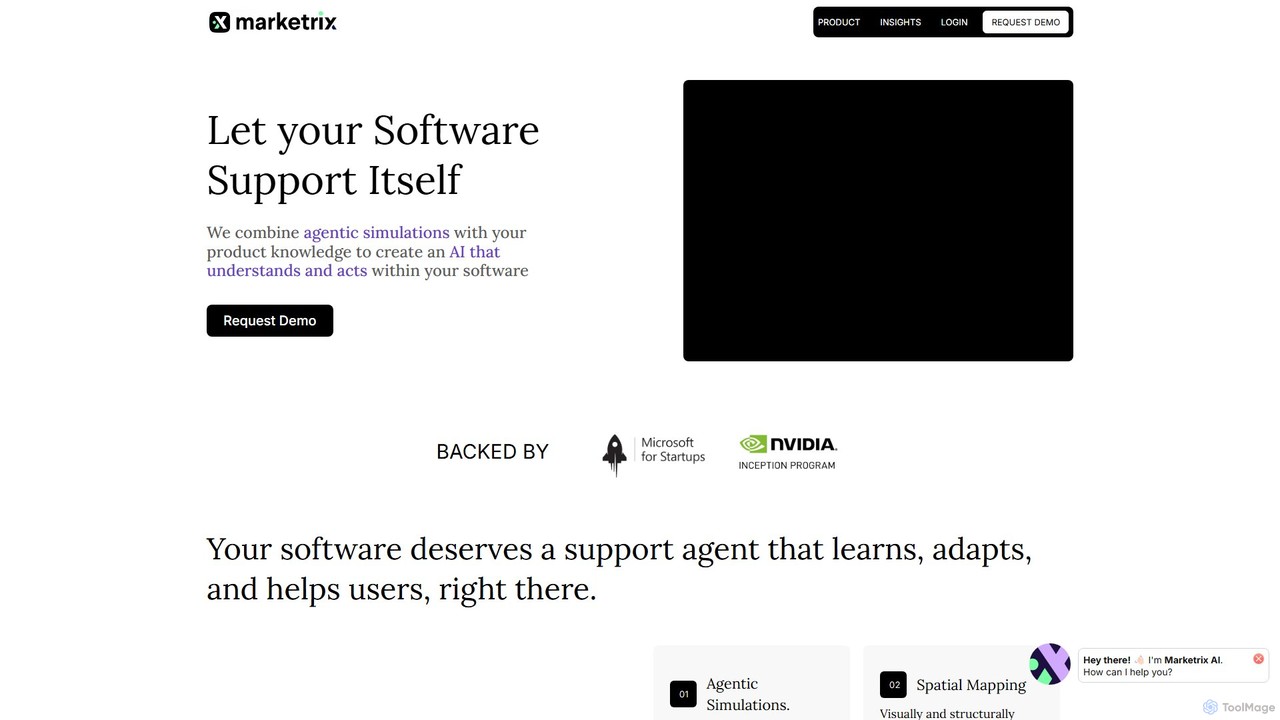
Marketrix is an AI platform that enables software to support itself. It uses agentic simulations to learn your …

4.0K

About Self Service Portals

Self Service Portals are AI-powered platforms designed to empower users to find information, resolve issues, and manage their accounts independently, without direct human intervention. These portals leverage natural language processing (NLP) and machine learning to understand user queries, provide relevant answers from knowledge bases, and guide users through automated workflows. By offering instant access to support and information 24/7, they significantly enhance customer satisfaction and reduce the workload on customer support teams. They represent a crucial component of modern customer support strategies, enabling efficient and scalable service delivery.

Core Features

  • Intelligent Knowledge Base Search: Utilizes AI to provide highly accurate and context-aware answers from extensive documentation.
  • Automated Troubleshooting Guides: Guides users step-by-step through common issues, offering solutions based on their input.
  • Personalized Account Management: Allows users to update profiles, view order history, manage subscriptions, and track service requests.
  • Virtual Assistant Integration: Embeds AI chatbots to handle complex queries or escalate to human agents when necessary.
  • Feedback and Analytics: Collects user feedback and provides insights into common issues and portal effectiveness for continuous improvement.

Applicable Scenarios

Self Service Portals are invaluable for businesses across various sectors, including e-commerce, SaaS, telecommunications, and banking. They serve customers seeking quick answers to product questions, troubleshooting technical problems, or managing their service subscriptions. For instance, an e-commerce customer can track an order or initiate a return, while a SaaS user can find tutorials or reset their password, all without contacting support staff.

How to Choose

When selecting a Self Service Portal solution, consider its AI capabilities for understanding complex queries and providing accurate responses. Evaluate its integration potential with existing CRM, knowledge base, and ticketing systems to ensure a seamless experience. Assess the ease of content management and customization options for branding and user interface. Finally, review the analytics and reporting features to measure performance and identify areas for improvement.

Self Service PortalsUse Cases

1

Automating Customer Order Tracking and Returns

For e-commerce businesses, a Self Service Portal allows customers to independently check their order status, view purchase history, and initiate return or exchange requests. This reduces the volume of repetitive inquiries to customer service, providing instant gratification for customers and freeing up support agents for more complex issues. It streamlines post-purchase operations and enhances customer satisfaction.

2

Providing Instant Technical Support for Software Users

SaaS companies can deploy Self Service Portals to offer 24/7 technical assistance. Users can search for solutions to common software issues, access step-by-step troubleshooting guides, or find FAQs without waiting for a support agent. This empowers users to resolve problems quickly, improving their product experience and reducing support ticket volume.

3

Managing User Accounts and Subscriptions

For subscription-based services, Self Service Portals enable users to update their personal information, change payment methods, upgrade or downgrade subscriptions, and view billing history. This self-management capability gives users control over their accounts, minimizes administrative tasks for the business, and ensures data accuracy.

4

Offering Comprehensive Product Information and FAQs

Any business with a complex product or service can use a Self Service Portal to host an extensive, AI-powered knowledge base. Customers can easily search for product specifications, user manuals, how-to guides, and answers to frequently asked questions. This ensures consistent information delivery and helps customers make informed decisions.

5

Facilitating Employee HR and IT Support

Internally, organizations can use Self Service Portals to provide employees with instant access to HR policies, IT troubleshooting guides, and internal FAQs. Employees can find information on benefits, submit IT tickets, or reset passwords independently, improving internal efficiency and reducing the burden on HR and IT departments.

6

Guiding Users Through Complex Onboarding Processes

For products or services requiring a detailed setup, a Self Service Portal can offer interactive onboarding guides and tutorials. New users can follow personalized paths, watch video demonstrations, and find answers to initial setup questions, ensuring a smoother onboarding experience and reducing early-stage support requests.

Self Service PortalsFrequently Asked Questions