Data Collection Best in category 1 results Research AI Tool

Popular AI tools in the Research field of Data Collection include Askwork, etc., helping you quickly improve efficiency.

Askwork

Askwork

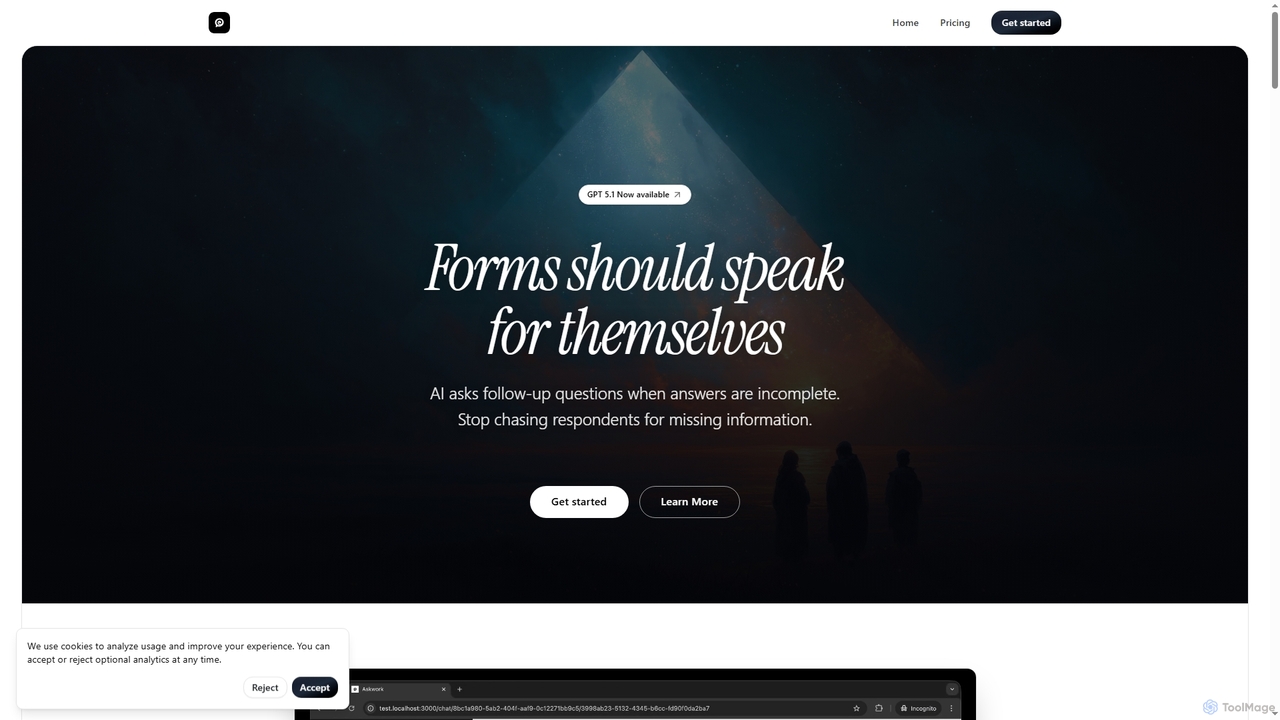
Askwork transforms static forms into dynamic, AI-powered conversations. It automatically asks follow-up questions, validates responses in real-time, and …

2.3K

About Research

AI-powered Research tools are designed to automate and enhance the process of discovering, analyzing, and synthesizing information. These tools leverage advanced natural language processing (NLP), machine learning, and data analytics to efficiently extract insights from vast datasets. They significantly streamline literature reviews, market analysis, and scientific discovery, enabling users to identify patterns and generate hypotheses faster. By transforming raw data into actionable knowledge, AI research tools empower academics, market analysts, and R&D teams to make data-driven decisions with unprecedented speed and accuracy.

Core Features

  • Automated Literature Review: Quickly scan, summarize, and extract key findings from thousands of academic papers, reports, and articles.
  • Data Synthesis & Pattern Recognition: Identify connections, trends, and anomalies across disparate datasets, revealing hidden insights.
  • Hypothesis Generation: Suggest potential research questions or hypotheses based on analyzed data, accelerating the discovery process.
  • Information Extraction: Precisely pull out specific entities, facts, and relationships from unstructured text, such as names, dates, and experimental results.
  • Sentiment & Trend Analysis: Gauge public opinion, market sentiment, and emerging trends from social media, news, and customer feedback.

Use Cases

These tools are invaluable for academics conducting extensive literature reviews, market researchers analyzing consumer behavior and competitive landscapes, and R&D teams exploring new scientific frontiers. They support tasks ranging from initial data exploration and evidence gathering to advanced analytical modeling and report generation, significantly reducing manual effort and accelerating insight generation.

How to Choose

When selecting an AI research tool, consider its data source compatibility (e.g., academic databases, web, proprietary data), the depth of its analytical capabilities (e.g., summarization, sentiment analysis, statistical modeling), ease of integration with existing workflows, and the accuracy of its information extraction. Evaluate the user interface for intuitiveness and ensure it provides robust visualization features for presenting findings effectively.

ResearchUse Cases

1

Automated Literature Review for Academic Research

Academic researchers can use AI research tools to rapidly scan and summarize thousands of scholarly articles, identifying key theories, methodologies, and gaps in existing literature. This significantly reduces the time spent on manual review, allowing them to focus on critical analysis and hypothesis development, thereby accelerating their research cycles and publication output.

2

Market Trend Analysis for Business Strategy

Market analysts employ AI research platforms to monitor social media, news articles, and consumer reviews, extracting sentiment and identifying emerging market trends. This enables businesses to make informed strategic decisions regarding product development, marketing campaigns, and competitive positioning, leading to more responsive and effective market engagement.

3

Scientific Discovery and Hypothesis Generation

R&D scientists leverage AI tools to analyze complex experimental data and vast scientific databases, uncovering hidden correlations and generating novel hypotheses. The AI can suggest potential drug targets or material properties, accelerating the pace of scientific discovery and innovation by providing data-driven insights for further investigation.

4

Competitive Intelligence Gathering

Business intelligence teams use AI research tools to gather and synthesize information about competitors, including product launches, pricing strategies, and market share shifts. This provides a comprehensive overview of the competitive landscape, aiding in strategic planning, risk assessment, and identifying opportunities for market differentiation and growth.

5

Patent Landscape Analysis

Legal and R&D departments utilize AI research tools to analyze patent databases, identifying existing patents, potential infringement risks, and white spaces for new intellectual property. This streamlines the patent application process, informs innovation strategies, and helps avoid costly legal disputes by providing a clear overview of the patent landscape.

6

Customer Feedback and Product Improvement

Product managers use AI research tools to analyze large volumes of customer feedback from surveys, support tickets, and online reviews. The tools identify common pain points, feature requests, and sentiment, directly informing product improvement cycles and enhancing user satisfaction by prioritizing changes based on actual user needs.

ResearchFrequently Asked Questions