ToolMage
Sign in

Best 2 Surveys AI tools for Customer Engagement

Popular Surveys AI tools in Customer Engagement include Interact and Askwork, helping you work more efficiently.

Askwork
Freemium

Askwork

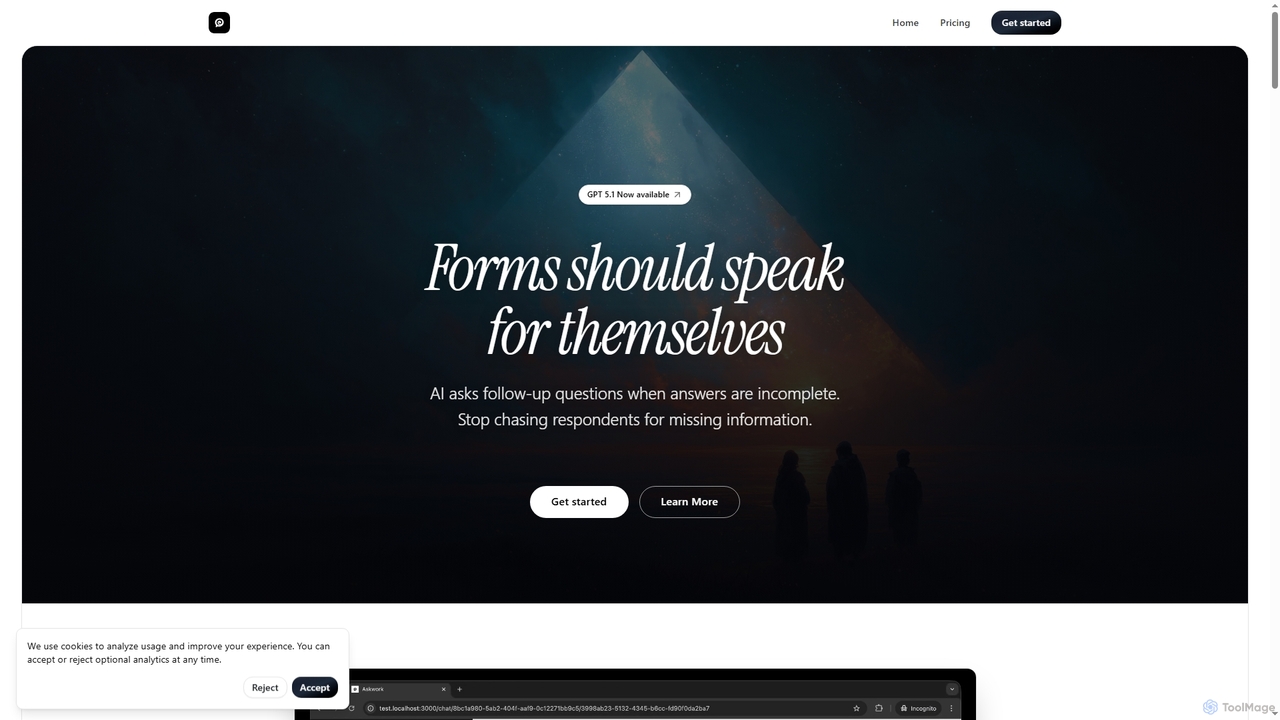
Askwork transforms static forms into dynamic, AI-powered conversations. It automatically asks follow-up questions, validates responses in real-time, and gathers deeper, context-rich insights to boost engagement and data quality for various business needs.

Surveys
Visits 5.7KFavorites 108Likes 106
Interact
Freemium

Interact

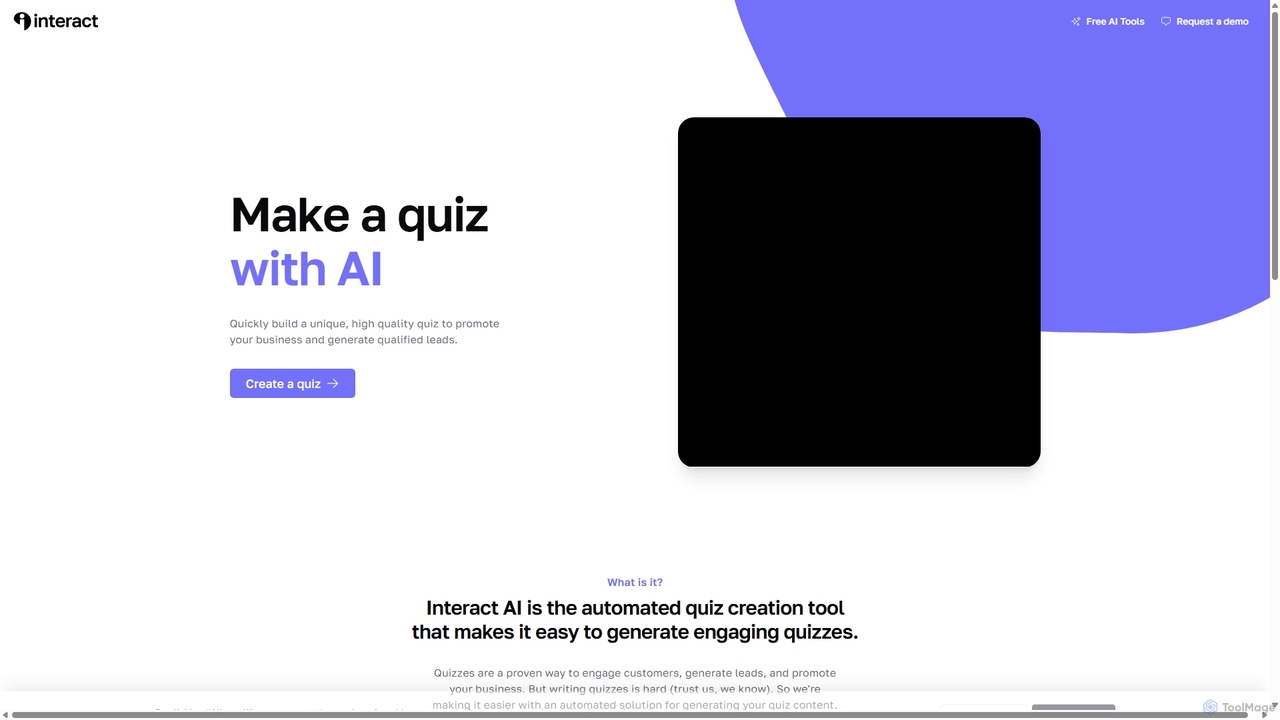
Interact is an AI-powered quiz maker designed to boost marketing efforts. It helps businesses generate leads, increase audience engagement, and drive sales through interactive quizzes, assessments, and polls. With a suite of free AI tools, you can instantly create compelling quiz titles, questions, and even entire trivia games, streamlining your content creation process and delivering conversion-focused results.

Content Generation
Visits 9.1KFavorites 121Likes 138

About Surveys

AI Survey tools are applications that use artificial intelligence to automate and enhance the process of creating, distributing, and analyzing surveys. These tools leverage Natural Language Processing (NLP) to interpret open-ended responses, generate relevant questions, and identify underlying sentiment and key themes from vast amounts of text data. Their primary value lies in transforming raw qualitative feedback into structured, actionable insights, providing a deeper understanding of customer or employee opinions. This capability makes them a crucial component of modern customer engagement strategies.

Core Features

  • AI-Powered Question Generation: Automatically creates relevant, unbiased, and context-aware questions based on a specified topic or goal.
  • Sentiment Analysis: Analyzes open-ended text responses to determine the emotional tone (positive, negative, neutral) and categorizes feedback automatically.
  • Topic & Theme Detection: Identifies and groups recurring topics and themes from thousands of qualitative answers without manual coding.
  • Predictive Analytics: Uses survey data to forecast trends, predict customer churn, or identify potential areas of dissatisfaction.
  • Adaptive Questioning: Dynamically adjusts the survey questions in real-time based on a respondent's previous answers for a more personalized experience.

Use Cases

AI Survey tools are widely used by market researchers, product managers, HR professionals, and customer experience teams. They are ideal for analyzing large-scale customer satisfaction (CSAT/NPS) feedback, conducting in-depth market research, and processing employee engagement survey results. For instance, a company can use an AI tool to instantly analyze 10,000 open-ended comments from an annual survey to pinpoint specific drivers of dissatisfaction.

How to Choose

When selecting an AI Survey tool, consider the sophistication of its text analysis engine, particularly its accuracy in sentiment and theme detection. Evaluate its integration capabilities with your existing CRM or data platforms. Also, assess the ease of use for survey design, its data security and compliance standards (like GDPR), and whether the pricing model aligns with your survey volume and frequency.

Surveys use cases

1

Analyze Customer Satisfaction Feedback at Scale

A customer experience manager at a large e-commerce company needs to understand the drivers behind their Net Promoter Score (NPS). They use an AI survey tool to analyze over 50,000 open-ended comments from their latest survey. The AI automatically categorizes feedback into themes like 'Shipping Speed', 'Product Quality', and 'Customer Support'. It also performs sentiment analysis on each theme, revealing that while 'Product Quality' is highly positive, 'Shipping Speed' is a major source of negative sentiment. This allows the manager to present concrete data to the logistics team, leading to targeted improvements that directly address customer complaints.

2

Conduct In-Depth Market Research for a New Product

A product manager is tasked with validating a new software concept. Instead of writing a survey from scratch, they input the product description into an AI survey tool. The AI generates a comprehensive survey covering potential features, pricing sensitivity, and target user pain points. After collecting responses, the AI's theme detection feature identifies a recurring request for a specific integration that the team hadn't considered. This insight allows the team to adjust the product roadmap before writing a single line of code, significantly reducing the risk of building the wrong product.

3

Streamline Employee Engagement Analysis

An HR department conducts an annual employee engagement survey for a company with 2,000 employees. Previously, it took weeks to manually read and categorize hundreds of open-ended comments. By using an AI survey tool, the HR manager gets an automated report within hours. The AI identifies key themes like 'Work-Life Balance', 'Management Communication', and 'Career Growth Opportunities'. The report highlights that while 'Work-Life Balance' is positive, 'Management Communication' is a significant concern in the engineering department. This allows HR to quickly organize targeted workshops for engineering managers, addressing the issue proactively.

4

Gather Actionable Post-Event Feedback

An event organizer for a large tech conference wants to improve next year's event. They send out a post-event survey using an AI tool. The tool's adaptive questioning feature asks attendees who rated a session poorly for specific feedback on the speaker or content, while asking those who rated it highly what they enjoyed most. The AI analysis then aggregates all feedback, creating a dashboard that visually ranks every session, speaker, and logistical aspect (like catering and venue). The organizer can instantly see that while the keynote speakers were a hit, the breakout sessions on 'Advanced AI' were rated poorly due to being 'too basic', providing clear direction for future content planning.

5

Prioritize Product Features Based on User Demand

A SaaS startup wants to decide which features to build next. They use an AI survey tool to poll their user base. The survey asks users to describe their biggest challenges and what features would help solve them. Instead of just counting votes for pre-selected features, the AI analyzes the open-ended responses to identify underlying needs. The analysis reveals a strong demand for 'better reporting tools', a theme that was more prevalent than any of the specific features the team had proposed. This data-driven insight helps the product team prioritize a complete overhaul of their reporting module, confident that it addresses a core user need.

6

Automate Academic Research Data Analysis

A sociologist is conducting a study on urban community sentiment, involving hundreds of in-depth interviews transcribed into text. Manually coding this qualitative data would be extremely time-consuming. The researcher uploads the transcripts to an AI survey analysis platform. The AI performs topic modeling and sentiment analysis, identifying key community concerns such as 'Public Safety', 'Affordable Housing', and 'Local Politics'. It also reveals the nuanced sentiment associated with each topic across different demographics. This automation allows the researcher to focus on interpreting the findings and writing the paper, rather than on tedious data processing, accelerating the research lifecycle significantly.

Surveys FAQ

What are AI Survey tools?

AI Survey tools are software applications that use artificial intelligence, particularly Natural Language Processing (NLP), to enhance the entire survey lifecycle. Unlike traditional survey platforms that primarily collect data, AI tools also help in designing better questions and, most importantly, automatically analyzing qualitative, open-ended responses. They can identify sentiment, extract key themes, and generate actionable insights from thousands of text answers in minutes, a task that would take humans days or weeks to complete manually.

How do AI Survey tools differ from traditional survey platforms?

The primary difference lies in the analysis of qualitative data. Traditional platforms like SurveyMonkey or Google Forms are excellent for collecting quantitative data (e.g., multiple-choice, ratings) but offer limited tools for open-ended text. AI Survey tools specialize in this area. Key differentiators include:

  • Automated Text Analysis: AI tools automatically code and categorize text, while traditional tools require manual reading or simple keyword searches.
  • Deeper Insights: AI can uncover nuanced sentiment and hidden themes that are not immediately obvious.
  • AI-Powered Design: Some AI tools can suggest questions or even generate an entire survey based on a goal, saving time and reducing bias.
  • Predictive Capabilities: Advanced AI tools can use survey data to predict future behavior, such as customer churn.
In essence, traditional tools help you ask questions, while AI tools help you understand the answers.

How to choose the right AI Survey tool?

Choosing the right AI Survey tool depends on your specific needs. Consider these factors:

  • Analysis Quality: How accurate is the sentiment analysis and theme detection? Look for tools that allow you to refine and train the AI model.
  • Integration: Does it connect with your existing tools like CRM, helpdesk software, or data warehouses (e.g., Salesforce, Zendesk, Snowflake)?
  • Ease of Use: Is the interface for creating surveys and viewing reports intuitive for non-technical users?
  • Scalability: Can the tool handle your volume of responses, both now and in the future?
  • Data Security & Compliance: Does the tool comply with data protection regulations like GDPR or CCPA?
Start by identifying your primary use case (e.g., customer feedback, employee engagement) and then evaluate tools based on how well they support that specific workflow.

What are the main benefits of using AI for surveys?

Using AI for surveys offers several key advantages over traditional methods. The primary benefits are:

  • Speed: AI can analyze thousands of open-ended responses in minutes, drastically reducing the time from data collection to insight.
  • Depth of Insight: AI uncovers patterns, themes, and sentiment nuances that are difficult for humans to spot, especially in large datasets.
  • Objectivity: AI reduces human bias in the interpretation of qualitative data, leading to more consistent and reliable analysis.
  • Actionability: By automatically structuring unstructured feedback and highlighting key issues, AI makes it easier for teams to identify and act on the most important feedback.
Ultimately, AI transforms surveys from a simple data collection exercise into a powerful engine for continuous improvement and strategic decision-making.

Who can benefit from using AI Survey tools?

A wide range of professionals and organizations can benefit from AI Survey tools. Key users include:

  • Product Managers: To analyze user feedback, validate new ideas, and prioritize feature roadmaps.
  • Market Researchers: To quickly process large volumes of qualitative data from focus groups and market surveys.
  • Customer Experience (CX) Teams: To analyze NPS/CSAT feedback at scale and identify key drivers of customer satisfaction and dissatisfaction.
  • HR Professionals: To understand employee engagement, analyze exit interview feedback, and improve company culture.
  • Academic Researchers: To automate the coding and analysis of qualitative data from interviews and open-ended questionnaires.
Essentially, anyone who needs to understand the 'why' behind quantitative data by analyzing open-ended feedback can gain significant value from these tools.