Data Engineering Best in category 1 results Data Science AI Tool

Popular AI tools in the Data Science field of Data Engineering include DevBlogs, etc., helping you quickly improve efficiency.

DevBlogs

DevBlogs

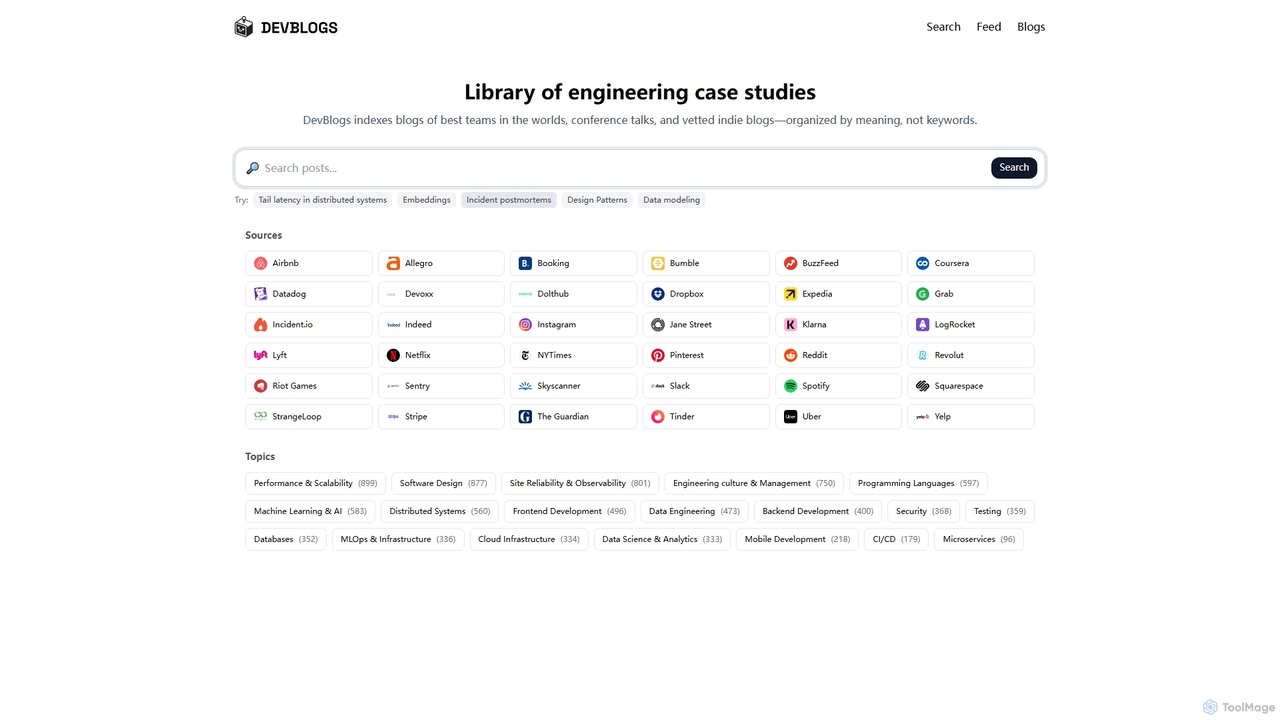
DevBlogs is a curated library indexing engineering case studies, tech blogs, and conference talks from leading global teams. …

2.1K

About Data Science

Data Science tools are a specialized category of software designed for analyzing complex data, building predictive models, and extracting actionable insights. These tools integrate statistical algorithms, machine learning (ML) libraries, and interactive visualization capabilities to uncover patterns and trends. They empower data scientists and analysts to move beyond simple data reporting, enabling them to forecast future outcomes, classify information, and support data-driven decision-making. As a key component of the Data Engineering lifecycle, they operate on cleansed and prepared data to perform advanced analytics.

Core Features

  • Model Development & Training: Build, train, and validate machine learning models like regression, classification, and clustering.
  • Interactive Data Exploration: Utilize notebooks (e.g., Jupyter) and visualization libraries for in-depth data analysis and discovery.
  • Statistical Analysis: Perform complex statistical tests, hypothesis testing, and probability modeling.
  • Feature Engineering: Create, select, and transform variables to improve the accuracy and performance of predictive models.
  • Deployment & Monitoring: Package and deploy models into production environments and monitor their performance over time.

Use Cases

Data Science tools are crucial in industries like finance for fraud detection, e-commerce for building recommendation engines, healthcare for disease prediction, and marketing for customer churn analysis. They are primarily used by data scientists, machine learning engineers, quantitative analysts, and academic researchers to solve complex problems with data.

How to Choose

When selecting a Data Science tool, consider the range of supported algorithms and libraries (e.g., TensorFlow, PyTorch, scikit-learn), integration with data sources and MLOps platforms, scalability for large datasets, collaboration features, and the user interface's suitability for both coding and low-code workflows.

Data ScienceUse Cases

1

Predicting Customer Churn for Subscription Services

A marketing analyst at a SaaS company uses a data science platform to analyze user behavior data, including login frequency, feature usage, and support ticket history. They build a binary classification model (like Logistic Regression or Gradient Boosting) to identify customers at a high risk of churning. The model's output provides a probability score for each user, allowing the marketing team to proactively launch targeted retention campaigns for high-risk segments, ultimately reducing the monthly churn rate by a measurable percentage.

2

Building an E-commerce Product Recommendation Engine

A machine learning engineer at an online retail company leverages a data science toolkit to process historical purchase and browsing data. Using algorithms like collaborative filtering, they build a model that predicts which products a user is likely to be interested in. This recommendation engine is then integrated into the website's product pages and checkout process, personalizing the shopping experience and leading to a significant increase in average order value and customer engagement.

3

Analyzing Sentiment from Customer Reviews

A product manager wants to understand public opinion about a new feature. They use a data science tool with Natural Language Processing (NLP) capabilities to analyze thousands of online reviews and social media comments. The tool automatically classifies the sentiment of each text as positive, negative, or neutral and uses topic modeling to identify key themes and pain points. This provides actionable feedback for product improvement without requiring weeks of manual reading and categorization.

4

Real-Time Financial Fraud Detection

A data scientist at a financial institution develops an anomaly detection model using a stream of transaction data. The data science platform allows them to train the model on millions of historical transactions to learn normal spending patterns. Once deployed, the model scores incoming transactions in real-time. Transactions that deviate significantly from a user's normal behavior are flagged as suspicious, automatically triggering alerts for fraud analysts and blocking potentially fraudulent activities, thereby minimizing financial losses.

5

Optimizing Marketing Campaigns with Customer Segmentation

A marketing team uses a data science platform to perform customer segmentation. By applying clustering algorithms (like K-Means) to customer data—including demographics, purchase history, and website interactions—they identify distinct customer groups. For example, they might find segments like 'high-value loyalists,' 'budget-conscious shoppers,' and 'new prospects.' These insights allow them to tailor marketing messages, promotions, and product recommendations for each segment, significantly improving campaign ROI and customer engagement.

6

Medical Image Analysis for Disease Diagnosis

A medical researcher uses a data science framework with deep learning capabilities to assist in diagnostics. They train a Convolutional Neural Network (CNN) on a large, labeled dataset of medical images, such as X-rays or MRIs, to detect signs of a specific disease. The resulting model can analyze new images and highlight potential areas of concern for a radiologist to review. This tool acts as a powerful assistant, helping to improve diagnostic accuracy and speed up the review process for large volumes of scans.

Data ScienceFrequently Asked Questions