AutoRegex
AutoRegex is an AI-powered tool that simplifies the creation of Regular Expressions (RegEx). By translating plain English descriptions …
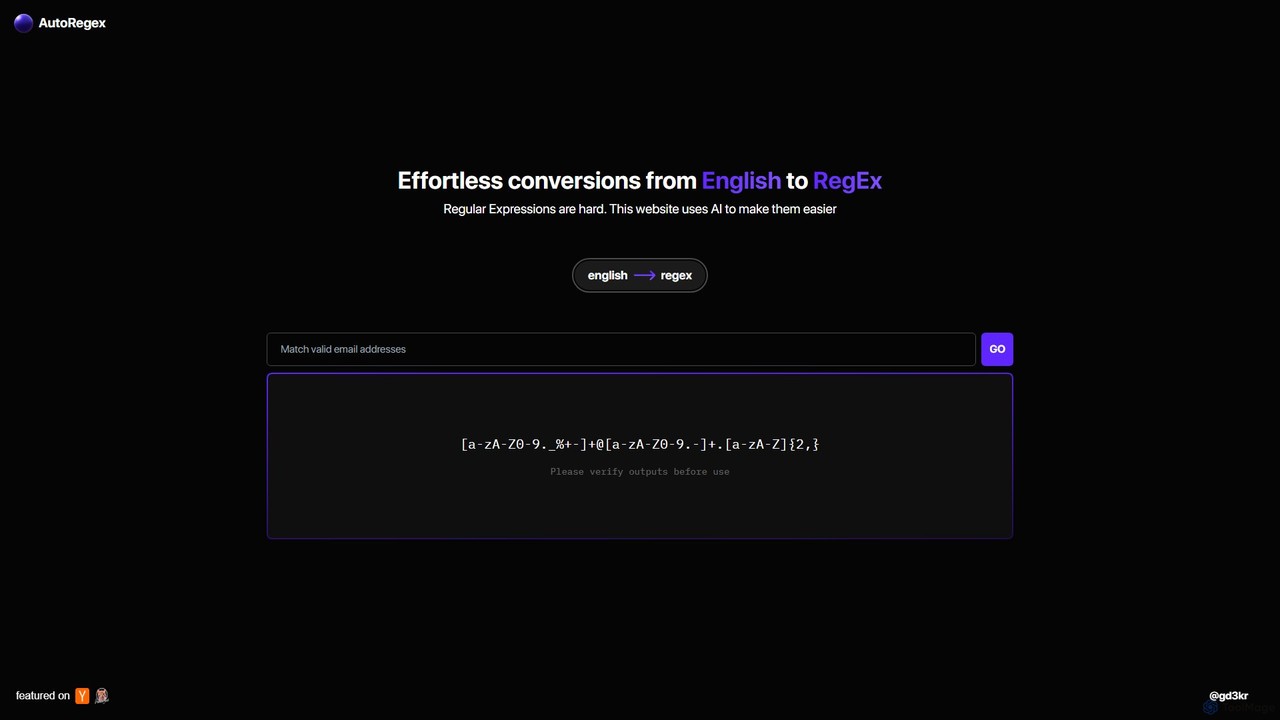
AutoRegex is an AI-powered tool that simplifies the creation of Regular Expressions (RegEx). By translating plain English descriptions into complex RegEx patterns, it helps developers, data analysts, and students save time and avoid errors. Just describe the pattern you need, and AutoRegex generates the correct syntax instantly, making text processing and data validation more accessible and efficient for everyone.
Magic Regex Generator
An AI-powered tool that effortlessly translates plain English descriptions into complex regular expressions. It simplifies regex creation, testing, …
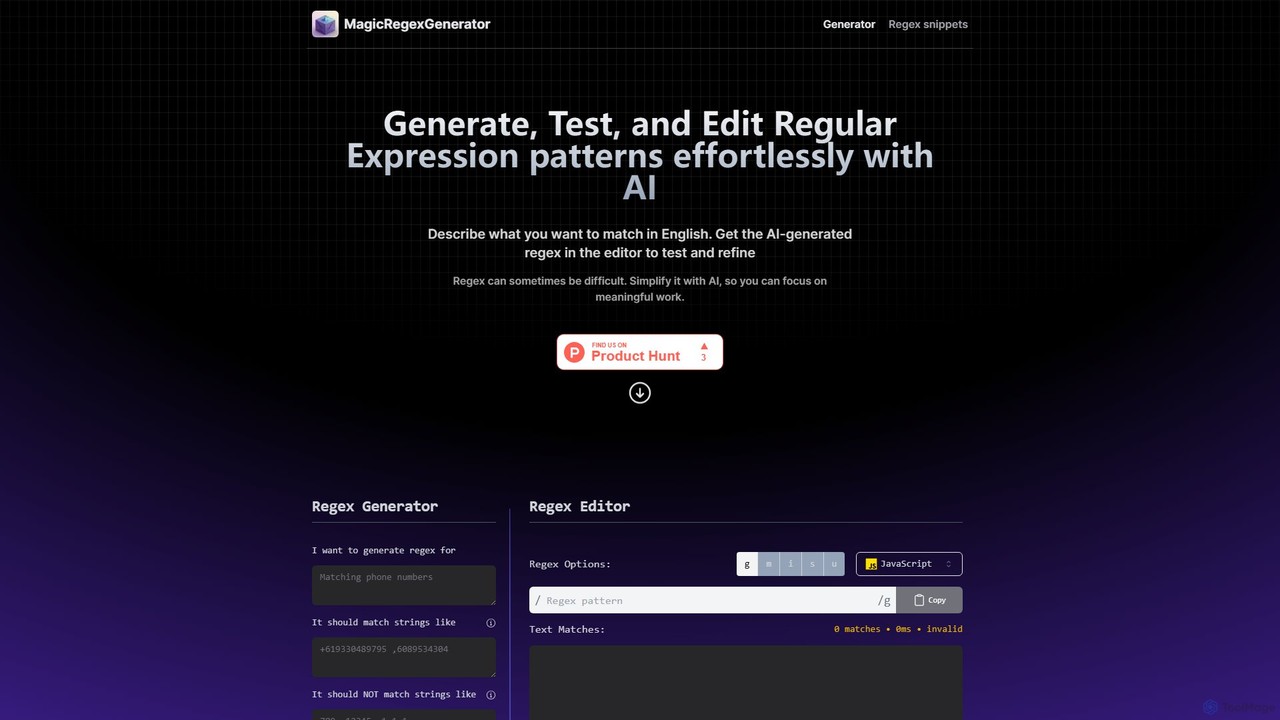
An AI-powered tool that effortlessly translates plain English descriptions into complex regular expressions. It simplifies regex creation, testing, and refinement for developers, data scientists, and anyone working with text patterns.
rgx.tools
rgx.tools is an AI-powered generator that translates natural language descriptions into regular expressions (regex). Powered by GPT-3.5, it …
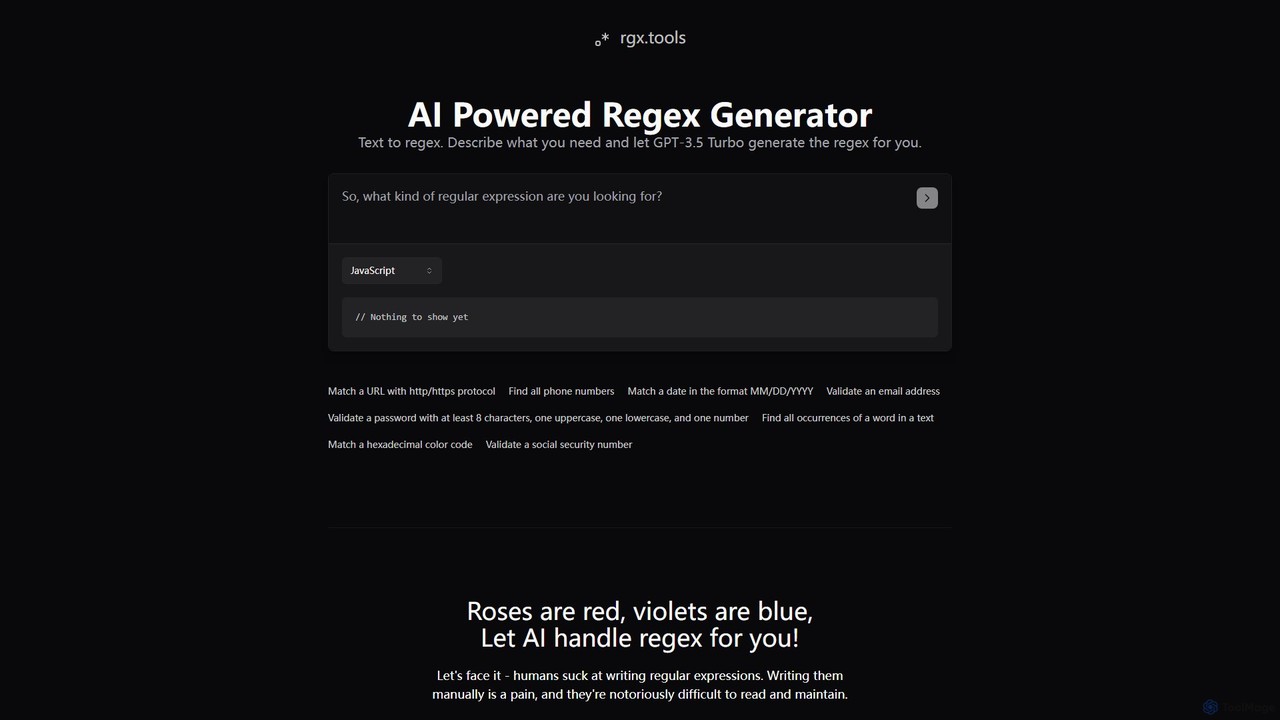
rgx.tools is an AI-powered generator that translates natural language descriptions into regular expressions (regex). Powered by GPT-3.5, it simplifies the complex task of writing regex for developers and data analysts. Users can describe their pattern matching needs in plain English and instantly receive clean, efficient regex code compatible with multiple programming languages like Python, JavaScript, and Java, complete with usage examples.
About Text Processing
Text Processing is a category of AI-powered tools designed to analyze, understand, and manipulate human language data. These tools leverage advanced Natural Language Processing (NLP) techniques to extract insights, generate content, and automate various text-related tasks. As a crucial part of the Data category, Text Processing enables businesses and individuals to transform unstructured text into actionable information, enhancing efficiency and decision-making across diverse applications.
Core Features
- Content Generation: Automatically creates articles, marketing copy, summaries, or creative text based on prompts.
- Sentiment Analysis: Identifies and quantifies the emotional tone (positive, negative, neutral) within text data.
- Entity Recognition: Automatically detects and classifies named entities like people, organizations, locations, and dates in text.
- Text Summarization: Condenses long documents or articles into shorter, coherent versions while retaining key information.
- Machine Translation: Converts text from one natural language to another, maintaining context and meaning.
Applicable Scenarios
Text Processing tools are indispensable for content creators, marketers, researchers, and customer service teams. They are used to automate content creation for blogs and social media, analyze customer feedback for sentiment, extract key information from legal documents, and translate global communications efficiently.
How to Choose
When selecting Text Processing tools, consider the specific NLP capabilities required (e.g., summarization vs. sentiment analysis), the range of supported languages, integration with existing workflows, and the accuracy and customization options of the AI models. Scalability for handling large volumes of text data and transparent pricing models are also crucial factors.
Text ProcessingUse Cases
Automating Customer Support Responses
Customer service teams can leverage Text Processing tools to automatically generate accurate and personalized responses to common customer inquiries. By analyzing incoming messages, the AI identifies intent and extracts key information, allowing for instant, relevant replies. This significantly reduces response times and frees up human agents to focus on more complex issues, improving overall customer satisfaction and operational efficiency by up to 60%.
Summarizing Research Papers and Reports
Researchers and analysts frequently deal with vast amounts of textual data. Text Processing tools can automatically summarize lengthy research papers, financial reports, or legal documents into concise, digestible versions. This enables users to quickly grasp the core arguments and findings without reading the entire text, saving hours of manual effort and accelerating information retrieval for critical decision-making or literature reviews.
Analyzing Social Media Sentiment for Brand Monitoring
Marketing and PR professionals can use Text Processing tools to monitor social media mentions and customer reviews, performing real-time sentiment analysis. This helps them understand public perception of their brand, products, or campaigns. By quickly identifying negative trends or positive feedback, companies can respond proactively, manage their reputation, and tailor marketing strategies to better resonate with their target audience, leading to improved brand loyalty.
Generating Diverse Marketing Copy and Ad Variants
Marketers and advertisers can utilize Text Processing tools to rapidly generate multiple variations of marketing copy, ad headlines, and product descriptions. By inputting core messages and target audience parameters, the AI can produce diverse creative options, allowing for extensive A/B testing. This accelerates campaign development, optimizes messaging for different channels, and ultimately improves conversion rates by identifying the most effective copy.
Extracting Key Information from Legal Documents
Legal professionals, paralegals, and compliance officers can use Text Processing tools to efficiently extract critical information from large volumes of legal documents, contracts, and regulatory filings. The AI can identify and categorize specific clauses, dates, parties involved, and obligations, significantly reducing the time spent on manual review. This enhances accuracy, ensures compliance, and accelerates due diligence processes, saving substantial operational costs.
Translating Global Communications and Content
Businesses operating internationally or individuals communicating across language barriers can utilize Text Processing tools for high-quality machine translation. These tools can instantly translate emails, documents, websites, and marketing materials into multiple languages, ensuring clear and consistent communication with global partners and customers. This facilitates market expansion and strengthens international relationships by overcoming linguistic challenges efficiently.