Detection Best in category 3 results Ai Content Detection AI Tool

Popular AI tools in the Ai Content Detection field of Detection include aicheatcheck、integrito、aicheckertool, etc., helping you quickly improve efficiency.

aicheckertool

aicheckertool

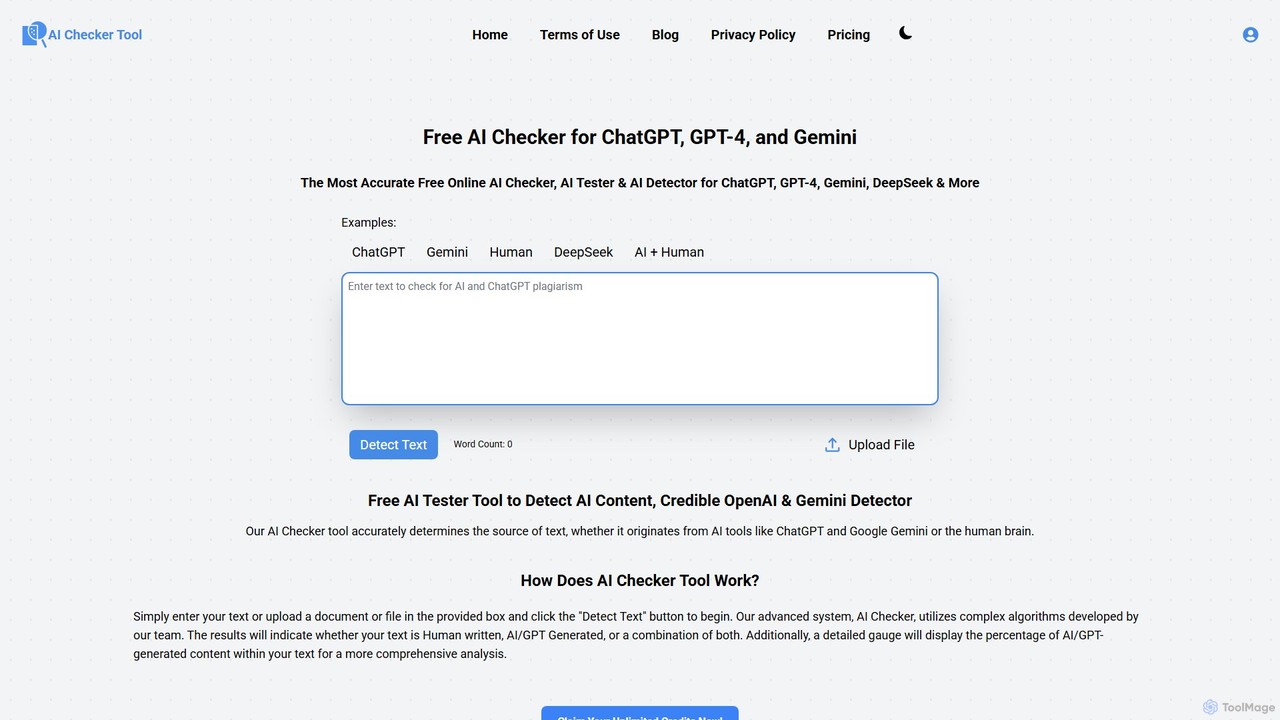
aicheckertool is a highly accurate AI content detector designed to distinguish between human-written text and content generated by …

3.0K
aicheatcheck

aicheatcheck

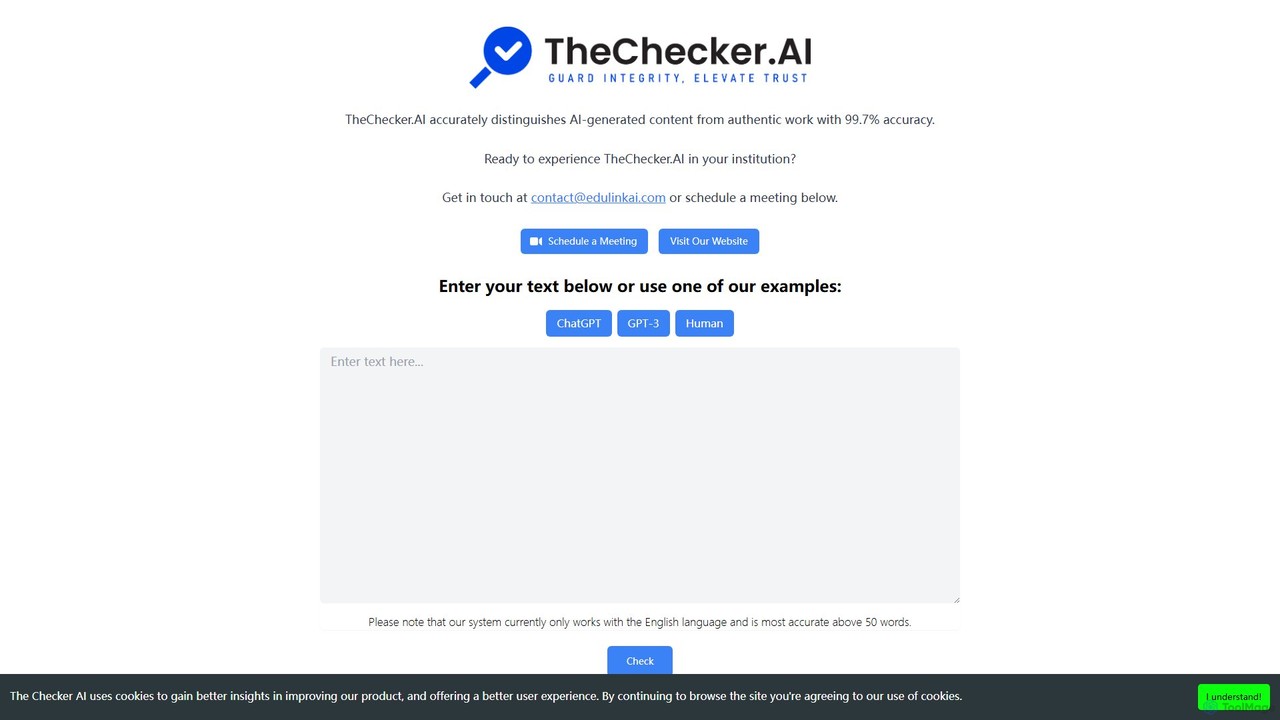
aicheatcheck (TheChecker.AI) is a specialized AI content detector for the education sector, offering 99.7% accuracy in distinguishing AI-generated …

5.8K
integrito

integrito

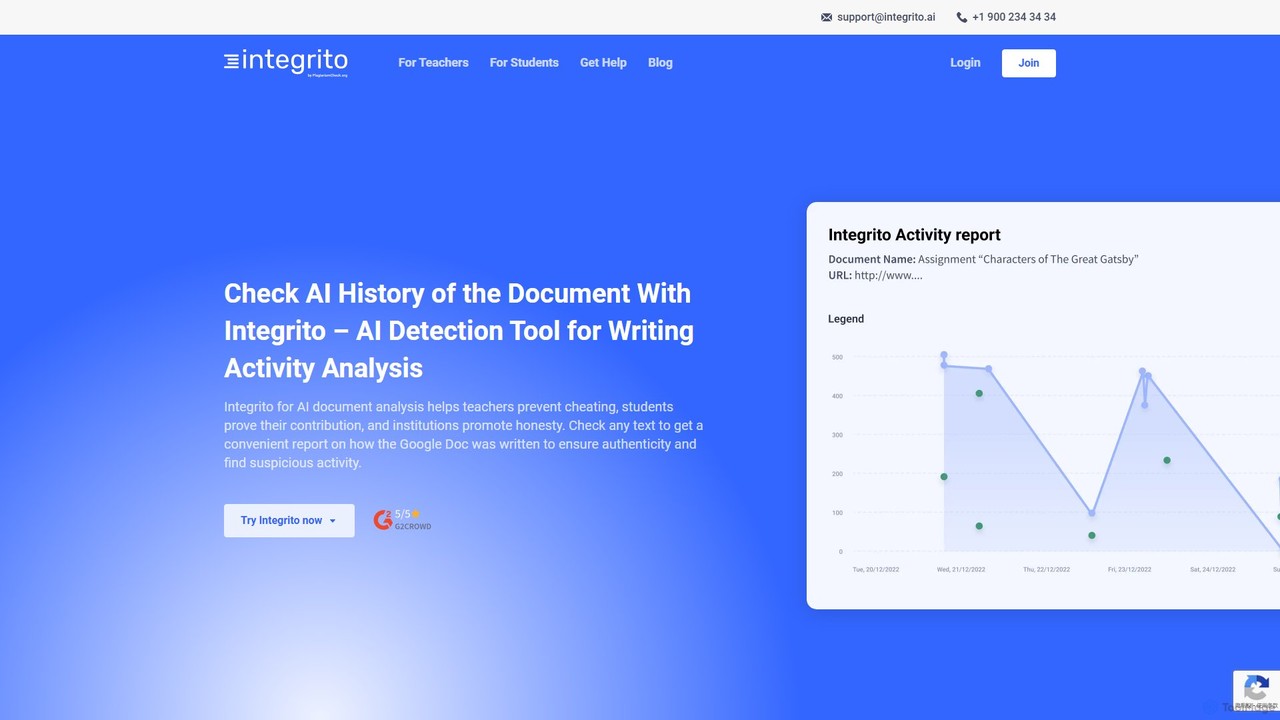
Integrito is an advanced AI detection tool that analyzes the writing process history in Google Docs. It helps …

4.3K

About Ai Content Detection

AI Content Detection tools are a specialized category of software designed to identify text generated by artificial intelligence models like GPT. These tools analyze linguistic patterns, perplexity, and burstiness to distinguish between human and machine-written content. Their primary value lies in upholding academic integrity, ensuring content authenticity for publishers, and maintaining search engine quality standards. Unlike general plagiarism checkers, they focus specifically on the stylistic and structural signatures of AI-generated text.

Core Features

  • Probability Scoring: Provides a percentage score indicating the likelihood that content is AI-generated.
  • Sentence-Level Highlighting: Visually marks specific sentences or phrases that are likely machine-written.
  • Model-Specific Analysis: Differentiates between outputs from various AI models (e.g., GPT-3.5, GPT-4, Claude).
  • Linguistic Pattern Analysis: Examines text for characteristics like perplexity (randomness) and burstiness (sentence length variation).
  • API Integration: Allows developers to integrate detection capabilities into other applications like learning management systems or content platforms.

Use Cases

These tools are crucial for educators and academic institutions to verify the originality of student submissions. Publishers, editors, and content managers use them to ensure their content is authentic and human-created, protecting brand reputation. SEO specialists also utilize them to audit content and avoid potential penalties from search engines for using low-quality, mass-produced AI text.

How to Choose

When selecting an AI Content Detection tool, consider its accuracy and low rate of false positives. Evaluate the range of AI models it can detect and the languages it supports. For organizational use, check for features like API access, batch processing, and integration with existing workflows. Finally, assess the pricing model—whether it's based on word count, number of documents, or a subscription plan—to find one that fits your usage volume.

Ai Content DetectionUse Cases

1

Verifying Academic Integrity in Education

Educators and academic institutions are primary users of AI content detectors. A university professor can use these tools to scan student essays and research papers for signs of AI generation. By uploading a batch of submissions, the tool provides a probability score for each document, highlighting specific sentences that deviate from typical human writing patterns. This helps maintain academic honesty, ensures students are developing critical writing skills, and provides concrete evidence to initiate discussions about proper source attribution and originality.

2

Ensuring Content Authenticity for Publishers

Digital publishers and media houses need to maintain brand credibility by publishing authentic, human-written content. An editor can integrate an AI detection API into their content management system (CMS). Before an article is published, it is automatically scanned. If the tool flags a high probability of AI generation, the editor is alerted to review the piece with the author. This workflow prevents the publication of low-quality or unoriginal content, protects the publisher's reputation, and ensures compliance with editorial standards.

3

SEO Content Auditing and Quality Control

An SEO agency managing multiple client websites uses an AI detector to audit existing and new content. Search engines may penalize sites with large amounts of low-value, AI-generated content. The agency's content team runs blog posts and landing pages through the detector to identify any potentially problematic text. This allows them to revise content to add more human insight and value, ensuring it meets search engine guidelines for helpful content and protecting their clients' search rankings from potential negative impacts.

4

Screening Candidate Submissions in Recruitment

A human resources department receives hundreds of applications for a writing-intensive role. To efficiently screen candidates, an HR specialist uses an AI content detector on submitted cover letters or writing samples. This helps identify applicants who may have relied heavily on AI to generate their application materials. While not a sole disqualifier, it provides a data point for recruiters to probe a candidate's genuine communication and writing skills during the interview process, ensuring they hire someone with the authentic abilities required for the job.

5

Validating Originality in Legal and Research Fields

In legal and scientific research, originality is paramount. A paralegal or research assistant can use an AI detector to check drafts of legal briefs, patents, or research papers. This serves as a preliminary check to ensure that no part of the document has been inadvertently generated by an AI tool without proper review and citation. It helps maintain the integrity of the research process and ensures that the final document is a product of genuine human analysis and expertise, which is critical for legal validity and scientific credibility.

6

Vetting Freelance and Agency Content Submissions

A marketing manager who outsources content creation to freelancers or agencies uses an AI detector as a quality assurance step. When a draft article is submitted, it's run through the detector. This ensures that the delivered work is original and not simply a repackaged AI output, guaranteeing that the company is paying for genuine human expertise and creativity. It also helps maintain a consistent, authentic brand voice across all outsourced content and protects the website from potential SEO issues related to AI-generated text.

Ai Content DetectionFrequently Asked Questions