ToolMage
Sign in

Best 1 Verification AI tools for Detection

Popular Verification AI tools in Detection include VeriIA, helping you work more efficiently.

VeriIA
Freemium

VeriIA

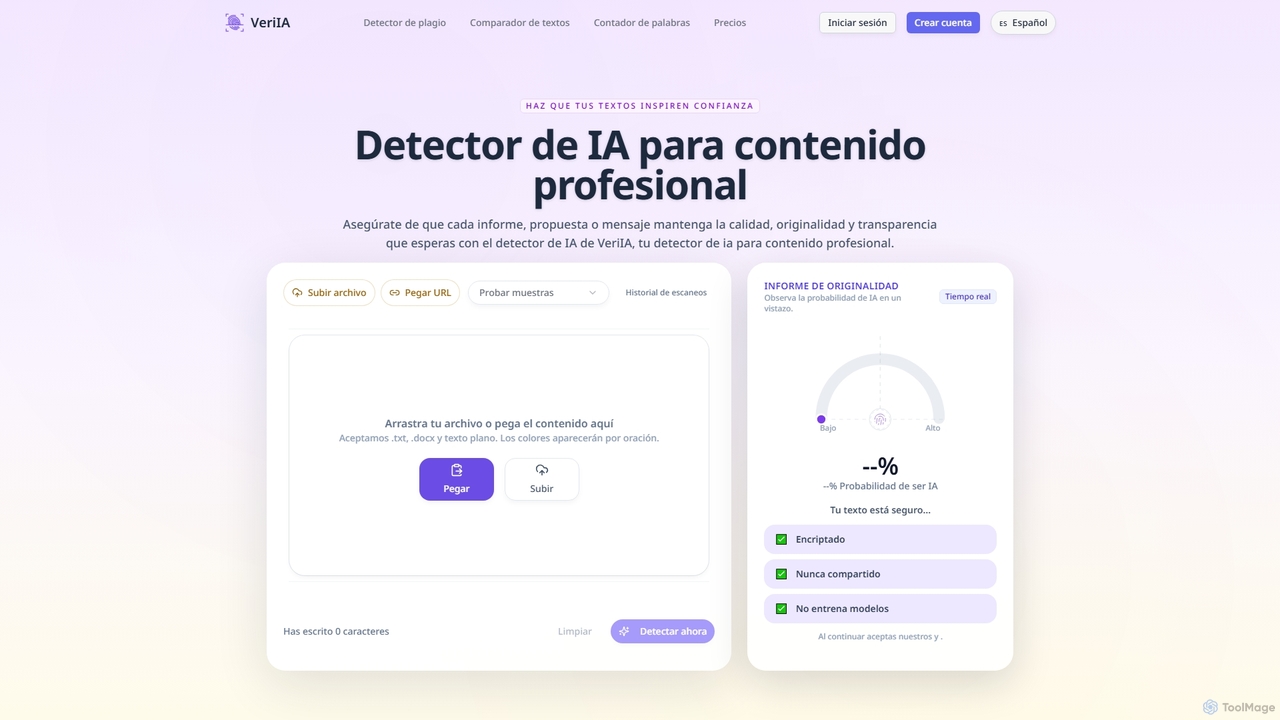
VeriIA is a comprehensive suite of professional content tools, featuring an advanced AI detector, plagiarism checker, text comparison tool, and word counter. It's designed to help writers, academics, and marketers ensure the originality, quality, and authenticity of their texts.

Verification
Visits 4.4KFavorites 82Likes 94

About Verification

AI-powered Verification tools are a specialized subset within the broader category of AI Detection, specifically designed to confirm the authenticity, integrity, or accuracy of data, identities, or content using advanced artificial intelligence algorithms. These tools leverage machine learning, computer vision, and natural language processing to analyze patterns, detect anomalies, and cross-reference information against known standards or databases. Their primary value lies in ensuring trust and security across digital platforms by providing conclusive validation rather than merely flagging potential issues.

Core Features

  • Identity Verification: Authenticates user identities through biometric analysis, document scanning, and liveness detection to prevent fraud.
  • Content Authenticity Checks: Analyzes text, images, and videos to detect deepfakes, manipulated media, or AI-generated content, ensuring originality and truthfulness.
  • Data Integrity Validation: Verifies the consistency, accuracy, and completeness of datasets, identifying discrepancies or corruption.
  • Compliance & Regulatory Checks: Automates the verification of data and processes against industry standards and legal requirements.
  • Fraud Pattern Verification: Confirms suspicious activities or transactions by cross-referencing against known fraud indicators and behavioral patterns.

Applicable Scenarios

These tools are essential for industries requiring high levels of trust and security. Financial institutions use them for customer onboarding (KYC) and transaction fraud prevention. Media organizations and social platforms deploy them to combat misinformation and verify user-generated content. E-commerce platforms utilize verification for secure payments and authentic product reviews, while legal and compliance departments ensure data adherence to regulations.

How to Choose

When selecting an AI verification tool, consider its accuracy and false positive rates, the breadth of verification methods (e.g., biometrics, document, content analysis), and its integration capabilities with existing systems. Evaluate compliance certifications, scalability to handle varying data volumes, and the level of customization offered for specific industry needs. User experience and robust API support are also critical for seamless implementation.

Featured tool rankings

Verification use cases

1

Online Identity Verification for KYC/AML

Financial institutions and fintech companies utilize AI verification tools to streamline customer onboarding processes while adhering to Know Your Customer (KYC) and Anti-Money Laundering (AML) regulations. These tools analyze government-issued IDs, perform facial recognition, and conduct liveness detection in real-time to confirm user identities. This automation significantly reduces manual review time, prevents identity fraud, and ensures robust regulatory compliance, leading to faster customer acquisition and enhanced security.

2

Deepfake and Manipulated Media Detection

News agencies, social media platforms, and content moderators deploy AI verification tools to combat the spread of misinformation. These tools are specifically designed to identify and flag synthetic media (deepfakes) or digitally altered images and videos. AI algorithms analyze subtle inconsistencies in facial movements, lighting, audio patterns, and metadata to verify the authenticity of visual and audio content. This ensures enhanced content trustworthiness, protects brand reputation, and helps maintain a reliable information ecosystem.

3

Software Code Integrity Verification

Software development teams and cybersecurity analysts leverage AI verification tools to ensure the integrity and authenticity of software codebases. These tools prevent unauthorized modifications or malicious injections by analyzing code patterns, dependencies, and version histories. AI algorithms can detect deviations from expected standards, identify potential vulnerabilities introduced by tampering, and verify that the code matches its intended design. This leads to improved software security, reduced vulnerabilities, and faster, more reliable code review cycles.

4

Product Authenticity Verification in Supply Chains

Retailers, luxury brands, and supply chain managers utilize AI verification systems to combat counterfeiting and ensure consumer trust in products. These systems scan unique identifiers such as QR codes, RFID tags, or even analyze material composition to verify product authenticity. By cross-referencing these details with secure databases, AI tools can confirm legitimacy at various points in the supply chain. This significantly reduces the circulation of counterfeit goods, protects brand value, and enhances consumer confidence in purchased items.

5

Academic Plagiarism and Originality Verification

Educators, researchers, and publishers employ AI verification tools to uphold academic integrity and ensure the originality of scholarly work. These tools analyze academic papers, articles, and research against vast databases of existing content and identify stylistic patterns indicative of plagiarism or AI-generated text. By providing comprehensive originality reports, AI verification helps detect uncredited sources, maintain high standards of research, and ensure fair assessment of student work, thereby strengthening the credibility of academic institutions.

6

Automated Data Quality and Consistency Checks

Data analysts, database administrators, and business intelligence teams rely on AI verification tools to ensure the accuracy, completeness, and consistency of large datasets before analysis or integration. AI algorithms automatically identify outliers, missing values, format inconsistencies, and logical errors within data, flagging them for correction. This proactive approach to data quality significantly improves data reliability, leads to more accurate business insights, and drastically reduces the manual effort traditionally required for data cleaning and preparation, enhancing overall data governance.

Verification FAQ

What are AI Verification tools?

AI Verification tools are AI-powered solutions designed to confirm the authenticity, integrity, or accuracy of various forms of data, identities, or content. They leverage advanced machine learning, computer vision, and natural language processing to analyze patterns and cross-reference information against established standards. These tools are crucial for building trust and security in digital environments, providing conclusive validation rather than just identifying potential issues.

How do AI Verification tools differ from general AI Detection tools?

AI Verification tools differ from general AI Detection tools primarily in their objective and outcome. While AI Detection tools focus on identifying anomalies, potential threats, or suspicious patterns, AI Verification tools aim to *confirm* the legitimacy, authenticity, or integrity of something against known standards or ground truth. Verification provides a conclusive validation, whereas detection often flags items for further investigation. Verification is a more definitive step, often following or complementing initial detection efforts.

What are the key benefits of using AI Verification tools?

The key benefits of using AI Verification tools include enhanced security and fraud prevention, as they can quickly and accurately confirm identities and detect manipulated content. They significantly improve data quality and ensure compliance with regulatory standards through automated checks. Furthermore, these tools increase trust across digital interactions, reduce manual effort, minimize human error in verification processes, and provide scalable solutions for handling large volumes of data or transactions efficiently.

What types of data can AI Verification tools process?

AI Verification tools are highly versatile and can process a wide array of data types. This includes personal identities (through biometrics like facial scans and fingerprints, or official documents like passports and driver's licenses), digital content (such as images, videos, audio, and text to detect deepfakes, plagiarism, or AI generation), transactional data (for fraud pattern confirmation), software code (to verify integrity), and physical product identifiers (like QR codes or RFID tags for authenticity in supply chains). Their capability extends to any data requiring confirmation of its truthfulness or integrity.

What should I consider regarding data privacy when using AI Verification tools?

When using AI Verification tools, data privacy is a critical consideration. You should prioritize tools that offer robust data encryption, comply with relevant data protection regulations (like GDPR or CCPA), and have transparent data handling policies. Ensure the vendor provides secure data storage, clear consent mechanisms for data collection, and a strong track record of protecting user privacy. It's also important to understand how long data is retained and if it's used for model training, ensuring it aligns with your organization's privacy standards and legal obligations.