Best of the Year 4 results Detection AI Tools

Popular AI tools in the Detection field include aicheatcheck、integrito、VeriIA、aicheckertool, etc., helping you quickly improve efficiency.

VeriIA

VeriIA

VeriIA is a comprehensive suite of professional content tools, featuring an advanced AI detector, plagiarism checker, text comparison …

2.9K
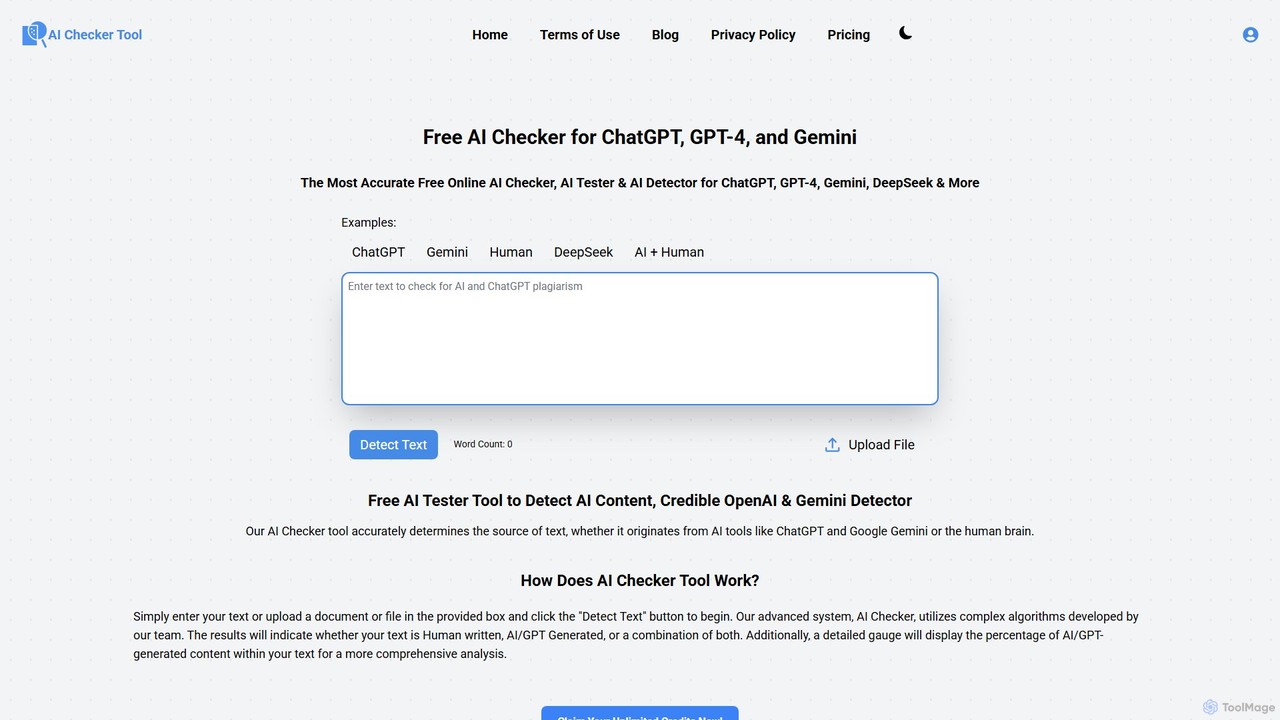
aicheckertool

aicheckertool

aicheckertool is a highly accurate AI content detector designed to distinguish between human-written text and content generated by …

2.2K
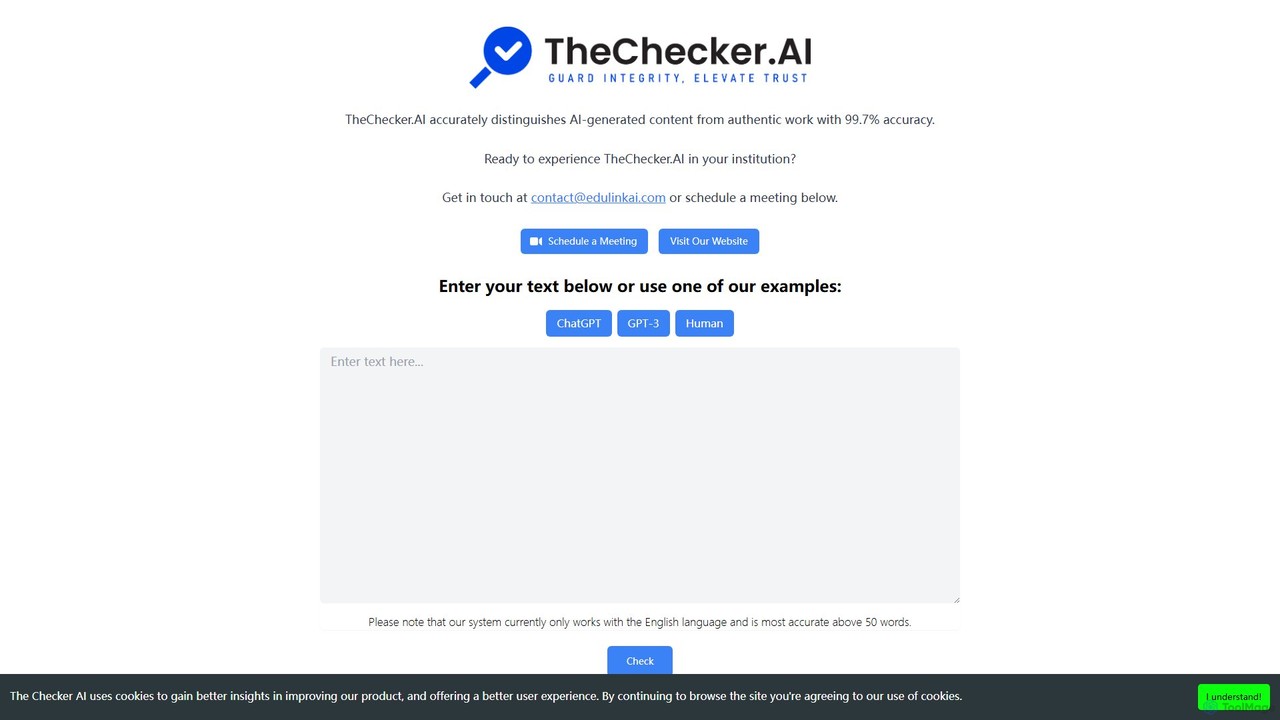
aicheatcheck

aicheatcheck

aicheatcheck (TheChecker.AI) is a specialized AI content detector for the education sector, offering 99.7% accuracy in distinguishing AI-generated …

5.0K
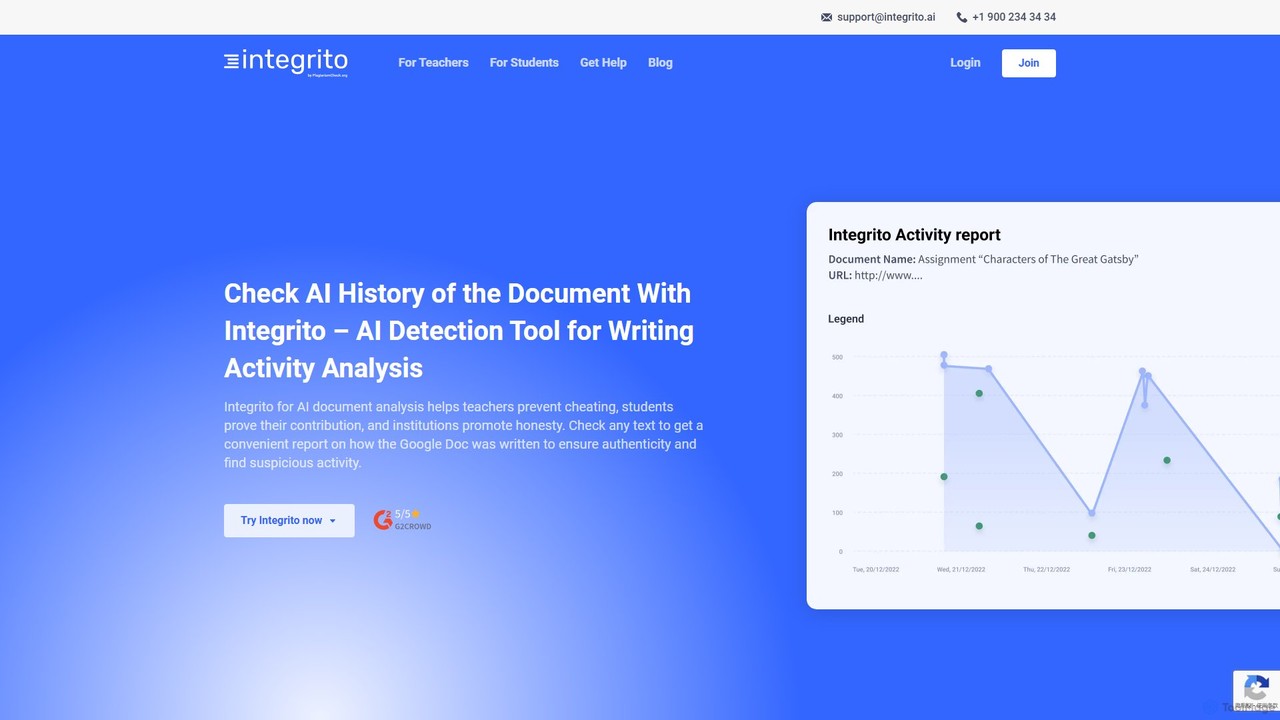
integrito

integrito

Integrito is an advanced AI detection tool that analyzes the writing process history in Google Docs. It helps …

3.5K

About Detection

AI Detection tools are a class of software that uses artificial intelligence to identify specific patterns, objects, anomalies, or attributes within data. These tools leverage complex machine learning models, such as natural language processing (NLP) for text analysis and computer vision for image recognition, to analyze content and flag targeted elements. Their primary value lies in verifying authenticity, ensuring quality control, and enhancing security across various digital and physical domains. They provide a critical layer of analysis for tasks ranging from identifying AI-generated content to detecting manufacturing defects.

Core Features

  • AI Content Identification: Detects text, images, audio, or video created by generative AI models.
  • Object & Anomaly Recognition: Pinpoints specific items, faces, or unusual patterns in visual data or data streams.
  • Plagiarism & Authenticity Verification: Compares content against extensive databases to identify copied material or verify originality.
  • Sentiment & Emotion Analysis: Determines the underlying emotional tone (positive, negative, neutral) in written text or speech.

Applicable Scenarios

These tools are widely used in academia to uphold integrity, in media to combat misinformation by verifying sources, in finance for fraud detection, and in manufacturing for automated quality assurance on production lines. They are essential for content moderators, security analysts, and researchers.

Selection Criteria

When selecting a detection tool, consider its accuracy and the rate of false positives/negatives. Evaluate the specific data types it supports (e.g., text, image, code), its integration capabilities via API, and whether its detection model is specialized for your specific need, such as identifying content from a particular AI model.


DetectionUse Cases

1

Verify Authenticity of Academic Papers

Educators and academic institutions use AI detection tools to maintain academic integrity. When a student submits an essay or research paper, an instructor can run the text through a detector. The tool scans for two primary issues: plagiarism, by comparing the text against a vast database of existing publications, and AI-generated content, by analyzing linguistic patterns like perplexity and burstiness. The system then generates a report highlighting potentially problematic sections, providing a probability score for AI authorship. This allows educators to quickly identify submissions that require further review, upholding standards and ensuring fairness.

2

Detect AI-Generated Images for News Outlets

Photojournalists and editors at news organizations face the challenge of synthetic media. To combat misinformation, they use AI image detection tools. Before publishing a user-submitted or wire-service photo from a conflict zone, an editor uploads it to a detection platform. The tool analyzes the image for artifacts common in AI generation, such as unnatural textures, inconsistent lighting, or flawed anatomical details (like hands). It provides a confidence score indicating the likelihood of the image being synthetic. This process serves as a crucial verification step, helping to maintain journalistic credibility and prevent the spread of fake news.

3

Automated Quality Control in Manufacturing

A factory manager uses an AI-powered visual detection system to automate quality control on a production line for electronic components. A high-speed camera captures images of each component as it passes. The AI model, trained on thousands of images of both perfect and defective parts, instantly analyzes each new image. It can detect microscopic cracks, soldering errors, or misaligned parts that are difficult for the human eye to spot consistently. If a defect is detected, the system automatically flags the component and diverts it from the main line for inspection. This significantly increases throughput, reduces human error, and ensures a higher standard of product quality.

4

Fraud Detection in Financial Transactions

A financial technology company employs an AI anomaly detection system to protect its users from fraud. The system continuously monitors transaction data in real-time, analyzing variables like transaction amount, location, time, and merchant type. It builds a baseline of normal spending behavior for each user. When a transaction occurs that significantly deviates from this established pattern—such as a large purchase from a foreign country when the user is typically local—the AI flags it as a high-risk anomaly. The system can then automatically block the transaction and send an immediate alert to the user for verification, preventing financial loss before it happens.

5

Content Moderation on Social Media Platforms

A social media platform uses AI detection models to enforce its community guidelines at scale. When a user uploads an image or video, it is automatically scanned by an AI system. This system is trained to detect various types of prohibited content, including graphic violence, hate symbols, and explicit material. If the AI detects a policy violation with high confidence, it can automatically remove the content and issue a warning to the user. For borderline cases, it flags the content for human review. This automated first-pass moderation allows the platform to handle millions of daily uploads efficiently, protecting users from harmful content while freeing up human moderators to focus on complex cases.

6

Monitor Brand Sentiment Online

A marketing team for a global consumer brand uses an AI sentiment detection tool to track public perception. The tool continuously scans the internet for mentions of the brand across social media, news articles, and review websites. For each mention, the AI's natural language processing (NLP) model analyzes the text to determine if the sentiment is positive, negative, or neutral. The results are aggregated into a real-time dashboard, allowing the marketing team to visualize sentiment trends, identify a sudden drop that could signal a PR crisis, or pinpoint positive feedback to amplify in their campaigns. This provides actionable insights without manually reading thousands of comments.

DetectionFrequently Asked Questions