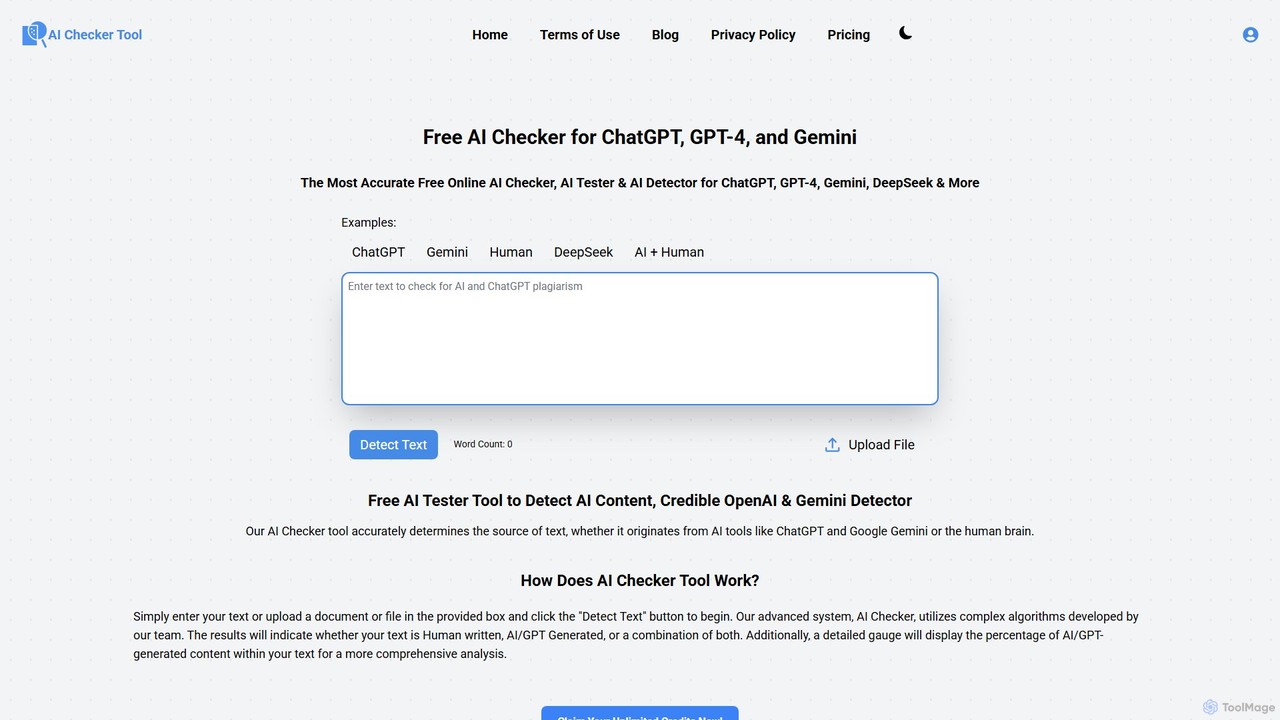
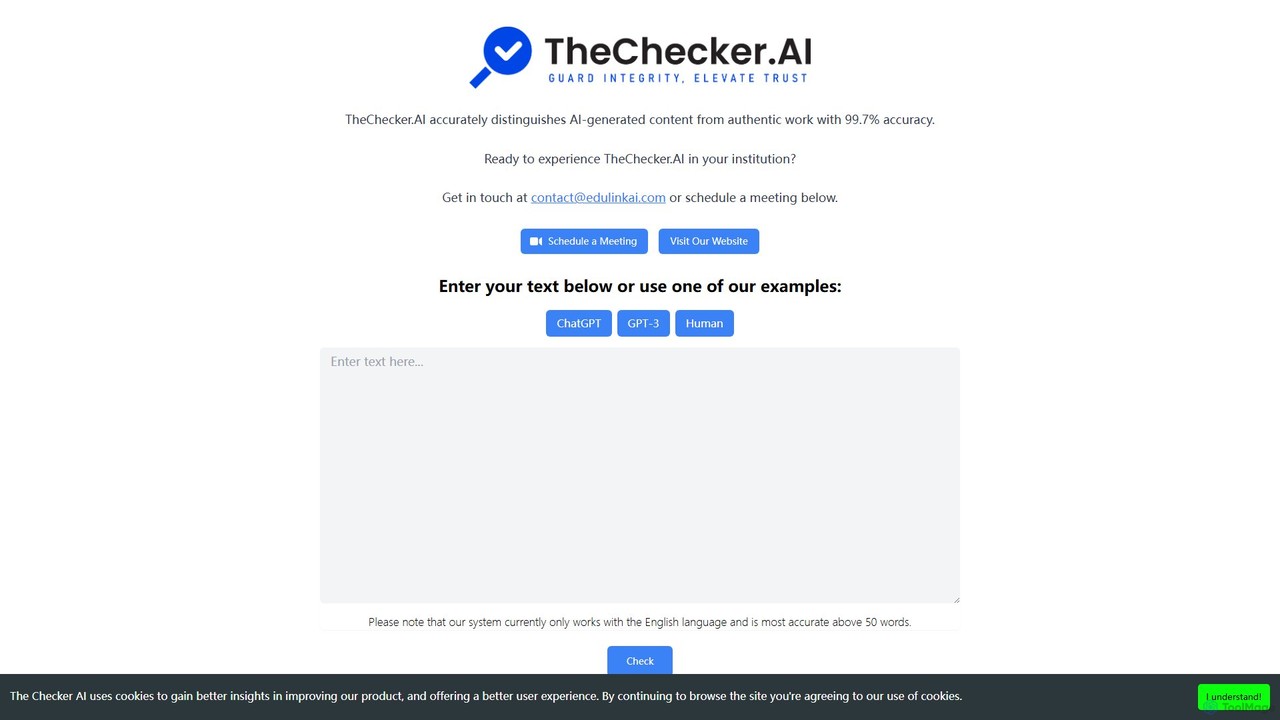
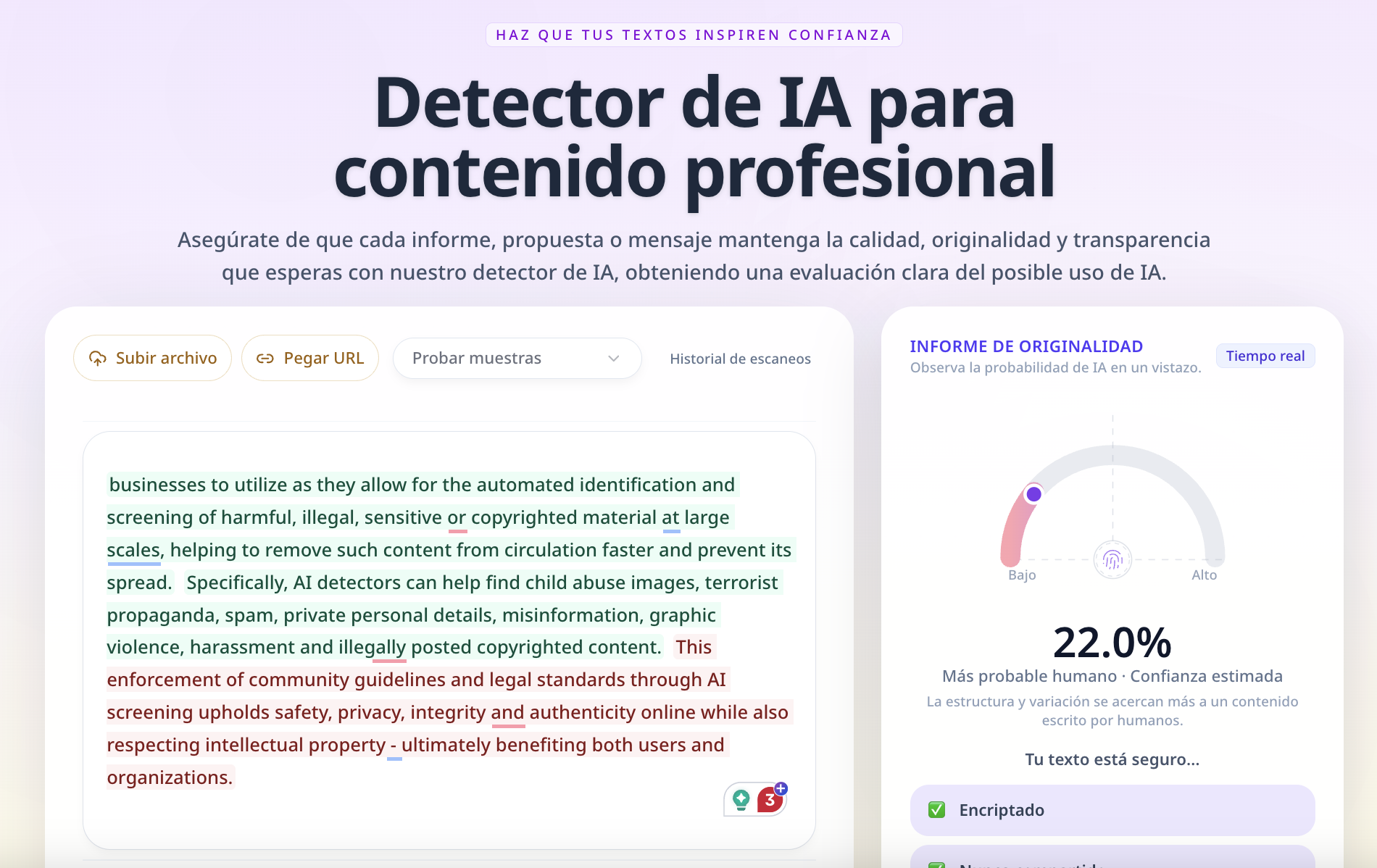
AI Detection tools are a class of software that uses artificial intelligence to identify specific patterns, objects, anomalies, or attributes within data. These tools leverage complex machine learning models, such as natural language processing (NLP) for text analysis and computer vision for image recognition, to analyze content and flag targeted elements. Their primary value lies in verifying authenticity, ensuring quality control, and enhancing security across various digital and physical domains. They provide a critical layer of analysis for tasks ranging from identifying AI-generated content to detecting manufacturing defects.
Core Features
- AI Content Identification: Detects text, images, audio, or video created by generative AI models.
- Object & Anomaly Recognition: Pinpoints specific items, faces, or unusual patterns in visual data or data streams.
- Plagiarism & Authenticity Verification: Compares content against extensive databases to identify copied material or verify originality.
- Sentiment & Emotion Analysis: Determines the underlying emotional tone (positive, negative, neutral) in written text or speech.
Applicable Scenarios
These tools are widely used in academia to uphold integrity, in media to combat misinformation by verifying sources, in finance for fraud detection, and in manufacturing for automated quality assurance on production lines. They are essential for content moderators, security analysts, and researchers.
Selection Criteria
When selecting a detection tool, consider its accuracy and the rate of false positives/negatives. Evaluate the specific data types it supports (e.g., text, image, code), its integration capabilities via API, and whether its detection model is specialized for your specific need, such as identifying content from a particular AI model.