Cheatproof
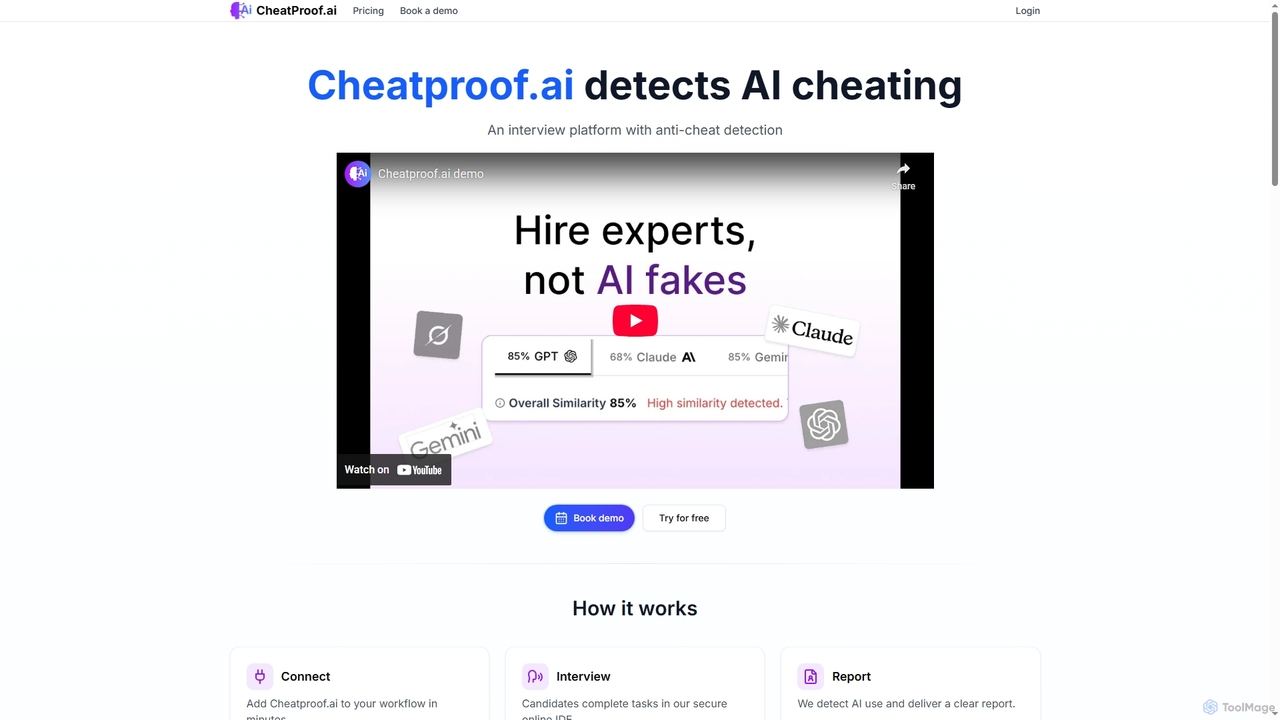
Cheatproof is an advanced AI detection platform designed for the hiring process, enabling HR and tech teams to …
Cheatproof is an advanced AI detection platform designed for the hiring process, enabling HR and tech teams to identify AI-assisted answers and ensure candidate authenticity during interviews. It features a secure online IDE, real-time AI detection, and comprehensive candidate activity tracking to reduce hiring risks and standardize fair assessments.
Nextprep
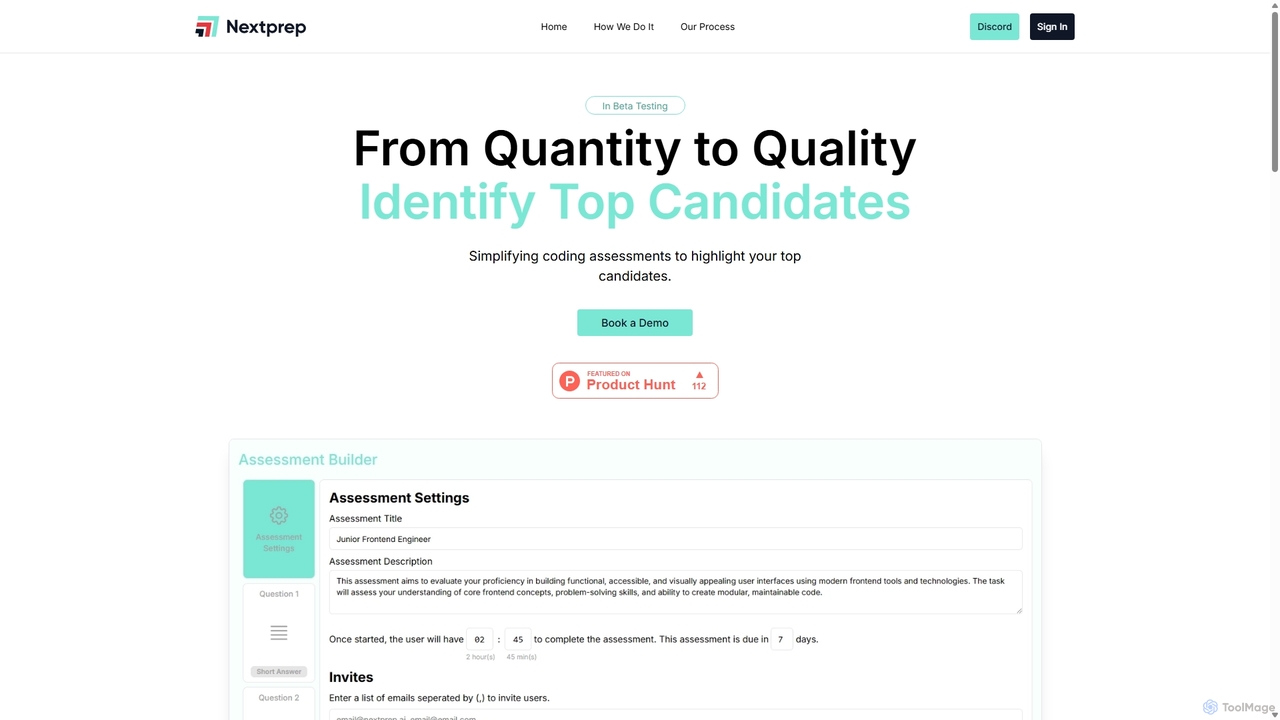
Nextprep is an AI-powered platform designed to streamline technical hiring by simplifying coding assessments. It helps companies identify …
Nextprep is an AI-powered platform designed to streamline technical hiring by simplifying coding assessments. It helps companies identify top engineering candidates by moving from a large quantity of applicants to a high-quality, vetted pool. The tool offers immersive, real-time coding tests and generates insightful performance reports, automating the initial screening process and enabling data-driven hiring decisions.
Reppls
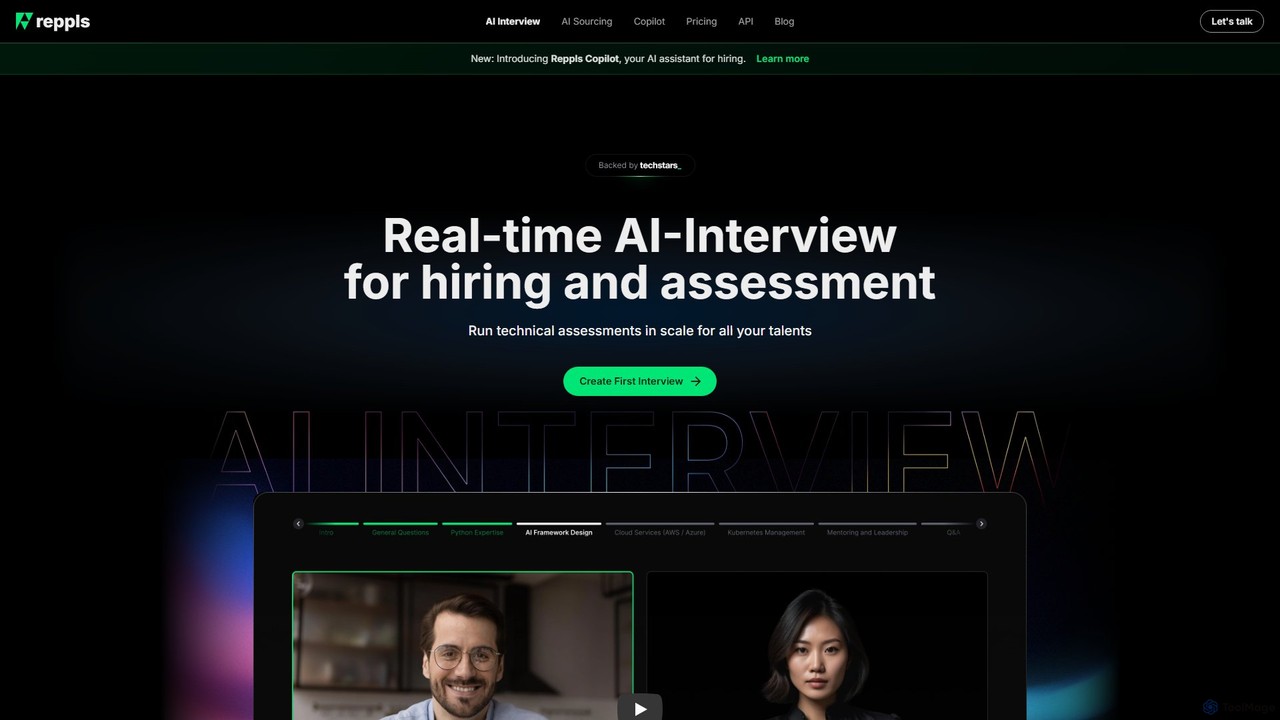
Reppls is an all-in-one AI recruitment platform designed to streamline hiring. It offers real-time AI-driven interviews, advanced coding …
Reppls is an all-in-one AI recruitment platform designed to streamline hiring. It offers real-time AI-driven interviews, advanced coding assessments, and comprehensive talent analytics. With support for 19 languages and robust anti-cheating proctoring, Reppls helps teams make fair, data-driven hiring decisions at scale, reducing time and eliminating bias.
HireHunch
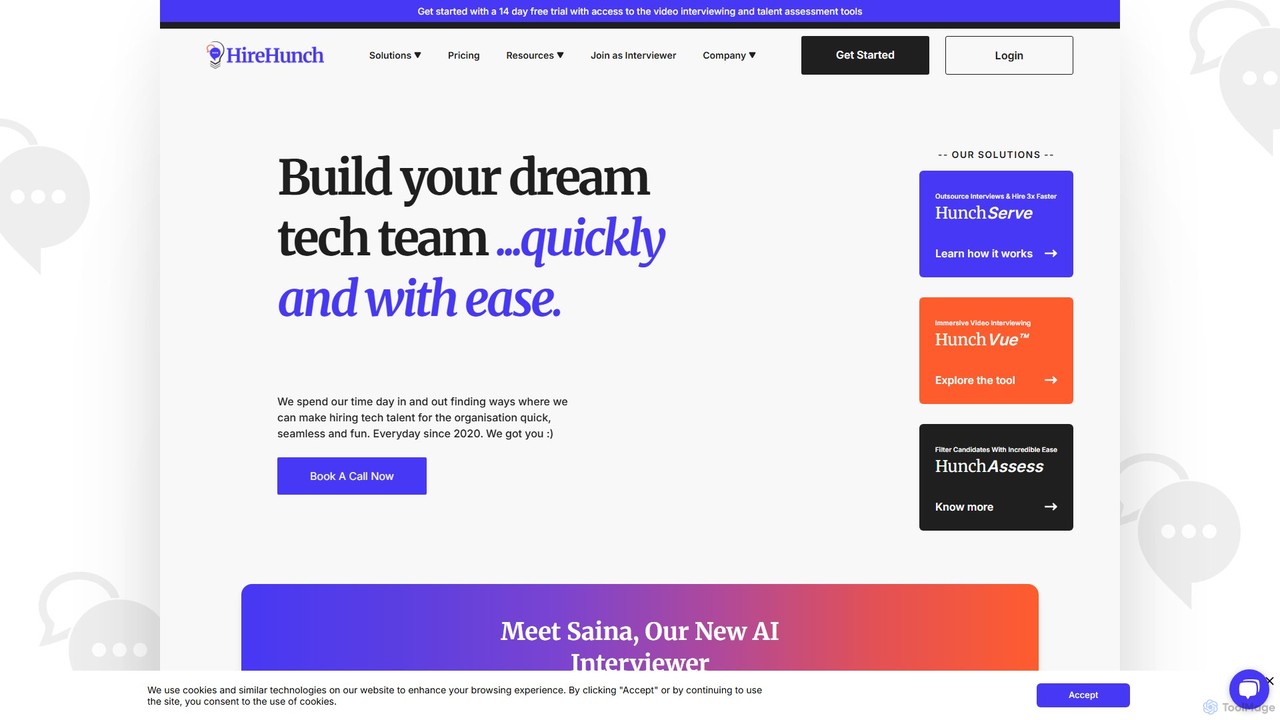
HireHunch is an AI-powered hiring platform offering Interview-as-a-Service (IaaS), a video interview environment, and candidate assessment tools. It …
HireHunch is an AI-powered hiring platform offering Interview-as-a-Service (IaaS), a video interview environment, and candidate assessment tools. It streamlines tech recruitment by outsourcing interviews to experts, automating screening with AI, and providing a comprehensive suite to hire top talent 3x faster while reducing bias and saving engineering hours.
About Code Assessment
AI Code Assessment tools are a specialized category of developer utilities that automatically analyze source code for quality, security, and performance issues. They leverage static analysis techniques and machine learning models to identify bugs, vulnerabilities, and stylistic inconsistencies without executing the program. These tools provide actionable feedback, helping development teams improve code maintainability, enhance security posture, and accelerate the code review process. They act as an automated expert, ensuring consistent standards across large codebases.
Core Features
- Static Analysis (SAST): Scans source code to detect potential bugs, security flaws, and anti-patterns before runtime.
- Vulnerability Detection: Identifies common security risks such as SQL injection, cross-site scripting (XSS), and insecure configurations.
- Code Quality Metrics: Calculates objective measures like cyclomatic complexity, code duplication, and maintainability index to assess code health.
- Automated Code Review: Provides context-aware suggestions on logic, style, and best practices, simulating a peer review.
- Refactoring Recommendations: Suggests specific code modifications to improve readability, performance, and adherence to design principles.
Use Cases
These tools are integral to modern software development workflows. They are commonly integrated into CI/CD pipelines to provide immediate feedback on every code commit. Security teams use them for comprehensive code audits and to enforce compliance standards. They also assist in managing technical debt by providing a clear overview of problematic areas in a legacy codebase.
How to Choose
When selecting an AI Code Assessment tool, consider its language and framework support to ensure compatibility with your tech stack. Evaluate its integration capabilities with your version control system (e.g., GitHub, GitLab) and CI/CD tools. Assess the depth and accuracy of its analysis, particularly the balance between security vulnerability detection and code quality checks. Finally, examine the clarity of its reporting and the actionability of its recommendations.
Code AssessmentUse Cases
Automate Code Reviews in CI/CD Pipelines
A DevOps engineer or software developer integrates an AI Code Assessment tool into their Continuous Integration/Continuous Deployment (CI/CD) pipeline. When a developer pushes new code to the repository, the pipeline automatically triggers the tool to scan the changes. The tool analyzes the code for potential bugs, security vulnerabilities, and violations of coding standards. If critical issues are found, the build can be configured to fail, preventing flawed code from being merged. This process provides immediate, consistent feedback to developers, reduces the manual workload on senior reviewers, and ensures a baseline quality and security standard for all code entering the main branch.
Conduct Security Audits for Compliance
A security analyst or compliance officer uses an AI Code Assessment tool to perform a comprehensive security audit of an application's codebase. Their goal is to identify vulnerabilities and ensure compliance with standards like GDPR, HIPAA, or PCI DSS. The tool systematically scans the entire codebase, flagging security weaknesses such as potential data leaks, improper authentication, or known vulnerabilities in third-party libraries. The generated report provides a detailed list of findings, categorized by severity, along with remediation guidance. This automates a significant portion of the audit process, enabling teams to proactively address security risks and generate the necessary documentation for compliance verification.
Manage and Prioritize Technical Debt
A tech lead or engineering manager needs to address the accumulated technical debt in a legacy project. They use an AI Code Assessment tool to scan the entire codebase and generate a comprehensive report on its health. The tool identifies areas with high cyclomatic complexity, excessive code duplication, and low maintainability. By quantifying these issues, the manager can objectively measure the technical debt. The report helps them prioritize refactoring tasks based on severity and impact, create tickets for the development team, and track progress over time. This data-driven approach transforms technical debt from a vague concept into a manageable set of actionable tasks.
Accelerate Onboarding for New Developers
A team lead is onboarding a new junior developer onto a large, complex project. To help the new hire understand the codebase and its quality standards, they are given access to the team's AI Code Assessment tool. The developer can run scans on their own code before submitting it for review, getting instant feedback on style conventions, potential pitfalls, and best practices specific to the project. This self-service approach empowers the new developer to learn independently, reduces the number of basic errors in their pull requests, and frees up senior developers' time from mentoring on fundamental coding standards. It helps standardize code quality across the entire team, regardless of individual experience levels.
Evaluate Third-Party Code and Libraries
Before integrating a new open-source library or a component from a third-party vendor, a software architect or senior developer needs to assess its quality and security. They use an AI Code Assessment tool to scan the library's source code. The analysis reveals potential security vulnerabilities, reliance on outdated dependencies, or poor coding practices that could introduce risks into their own application. The resulting report provides a clear, objective basis for deciding whether to adopt the library, request changes from the vendor, or look for an alternative. This proactive evaluation prevents the introduction of hidden security flaws and future maintenance headaches.
Prepare for a Large-Scale Code Refactoring
An engineering team is planning a major refactoring of a critical application to improve its architecture and performance. Before starting, they use an AI Code Assessment tool to establish a baseline of the current code quality. The tool generates detailed metrics on complexity, duplication, and dependencies, highlighting the most problematic modules. This initial assessment helps the team scope the refactoring effort, identify high-risk areas, and set clear, measurable goals (e.g., 'reduce cyclomatic complexity in the payment module by 20%'). As they refactor, they can run subsequent scans to track progress against the baseline, ensuring the changes are genuinely improving the codebase's health and not introducing new issues.