Enforster AI
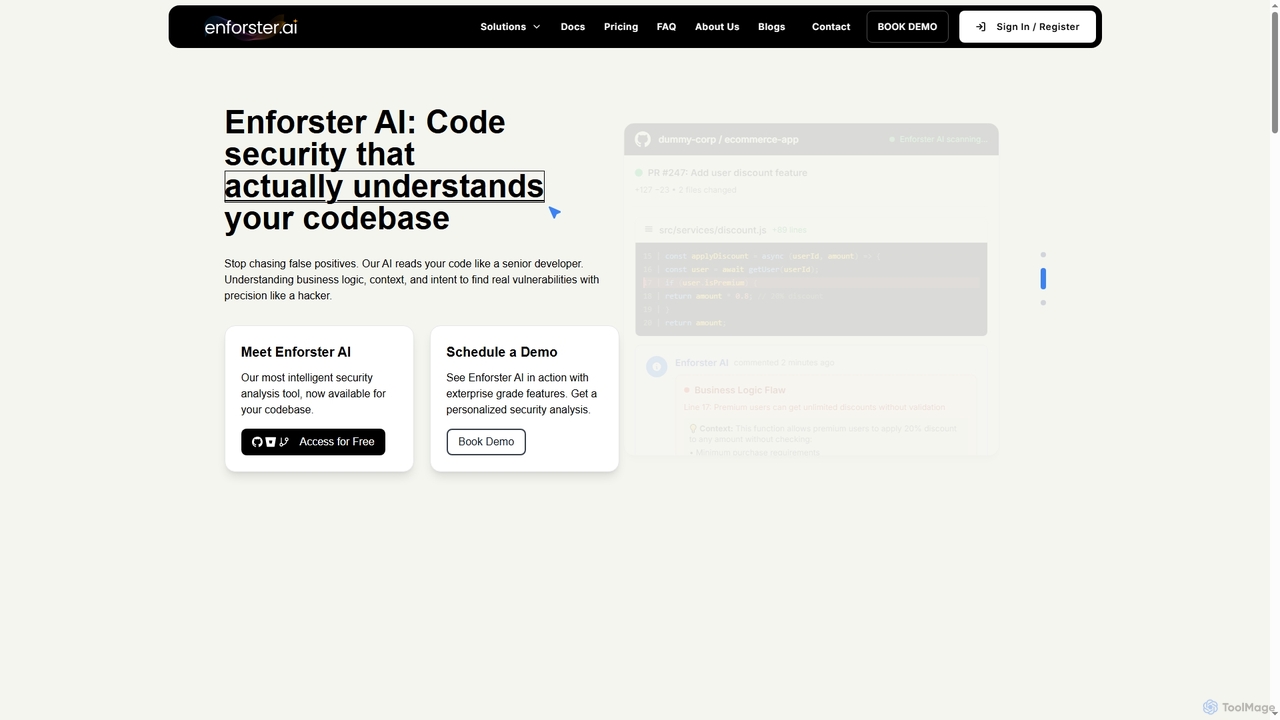
Enforster AI is an AI-native Static Application Security Testing (SAST) tool that analyzes code like a senior developer. …
Enforster AI is an AI-native Static Application Security Testing (SAST) tool that analyzes code like a senior developer. It understands business logic and context to identify real vulnerabilities with 90% accuracy, reducing false positives by 60% and providing AI-generated fixes.
Aquilax
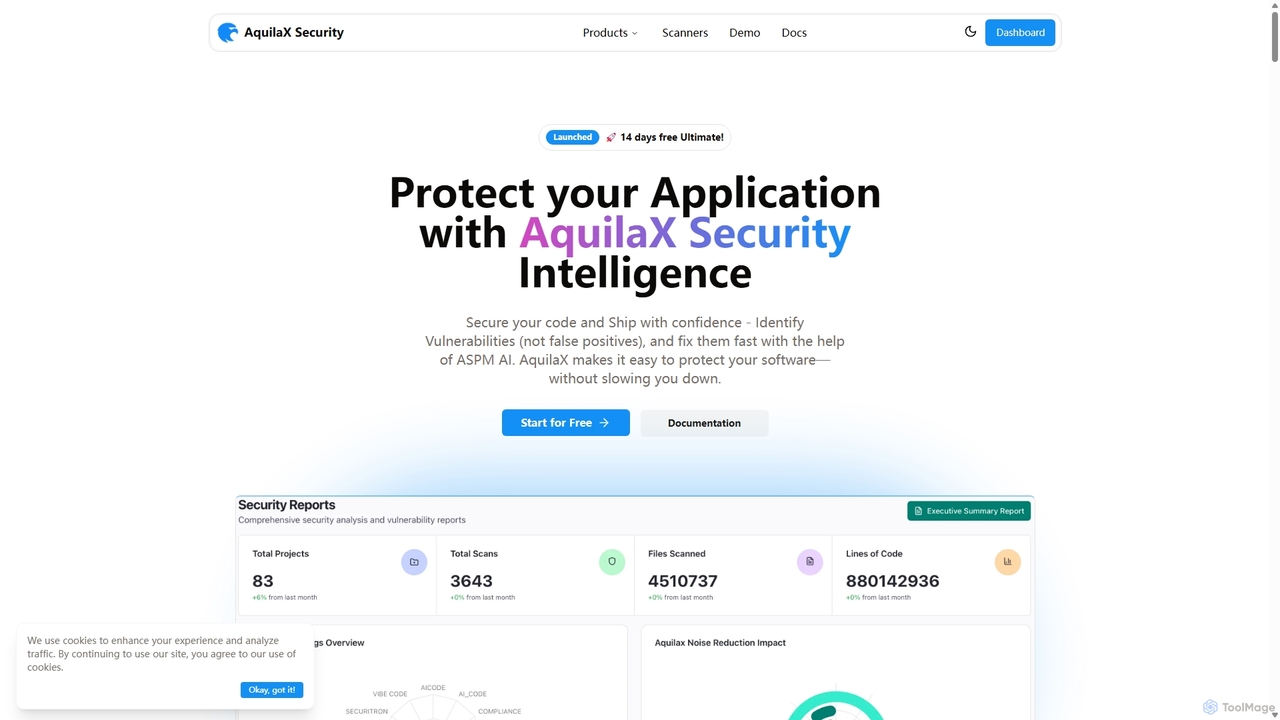
AquilaX is an AI-powered DevSecOps platform designed to secure software throughout the development lifecycle. It integrates seamlessly into …
AquilaX is an AI-powered DevSecOps platform designed to secure software throughout the development lifecycle. It integrates seamlessly into CI/CD pipelines, offering a suite of 12 advanced scanners for vulnerabilities, secrets, and compliance. With its self-learning AI model, AquilaX dramatically reduces false positives, provides actionable remediation steps, and empowers teams to ship secure code with confidence and speed.
Dryrun Security
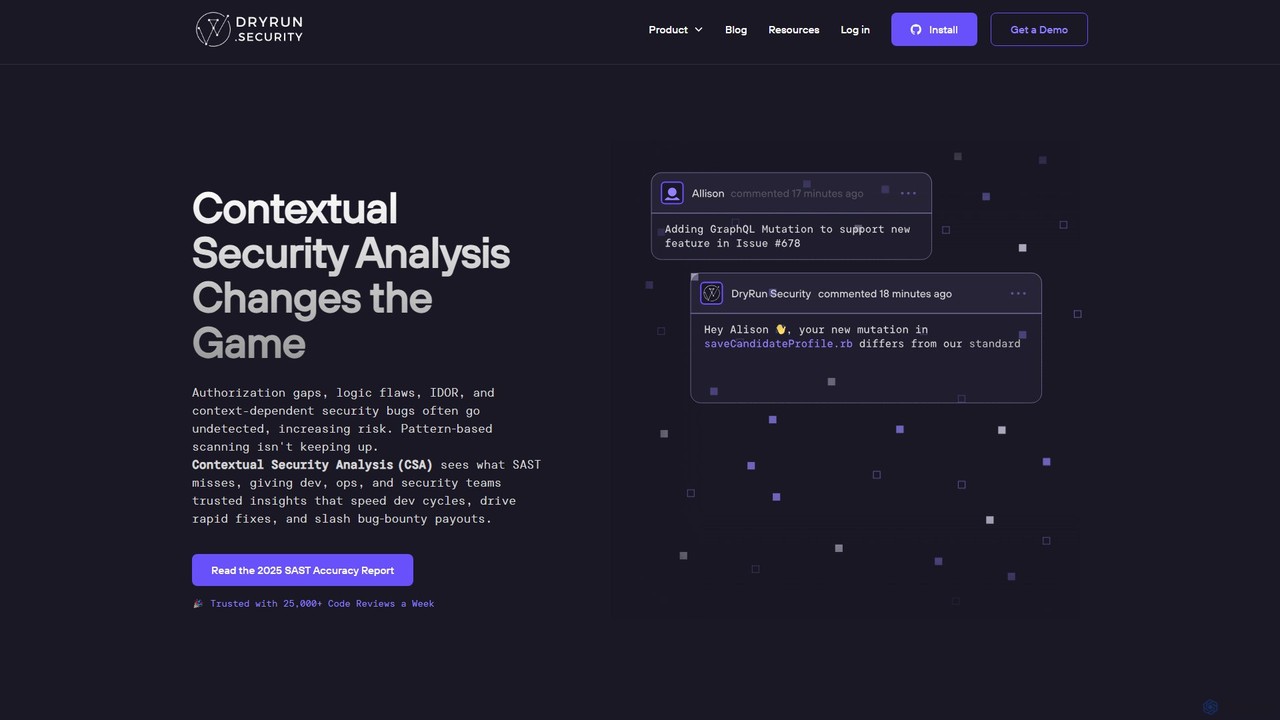
Dryrun Security is an AI-powered application security platform that uses Contextual Security Analysis (CSA) to find and fix …
Dryrun Security is an AI-powered application security platform that uses Contextual Security Analysis (CSA) to find and fix complex vulnerabilities traditional scanners miss. It integrates directly into developer workflows like GitHub, providing real-time, low-false-positive feedback within pull requests to enhance collaboration and accelerate secure development.
SolidityScan
SolidityScan is an AI-powered smart contract vulnerability scanner and auditing tool. It automates the security analysis of Solidity …
SolidityScan is an AI-powered smart contract vulnerability scanner and auditing tool. It automates the security analysis of Solidity code, detecting vulnerabilities, suggesting gas optimizations, and ensuring compliance with best practices to secure Web3 applications.
ZeroPath
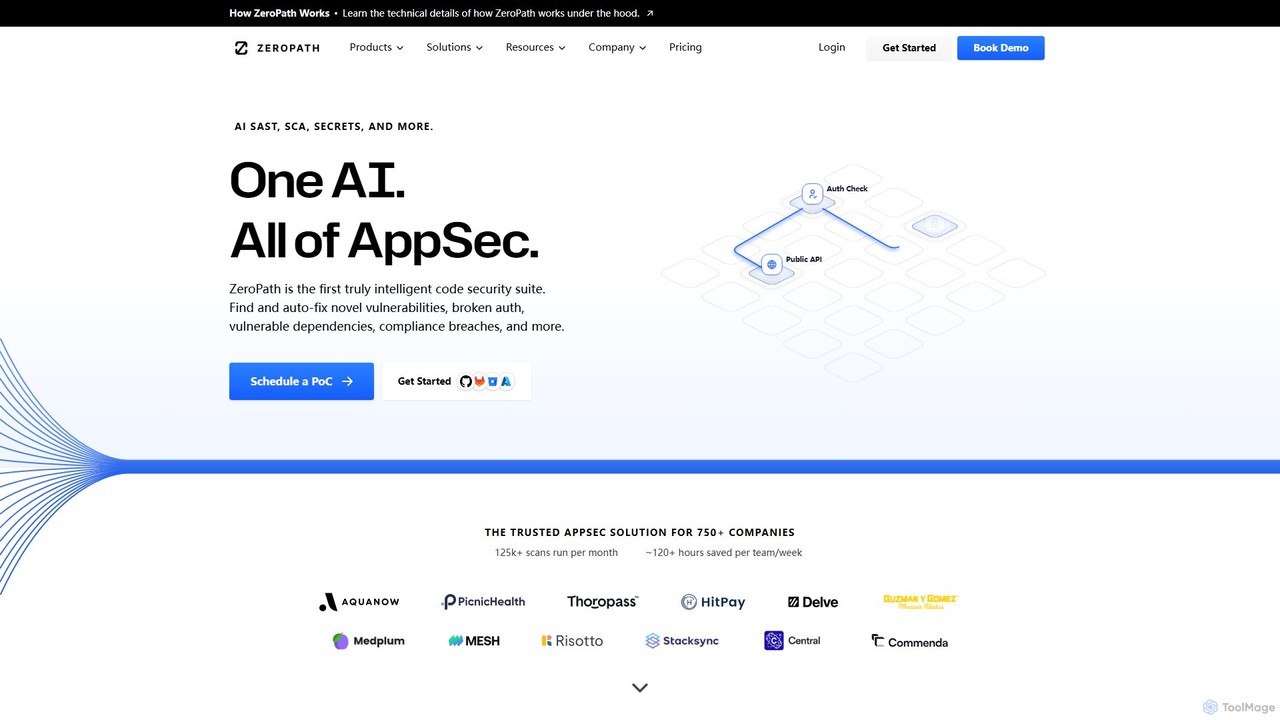
ZeroPath is an AI-native application security (AppSec) platform that unifies SAST, SCA, secrets detection, and more. It intelligently …
ZeroPath is an AI-native application security (AppSec) platform that unifies SAST, SCA, secrets detection, and more. It intelligently finds and automatically fixes complex vulnerabilities, significantly reduces false positives, and seamlessly integrates into developer workflows to make security a collaborative effort.
SecuredAI
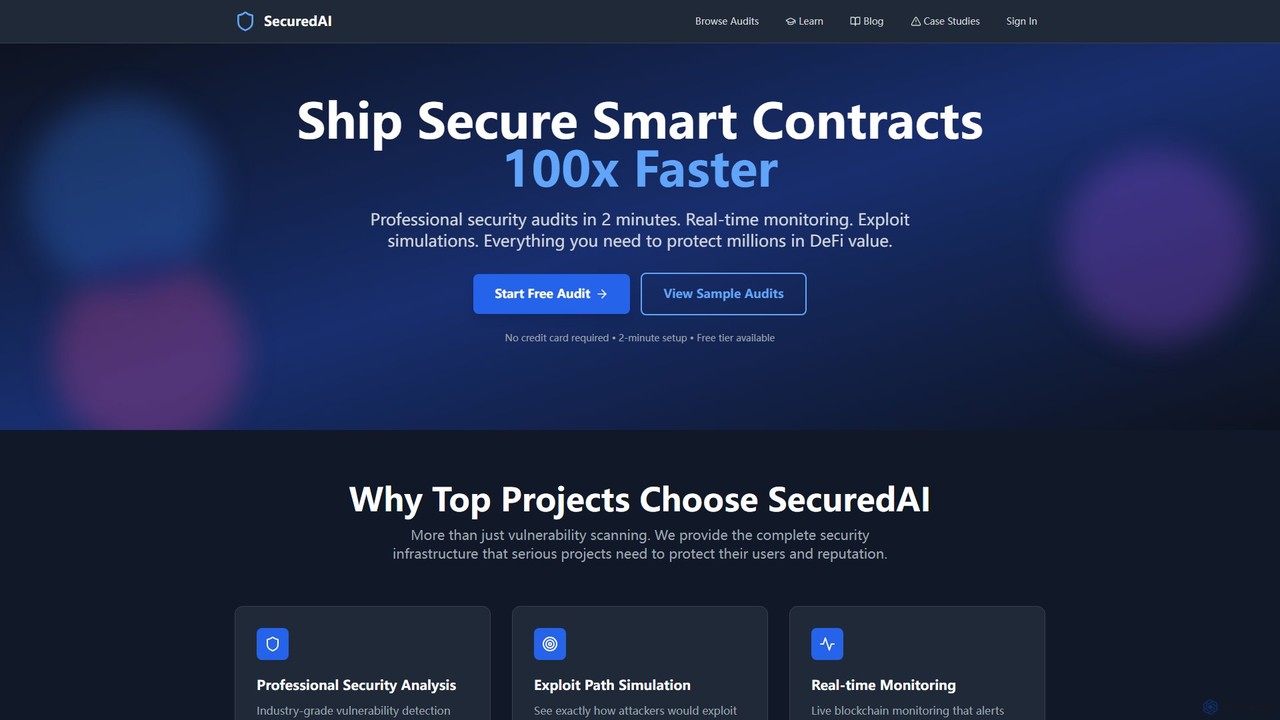
SecuredAI is an AI-powered Web3 security platform that provides professional smart contract security audits in minutes. It offers …
SecuredAI is an AI-powered Web3 security platform that provides professional smart contract security audits in minutes. It offers a complete security infrastructure, including real-time on-chain monitoring, exploit simulations, and on-chain verification, enabling developers to ship secure code 100x faster and protect their DeFi projects.
Healthy Package
Healthy Package is an AI-powered tool by DerScanner that assesses the security and health of open-source packages. It …
Healthy Package is an AI-powered tool by DerScanner that assesses the security and health of open-source packages. It analyzes over 100 million packages, providing a comprehensive health score based on popularity, author reliability, security commitment, and community activity to help developers prevent vulnerabilities in their applications.
HoundDog.ai
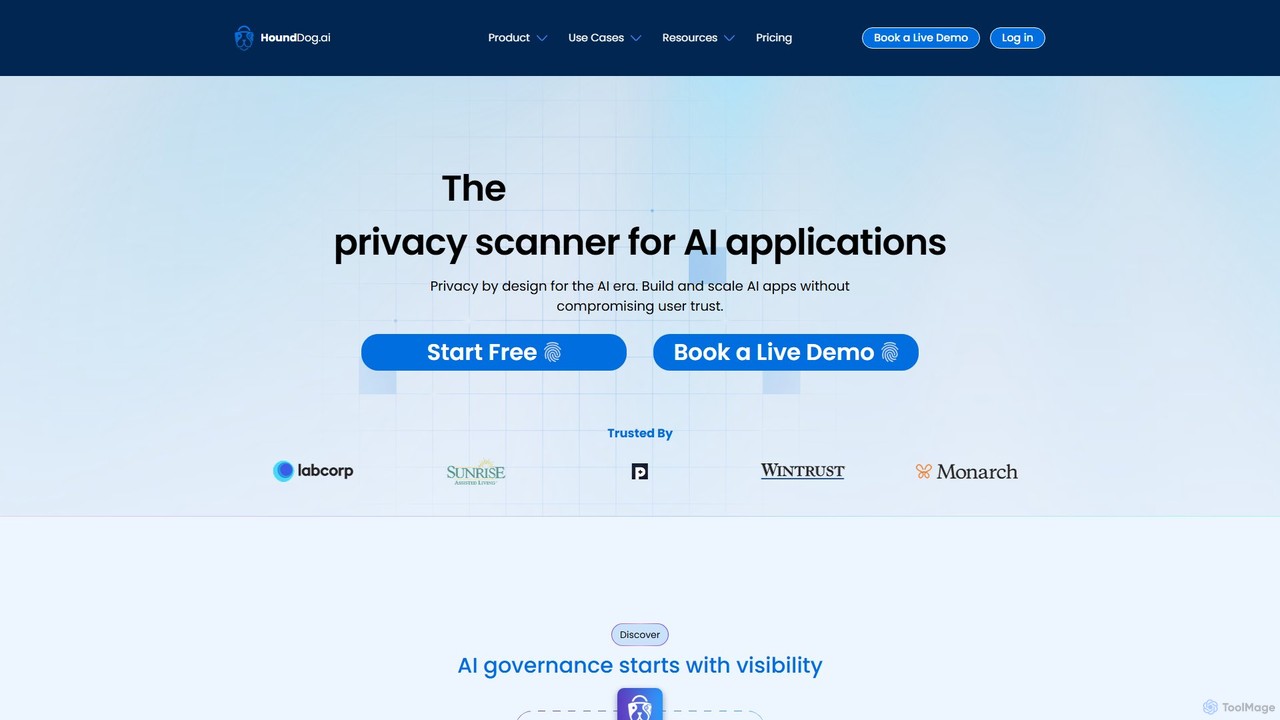
A proactive privacy code scanner for AI applications that automates data mapping and prevents PII leaks early in …
A proactive privacy code scanner for AI applications that automates data mapping and prevents PII leaks early in development. It integrates into the SDLC to enforce privacy by design, discover shadow AI, and ensure compliance with regulations like GDPR and HIPAA.
Corgea
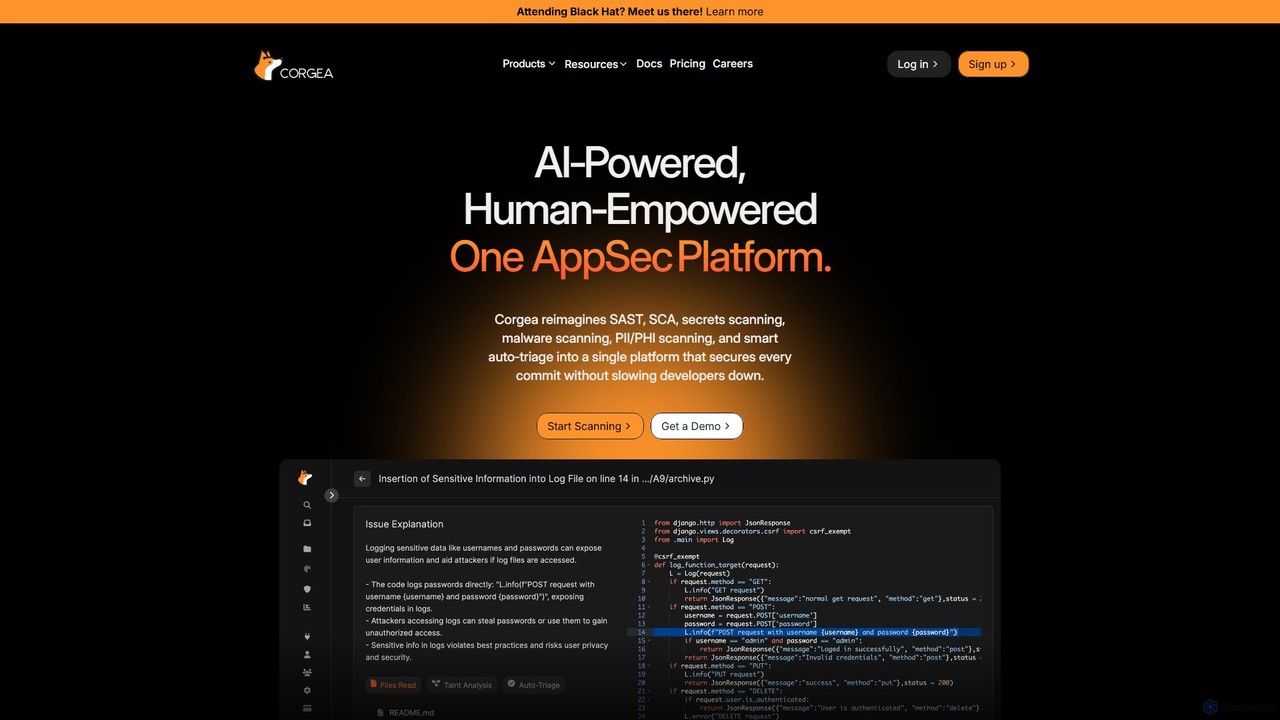
Corgea is an AI-powered application security (AppSec) platform that unifies SAST, SCA, secrets scanning, and more. It intelligently …
Corgea is an AI-powered application security (AppSec) platform that unifies SAST, SCA, secrets scanning, and more. It intelligently triages vulnerabilities, reducing false positives by up to 90%, and automatically generates code fixes. Designed for modern development teams, Corgea integrates seamlessly into developer workflows (GitHub, Azure DevOps), enabling them to secure every commit without sacrificing speed.
Snyk
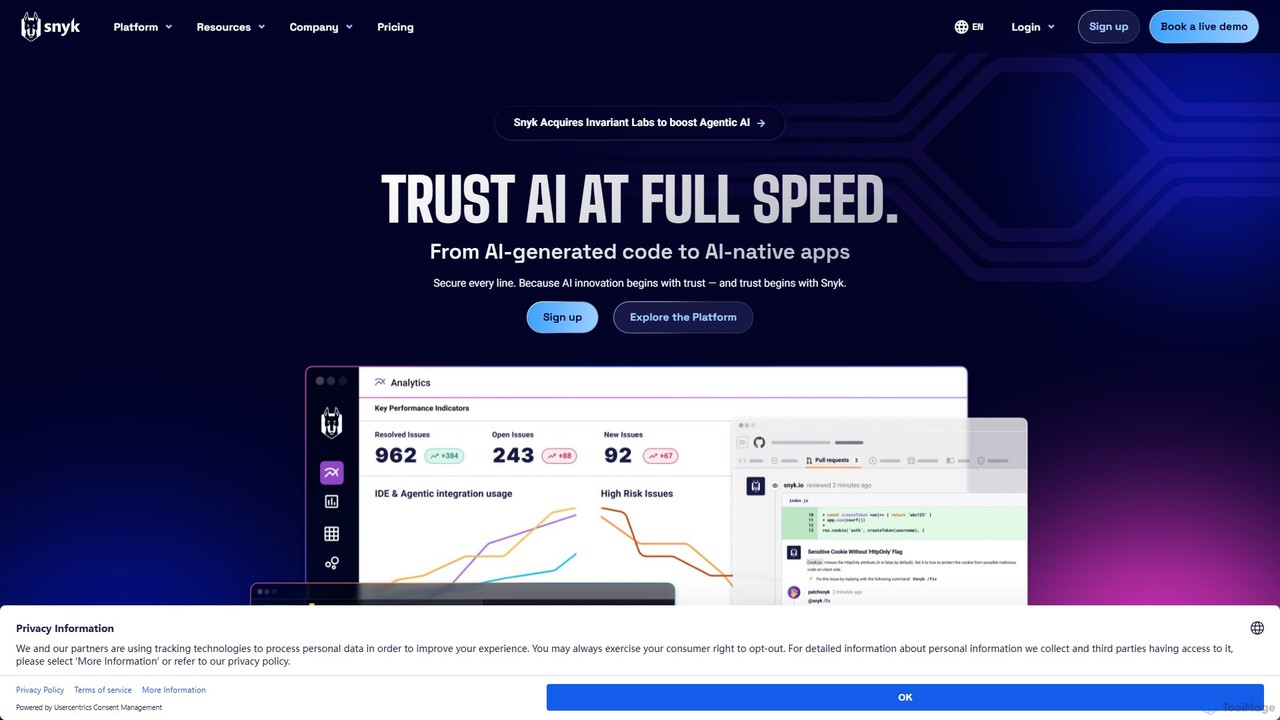
Snyk is an AI-powered developer security platform that helps businesses build software securely. It proactively finds and fixes …
Snyk is an AI-powered developer security platform that helps businesses build software securely. It proactively finds and fixes vulnerabilities in custom code, open-source dependencies, containers, and Infrastructure as Code (IaC) throughout the entire development lifecycle, from IDE to production.
EdgeBit
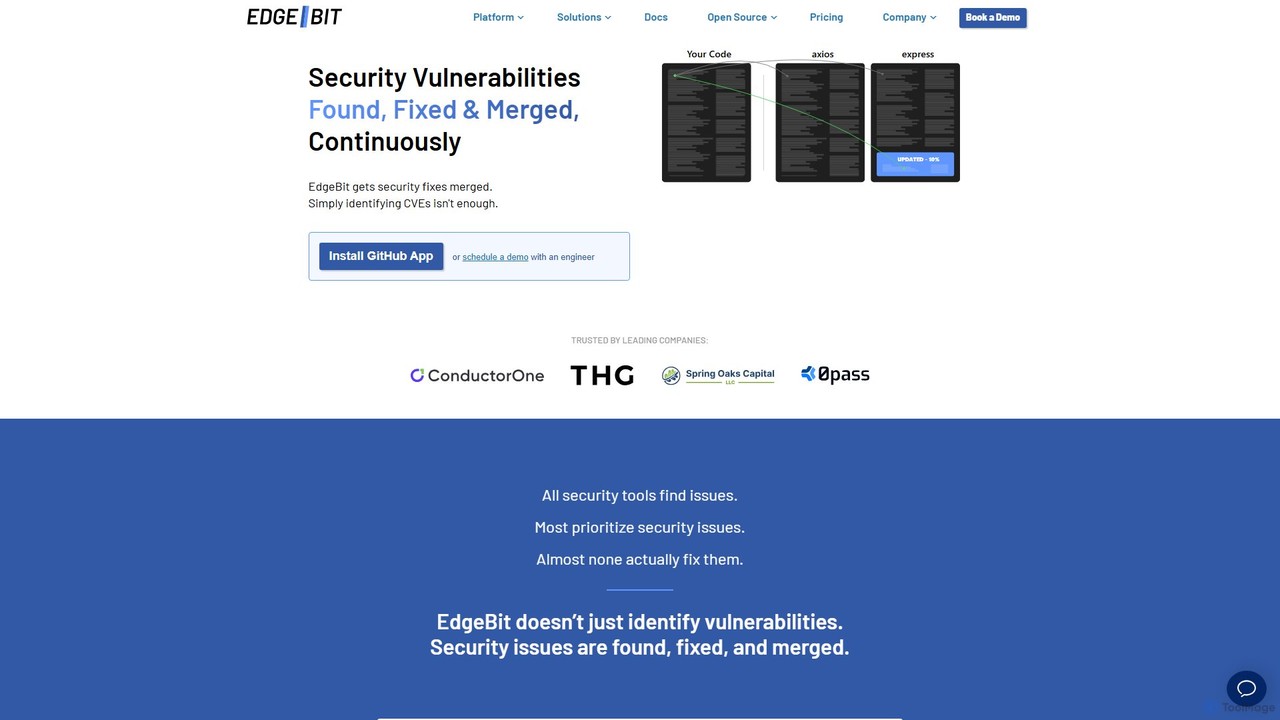
EdgeBit is an AI-powered platform for real-time software supply chain security. It automates Software Composition Analysis (SCA) and …
EdgeBit is an AI-powered platform for real-time software supply chain security. It automates Software Composition Analysis (SCA) and dependency management, identifying and fixing vulnerabilities by connecting build pipelines to runtime environments. It uses AI to propose low-risk, automated dependency upgrades, saving developer time and enhancing security.
About Code Security
Code Security tools are a specialized category of developer utilities that leverage artificial intelligence to automatically analyze source code for vulnerabilities. They employ machine learning models to scan codebases, dependencies, and infrastructure configurations, identifying security flaws and insecure coding practices. The primary value of these tools is their ability to shift security left, enabling developers to find and fix issues early in the development lifecycle before they reach production. AI enhances this process by detecting complex, non-obvious vulnerabilities that rule-based static analysis tools might miss.
Core Features
- AI-Powered Vulnerability Detection: Scans code for common weaknesses like SQL injection and XSS, as well as complex, context-specific flaws.
- Software Composition Analysis (SCA): Identifies known vulnerabilities within third-party libraries and open-source dependencies.
- Secret Scanning: Automatically detects hardcoded credentials, API keys, and other sensitive data within the codebase.
- Infrastructure as Code (IaC) Analysis: Reviews configuration files (e.g., Terraform, Docker) for security misconfigurations.
- Actionable Remediation Guidance: Provides context-aware suggestions and code examples to help developers fix identified issues quickly.
Use Cases
These tools are essential for organizations practicing DevSecOps, where security is integrated into every stage of the CI/CD pipeline. They are used by software development teams to build secure applications, by security engineers to conduct automated code audits, and by compliance teams to enforce coding standards and policies.
How to Choose
When selecting a Code Security tool, consider its language and framework support to ensure it covers your tech stack. Evaluate its integration capabilities with your existing tools like Git repositories, CI/CD platforms, and issue trackers. Assess the tool's accuracy and the rate of false positives to avoid developer fatigue. Finally, examine the quality of its remediation guidance and reporting features.
Code SecurityUse Cases
Automating Security Checks in CI/CD Pipelines
For a DevOps team, integrating a Code Security tool into their Continuous Integration/Continuous Deployment (CI/CD) pipeline is a critical step towards implementing DevSecOps. When a developer submits a pull request, the tool automatically triggers a scan on the new code. It analyzes for potential vulnerabilities, exposed secrets, or insecure dependencies. If critical issues are found, the build can be configured to fail, preventing insecure code from being merged. This automated gatekeeping ensures that security is a consistent, non-negotiable part of the development workflow, significantly reducing the risk of deploying vulnerable applications to production.
Securing Open-Source Dependencies
A backend developer working on a microservices architecture relies heavily on open-source packages from repositories like npm or PyPI. A Code Security tool with Software Composition Analysis (SCA) continuously monitors the project's dependency manifest file. If a new vulnerability is disclosed for a library the project uses (e.g., Log4Shell), the tool immediately alerts the developer. It provides details about the vulnerability, its severity, and often suggests the minimum safe version to upgrade to, helping to mitigate software supply chain risks proactively.
Conducting Comprehensive Code Audits
An application security (AppSec) engineer is tasked with auditing a large, legacy enterprise application. Manually reviewing millions of lines of code is impractical. By using an AI-powered Code Security tool, the engineer can perform a deep scan of the entire codebase in a fraction of the time. The tool generates a prioritized report of findings, highlighting critical vulnerabilities like remote code execution or data leakage paths. This allows the security team to focus their manual efforts on the most complex business logic flaws, using the automated scan as a comprehensive baseline.
Preventing Accidental Secret Exposure
A developer, working late to meet a deadline, accidentally includes a cloud provider's API key in a code commit and pushes it to a public GitHub repository. A Code Security tool integrated with the repository scans the commit in real-time. It immediately identifies the string pattern matching an API key and triggers an alert to both the developer and the security team. This instant notification allows the developer to revoke the key and remove it from the repository's history before it can be discovered and exploited by malicious actors, preventing a potentially catastrophic security breach.
Validating Infrastructure as Code (IaC) Security
A cloud engineering team uses Terraform to manage their AWS infrastructure. Before applying any changes, their CI pipeline runs a Code Security tool to scan the Terraform files. The tool checks for common misconfigurations, such as creating publicly accessible S3 buckets, using overly permissive IAM roles, or leaving sensitive network ports open to the internet. By catching these issues before the infrastructure is provisioned, the team ensures their cloud environment is built on a secure foundation and complies with company security policies from the outset.
In-IDE Developer Security Training
A junior developer is writing a new feature that involves handling user input. As they type, a Code Security tool plugin within their IDE (like VS Code) highlights a line of code susceptible to SQL injection. Instead of just flagging an error, the tool provides a detailed explanation of the vulnerability and offers a secure code snippet demonstrating how to use parameterized queries to fix it. This immediate, context-aware feedback acts as a real-time coaching mechanism, helping the developer learn secure coding practices and improve their skills without leaving their development environment.