Label Studio
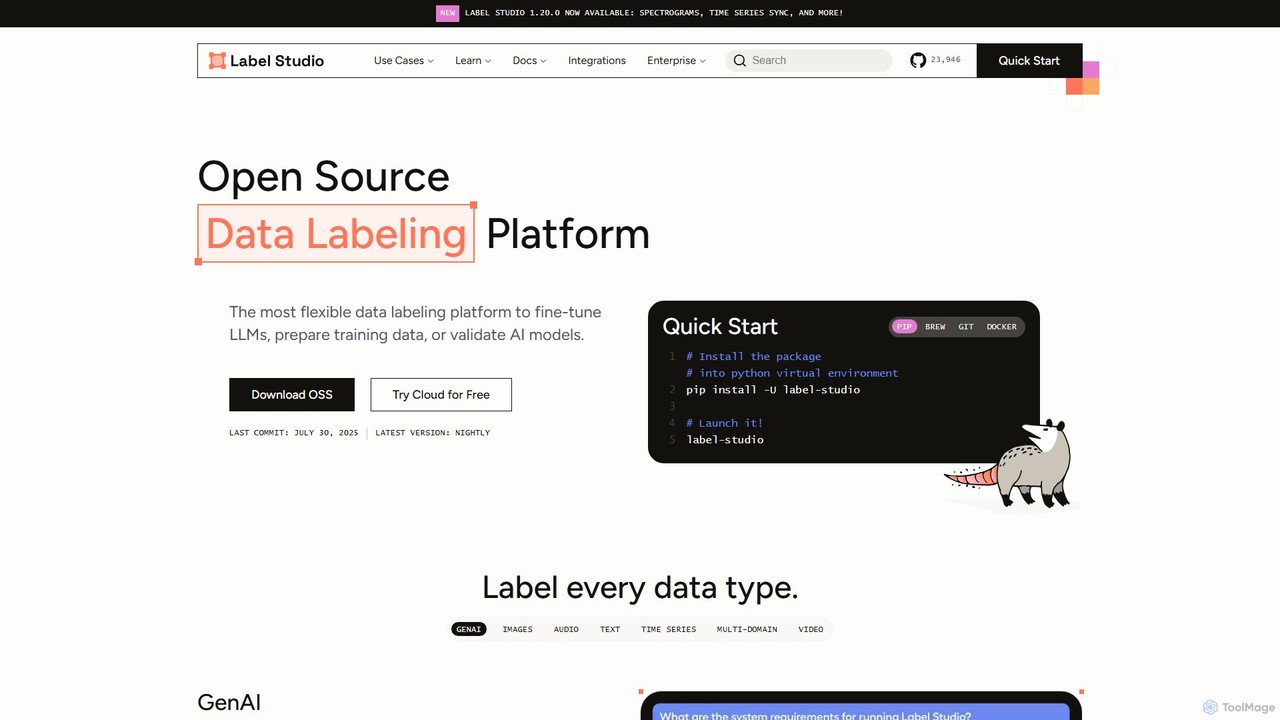
Label Studio is a versatile open-source data labeling platform designed for a wide range of data types. It …
Label Studio is a versatile open-source data labeling platform designed for a wide range of data types. It enables users to annotate images, text, audio, video, and time-series data to fine-tune LLMs, prepare training data for machine learning, and validate AI models with human-in-the-loop feedback.
Labellerr
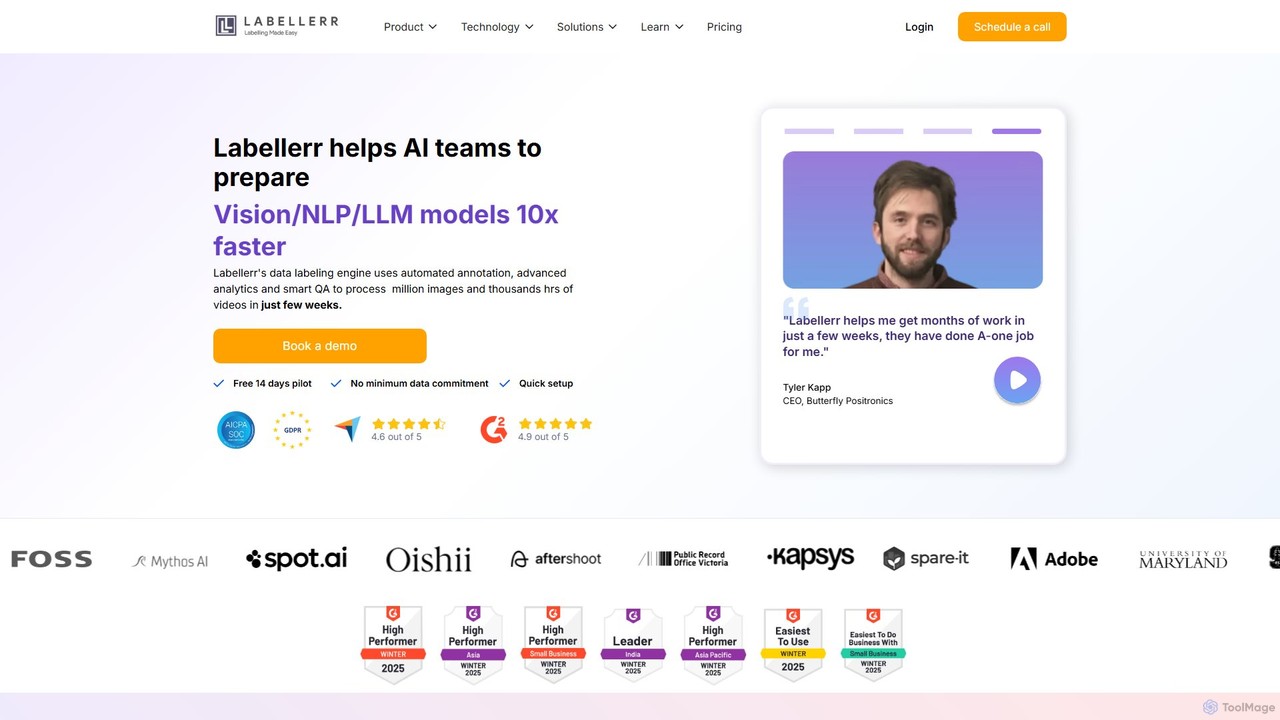
Labellerr is an AI-powered data labeling and annotation platform designed to accelerate the development of Vision, NLP, and …
Labellerr is an AI-powered data labeling and annotation platform designed to accelerate the development of Vision, NLP, and LLM models. It offers automated annotation, smart quality assurance, and seamless MLOps integration to deliver 99% accurate labels up to 99x faster, significantly reducing data preparation time and development costs for AI teams.
Segments.ai
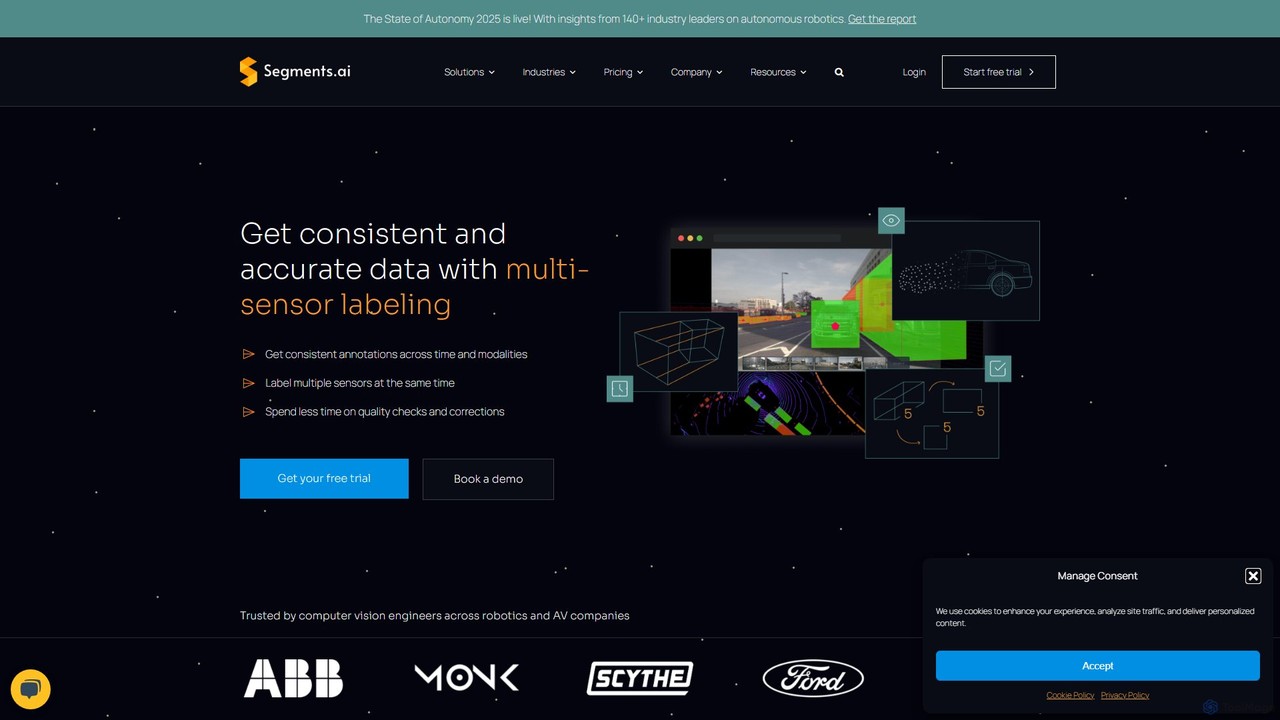
Segments.ai is an advanced data labeling platform designed for multi-sensor data, specializing in robotics and autonomous vehicles. It …
Segments.ai is an advanced data labeling platform designed for multi-sensor data, specializing in robotics and autonomous vehicles. It streamlines the annotation of 2D images and 3D point clouds with ML-powered tools, ensuring high-quality, consistent data to accelerate computer vision model development.
About Data Labeling
Data Labeling tools are specialized platforms used to annotate raw data, such as images, text, audio, and video, making it understandable for machine learning models. As a key part of the developer toolkit, these tools employ manual, semi-automated, and AI-assisted techniques to assign meaningful tags, categories, or attributes to data points. This process is fundamental for creating high-quality, structured training datasets, which directly determine the accuracy and performance of AI systems in fields like computer vision and natural language processing. They provide collaborative workflows, quality assurance mechanisms, and specialized annotation interfaces to ensure precision and consistency at scale.
Core Features
- Multiple Data Type Support: Annotate various data formats including images (bounding boxes, polygons, segmentation), text (NER, classification), audio, and video.
- AI-Assisted Labeling: Utilizes pre-trained models to suggest labels, significantly speeding up the manual annotation process and reducing human error.
- Quality Assurance Workflows: Includes features like consensus scoring, review stages, and performance analytics to maintain high data quality and consistency.
- Collaboration & Project Management: Provides tools for team management, task assignment, progress tracking, and managing large-scale labeling projects.
- Data Security & Integration: Offers secure data handling, role-based access control, and APIs for seamless integration with cloud storage and MLOps pipelines.
Use Cases
Data Labeling tools are essential for industries developing AI solutions. In the automotive sector, they are used to annotate sensor data for training autonomous vehicles. In healthcare, they help label medical images (X-rays, MRIs) for disease detection models. E-commerce companies use them to categorize products and tag user-generated content for better recommendation engines and content moderation.
How to Choose
When selecting a Data Labeling tool, consider the specific data types you work with and the required annotation complexity. Evaluate the effectiveness of its AI-assisted features and the robustness of its quality control mechanisms. Assess its project management capabilities for team collaboration and scalability. Finally, check its integration options with your existing data storage and machine learning infrastructure, as well as its security protocols.
Data LabelingUse Cases
Training Autonomous Vehicle Perception Models
An automotive engineering team developing self-driving technology uses a data labeling platform to process millions of video frames from vehicle sensors. Labelers meticulously annotate objects like pedestrians, vehicles, traffic signs, and lane markings using bounding boxes, polygons, and semantic segmentation. The platform's quality assurance features, such as consensus scoring and review workflows, ensure high-accuracy labels. This precisely labeled dataset is then used to train and validate the vehicle's perception models, enabling it to understand its environment and make safe driving decisions.
Improving Medical Imaging Diagnostics with AI
Radiologists and data scientists in a healthcare research institute collaborate using a data labeling tool to annotate thousands of medical images like MRIs and CT scans. They use specialized tools for polygon and brush segmentation to precisely outline tumors, lesions, and other anomalies. The platform's support for DICOM formats and its secure, compliant environment are critical. The resulting high-quality dataset is used to train a deep learning model for early disease detection, aiming to assist clinicians by highlighting potential areas of concern in future scans, improving diagnostic accuracy and speed.
Developing a Customer Support Chatbot
A data science team at a tech company is building an NLP-powered chatbot. They use a data labeling tool to perform Named Entity Recognition (NER) and intent classification on thousands of customer support transcripts. Annotators highlight product names, user issues, and dates, and classify each query's intent (e.g., 'billing question', 'technical support'). The platform's AI-assisted features suggest entities and intents, accelerating the labeling process. This structured data is then used to train the chatbot to accurately understand user requests, route them to the correct department, and provide relevant answers.
Enhancing E-commerce Product Discovery
An e-commerce platform's data team aims to improve its search and recommendation engine. They use a data labeling service to enrich their product catalog. Annotators assign detailed attributes to millions of product images, such as 'sleeve length' for apparel or 'material type' for furniture. For product descriptions, they perform text categorization to tag items with relevant styles and themes. This highly detailed, labeled data allows the platform to provide more accurate search results, power faceted search filters, and offer personalized product recommendations that significantly increase user engagement and sales.
Building Datasets for Agricultural AI
An agritech company uses a data labeling platform to analyze drone and satellite imagery of farmlands. A team of annotators uses semantic segmentation to identify different crop types, detect areas affected by pests or diseases, and map irrigation patterns. The platform's ability to handle large geospatial images and its collaborative tools are essential for the project's success. The labeled data is used to train computer vision models that provide farmers with actionable insights, helping them optimize crop yield, reduce water usage, and apply treatments precisely where needed.
Moderating User-Generated Content at Scale
A social media platform's trust and safety team needs to efficiently moderate millions of user-submitted images and text posts daily. They use a data labeling tool to create a golden dataset for training their automated moderation models. Human labelers classify content into categories like 'safe', 'spam', or 'inappropriate' based on detailed guidelines. The platform's review and consensus features ensure high-quality, consistent labels. This dataset enables the development of AI models that can automatically flag or remove policy-violating content, reducing the burden on human moderators and creating a safer online environment.