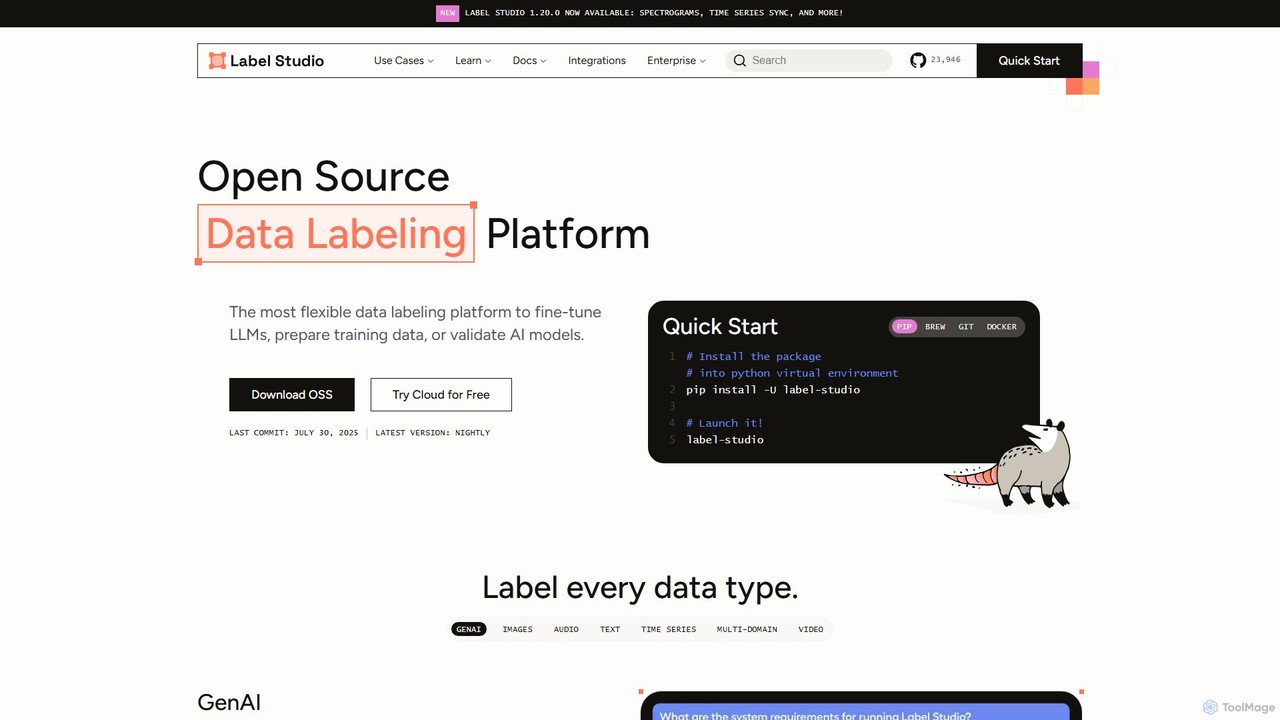
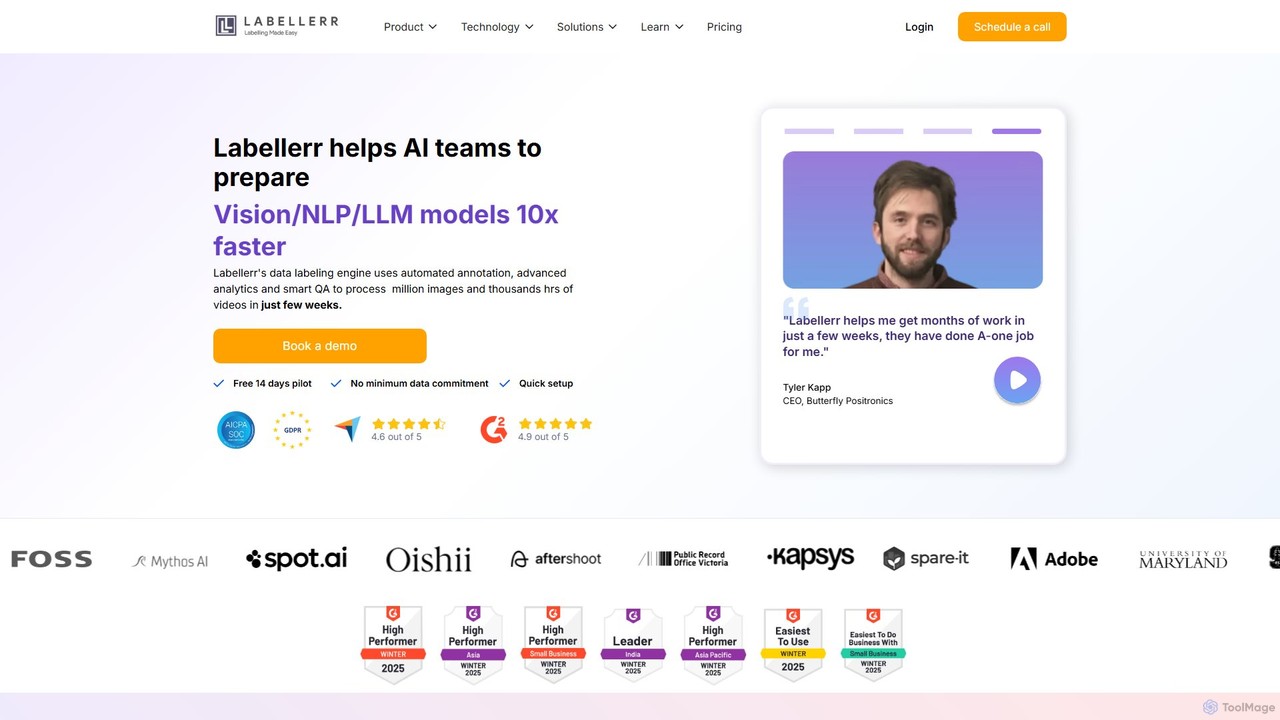
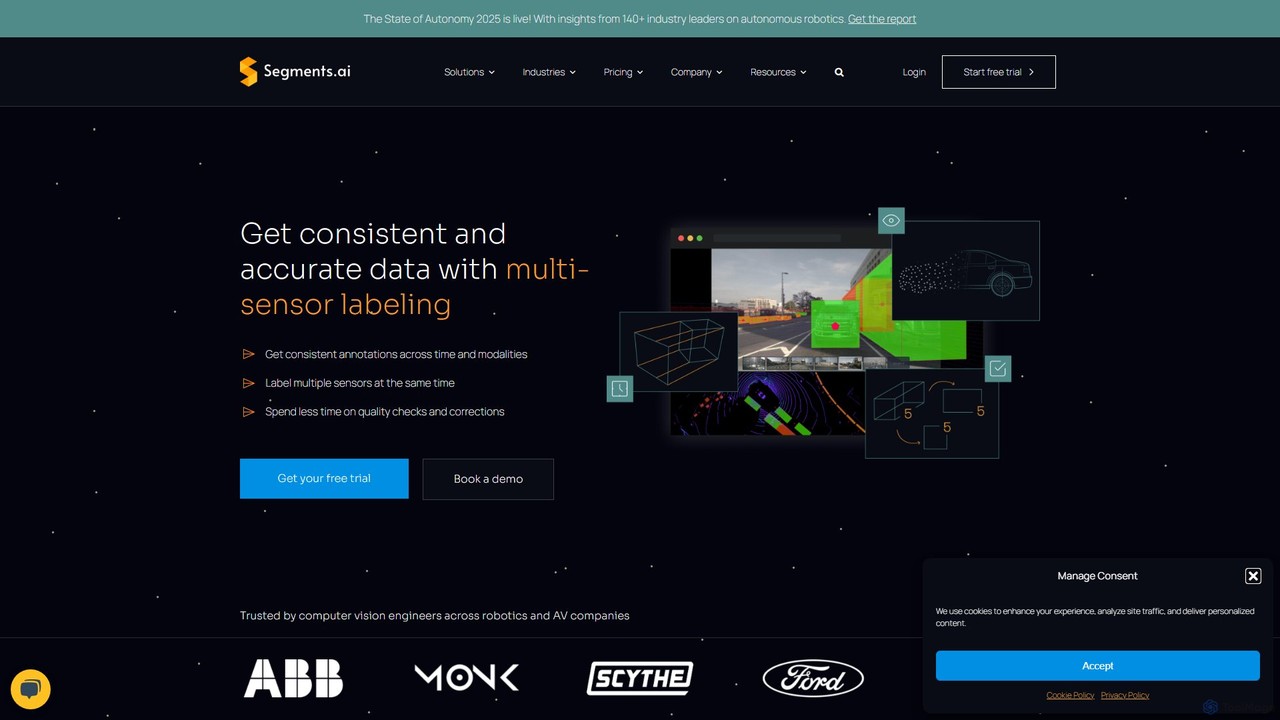
Data Labeling tools are specialized platforms used to annotate raw data, such as images, text, audio, and video, making it understandable for machine learning models. As a key part of the developer toolkit, these tools employ manual, semi-automated, and AI-assisted techniques to assign meaningful tags, categories, or attributes to data points. This process is fundamental for creating high-quality, structured training datasets, which directly determine the accuracy and performance of AI systems in fields like computer vision and natural language processing. They provide collaborative workflows, quality assurance mechanisms, and specialized annotation interfaces to ensure precision and consistency at scale.
Core Features
- Multiple Data Type Support: Annotate various data formats including images (bounding boxes, polygons, segmentation), text (NER, classification), audio, and video.
- AI-Assisted Labeling: Utilizes pre-trained models to suggest labels, significantly speeding up the manual annotation process and reducing human error.
- Quality Assurance Workflows: Includes features like consensus scoring, review stages, and performance analytics to maintain high data quality and consistency.
- Collaboration & Project Management: Provides tools for team management, task assignment, progress tracking, and managing large-scale labeling projects.
- Data Security & Integration: Offers secure data handling, role-based access control, and APIs for seamless integration with cloud storage and MLOps pipelines.
Use Cases
Data Labeling tools are essential for industries developing AI solutions. In the automotive sector, they are used to annotate sensor data for training autonomous vehicles. In healthcare, they help label medical images (X-rays, MRIs) for disease detection models. E-commerce companies use them to categorize products and tag user-generated content for better recommendation engines and content moderation.
How to Choose
When selecting a Data Labeling tool, consider the specific data types you work with and the required annotation complexity. Evaluate the effectiveness of its AI-assisted features and the robustness of its quality control mechanisms. Assess its project management capabilities for team collaboration and scalability. Finally, check its integration options with your existing data storage and machine learning infrastructure, as well as its security protocols.