Developer Tools Best in category 2 results Engineering Intelligence AI Tool

Popular AI tools in the Engineering Intelligence field of Developer Tools include Faros AI、Typo, etc., helping you quickly improve efficiency.

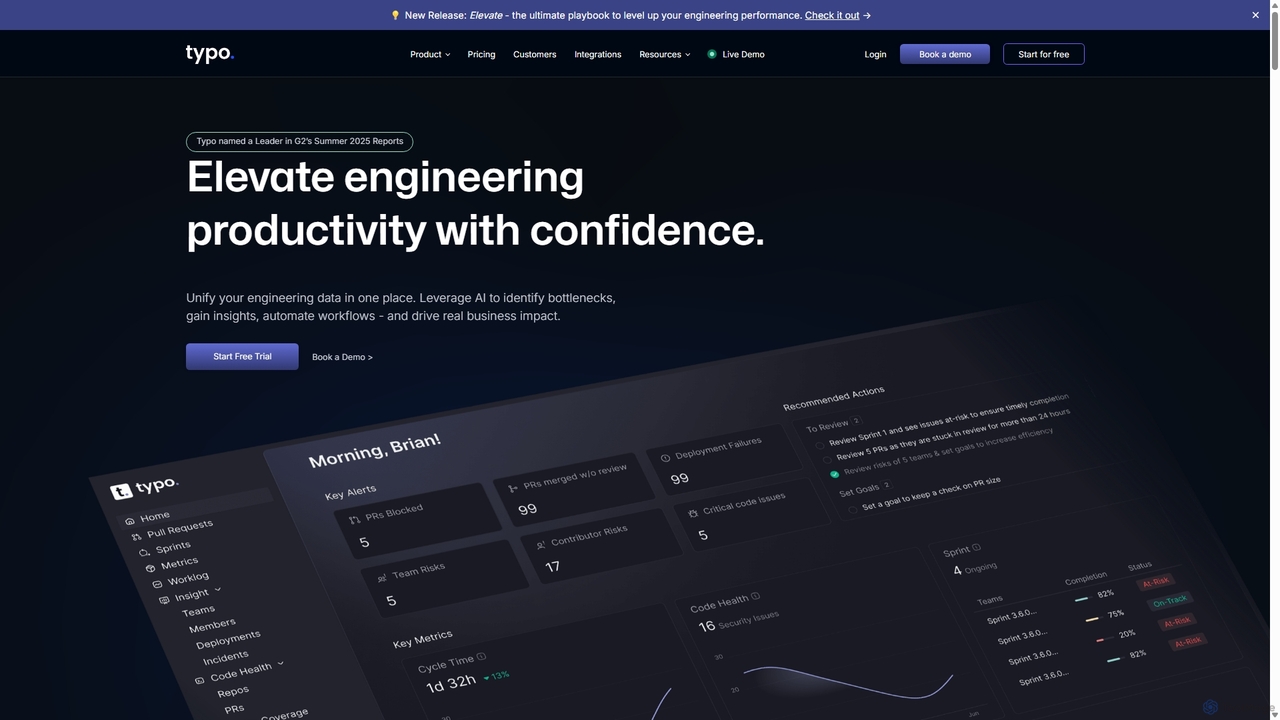
Typo

Typo

Typo is an AI-powered engineering intelligence platform designed to enhance software delivery and developer productivity. It centralizes data …

10.6K
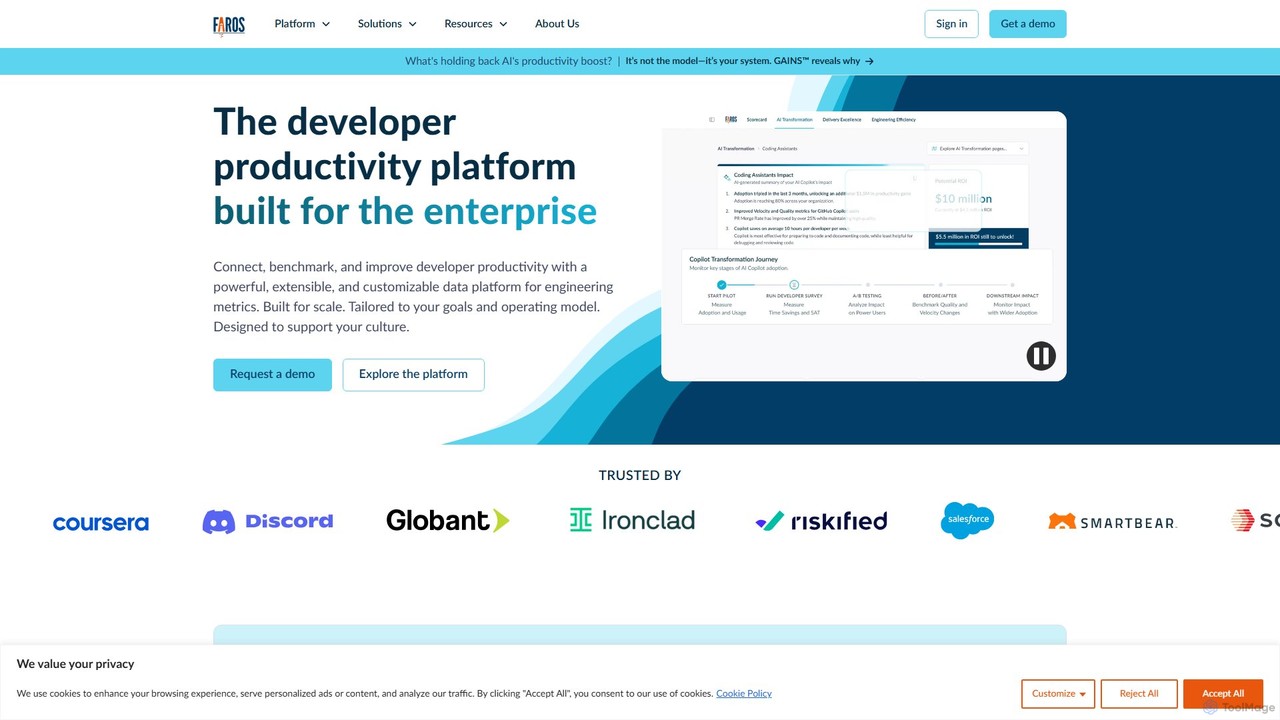
Faros AI

Faros AI

Faros AI is an engineering intelligence platform that connects data across the entire Software Development Life Cycle (SDLC). …

104.3K

About Engineering Intelligence

Engineering Intelligence tools are a specialized category of developer tools that provide data-driven insights into the software development lifecycle (SDLC). They analyze data from sources like Git repositories, project management systems, and CI/CD pipelines to create objective metrics and visualizations. This enables engineering leaders and teams to identify bottlenecks, optimize workflows, and improve productivity and predictability. Unlike tools focused on individual coding tasks, Engineering Intelligence platforms offer a high-level view of the entire engineering process.

Core Features

  • DORA Metrics Tracking: Automatically measures key DevOps metrics like Deployment Frequency, Lead Time for Changes, Change Failure Rate, and Time to Restore Service.
  • Cycle Time Analysis: Visualizes the time taken for work to move from the first commit to production, highlighting delays in stages like code review or testing.
  • Pull Request (PR) Analytics: Provides insights into PR size, review time, reviewer workload, and collaboration patterns to streamline the review process.
  • Investment Profile Analysis: Maps engineering work back to business initiatives, showing how team effort is allocated across new features, maintenance, and technical debt.
  • Process Bottleneck Detection: Uses data to pinpoint specific stages in the development workflow where work slows down or gets stuck.

Use Cases

These tools are primarily used by VPs of Engineering, engineering managers, and team leads in technology companies. They are essential for organizations practicing Agile or DevOps methodologies that want to make data-informed decisions to improve their engineering velocity and quality. They help quantify the impact of process changes and facilitate objective conversations during performance reviews and strategic planning.

How to Choose

When selecting an Engineering Intelligence tool, consider its integration capabilities with your existing toolchain (e.g., GitHub, GitLab, Jira, Azure DevOps). Evaluate the depth and customizability of the metrics provided, especially support for DORA metrics. Assess the user interface for clarity and ease of use for non-technical stakeholders. Finally, review data privacy and security policies to ensure they align with your company's standards.

Engineering IntelligenceUse Cases

1

Optimizing the Code Review Process

An engineering manager notices that the team's cycle time is increasing. Using an Engineering Intelligence tool, they access the Pull Request analytics dashboard. The data reveals that PRs from junior developers wait 40% longer for a first review compared to those from senior developers. The manager also sees that one senior engineer is assigned to over 60% of all reviews, creating a bottleneck. Armed with this data, they implement a new policy of round-robin review assignments and dedicated mentoring time, reducing the average PR review time by 30% within a month.

2

Improving Sprint Planning Accuracy

A product team consistently overcommits and fails to complete all planned work in a sprint. The team lead uses an Engineering Intelligence platform to analyze historical data. They discover that tasks labeled 'Refactor' take, on average, 50% longer than initially estimated. The tool's investment profile shows that 25% of engineering time is spent on unplanned bug fixes. During the next sprint planning, the team uses this data to adjust their estimation for refactoring tasks and allocates specific capacity for potential bug fixes, leading to their first successfully completed sprint in a quarter.

3

Reporting Engineering Health to Leadership

A VP of Engineering needs to present the department's progress to the executive board. Instead of using subjective anecdotes, they use an Engineering Intelligence tool to generate a dashboard of DORA metrics. They demonstrate a 15% increase in Deployment Frequency and a 20% decrease in Change Failure Rate over the last quarter, directly linking these improvements to a recent investment in automated testing infrastructure. This data-driven approach provides a clear, objective view of the engineering team's performance and helps justify future budget requests for new tools and training.

4

Facilitating Data-Driven 1-on-1 Meetings

During a 1-on-1 meeting, an engineering manager wants to discuss a developer's recent performance. Instead of relying on memory, the manager pulls up the developer's contribution patterns in the Engineering Intelligence tool. They notice the developer is submitting smaller, more frequent PRs, which is a positive change. However, their code churn rate is high, indicating rework. The manager uses this specific, objective data to start a constructive conversation about improving initial code quality and testing, turning a potentially difficult conversation into a productive coaching session.

5

Identifying and Mitigating Burnout Risk

A team lead uses an Engineering Intelligence tool to review team-level work patterns. They notice one developer's activity shows a concerning trend: consistently high 'coding days' (working late nights and weekends) but a declining PR throughput. This pattern can be an early indicator of burnout. The lead uses this insight not to judge, but to initiate a supportive conversation with the developer about their workload and well-being. They work together to re-prioritize tasks and ensure a healthier work-life balance, preventing potential burnout before it impacts the developer and the team.

6

Validating the Impact of New Processes

An organization invests in a new CI/CD pipeline to accelerate delivery. A month after implementation, the Head of Platform Engineering uses an Engineering Intelligence tool to measure the impact. They compare DORA metrics from before and after the change. The data clearly shows that Deployment Frequency has doubled, and Lead Time for Changes has been cut by 40%, while the Change Failure Rate remained stable. This quantitative evidence proves the ROI of the new pipeline and helps build a strong business case for further DevOps investments.

Engineering IntelligenceFrequently Asked Questions