CloudVerse AI
CloudVerse AI is an AI-powered FinOps platform designed for comprehensive cloud financial management. It helps enterprises govern, manage, …
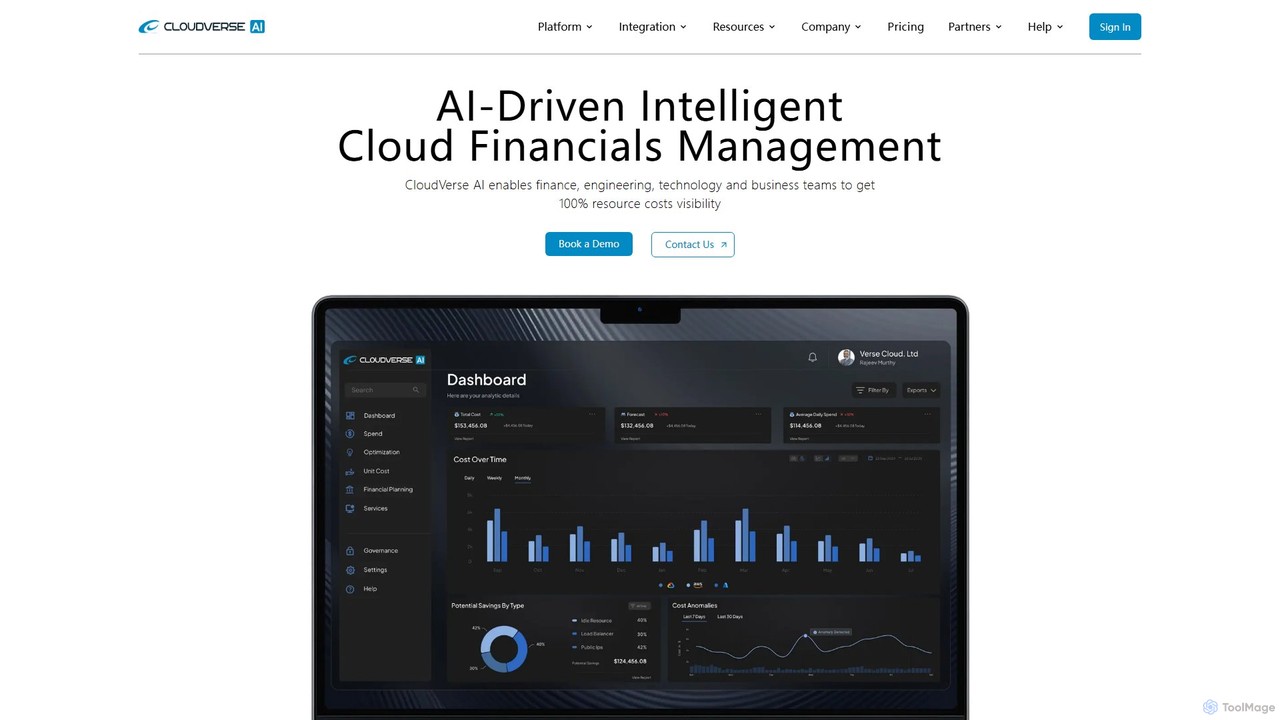
CloudVerse AI is an AI-powered FinOps platform designed for comprehensive cloud financial management. It helps enterprises govern, manage, and optimize their spending across multicloud environments like AWS, Azure, and GCP. By leveraging intelligent algorithms and features like virtual tagging, it provides clear cost allocation, enhances budget control, and aims to significantly reduce cloud expenses, making the cloud simple and cost-effective.
About Finops
Finops tools are AI-powered solutions designed to bring financial accountability and control to cloud spending. These platforms leverage data analytics and machine learning to provide comprehensive visibility into cloud costs, optimize resource utilization, and foster collaboration between finance, operations, and development teams. They enable organizations to make informed, data-driven decisions, ensuring cloud investments deliver maximum business value while managing expenses effectively.
Core Features
- Cost Visibility & Allocation: Detailed breakdown of cloud spending across services, departments, and projects, enabling accurate chargebacks.
- Anomaly Detection: Proactive identification of unusual spending patterns or potential cost overruns using AI-driven insights.
- Optimization Recommendations: AI-generated suggestions for cost savings, such as rightsizing instances, identifying idle resources, or leveraging reserved instances.
- Budget Management & Forecasting: Tools to set budgets, track spend against forecasts, and predict future cloud expenditures based on historical data.
- Reporting & Dashboards: Customizable reports and interactive dashboards for real-time insights into cloud financial performance and trends.
Applicable Scenarios
Finops tools are crucial for organizations operating at scale in the cloud, from startups managing rapid growth to large enterprises optimizing complex multi-cloud environments. They are used by cloud engineers to monitor resource costs, by finance teams for budgeting and forecasting, and by product owners to understand the financial impact of their services. These tools facilitate a culture of cost awareness and shared responsibility across technical and business units.
How to Choose
When selecting a Finops tool, consider its integration capabilities with your existing cloud providers (AWS, Azure, GCP) and internal systems. Evaluate the depth of its cost visibility, the accuracy of its anomaly detection, and the actionability of its optimization recommendations. Look for robust reporting features, customizable dashboards, and strong governance controls to enforce cost policies. Scalability and support for multi-cloud environments are also key factors.

FinopsUse Cases
Optimizing Cloud Resource Utilization
Cloud engineers and DevOps teams utilize Finops tools to identify underutilized or idle cloud resources, such as oversized virtual machines or unattached storage volumes. The tools provide actionable recommendations for rightsizing instances, automating shutdown schedules, or deleting unused assets, directly translating into significant cost savings without impacting performance. This proactive management ensures that cloud infrastructure is always aligned with actual demand.
Accurate Cost Allocation and Chargebacks
Finance departments and IT leaders leverage Finops platforms to precisely allocate cloud costs back to specific business units, projects, or even individual applications. By integrating with tagging strategies and organizational hierarchies, these tools provide granular cost breakdowns, enabling fair and transparent chargebacks. This fosters accountability and helps each team understand the financial impact of their cloud consumption.
Proactive Anomaly Detection in Cloud Spend
Operations teams and cloud administrators use Finops tools to automatically detect unusual spikes or unexpected changes in cloud spending. AI-driven anomaly detection algorithms flag deviations from historical patterns, alerting teams to potential misconfigurations, runaway processes, or unauthorized resource provisioning. Early detection prevents significant financial losses and allows for swift corrective action.
Strategic Cloud Budgeting and Forecasting
CFOs and financial analysts employ Finops solutions to develop accurate cloud budgets and forecast future expenditures. By analyzing historical spend data, current resource usage, and projected growth, these tools provide reliable predictions. This enables organizations to plan their cloud investments more effectively, negotiate better deals with cloud providers, and avoid budget overruns.
Enforcing Cloud Cost Governance Policies
IT governance and compliance teams implement Finops tools to establish and enforce cost management policies across the organization. These tools can automate policy checks, identify non-compliant resources (e.g., untagged resources, unapproved instance types), and provide mechanisms for remediation. This ensures adherence to financial guidelines and promotes a consistent approach to cloud resource provisioning.
Evaluating the Financial Impact of New Features
Product managers and development teams use Finops insights to understand the cost implications of new features or services before and after deployment. By linking specific application components to their underlying cloud costs, teams can evaluate the return on investment (ROI) of development efforts, prioritize cost-efficient designs, and make data-driven decisions about product scaling and architecture.