GetNude
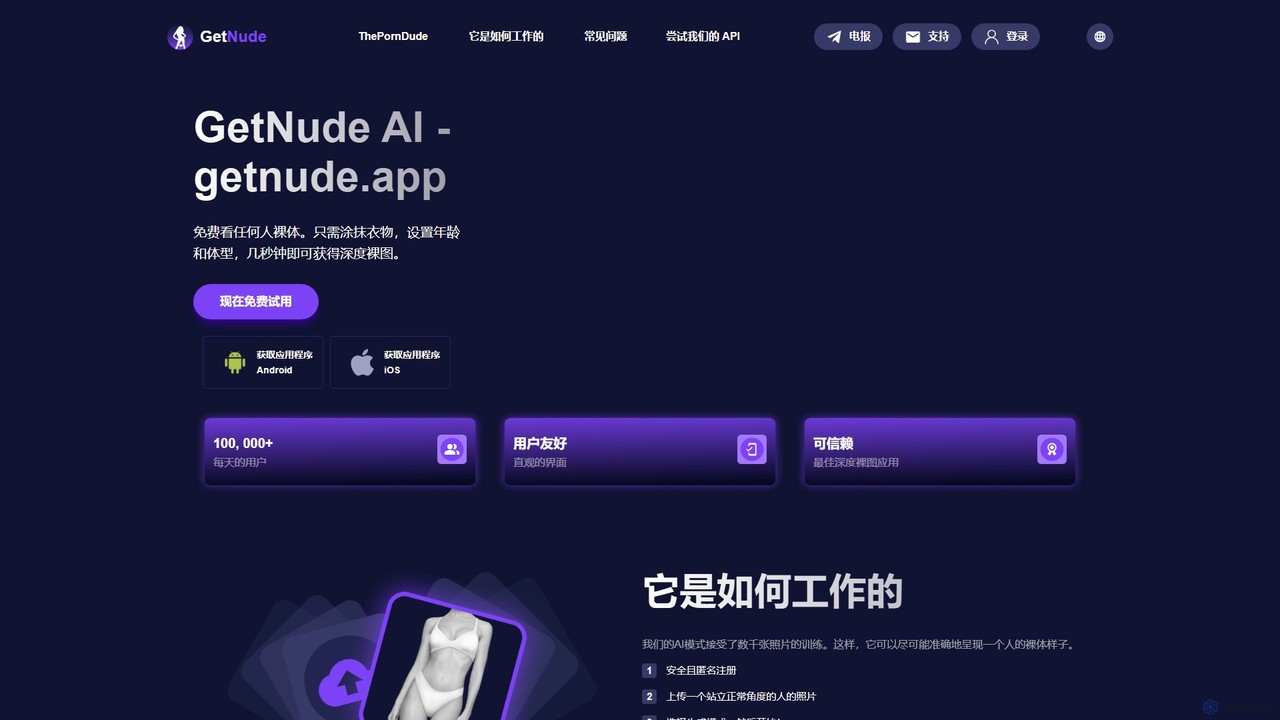
GetNude is an AI-powered tool that digitally removes clothing from images. Users can upload a photo, use a …
GetNude is an AI-powered tool that digitally removes clothing from images. Users can upload a photo, use a brush to mark the clothing area, and specify parameters like age and body type to generate a realistic nude version in seconds. It offers a free trial and credit-based premium plans.
About Image Processing Api
Image Processing APIs are specialized developer tools that enable programmatic manipulation, analysis, and transformation of digital images. These APIs leverage advanced algorithms, often including AI and machine learning, to automate complex visual tasks. They provide scalable and efficient solutions for integrating sophisticated image capabilities directly into applications, enhancing user experiences and streamlining workflows.
Core Features
- Image Transformation: Resizing, cropping, rotating, flipping, and format conversion (e.g., JPG to PNG).
- Enhancement & Filtering: Adjusting brightness, contrast, saturation, applying artistic filters, and noise reduction.
- Object & Scene Recognition: Detecting and identifying objects, faces, landmarks, and classifying scenes within images.
- Text Extraction (OCR): Converting text from images into machine-readable formats.
- Background Removal: Automatically isolating subjects from their backgrounds for various applications.
Applicable Scenarios
Developers integrate Image Processing APIs into various applications, from e-commerce platforms needing automated product image optimization to social media apps requiring real-time content moderation. They are crucial for systems that handle large volumes of visual data, enabling dynamic content delivery, enhanced search capabilities, and automated data extraction.
How to Choose
When selecting an Image Processing API, consider its range of features, performance (speed and scalability), ease of integration (SDKs, documentation), and pricing model. Evaluate the accuracy of AI-powered features like object detection, the variety of supported image formats, and the robustness of its security and compliance measures.
Image Processing ApiUse Cases
Automated E-commerce Product Image Optimization
E-commerce platforms utilize Image Processing APIs to automatically resize, crop, and compress product images for various display contexts (thumbnails, product pages, banners). This ensures fast loading times, consistent visual quality across devices, and reduces manual effort for image preparation, directly impacting conversion rates and user experience.
Real-time Social Media Content Moderation
Social media platforms integrate these APIs to automatically detect and flag inappropriate content, such as nudity, violence, or hate symbols, in user-uploaded images. This enables real-time content moderation, ensuring community safety, compliance with platform guidelines, and reducing the burden on human moderators.
Dynamic Image Generation for Marketing Campaigns
Marketing teams use Image Processing APIs to dynamically generate personalized ad creatives or social media visuals at scale. By programmatically combining templates, product images, and text overlays, they can create thousands of unique variations tailored to specific audience segments, optimizing campaign performance and engagement.
Document Digitization and Data Extraction
Businesses in finance, healthcare, or legal sectors deploy Image Processing APIs with OCR capabilities to digitize physical documents. The APIs extract key information like names, dates, and invoice numbers from scanned images, automating data entry, improving searchability, and streamlining record-keeping processes.
Security Surveillance and Anomaly Detection
Security system developers integrate Image Processing APIs to analyze video frames from surveillance cameras. These APIs can detect specific objects (e.g., unauthorized vehicles), identify faces, or flag unusual activities in real-time, triggering alerts and enhancing proactive security measures in various environments.
Medical Imaging Analysis for Diagnostics
Healthcare technology companies leverage Image Processing APIs to assist in the analysis of medical images like X-rays, MRIs, or CT scans. These APIs can highlight anomalies, measure features, or segment specific regions, providing valuable insights to radiologists and clinicians, potentially aiding in earlier and more accurate diagnoses.