ZenMulti
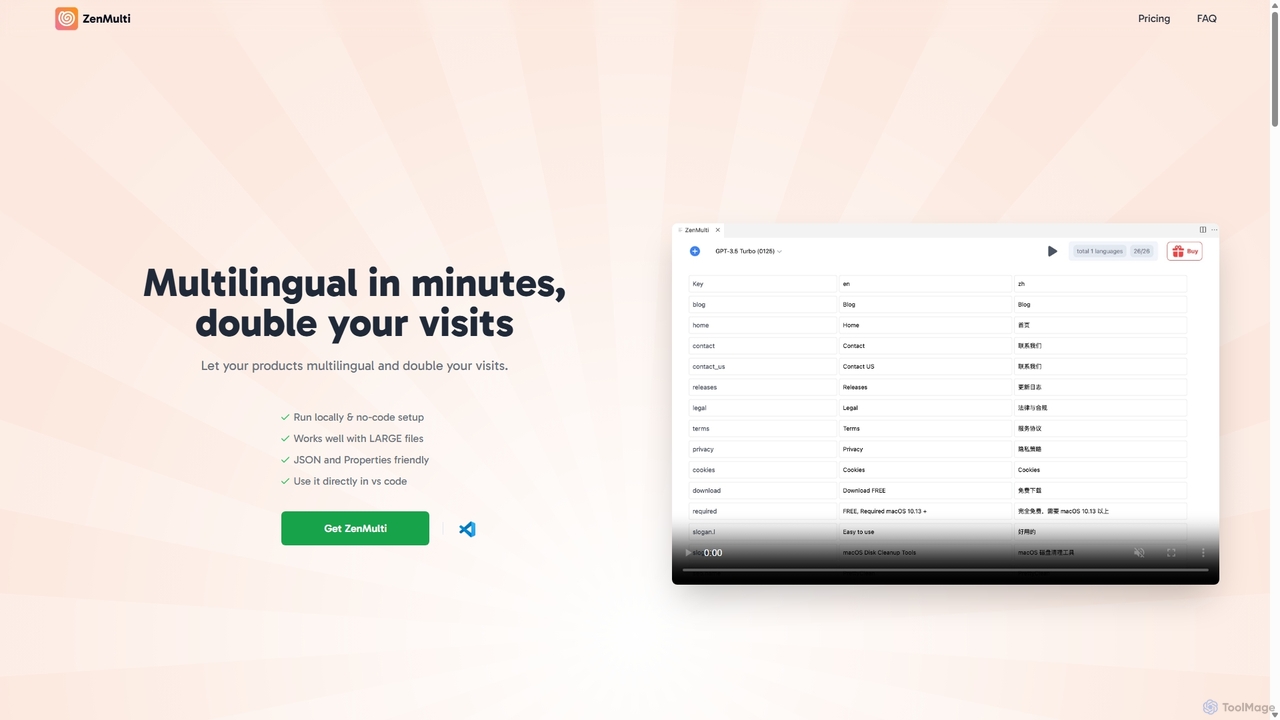
ZenMulti is an AI-powered VS Code extension designed for developers to effortlessly translate application resource files (like JSON …
ZenMulti is an AI-powered VS Code extension designed for developers to effortlessly translate application resource files (like JSON and .properties) into multiple languages. It streamlines the localization (i18n) process with a simple, no-code setup, running locally for enhanced privacy and speed. It's a one-time purchase tool for lifetime use.
About Localization
Localization tools are AI-powered solutions designed to adapt software, websites, applications, and content for specific target markets, encompassing linguistic, cultural, and technical requirements. As a crucial part of developer tools, these platforms leverage artificial intelligence to streamline the complex process of internationalization (i18n) and localization (l10n), ensuring products resonate with diverse global audiences. They go beyond simple translation, addressing cultural nuances, regional preferences, and technical specifications to deliver a truly localized user experience.
Core Features
- Automated Translation & MTPE: Integrates AI-driven machine translation with human post-editing workflows for speed and accuracy.
- Terminology Management: Centralizes glossaries and style guides to ensure consistent brand voice and technical accuracy across all languages.
- Localization Testing: Automates checks for UI/UX issues, text overflow, and functional correctness in localized versions.
- Internationalization (i18n) Support: Provides frameworks and tools to design products that are inherently ready for localization, separating translatable content from code.
- Workflow Automation: Manages translation projects, assigns tasks, tracks progress, and integrates with development pipelines.
Applicable Scenarios
Localization tools are essential for global software companies expanding into new markets, ensuring their applications are culturally and linguistically appropriate. E-commerce platforms use them to adapt product descriptions and user interfaces for international shoppers, while content creators leverage them to translate and culturally adapt marketing materials and documentation for diverse audiences. Developers integrate these tools to manage string extraction, translation memory, and ensure seamless deployment of multilingual versions.
How to Choose
When selecting localization tools, consider the breadth of language support and the quality of AI-driven translation engines. Evaluate integration capabilities with existing development environments (e.g., Git, CI/CD pipelines) and content management systems. Assess the flexibility of workflow management, including support for human review and custom terminology. Finally, examine scalability, security features, and the pricing model to match your project's scope and budget.
LocalizationUse Cases
Automating Software UI Localization
A software development team uses AI localization tools to automatically extract UI strings from their application's source code, send them for machine translation, and then route them to professional linguists for post-editing. This process significantly reduces manual effort and accelerates the release of multilingual software versions, ensuring consistent user experience across different languages and regions.
Global E-commerce Product Description Adaptation
An international e-commerce manager utilizes localization platforms to translate and culturally adapt thousands of product descriptions, marketing copy, and customer reviews for various target markets. The AI ensures brand voice consistency while human editors fine-tune cultural relevance, leading to increased conversion rates and customer engagement in diverse locales.
Multilingual Website Content Management
A web content team employs localization tools to manage the translation and cultural adaptation of website pages, blog posts, and SEO keywords. The tools integrate with their CMS, automating content synchronization and ensuring that all localized versions are up-to-date and optimized for local search engines, expanding their global reach and organic traffic.
Game Localization for International Release
A game studio leverages specialized localization tools to translate in-game text, dialogue, subtitles, and user interface elements into multiple languages. These tools help manage complex terminology, maintain narrative consistency, and facilitate cultural adaptation of content, ensuring the game resonates with players worldwide without losing its original charm or meaning.
Adapting Mobile Apps for New Markets
Mobile app developers use localization tools to prepare their applications for launch in new countries. This involves translating app store listings, in-app text, push notifications, and adapting date/time formats, currency, and legal disclaimers. The tools streamline the process, ensuring a smooth and compliant user experience for diverse mobile users.
Streamlining Technical Documentation Translation
A technical writing department uses AI localization tools to translate user manuals, help guides, and support documentation into multiple languages. By leveraging translation memory and terminology management, the tools ensure accuracy and consistency across all technical content, reducing support queries and improving user satisfaction for global customers.