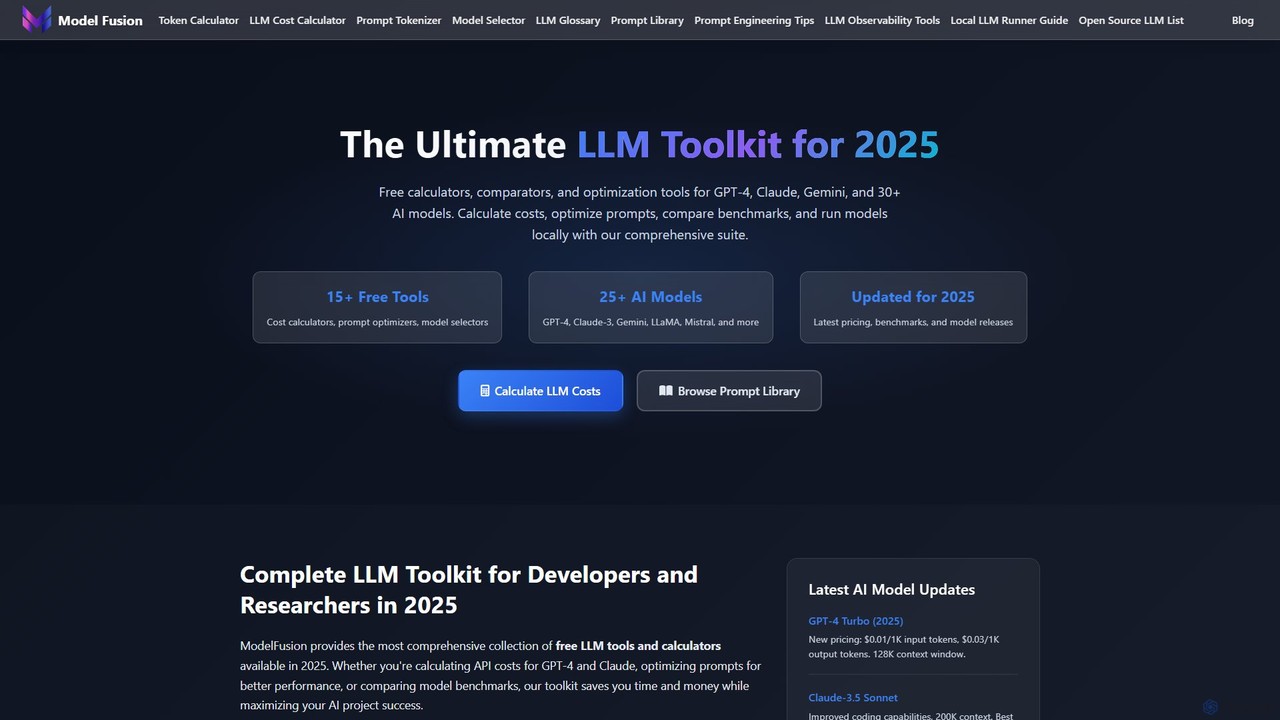
ModelFusion
ModelFusion is an all-in-one LLM toolkit for developers and researchers. It offers a suite of free tools, including …
ModelFusion is an all-in-one LLM toolkit for developers and researchers. It offers a suite of free tools, including a cost calculator, prompt library, and model comparator for over 30 AI models like GPT-4, Claude, and Gemini. It also provides a unified API and local model running guides to streamline AI development and optimize costs.
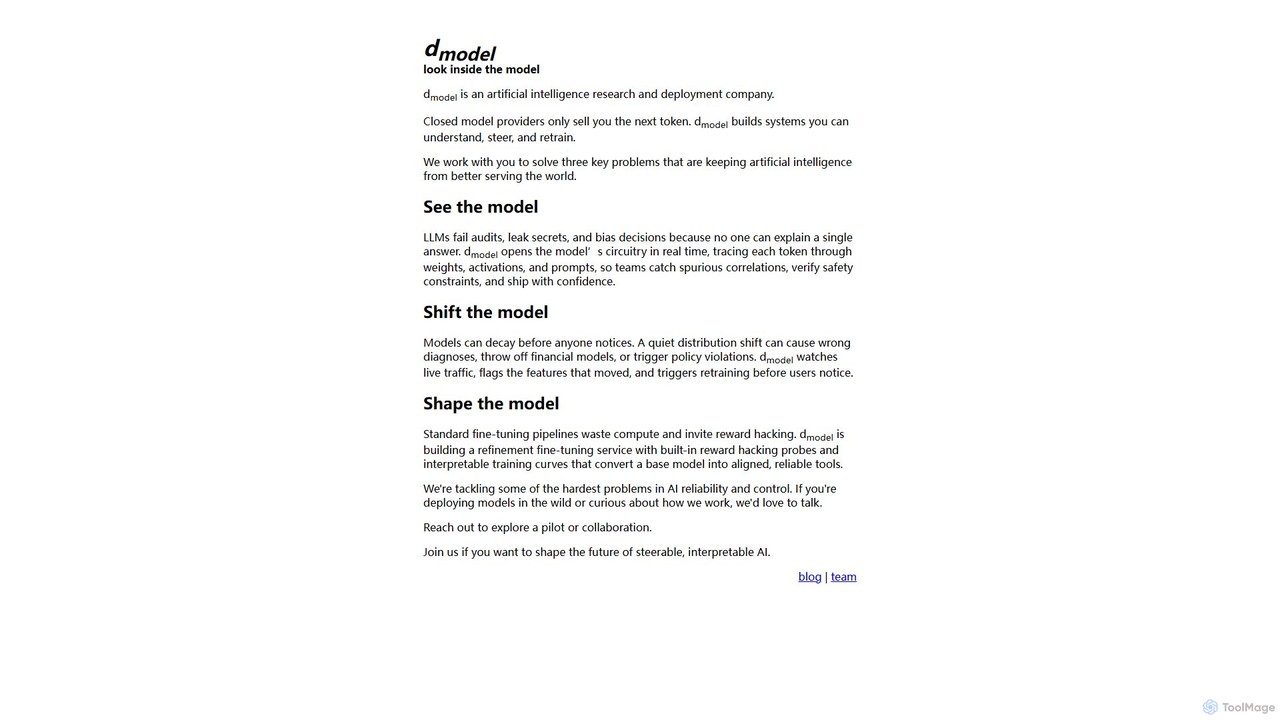
dmodel.ai
dmodel.ai is an AI research and deployment company offering tools for model interpretability, monitoring, and control. It helps …
dmodel.ai is an AI research and deployment company offering tools for model interpretability, monitoring, and control. It helps businesses understand, steer, and retrain their AI models, ensuring reliability, safety, and alignment for enterprise-grade deployments.
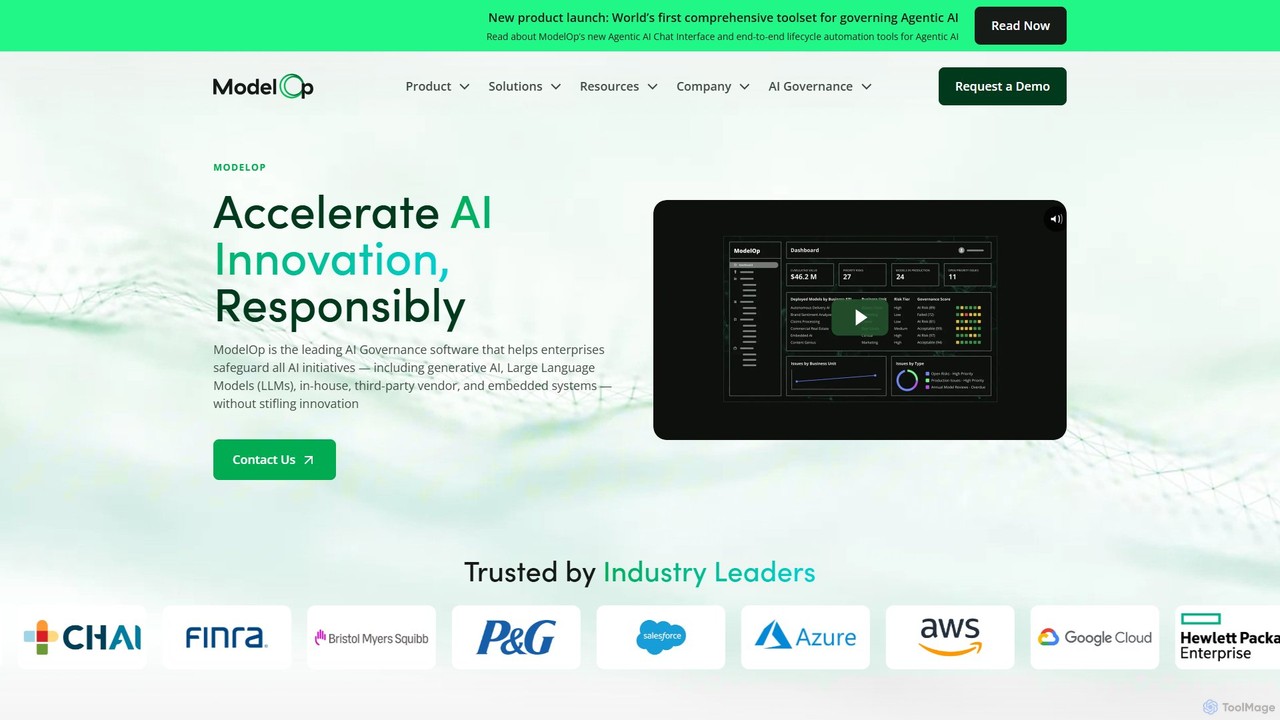
ModelOp
ModelOp is a leading enterprise AI Governance software platform designed to help organizations accelerate AI innovation responsibly. It …
ModelOp is a leading enterprise AI Governance software platform designed to help organizations accelerate AI innovation responsibly. It provides a centralized system to manage, monitor, and govern all AI initiatives, including generative AI, LLMs, in-house models, and third-party systems, ensuring compliance, mitigating risk, and maximizing value.
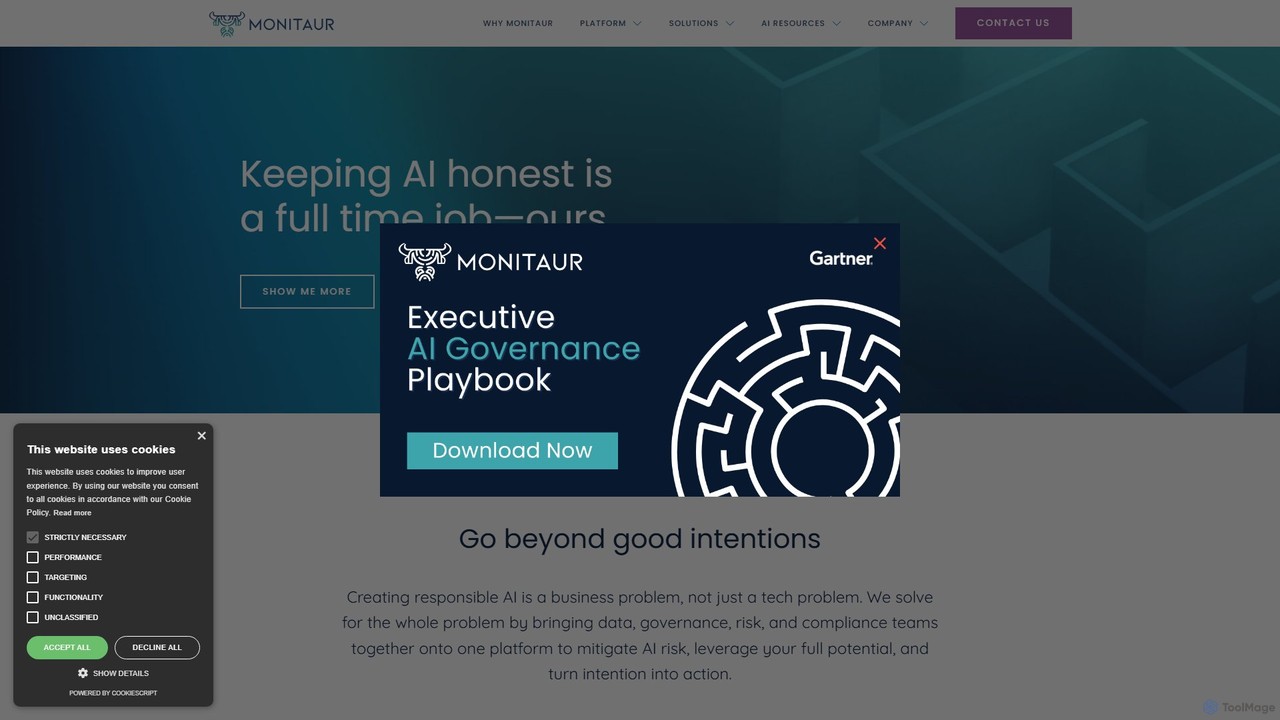
Monitaur
Monitaur is an AI governance and risk management platform that helps businesses operationalize responsible AI. It unifies data, …
Monitaur is an AI governance and risk management platform that helps businesses operationalize responsible AI. It unifies data, governance, risk, and compliance teams to mitigate AI risks, ensure model fairness and performance, and turn ethical principles into provable actions.
CTGT
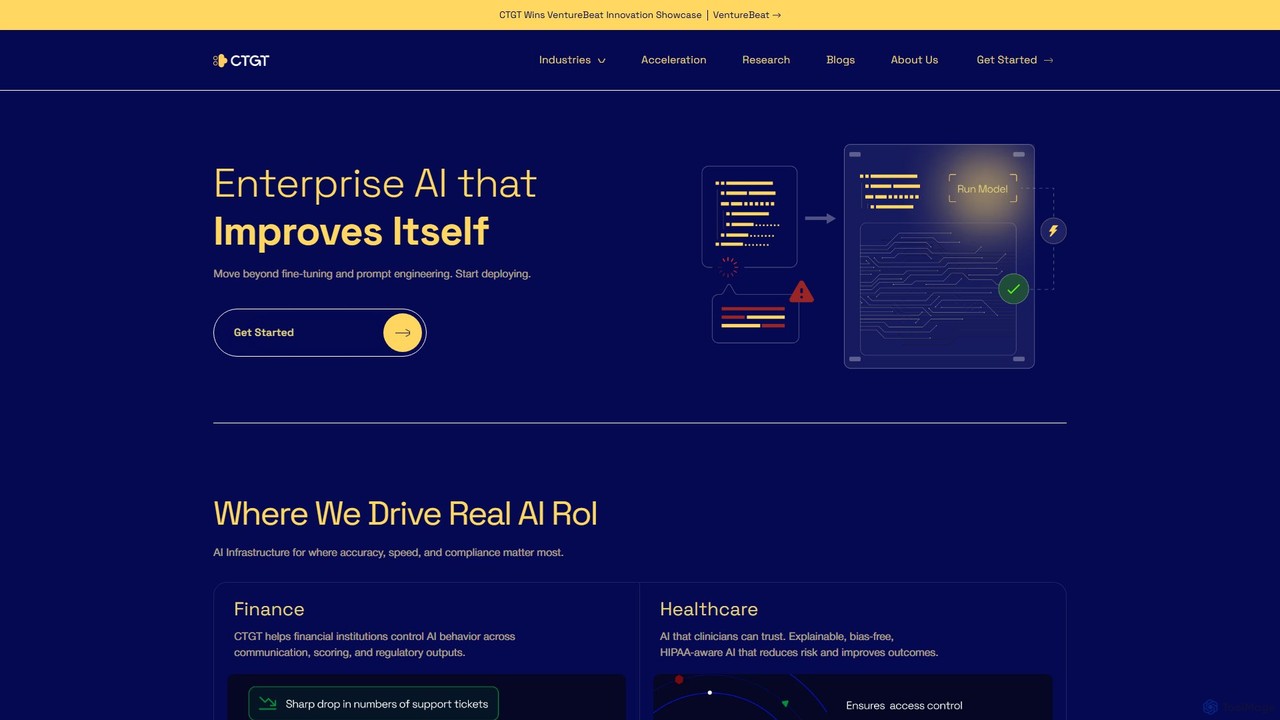
CTGT is an enterprise AI platform that provides fine-grained control over AI models without retraining. It ensures accuracy, …
CTGT is an enterprise AI platform that provides fine-grained control over AI models without retraining. It ensures accuracy, compliance, and security for high-stakes industries like finance, healthcare, and legal by directly intervening in the model's internal processes, moving beyond traditional fine-tuning and prompt engineering.
SkyDeck AI
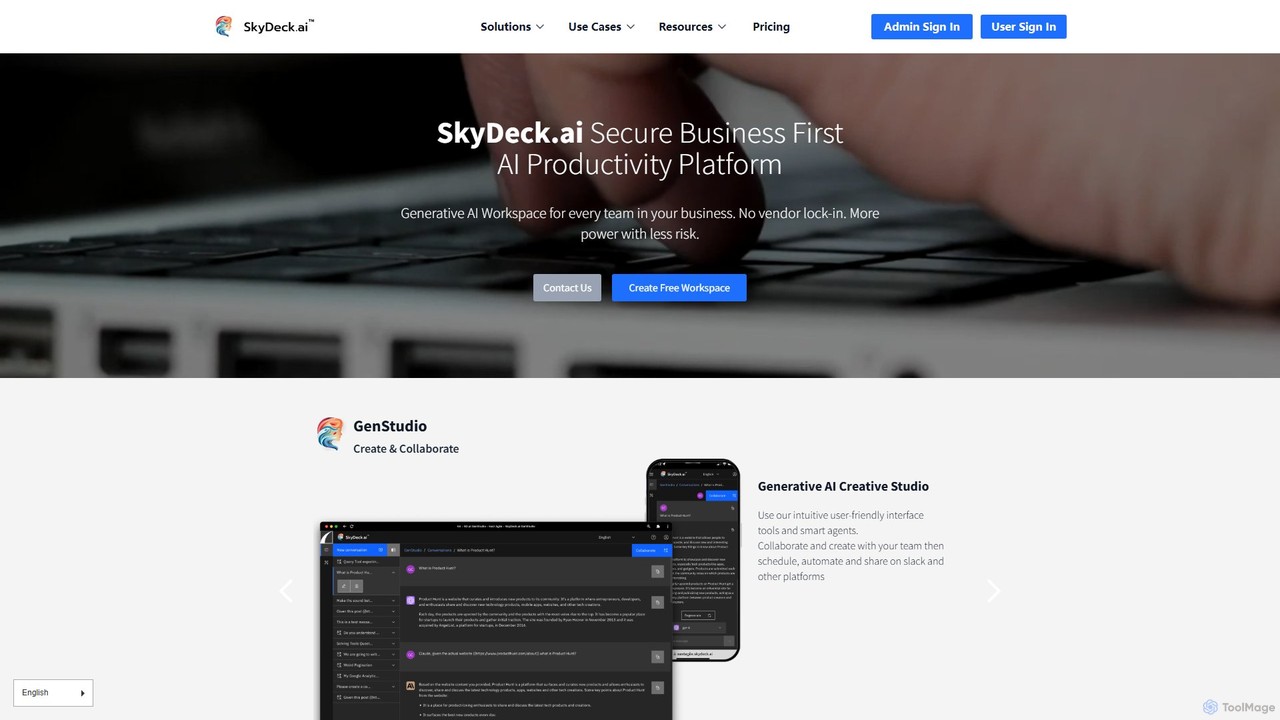
SkyDeck AI is a secure, business-first AI productivity platform designed for enterprises. It offers a collaborative generative AI …
SkyDeck AI is a secure, business-first AI productivity platform designed for enterprises. It offers a collaborative generative AI studio (GenStudio) and a robust administrative control center, enabling teams to use multiple LLMs without vendor lock-in. Key features include advanced security, team management, automation, and seamless integrations with tools like Slack and Hugging Face.

Dynamo AI
Dynamo AI is an enterprise platform for deploying secure, compliant, and reliable Generative AI. It offers AI guardrails, …
Dynamo AI is an enterprise platform for deploying secure, compliant, and reliable Generative AI. It offers AI guardrails, hallucination detection, red-teaming, and observability to manage AI risks and accelerate production at scale.
About Model Management
Model Management tools are specialized platforms for versioning, deploying, monitoring, and governing machine learning models throughout their lifecycle. As a key component of MLOps within the broader Developer Tools category, these systems bridge the gap between data science experimentation and production-level operations. They provide a centralized framework to ensure that AI models are reproducible, scalable, and auditable. This systematic approach helps organizations manage complexity, mitigate risks, and maximize the value of their AI investments.
Core Features
- Model Registry & Versioning: Provides a central repository to store, track, and manage different versions of models, including their associated metadata, code, and training data.
- Automated Deployment: Streamlines the process of deploying models as scalable APIs or services into various environments (cloud, on-premise, edge) with CI/CD integration.
- Performance Monitoring: Continuously tracks the operational health of deployed models, detecting issues like data drift, concept drift, and performance degradation.
- Governance & Access Control: Enforces policies for model approval, usage, and access, ensuring security, compliance, and a clear audit trail.
- A/B Testing Framework: Facilitates the comparison of different model versions in a live environment to validate performance improvements before a full rollout.
Use Cases
Model Management platforms are essential for organizations with multiple production models, such as in finance for managing fraud detection algorithms, in e-commerce for updating recommendation engines, and in healthcare for governing diagnostic AI tools. They are primarily used by MLOps engineers, data scientists, and IT operations teams to maintain system reliability and efficiency.
How to Choose
When selecting a Model Management tool, consider its integration capabilities with your existing ML frameworks (e.g., TensorFlow, PyTorch) and cloud infrastructure. Evaluate the sophistication of its monitoring and alerting features for drift detection. Assess its scalability to handle your expected number of models and prediction volume, and verify its support for your required deployment targets and governance standards.
Model ManagementUse Cases
Managing E-commerce Recommendation Models
An e-commerce company's data science team manages dozens of personalized recommendation models for different product categories. Using a model management platform, they version each model based on the training dataset and algorithm used. The MLOps engineers then automate the deployment of updated models to production with zero downtime. The platform continuously monitors key business metrics like click-through rates and conversion rates, alerting the team if a model's performance degrades, enabling rapid rollback to a previous stable version.
Ensuring Compliance for Financial Fraud Detection Models
A financial institution must maintain a complete audit trail for its fraud detection models to meet regulatory requirements like SR 11-7. A model management platform acts as a system of record. It logs every model version, the data it was trained on, its validation results, and who approved its deployment. When regulators conduct an audit, the compliance team can easily generate reports detailing the model's entire lifecycle, demonstrating transparency and adherence to governance policies, thus avoiding significant fines and reputational damage.
A/B Testing a New Customer Churn Prediction Model
A telecom company develops a new churn prediction model that promises higher accuracy. Instead of a risky direct replacement, the MLOps team uses the model management platform to perform a champion/challenger test. They deploy the new model (challenger) alongside the existing one (champion) and route 10% of prediction requests to it. For several weeks, the platform collects performance data from both models. The data clearly shows the new model reduces prediction errors by 15%, giving the business the confidence to promote it as the new champion for 100% of traffic.
Automating CI/CD for Machine Learning (MLOps)
A tech startup wants to accelerate its model development lifecycle. They integrate a model management tool into their CI/CD pipeline. When a data scientist commits a new model version to the code repository, a pipeline is automatically triggered. This pipeline runs automated tests, packages the model into a container, registers it in the model management platform, and deploys it to a staging environment. This MLOps practice reduces manual deployment work from days to minutes, allowing the team to iterate and deliver new AI features to customers much faster.
Monitoring for Data Drift in a Healthcare Diagnostic AI
A hospital deploys an AI model to detect diseases from medical images. The model was trained on images from a specific type of scanner. Over time, the hospital introduces new scanners with slightly different image properties. The model management platform's monitoring feature detects this 'data drift' by comparing the statistical distribution of new images against the training data. It automatically alerts the MLOps team, who can then trigger a retraining pipeline using data from the new scanners to maintain the model's diagnostic accuracy and ensure patient safety.
Centralizing Models for a Cross-Functional Data Science Team
A large enterprise has multiple data science teams building models for different business units. Without a central system, this leads to duplicated effort and inconsistent standards. By implementing a model management platform with a central model registry, they create a single source of truth. A team in marketing can now discover and reuse a customer segmentation model built by the sales team. The platform's access controls ensure that teams can only view or use models relevant to their function, promoting collaboration while maintaining security and organizational standards.