Fiddler AI
Fiddler AI is an enterprise-grade AI Observability platform designed to build trust and transparency into AI systems. It …
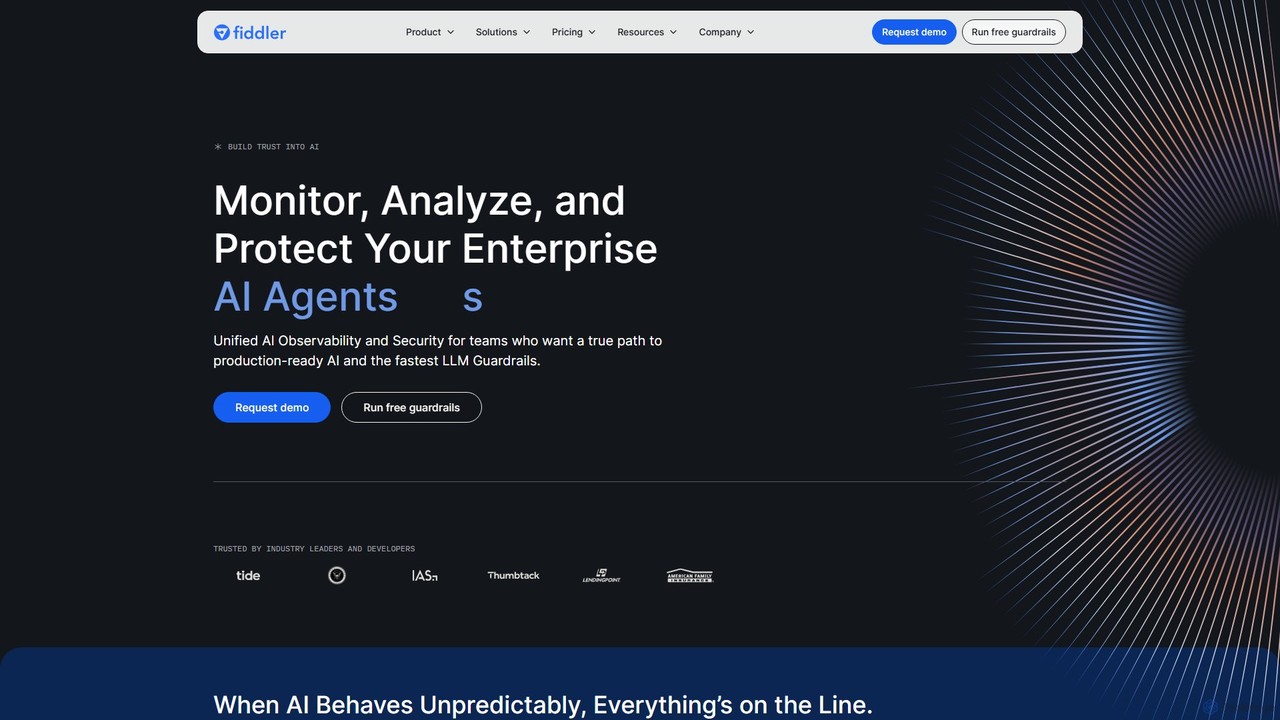
Fiddler AI is an enterprise-grade AI Observability platform designed to build trust and transparency into AI systems. It provides unified monitoring, explainability, and security for both traditional machine learning (ML) models and large language models (LLMs). The platform helps teams detect and resolve issues like data drift, performance degradation, bias, and security vulnerabilities, ensuring AI applications are reliable, fair, and compliant.
About Model Monitoring
Model Monitoring tools are a specialized category of developer utilities designed to track, analyze, and manage the performance of machine learning models in production environments. These platforms continuously evaluate live data and model predictions to detect issues like performance degradation, data drift, and concept drift. By providing real-time insights and alerts, they ensure that AI systems remain accurate, fair, and reliable long after deployment. This proactive oversight is crucial for maintaining business value and mitigating risks associated with model failure.
Core Features
- Performance Tracking: Monitors key ML metrics such as accuracy, precision, recall, and F1-score against production data.
- Drift Detection: Automatically identifies statistical changes between training data and live input data (Data Drift) or in the underlying data relationships (Concept Drift).
- Explainability and Bias Analysis: Provides insights into why a model made a specific prediction and audits for fairness issues or unintended bias.
- Operational Health Monitoring: Tracks infrastructure metrics like prediction latency, throughput, and server error rates.
- Automated Alerting: Configures custom alerts to notify teams immediately when performance drops or significant drift is detected.
Applicable Scenarios
Model Monitoring is essential for any organization deploying machine learning models into production. It is widely used in industries like finance for fraud detection models, e-commerce for recommendation engines, and healthcare for diagnostic AI. MLOps engineers, data scientists, and machine learning engineers use these tools to ensure the long-term health and return on investment of their AI systems.
Selection Criteria
When choosing a Model Monitoring tool, consider its integration capabilities with your existing MLOps stack (e.g., TensorFlow, PyTorch, Kubeflow). Evaluate the sophistication of its drift detection algorithms and the clarity of its explainability reports. Also, assess its scalability to handle your prediction volume, the flexibility of its alerting system, and whether it supports monitoring for both structured and unstructured data.

Model MonitoringUse Cases
Monitor Financial Fraud Detection Models
A financial institution's data science team uses a model monitoring platform to oversee their real-time transaction fraud detection model. The tool continuously tracks prediction accuracy and latency. More importantly, it is configured to detect concept drift. When a new, sophisticated fraud pattern emerges that the model wasn't trained on, the system detects a significant deviation in data patterns and prediction confidence, automatically alerting the MLOps team. This allows them to quickly trigger a retraining pipeline with new data, preventing significant financial losses and maintaining the model's effectiveness against evolving threats.
Ensure Fairness in AI-Powered Hiring Tools
An HR technology company deploys an AI model to screen resumes and rank candidates. To ensure ethical AI practices, they use a model monitoring tool focused on bias and fairness. The tool continuously analyzes predictions across different demographic groups (e.g., gender, ethnicity) protected by regulations. If the model starts showing a bias—for instance, consistently ranking male candidates higher for a technical role despite similar qualifications—the system flags this disparity. This provides the company with actionable insights to investigate and correct the model, ensuring compliance with anti-discrimination laws and promoting fair hiring practices.
Maintain E-commerce Recommendation Engine Quality
An online retailer relies on a recommendation engine to drive sales. Over time, user behavior changes due to new trends or seasonality. A model monitoring tool is used to detect data drift in user interaction data (clicks, purchases, views). For example, as winter approaches, the tool detects a shift in product categories being viewed. It alerts the data science team that the input data no longer matches the distribution the model was trained on. This prompts a model refresh or retraining with recent data, ensuring recommendations stay relevant, personalized, and effective at driving conversions.
Validate Performance of Medical Imaging AI
A healthcare provider uses an AI model to detect anomalies in medical scans like X-rays or MRIs. The stakes are extremely high, so continuous validation is critical. A model monitoring tool is implemented to track the model's accuracy, precision, and recall against new scans, which are later verified by radiologists. The tool also monitors for data drift caused by new imaging equipment or different scanning protocols. If performance metrics dip below a pre-defined clinical threshold, an alert is sent to the clinical engineering team, ensuring patient safety is never compromised by a degraded AI model.
Monitor Predictive Maintenance Models in Manufacturing
A factory uses an ML model to predict equipment failure based on sensor data (temperature, vibration). A model monitoring tool is essential to track the model's predictive accuracy. Over time, sensors can degrade or be replaced, causing data drift. The monitoring tool detects these statistical shifts in sensor readings and alerts the maintenance team. This prevents the model from making inaccurate failure predictions based on faulty data, ensuring that maintenance is scheduled effectively, minimizing downtime, and avoiding unnecessary parts replacement.
Analyze Customer Churn Prediction Model Explainability
A telecom company uses a model to predict which customers are likely to churn. To improve retention strategies, product managers need to understand *why* a customer is flagged as high-risk. They use a model monitoring tool's explainability feature (e.g., SHAP values). This feature breaks down each prediction, showing which factors (like 'number of support tickets' or 'data usage drop') contributed most to the churn score. This insight allows the company to move beyond just predicting churn to proactively addressing the root causes, for example, by offering a specific customer a better data plan instead of a generic discount.