Frugal
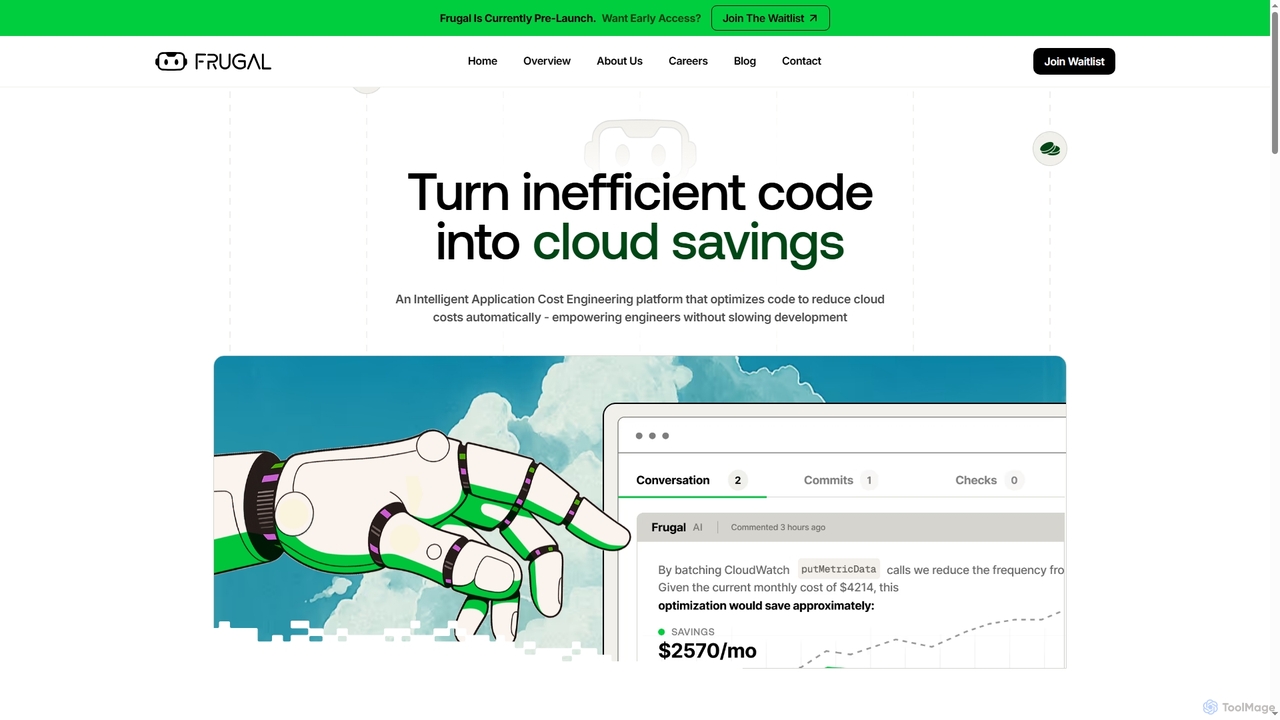
Frugal is an intelligent, AI-powered Application Cost Engineering platform designed for engineers to automatically optimize code and reduce …
Frugal is an intelligent, AI-powered Application Cost Engineering platform designed for engineers to automatically optimize code and reduce cloud costs. It aims to empower developers to eliminate waste at the source without compromising development speed, fostering collaboration between engineering and FinOps teams.
About Code Optimization
Code Optimization tools are AI-powered solutions designed to analyze, improve, and refine software code for enhanced performance, efficiency, and maintainability. As a specialized sub-category within Development AI tools, they leverage advanced algorithms to identify bottlenecks, suggest refactorings, and even automate code transformations. These tools help developers create faster, more reliable applications while reducing operational costs and technical debt.
Core Features
- Performance Bottleneck Detection: Automatically identifies inefficient code segments that hinder application speed.
- Automated Refactoring Suggestions: Provides intelligent recommendations for improving code structure, readability, and design patterns.
- Resource Usage Analysis: Monitors and optimizes memory, CPU, and network consumption within code execution.
- Code Quality & Maintainability Improvement: Suggests changes to adhere to coding standards, reduce complexity, and enhance future maintainability.
- Dead Code Elimination: Pinpoints and helps remove unused code, reducing application size and potential vulnerabilities.
Applicable Scenarios
Software development teams use these tools to fine-tune their applications, from web services to mobile apps. They are crucial for optimizing high-traffic backend systems to handle more requests efficiently, or for ensuring real-time applications deliver a smooth user experience. Additionally, they assist in reducing cloud infrastructure costs by making code run more efficiently on fewer resources.
How to Choose
When selecting an AI code optimization tool, consider its compatibility with your programming languages and frameworks, its integration capabilities with your existing CI/CD pipelines, and the accuracy and actionability of its suggestions. Evaluate the depth of its analysis (e.g., runtime vs. static), its reporting features, and the level of automation it provides for applying optimizations. User interface and community support are also important factors.
Code OptimizationUse Cases
Optimizing Backend API Performance
For backend developers and DevOps engineers, AI code optimization tools analyze API endpoints to identify slow queries, inefficient data structures, or redundant computations. By suggesting and sometimes automatically applying optimized algorithms or database interactions, these tools can significantly reduce response times and increase throughput for high-traffic web services, ensuring a smoother experience for end-users and reducing server load.
Reducing Cloud Compute Costs for Microservices
Cloud architects and engineering managers utilize AI optimization to scrutinize microservices for excessive resource consumption. The tools pinpoint memory leaks, inefficient loops, or unnecessary I/O operations that drive up cloud bills. Optimizing these areas leads to more efficient resource allocation, allowing services to run on smaller instances or fewer containers, directly translating into substantial cost savings on platforms like AWS, Azure, or GCP.
Accelerating Data Processing Scripts
Data scientists and machine learning engineers often work with large datasets and complex algorithms. AI code optimization helps them by analyzing Python, R, or Java scripts to find performance bottlenecks in data loading, transformation, or model training phases. The tools can suggest vectorized operations, more efficient data structures, or parallelization strategies, drastically cutting down processing times for analytical pipelines and ML model development.
Enhancing Mobile App Responsiveness
Mobile app developers employ these tools to ensure their applications run smoothly and consume minimal battery on user devices. AI optimization identifies inefficient UI rendering code, excessive background processes, or unoptimized network calls that can lead to lag or battery drain. By providing actionable insights and refactoring suggestions, the tools help deliver a highly responsive and energy-efficient mobile experience.
Improving Game Engine Efficiency
Game developers leverage AI code optimization to squeeze maximum performance out of game engines and custom code. These tools can detect frame rate drops caused by inefficient rendering loops, complex physics calculations, or unoptimized asset loading. By suggesting improvements to algorithms, memory management, or parallel processing, they help achieve higher frame rates, faster load times, and a more immersive gaming experience.
Automating Code Review for Performance & Quality
Development teams integrate AI code optimization into their CI/CD pipelines to automate performance and quality checks. Before code merges, the AI automatically scans new commits for potential performance regressions, security vulnerabilities, or deviations from coding standards. This proactive approach catches issues early, reduces manual review effort, and ensures a consistently high standard of code quality across the entire codebase.