Cycle
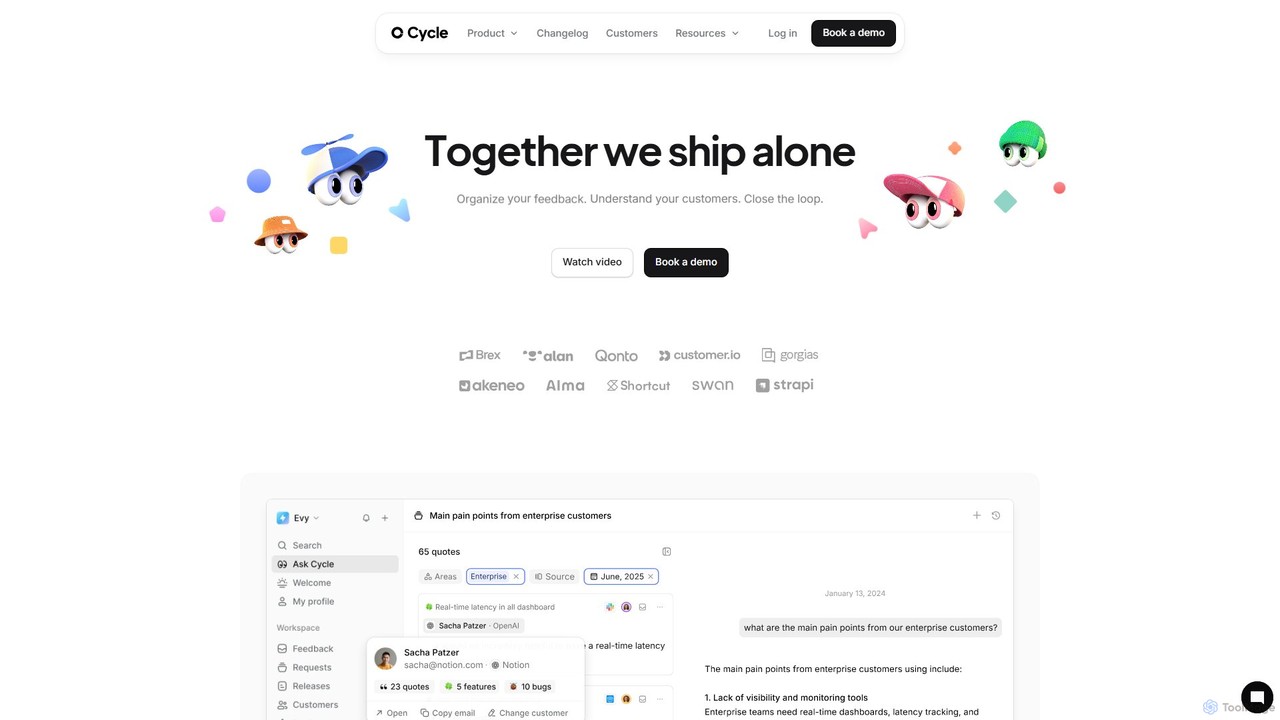
Cycle is an AI-powered feedback hub designed for product teams. It automates the collection, organization, and analysis of …
Cycle is an AI-powered feedback hub designed for product teams. It automates the collection, organization, and analysis of customer feedback from various sources like Slack, Zendesk, and Intercom. With dedicated AI agents, Cycle helps teams understand customer needs, prioritize features, and close the feedback loop effectively, streamlining the entire product development lifecycle.
About Roadmapping
AI Roadmapping tools are designed to strategically plan and visualize the evolution of products, projects, or technologies. They leverage artificial intelligence to analyze data, suggest priorities, predict timelines, and automate the creation and management of dynamic roadmaps. These tools help development teams align initiatives with business goals, optimize resource allocation, and communicate strategic direction effectively, enabling more adaptive planning in complex environments.
Core Features
- Data-Driven Prioritization: AI analyzes market trends, user feedback, and resource constraints to suggest optimal feature prioritization for roadmaps.
- Automated Timeline Generation: Automatically generates project timelines and milestones based on historical data, estimated effort, and dependencies.
- Risk Prediction & Mitigation: Identifies potential roadblocks and suggests mitigation strategies by analyzing project dependencies and historical risks.
- Scenario Planning: Simulates different strategic paths and their potential outcomes, aiding in informed decision-making for roadmap adjustments.
- Dynamic Visualization: Creates interactive and adaptable roadmap visualizations that update in real-time with project progress and changing data.
Applicable Scenarios
AI Roadmapping tools are crucial for product managers defining future product features and releases, software development teams planning sprint cycles and long-term technical debt, and R&D departments mapping out technology adoption and innovation initiatives. They support strategic planning across various stages of product and project lifecycle.
How to Choose
When selecting an AI Roadmapping tool, consider its integration capabilities with existing project management and data analytics tools. Evaluate the sophistication of its AI-driven insights for prioritization, prediction, and scenario planning. Assess the level of customization and flexibility offered for adapting roadmap views and data inputs, and look for robust collaboration features for team alignment.
RoadmappingUse Cases
Product Feature Prioritization
Product managers utilize AI roadmapping tools to analyze extensive user feedback, market demand, and development costs. The AI then suggests the most impactful features for upcoming releases, ensuring that development efforts are aligned with strategic business goals and maximize return on investment.
Agile Sprint Planning Optimization
Development teams leverage AI roadmapping tools to predict task dependencies and estimate effort based on historical sprint data. This capability helps in creating more realistic and efficient sprint backlogs, significantly reducing potential bottlenecks and improving the overall predictability of project delivery.
Strategic Technology Adoption
CTOs and R&D leaders utilize AI roadmapping to evaluate emerging technologies, assess their potential impact, and map out a phased adoption strategy. The AI can forecast integration challenges and resource requirements, ensuring a smooth transition and strategic advantage for the organization.
Resource Allocation & Capacity Planning
Project portfolio managers employ AI roadmapping to visualize resource availability against planned initiatives across multiple projects. The AI identifies potential resource overloads or underutilization, suggesting adjustments to optimize team capacity and ensure efficient project execution.
Market-Driven Product Evolution
Marketing and product teams use AI roadmapping to continuously monitor market trends and competitor activities. The AI identifies gaps or opportunities, suggesting new product initiatives or adjustments to existing ones, keeping the product competitive, relevant, and responsive to market changes.
Stakeholder Communication & Alignment
Project leads use AI roadmapping tools to create interactive, shareable roadmaps that clearly communicate strategic direction, milestones, and dependencies to diverse stakeholders. The AI can highlight key progress points and potential risks, fostering transparency and alignment across the organization.