Kraftful
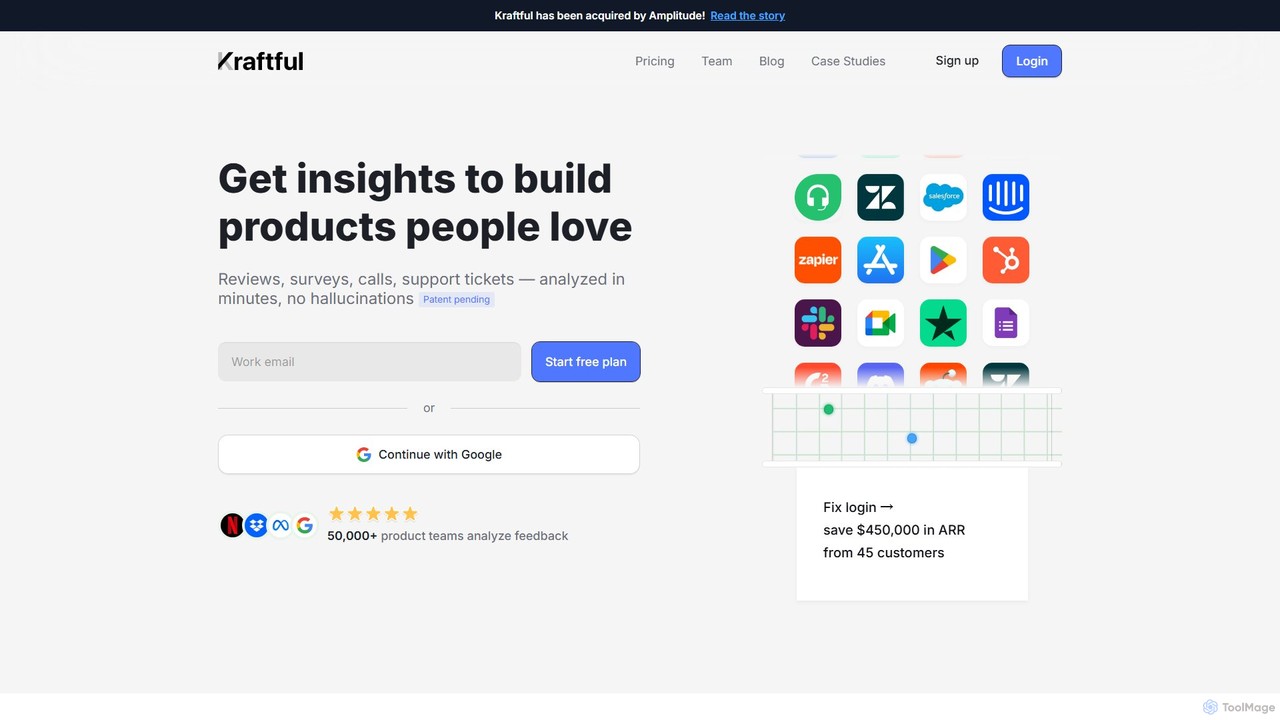
Kraftful is an AI-powered copilot for product teams, designed to analyze and synthesize user feedback from over 30 …
Kraftful is an AI-powered copilot for product teams, designed to analyze and synthesize user feedback from over 30 sources. It automatically sorts feedback into actionable insights, generates user stories for Jira and Linear, and helps teams build products customers love by deeply understanding their needs.
Collectif
Collectif is an AI-powered continuous discovery platform that automates the analysis of customer feedback. It integrates with tools …
Collectif is an AI-powered continuous discovery platform that automates the analysis of customer feedback. It integrates with tools like Zendesk, Hubspot, and Intercom to centralize support tickets, sales calls, and interviews, using GPT-4 to extract actionable insights, identify user needs, and streamline product development.
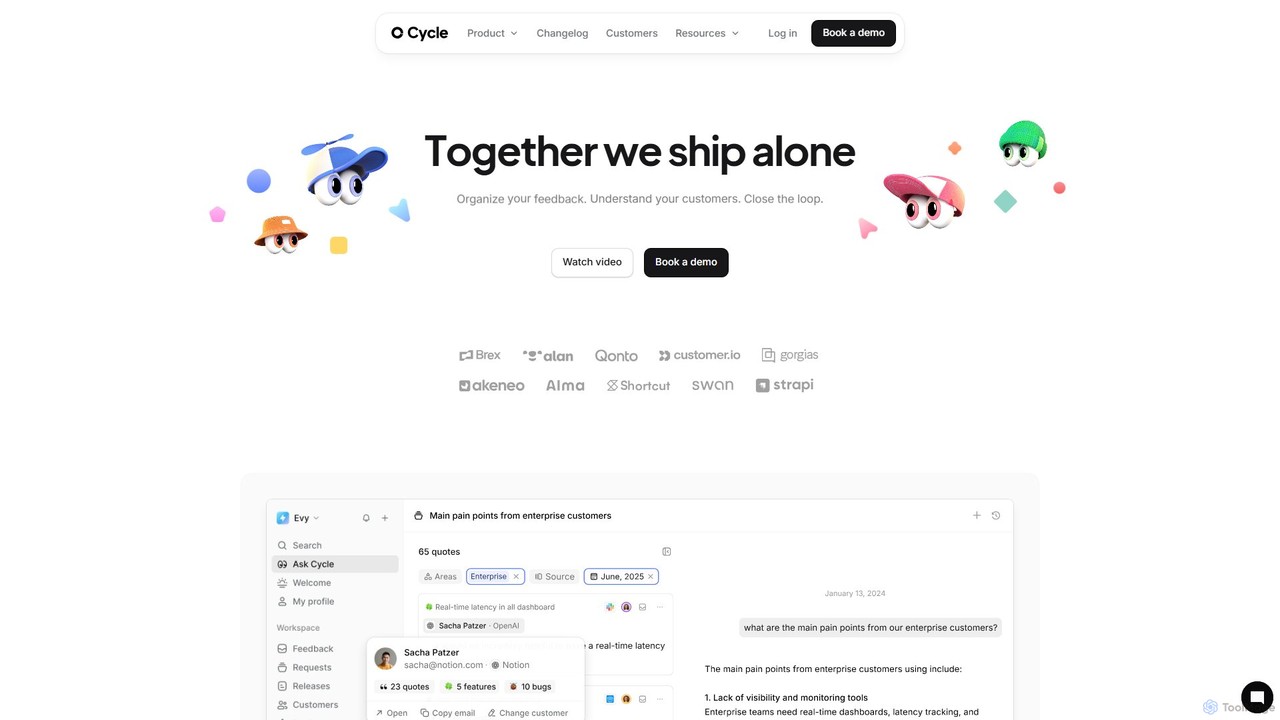
Cycle
Cycle is an AI-powered feedback hub designed for product teams. It automates the collection, organization, and analysis of …
Cycle is an AI-powered feedback hub designed for product teams. It automates the collection, organization, and analysis of customer feedback from various sources like Slack, Zendesk, and Intercom. With dedicated AI agents, Cycle helps teams understand customer needs, prioritize features, and close the feedback loop effectively, streamlining the entire product development lifecycle.
About Feedback Management
Feedback Management tools are AI-powered platforms designed to systematically collect, analyze, and act on user feedback from various channels. They leverage Natural Language Processing (NLP) to automatically categorize comments, identify sentiment, and extract key themes from unstructured text. This enables product teams to make data-driven decisions, prioritize feature development, and enhance user satisfaction. As a specialized area within Product Management, these tools transform raw customer opinions into actionable insights for the development lifecycle.
Core Features
- Automated Feedback Aggregation: Gathers feedback from diverse sources like surveys, app stores, social media, and support tickets into a single repository.
- AI-Powered Theme & Sentiment Analysis: Uses NLP to automatically detect topics, trends, and the emotional tone (positive, negative, neutral) within feedback.
- Intelligent Prioritization: Ranks feedback based on factors like frequency, user segment, or potential business impact to guide roadmap planning.
- Roadmap Integration: Connects prioritized feedback directly to product management tools like Jira or Trello, closing the loop between user needs and development tasks.
Use Cases
These tools are primarily used by product managers, UX researchers, and customer success teams. They are essential for continuous product discovery, identifying user pain points in existing features, and validating new concepts with qualitative data before committing development resources.
How to Choose
When selecting a Feedback Management tool, consider its integration capabilities with your existing tech stack (e.g., CRM, support desk). Evaluate the sophistication of its AI analysis, the clarity of its data visualizations and reports, and its ability to scale with the volume of feedback your product receives.
Feedback ManagementUse Cases
Prioritizing Feature Requests from User Feedback
A SaaS product manager is overwhelmed with feature requests from various channels like Intercom, email, and community forums. By using an AI Feedback Management tool, they can aggregate all this unstructured data into one dashboard. The AI automatically analyzes and groups requests by theme, such as 'reporting enhancements' or 'API integration'. It then scores each theme based on request volume and user sentiment, allowing the manager to instantly identify the most impactful features to add to the Q3 roadmap, backed by clear user data.
Analyzing App Store Reviews to Identify Bugs
A mobile game developer needs to quickly identify critical bugs after a new version release. Their Feedback Management tool is connected to the Apple App Store and Google Play Store. The AI continuously scans new reviews, using sentiment analysis to flag negative comments. It then uses topic modeling to identify recurring keywords like 'crash', 'freeze', or 'login issue'. Critical issues are automatically converted into tickets in their Jira project, allowing the development team to address high-priority bugs within hours instead of days of manual review sifting.
Validating New Product Concepts with Survey Data
A UX researcher wants to validate a new feature concept before dedicating engineering resources. They send out a survey with open-ended questions to a segment of users. Instead of manually reading hundreds of text responses, they feed the data into a Feedback Management tool. The AI identifies the most frequently mentioned benefits and concerns. It generates a summary report with key themes like 'privacy concerns' and 'desire for mobile access', providing the product team with actionable, qualitative insights to refine the feature specification and mitigate risks early.
Improving Customer Onboarding by Analyzing Support Tickets
A customer success team notices a high volume of support tickets from new users in their first week. They use a Feedback Management tool to analyze the content of these tickets. The AI categorizes tickets by topic, revealing that 30% of inquiries are related to 'setting up integrations'. This insight allows the team to pinpoint a specific friction point in the onboarding process. They can then create a targeted tutorial video or improve in-app guidance for integrations, proactively reducing support load and improving the new user experience.
Tracking Post-Launch Sentiment on Social Media
After launching a major redesign, a marketing team needs to gauge public reaction. They configure their Feedback Management tool to monitor Twitter and Reddit for mentions of their product. The AI dashboard provides a real-time view of sentiment trends, showing an initial dip in positive sentiment followed by a gradual recovery. It also surfaces key conversation topics, such as users praising the new dark mode but criticizing the changed navigation. This allows the team to quickly craft targeted communications addressing the criticism and amplifying the positive feedback.
Closing the Feedback Loop with Automated Notifications
A product team uses their Feedback Management tool to link user feedback directly to development tasks in Jira. When a user reports a bug or requests a feature, the feedback is tagged and associated with a Jira ticket. Once the development team marks the ticket as 'Done', the system automatically triggers a notification. An email is sent to all users who provided the initial feedback, informing them that the issue has been resolved or the feature has been implemented. This automated process significantly improves customer satisfaction by showing users their voice is heard and acted upon.