Product Best in category 5 results Product Management AI Tool

Popular AI tools in the Product Management field of Product include Bagel AI、Canvas AI、Context、Assistra、getpivotly, etc., helping you quickly improve efficiency.

Context

Context

Context is an AI-powered analytics platform designed to help product teams understand their users. It unifies qualitative feedback …

5.0K
Bagel AI

Bagel AI

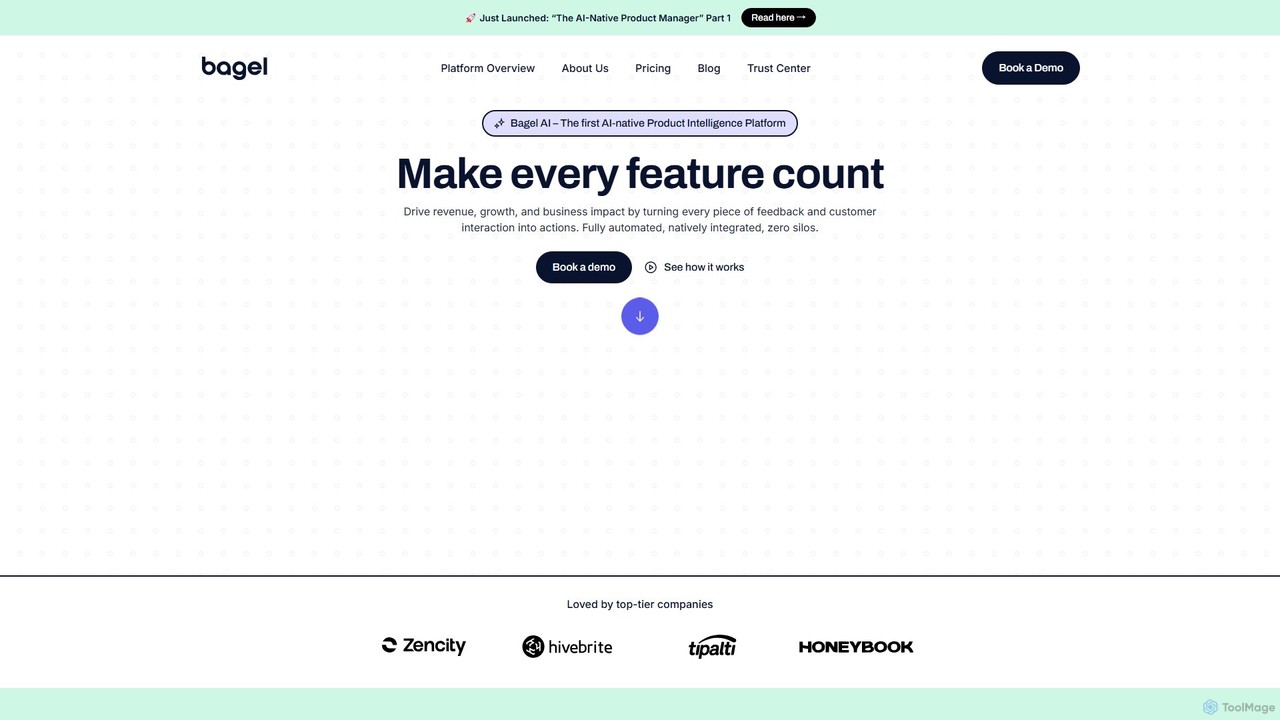
Bagel AI is an AI-native product intelligence platform that automatically consolidates customer feedback from all sources. It helps …

31.6K
Assistra

Assistra

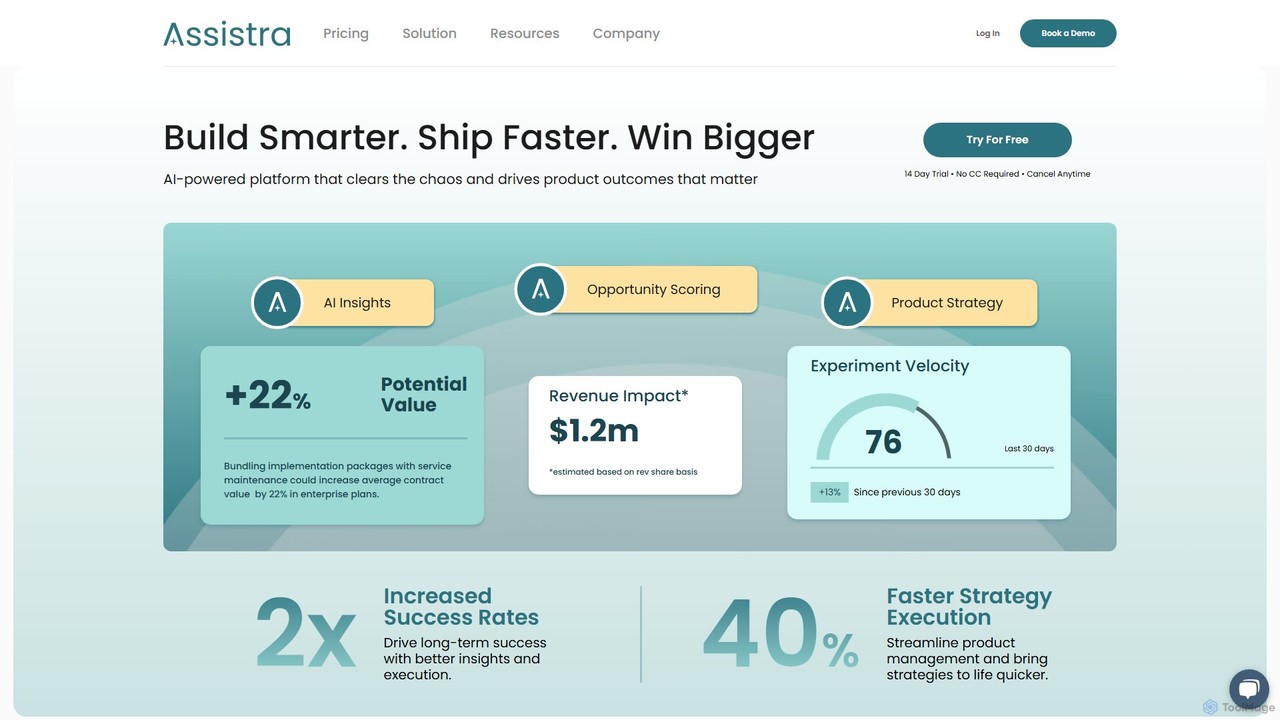
Assistra is an AI-powered product management platform designed to streamline the entire product lifecycle. It helps teams turn …

3.0K
getpivotly

getpivotly

getpivotly is an AI-powered platform designed to guide startups and businesses through the complex process of achieving Product-Market …

1.5K
Free
Canvas AI

Canvas AI

Canvas AI is a free, AI-powered tool designed to help innovators, product managers, and startups create and refine …

5.3K

About Product Management

AI Product Management tools are specialized platforms designed to automate and enhance decision-making throughout the product lifecycle. Leveraging technologies like Natural Language Processing (NLP) and machine learning, these tools analyze vast amounts of data from user feedback, market trends, and internal workflows. They help product teams prioritize features, generate documentation, and uncover insights that would be manually intensive to find. This data-driven approach enables faster, more informed product development and strategy.

Core Features

  • User Feedback Analysis: Automatically categorizes and summarizes feedback from sources like surveys, reviews, and support tickets to identify key themes.
  • AI-Powered Roadmapping: Suggests feature prioritization based on strategic goals, user impact, and development effort.
  • Automated Documentation: Generates initial drafts of Product Requirements Documents (PRDs), user stories, and specifications from simple prompts.
  • Competitive Intelligence: Monitors and analyzes competitor products, features, and market positioning to inform strategy.

Use Cases

These tools are primarily used by product managers, product owners, startup founders, and UX researchers in technology-driven companies. They are particularly valuable in SaaS, mobile app development, and e-commerce industries for managing complex backlogs, understanding user needs at scale, and accelerating the path from idea to launch.

How to Choose

When selecting an AI Product Management tool, consider its integration capabilities with your existing stack (e.g., Jira, Slack, Intercom). Evaluate the quality and customizability of its AI models for your specific data sources. Also, assess the platform's data security protocols and whether its pricing model aligns with your team's size and usage patterns.

Product ManagementUse Cases

1

Automate Synthesis of User Feedback

A product manager at a SaaS company is overwhelmed with thousands of pieces of feedback from Intercom, app store reviews, and NPS surveys each month. Instead of spending days manually tagging and categorizing, they connect these data sources to an AI Product Management tool. The AI automatically processes all incoming feedback, identifies recurring themes like 'request for dark mode' or 'bug in checkout process', and quantifies their frequency. This provides a real-time, data-backed view of user needs, allowing the PM to confidently prioritize features that address the most significant user pain points.

2

Draft Initial Product Requirements Documents (PRD)

A startup founder has a new product idea but lacks the time to write a detailed PRD. They use an AI tool and provide a high-level prompt: 'Create a PRD for a mobile app that helps users find local hiking trails, including user profiles, trail search with filters, and user reviews.' The AI generates a structured document outlining the product vision, target audience, user stories, functional requirements, and non-functional requirements. This draft serves as a strong starting point, saving over 80% of the initial writing time and allowing the founder to focus on refining the strategy and details with the development team.

3

Prioritize Features for the Next Sprint

A product team is debating which features to include in the next quarter's roadmap. They use an AI roadmapping tool to score each item in their backlog against predefined criteria such as 'alignment with company goals,' 'customer value,' and 'engineering effort.' The AI model, trained on past project data, provides an objective priority score for each feature. This data-driven approach removes personal bias from the decision-making process, facilitates a more productive discussion among stakeholders, and helps the team build a roadmap that maximizes business impact.

4

Conduct Competitive Feature Analysis

A product manager for a mobile app needs to stay ahead of the competition. They use an AI-powered competitive intelligence tool to automatically track competitors' app updates, new feature launches, and changes in user reviews. The tool scrapes and analyzes this public data, generating a weekly digest that highlights key competitive moves and shifts in market sentiment. This saves the PM hours of manual research each week and provides actionable insights to inform their own product strategy, ensuring they don't miss critical market trends or competitive threats.

5

Generate User Personas from Interview Data

A UX researcher has just completed a dozen in-depth user interviews. Instead of manually sifting through hours of transcripts to identify patterns, they upload the audio files or text transcripts to an AI tool. The AI analyzes the language, identifies common pain points, motivations, and behaviors across all interviews, and synthesizes this information into 3-5 distinct, data-backed user personas. Each persona includes a summary, goals, frustrations, and direct quotes, providing the entire product team with a clear and empathetic understanding of their target users.

6

Validate Product Ideas with Market Data

An entrepreneur is considering launching a new B2B SaaS tool. Before investing in development, they use an AI product tool to analyze market viability. They input their product concept, and the AI scours market reports, social media trends, and online forums to gauge demand, identify potential competitors, and estimate market size. The tool generates a report summarizing the opportunity, highlighting potential risks, and suggesting key features based on market conversations. This data-driven validation helps the entrepreneur make a more informed decision on whether to proceed, pivot, or abandon the idea, significantly reducing the risk of building a product nobody wants.

Product ManagementFrequently Asked Questions