ToolMage
Sign in

Best 5 Voice Of The Customer AI tools for Customer Support

Popular Voice Of The Customer AI tools in Customer Support include Dolphin AI, Cycle, Feedback Sync, ListenUp, and MagicLoop, helping you work more efficiently.

Feedback Sync
Freemium

Feedback Sync

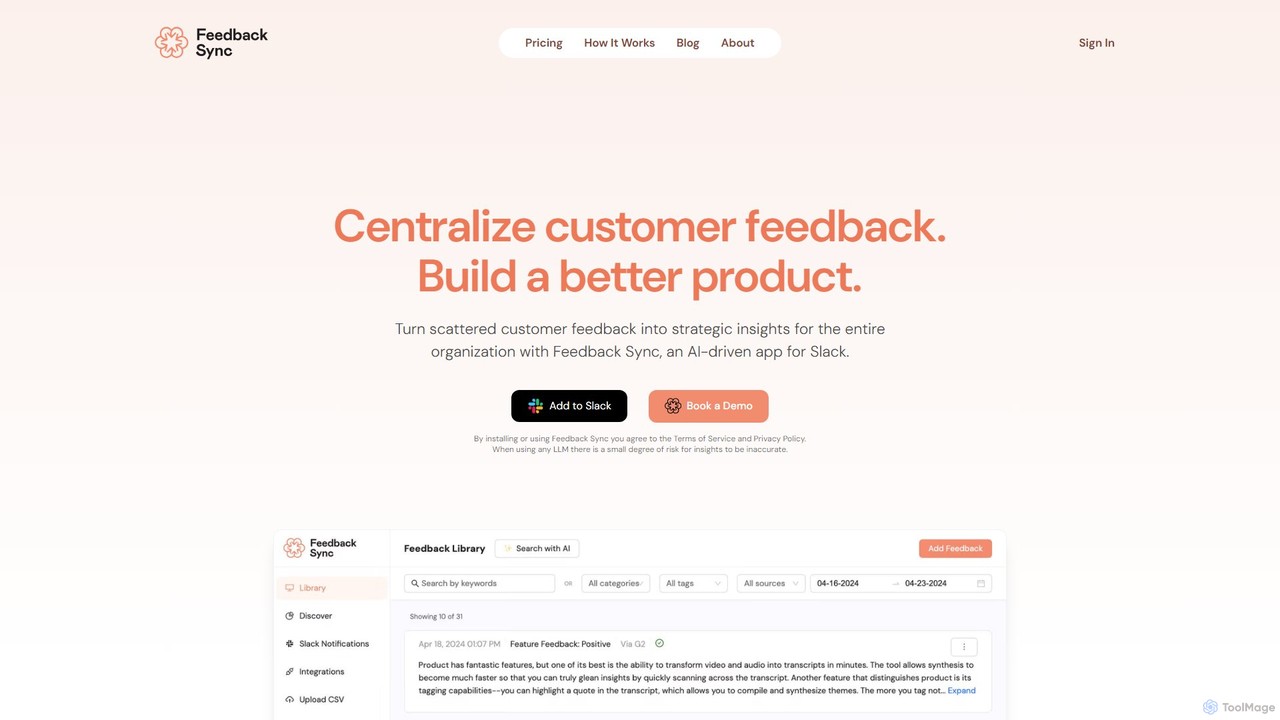
Feedback Sync is an AI-driven app for Slack that centralizes customer feedback from various sources like Zendesk and G2. It automatically organizes, summarizes, and prioritizes feedback, turning scattered data into strategic insights to help teams build better products faster.

Voice Of The Customer
Visits 6.6KFavorites 137Likes 137
MagicLoop
Freemium

MagicLoop

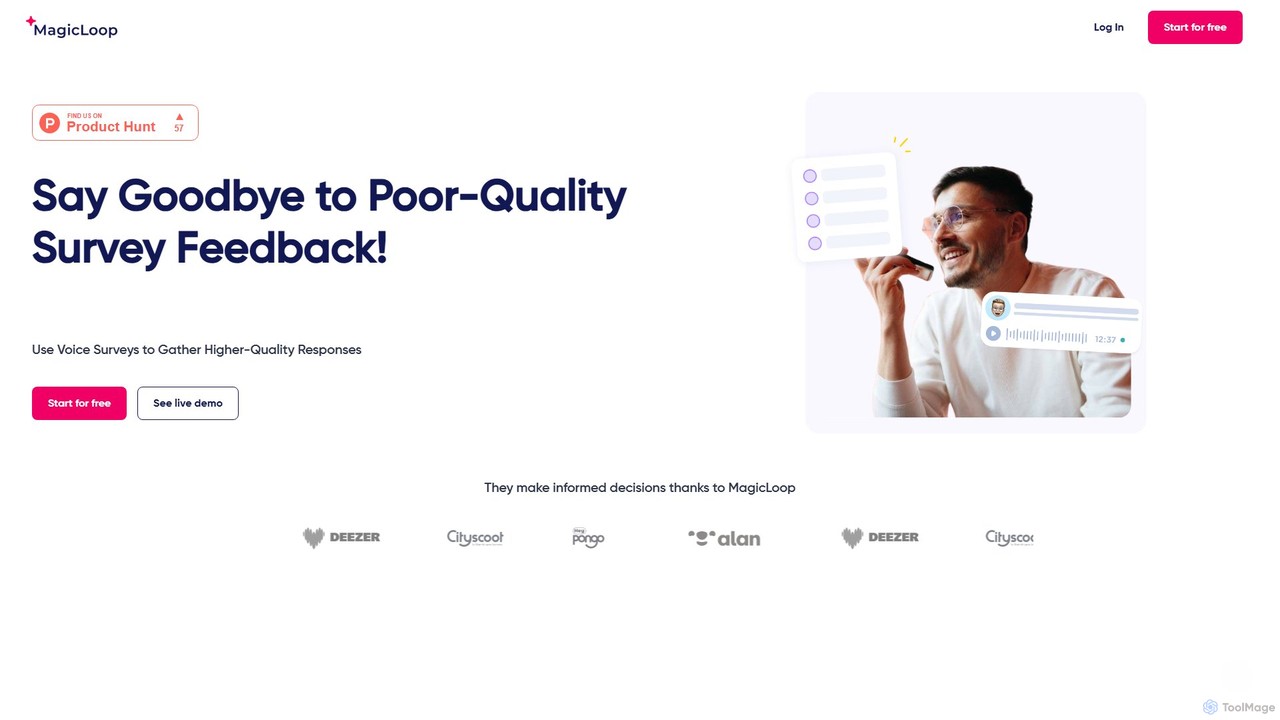
MagicLoop is an AI-powered voice survey tool designed to capture high-quality customer feedback. It replaces traditional text-based surveys with engaging voice responses, allowing you to gather richer, more nuanced insights. The platform uses AI to automatically transcribe, analyze, and synthesize voice data, saving you hours of manual work. Ideal for user research, NPS feedback, and market analysis, MagicLoop helps you truly understand the voice of your customer and make more informed, empathetic decisions.

Market Research
Visits 6KFavorites 181Likes 177
Dolphin AI
Freemium

Dolphin AI

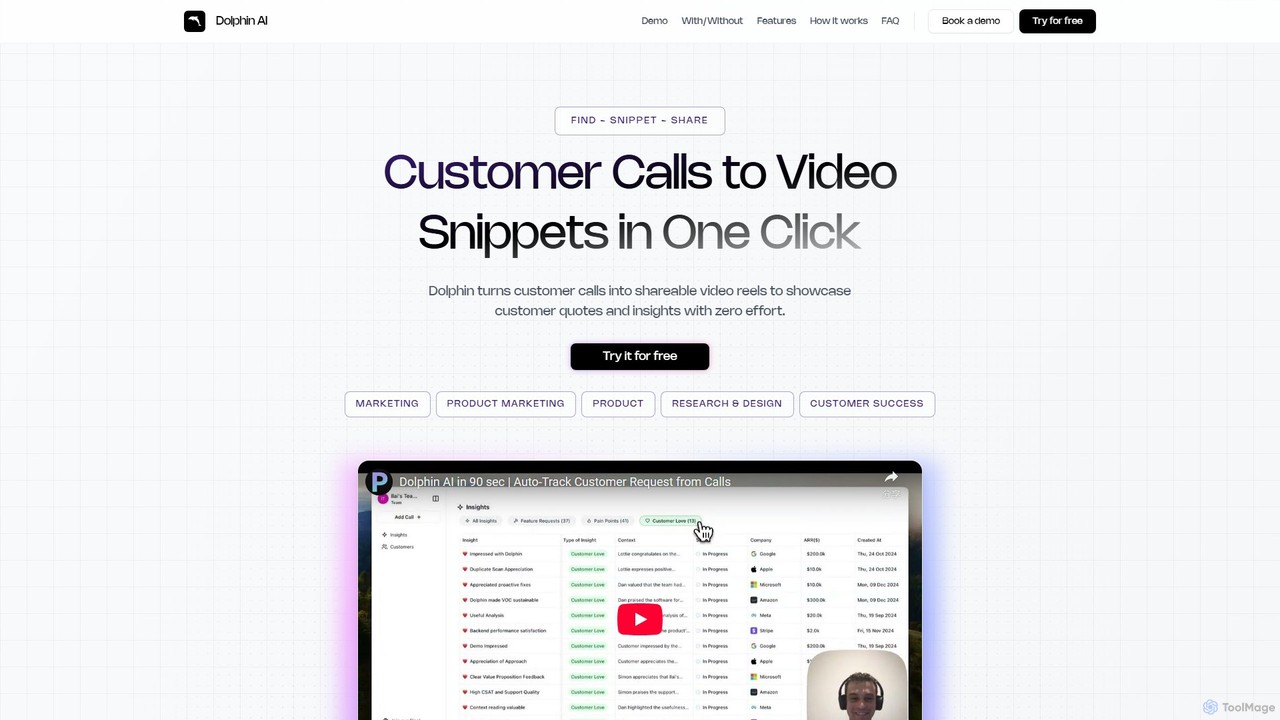
Dolphin AI automatically transforms your customer call recordings from platforms like Zoom and Gong into short, shareable video snippets. It identifies key moments, powerful quotes, and customer insights, allowing marketing, product, and sales teams to leverage authentic customer voice with zero manual effort. Instantly create testimonials, gather feedback, and share proof points.

Voice Of The Customer
Visits 40.7KFavorites 134Likes 136
Cycle
Paid

Cycle

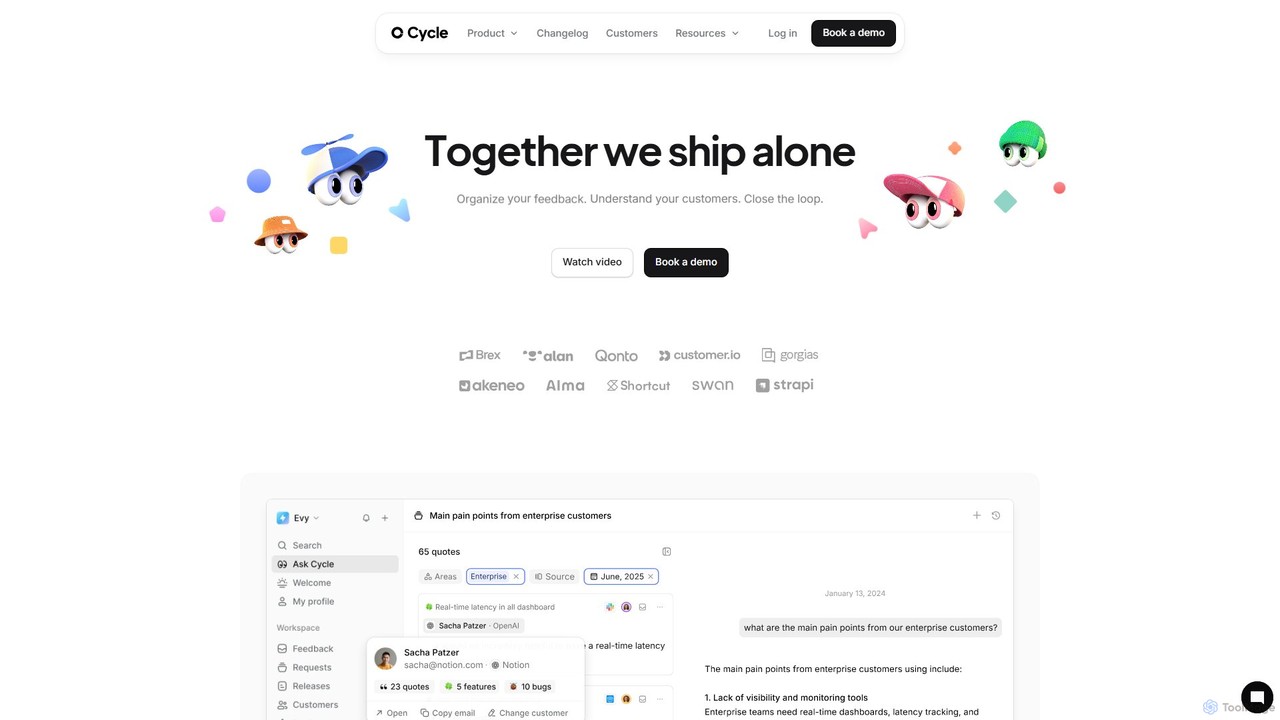
Cycle is an AI-powered feedback hub designed for product teams. It automates the collection, organization, and analysis of customer feedback from various sources like Slack, Zendesk, and Intercom. With dedicated AI agents, Cycle helps teams understand customer needs, prioritize features, and close the feedback loop effectively, streamlining the entire product development lifecycle.

Voice Of The Customer
Visits 22KFavorites 139Likes 158
ListenUp
Freemium

ListenUp

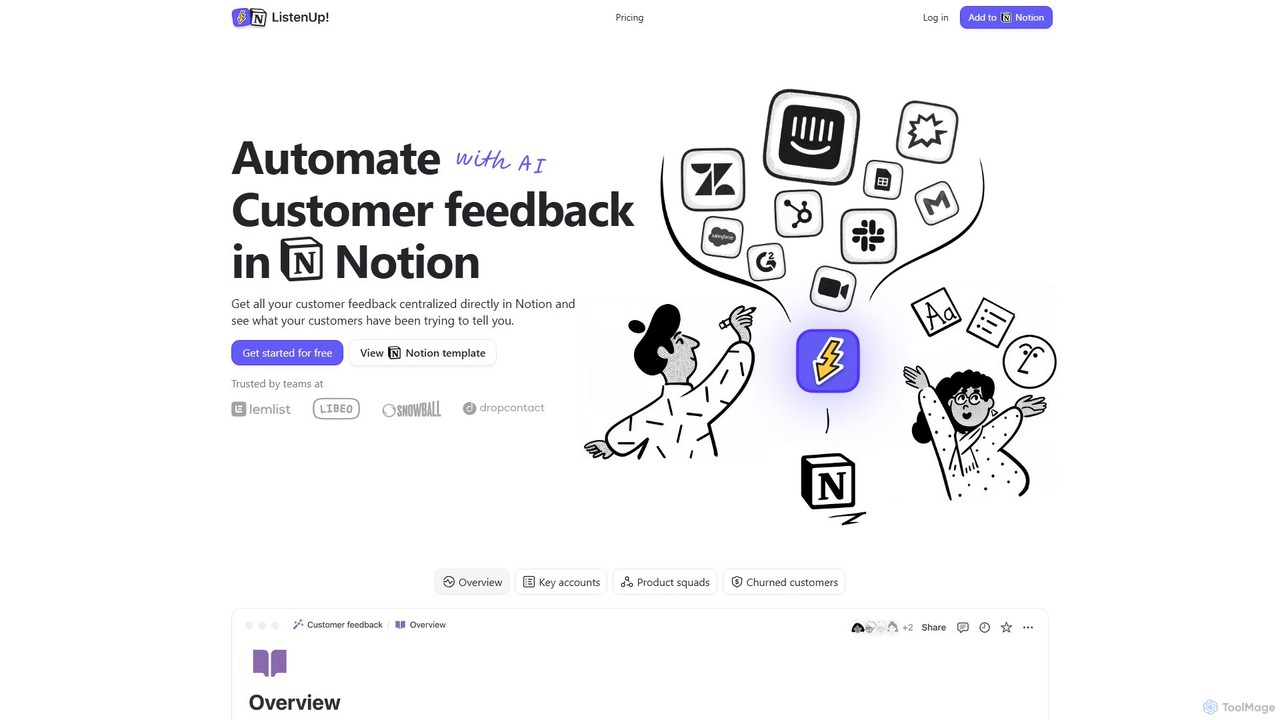
ListenUp is an AI-powered platform that automates customer feedback management by centralizing it directly within Notion. It connects to various sources like sales and support tools, transcribes video feedback, and uses AI to extract, classify, and group insights. This helps product teams save time, uncover hidden patterns, and make data-driven decisions to build features customers truly want, all within their existing Notion workspace.

Voice Of The Customer
Visits 6.1KFavorites 161Likes 145

About Voice Of The Customer

Voice Of The Customer (VoC) tools are AI-powered solutions designed to collect, analyze, and act upon customer feedback from various channels. These tools leverage natural language processing (NLP) and machine learning to understand customer sentiment, identify emerging trends, and pinpoint pain points. By transforming raw feedback into actionable insights, VoC platforms enable businesses to enhance product development, improve customer service, and optimize overall customer experience.

Core Features

  • Automated Feedback Collection: Gathers data from surveys, reviews, social media, support tickets, and calls.
  • Sentiment Analysis: Automatically detects the emotional tone (positive, negative, neutral) within customer communications.
  • Topic & Trend Identification: Uncovers recurring themes, common issues, and emerging preferences from large datasets.
  • Root Cause Analysis: Helps identify the underlying reasons behind customer satisfaction or dissatisfaction.
  • Actionable Insights & Reporting: Provides dashboards and alerts to visualize data and highlight critical areas for improvement.

Use Cases

VoC tools are invaluable for product managers seeking to prioritize features based on user needs, marketing teams aiming to tailor campaigns to customer sentiment, and customer service departments looking to proactively address common issues. They help businesses understand market demand, identify service gaps, and measure the impact of changes on customer satisfaction.

How to Choose

When selecting a VoC tool, consider its data source compatibility (e.g., text, audio, video), the depth of its AI analysis (sentiment, emotion, intent), and its integration capabilities with existing CRM or helpdesk systems. Evaluate its scalability to handle your feedback volume, customization options for industry-specific terminology, and the clarity of its reporting and alert mechanisms to ensure actionable insights.

Voice Of The Customer use cases

1

Enhance Product Development with Customer Insights

Product managers can utilize AI VoC tools to analyze thousands of customer reviews, feature requests, and support tickets. By automatically identifying recurring pain points and desired functionalities, they can prioritize product roadmap items that directly address user needs, leading to more impactful updates and higher customer satisfaction. This process significantly reduces the time spent manually sifting through feedback.

2

Proactive Customer Service Improvement

Customer service managers can deploy VoC tools to monitor real-time feedback from social media, chat logs, and call transcripts. The AI identifies emerging issues or widespread dissatisfaction before they escalate into major problems. This allows support teams to proactively address root causes, update FAQ knowledge bases, or even reach out to at-risk customers, transforming reactive support into a proactive retention strategy.

3

Personalize Marketing Campaigns with Sentiment Data

Marketing teams can leverage VoC insights to create highly targeted and personalized campaigns. By analyzing customer sentiment around specific products or services, marketers can craft messages that resonate more deeply with different customer segments. For example, positive sentiment about a new feature can be highlighted in promotional materials, while addressing negative feedback directly in targeted ads can rebuild trust and engagement.

4

Identify Churn Risk and Improve Retention

Subscription-based businesses can use VoC tools to detect early warning signs of customer churn. By continuously analyzing feedback from various touchpoints, the AI can flag customers expressing dissatisfaction, mentioning competitor products, or showing decreased engagement. This enables customer success teams to intervene proactively with personalized offers, support, or educational resources, significantly improving customer retention rates and lifetime value.

5

Benchmark Customer Satisfaction Against Competitors

Market researchers and strategists can utilize VoC tools to gather and analyze public feedback about competitors. By comparing sentiment, common complaints, and praised features across different brands, businesses can identify their competitive advantages and areas for improvement. This provides valuable market intelligence, helping to refine positioning, differentiate offerings, and develop strategies to capture market share based on genuine customer preferences.

6

Optimize Customer Journey Touchpoints

Experience designers and operations teams can map customer feedback to specific touchpoints within the customer journey. VoC tools help identify where customers encounter friction or delight, from initial website interaction to post-purchase support. By pinpointing these moments, businesses can make targeted improvements to processes, interfaces, and communication strategies, ensuring a smoother and more satisfying overall customer experience across all stages.

Voice Of The Customer FAQ

What are Voice Of The Customer (VoC) AI tools?

Voice Of The Customer (VoC) AI tools are software solutions that use artificial intelligence, primarily natural language processing (NLP) and machine learning, to automatically collect, analyze, and interpret customer feedback from various sources. They go beyond simple data collection to uncover sentiment, identify key themes, and provide actionable insights into customer needs and preferences. These tools help businesses understand what customers are saying, feeling, and expecting.

How do AI VoC tools differ from traditional customer surveys?

AI VoC tools offer significant advantages over traditional customer surveys by providing deeper, more comprehensive, and often unsolicited insights. While surveys rely on structured questions and limited response options, AI VoC tools can analyze unstructured data from diverse sources like social media, call transcripts, and open-ended feedback. This allows for the discovery of emergent themes and nuanced sentiments that might be missed by predefined survey questions, offering a more holistic view of the customer experience at scale.

What types of data can AI Voice Of The Customer tools analyze?

AI Voice Of The Customer tools are highly versatile and can analyze a wide array of data types. This includes structured data from surveys (ratings, multiple-choice) and CRM fields, as well as rich unstructured data. Unstructured sources typically include text from customer reviews, social media posts, email correspondence, chat transcripts, support tickets, and open-ended survey responses. Advanced tools can also process audio from call recordings (via speech-to-text) and even video content to extract sentiment and key topics.

Who benefits most from using AI Voice Of The Customer solutions?

A wide range of roles and departments benefit significantly from AI VoC solutions. Product managers gain insights for feature prioritization, while marketing teams can personalize campaigns based on sentiment. Customer service and support teams use it for proactive issue resolution and improving agent performance. Executive leadership benefits from a holistic view of customer satisfaction and market trends, enabling data-driven strategic decisions. Ultimately, any role focused on understanding and improving the customer experience will find these tools invaluable.

How can AI VoC tools integrate with existing business systems?

AI VoC tools are designed for seamless integration with a variety of existing business systems to maximize their utility. Common integrations include Customer Relationship Management (CRM) platforms like Salesforce or HubSpot, helpdesk software such as Zendesk or Freshdesk, and marketing automation tools. These integrations allow for a unified view of customer data, enabling feedback to enrich customer profiles, trigger automated workflows (e.g., creating a support ticket from a negative review), and inform personalized customer interactions across different departments. Many tools offer APIs or pre-built connectors for easy setup.