Spiky
Spiky is an AI-powered conversation intelligence platform designed for revenue teams. It analyzes sales and customer success calls …
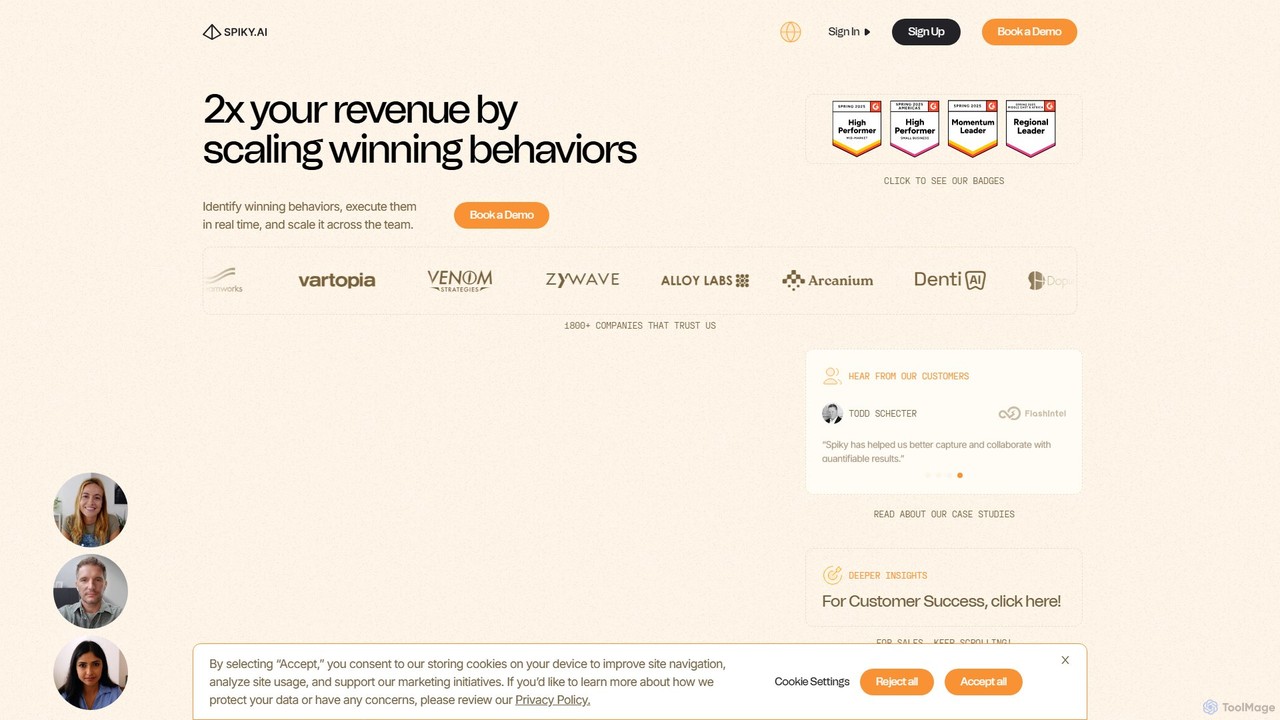
Spiky is an AI-powered conversation intelligence platform designed for revenue teams. It analyzes sales and customer success calls in real-time to provide coaching, identify winning behaviors, and automate workflows. Spiky helps teams improve playbook adoption, increase pipeline visibility, and ultimately boost revenue by scaling successful strategies across the organization.
impact360
impact360 is an AI-powered customer engagement analytics platform designed for contact centers and enterprises. It captures and analyzes …
impact360 is an AI-powered customer engagement analytics platform designed for contact centers and enterprises. It captures and analyzes 100% of customer interactions across all channels, including voice, email, chat, and social media. By leveraging speech and text analytics, it uncovers actionable insights to improve customer experience, optimize agent performance, and enhance operational efficiency.
About Analytics
AI Analytics tools are specialized platforms designed to extract actionable insights from customer interactions and support data. Leveraging machine learning and natural language processing, these tools automatically identify trends, sentiment, and common issues within vast datasets. They empower businesses to proactively improve customer service quality, optimize support operations, and enhance overall customer experience by transforming raw data into strategic intelligence.
Core Features
- Sentiment Analysis: Automatically gauge customer emotions from text and voice interactions to understand satisfaction levels.
- Root Cause Analysis: Identify underlying reasons for customer issues and recurring problems across support channels.
- Performance Metrics Tracking: Monitor key support KPIs like resolution time, agent efficiency, and customer satisfaction scores.
- Predictive Analytics: Forecast future customer needs, potential churn, or emerging issues based on historical interaction data.
- Topic Clustering: Group similar customer inquiries and feedback to reveal emerging trends and common pain points.
Applicable Scenarios
Customer support managers utilize AI analytics to pinpoint bottlenecks in service delivery, understanding which issues consume the most resources or lead to dissatisfaction. Product teams leverage these insights to prioritize feature development based on frequent customer feedback and pain points. Marketing departments can also use sentiment analysis to refine messaging and campaigns, ensuring they resonate positively with the target audience.
How to Choose
When selecting an AI analytics tool for customer support, consider its integration capabilities with existing CRM and helpdesk systems to ensure seamless data flow. Evaluate the depth and accuracy of its natural language processing for sentiment and topic analysis, crucial for understanding nuanced customer feedback. Assess the reporting and visualization features, ensuring they provide clear, actionable insights tailored to your team's needs. Finally, consider scalability and customization options to adapt to evolving business requirements and data volumes.
AnalyticsUse Cases
Identify Recurring Customer Issues
A customer support manager uses AI analytics to automatically scan thousands of support tickets and chat logs. The tool identifies common keywords, phrases, and sentiment patterns, clustering them into recurring issue categories like 'login problems' or 'billing discrepancies'. This allows the manager to prioritize knowledge base updates, agent training, or escalate systemic problems to product development, significantly reducing repeat inquiries and improving first-contact resolution rates.
Measure Customer Sentiment in Real-time
A social media support team employs AI analytics to monitor customer comments and direct messages across platforms. The tool performs real-time sentiment analysis, flagging negative interactions or emerging crises immediately. This enables agents to intervene proactively, address dissatisfaction before it escalates, and track overall brand perception, ensuring a consistent positive customer experience and protecting brand reputation.
Optimize Agent Performance and Training
A call center supervisor utilizes AI analytics to evaluate agent-customer interactions. The tool analyzes conversation transcripts for adherence to scripts, empathy, problem-solving effectiveness, and customer satisfaction indicators. By identifying top-performing behaviors and common areas for improvement, the supervisor can tailor training programs, provide targeted feedback to individual agents, and enhance overall team efficiency and service quality.
Predict Customer Churn Risk
A customer success team integrates AI analytics with their CRM to predict which customers are at high risk of churning. The tool analyzes historical interaction data, usage patterns, and sentiment scores to identify early warning signs. This allows customer success managers to proactively reach out to at-risk clients with personalized offers, support, or solutions, significantly improving retention rates and safeguarding long-term revenue.
Personalize Customer Self-Service Content
An online help center manager uses AI analytics to understand common user queries and knowledge gaps. By analyzing search terms, FAQ views, and chatbot interactions, the tool identifies content deficiencies and popular topics. This insight enables the manager to create more relevant and personalized self-service articles, guides, and chatbot responses, empowering customers to find solutions independently and reducing inbound support volume.
Benchmark Support Performance Against Industry
A business intelligence analyst leverages AI analytics to compare their customer support metrics against industry benchmarks. The tool aggregates anonymized data from similar companies or publicly available reports, providing insights into average resolution times, customer satisfaction scores, and agent productivity. This allows the analyst to identify areas where their support operations excel or lag, informing strategic improvements and competitive positioning.