Magiq
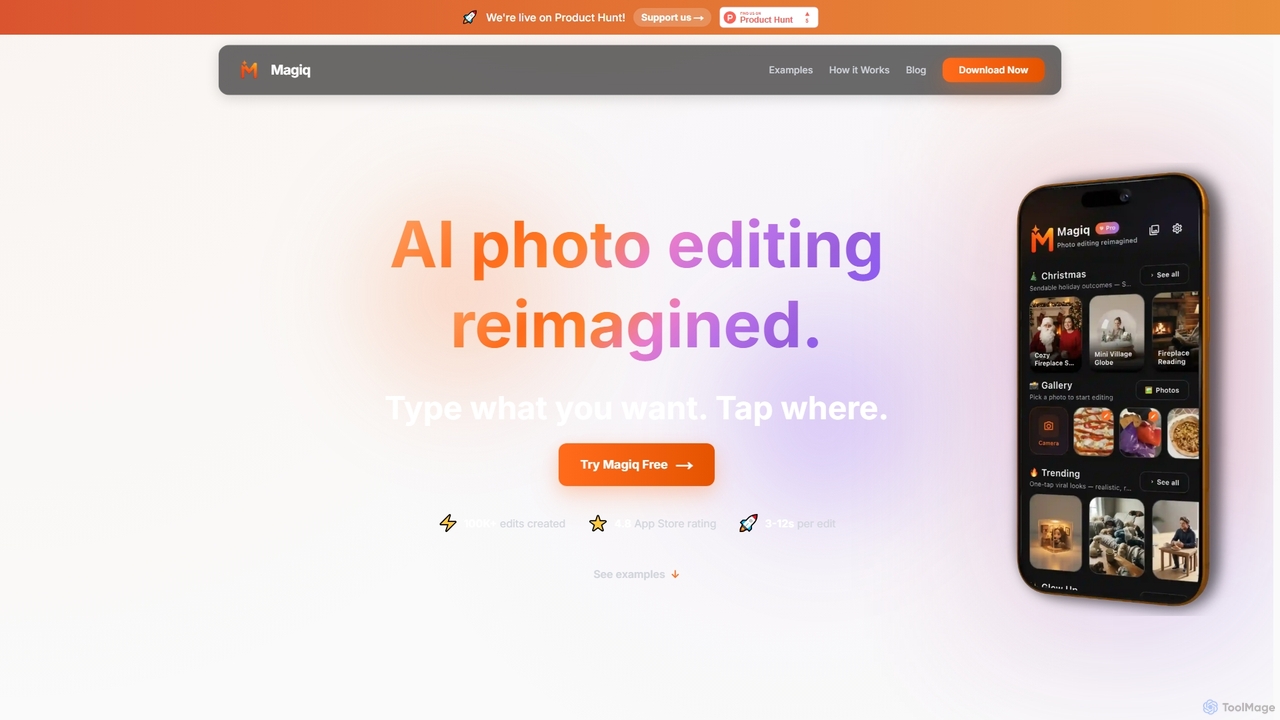
Magiq is an AI-powered photo editor for iOS and Android that redefines image transformation. With simple text instructions, …
Magiq is an AI-powered photo editor for iOS and Android that redefines image transformation. With simple text instructions, users can perform complex edits like background removal, outfit changes, smart lighting adjustments, and professional portrait creation. It delivers realistic, high-quality results in seconds, making advanced photo editing accessible to everyone.
About Generative Art
Generative Art tools are a class of software that uses algorithms, mathematical rules, or autonomous systems to create unique visual artworks. These tools operate on principles of procedural generation, where the artist defines a set of rules or parameters, and the system generates the final output, often with elements of randomness. This process-driven approach allows for the creation of complex, intricate, and often unpredictable art that would be difficult to produce by hand. It represents a specialized field within digital art focused on the collaboration between human creativity and computational logic.
Core Features
- Algorithmic Creation: Generates artwork based on mathematical formulas, code, or complex rule sets rather than direct manual drawing.
- Parameter Control: Allows users to manipulate variables like color palettes, complexity, randomness, and patterns to guide the artistic outcome.
- Iterative Exploration: Capable of producing countless unique variations from a single set of instructions, facilitating creative discovery.
- Style Abstraction: Focuses on creating abstract, geometric, or data-driven visuals, often distinct from photorealistic imagery.
Use Cases
Generative Art tools are primarily used by digital artists, designers, and creative coders. They are ideal for creating unique abstract backgrounds, complex patterns for textiles or branding, algorithmic data visualizations, and large-scale NFT collections where each piece is a unique variation of a core theme. Developers also use them for procedural content generation in games and simulations.
How to Choose
When selecting a Generative Art tool, consider the level of control you require; some tools are code-based (like Processing or p5.js) for maximum flexibility, while others offer user-friendly interfaces with sliders and presets. Evaluate the tool's specific aesthetic and algorithmic capabilities to ensure they match your artistic vision. Also, check the supported output formats (e.g., SVG for scalability, PNG for web) and the community support available for learning and inspiration.
Generative ArtUse Cases
Generating a Unique NFT Collection
An NFT artist wants to launch a collection of 10,000 unique avatars. Instead of manually designing each one, they use a generative art tool. The artist first creates various traits like background colors, character types, accessories, and expressions. They then set rarity rules for each trait within the tool's algorithm. The software programmatically combines these traits according to the defined rules, generating thousands of distinct, non-fungible artworks. This process not only automates a massive creative task but also ensures each piece in the collection is verifiably unique.
Designing Abstract Backgrounds and Textures
A graphic designer is working on a branding project and needs a series of unique, non-stock backgrounds for a website and marketing materials. Using a generative art tool, they can input the brand's color palette and adjust parameters like complexity, line weight, and organic vs. geometric shapes. The tool generates an endless stream of high-resolution patterns and textures. This allows the designer to quickly explore dozens of visual directions and select the perfect abstract art that aligns with the brand's identity, avoiding generic stock imagery and saving hours of manual creation time.
Creating Algorithmic Data Visualizations
A data scientist or information designer needs to represent a complex dataset, such as climate change trends or social network activity, in a compelling way. Instead of standard charts, they use a generative art tool that can interpret data as input. By mapping data points to visual parameters like color, size, and position, the tool transforms the raw numbers into an aesthetic, intricate artwork. The resulting piece is not just a graph but an artistic interpretation that can evoke emotion and make complex information more accessible and memorable to a broader audience.
Prototyping Procedural Game Assets
A game developer, particularly in an indie studio, needs to create a vast world with varied environments, textures, or magical effects. Using generative art tools, they can procedurally generate these assets. For example, they can create algorithms to produce unique tree shapes, alien planet terrains, or dynamic spell animations. This approach significantly speeds up the asset creation pipeline, allowing a small team to build a large and visually diverse game world. It also enables dynamic in-game content, where environments can change each time a player enters them.
Live Visuals for Music and Events (VJing)
A VJ (Video Jockey) performing at a concert or festival needs dynamic visuals that react to the music in real-time. They use generative art software that can take audio input and use its frequencies and beats to drive algorithmic animations. The visuals evolve with the music, creating a synchronized, immersive experience for the audience. The VJ can manipulate parameters on the fly, changing colors, shapes, and complexity to match the mood of the performance. This creates a unique, unrepeatable visual show for every event.
Exploring Creative Coding and Digital Art
A student, hobbyist, or artist new to digital media wants to explore the intersection of code and art. They use platforms like Processing or p5.js, which are specifically designed for learning creative coding. By writing simple lines of code, they can generate complex patterns, interactive animations, and unique visual forms. This process is not just about the final image but about learning computational thinking and expressing creative ideas through algorithms. It serves as an accessible entry point into the world of generative art, fostering experimentation and a deeper understanding of how technology can be an artistic medium.