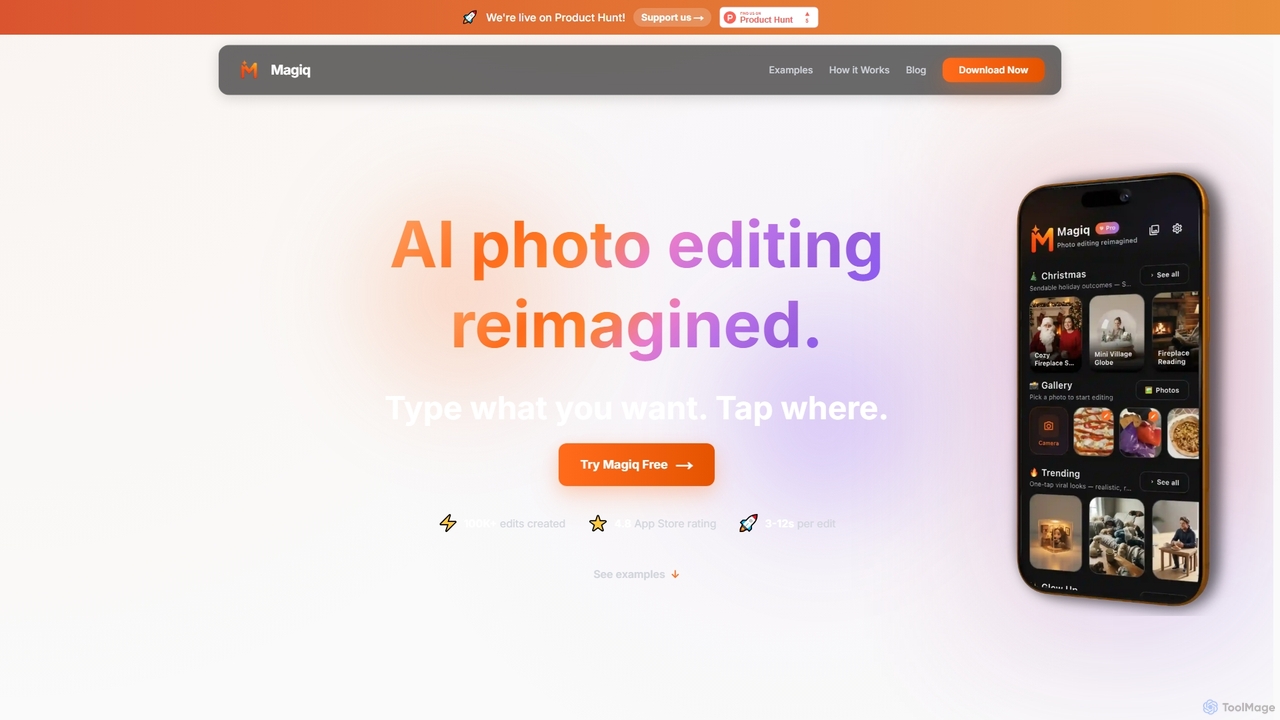
Magiq
Magiq is an AI-powered photo editor for iOS and Android that redefines image transformation. With simple text instructions, …
Magiq is an AI-powered photo editor for iOS and Android that redefines image transformation. With simple text instructions, users can perform complex edits like background removal, outfit changes, smart lighting adjustments, and professional portrait creation. It delivers realistic, high-quality results in seconds, making advanced photo editing accessible to everyone.
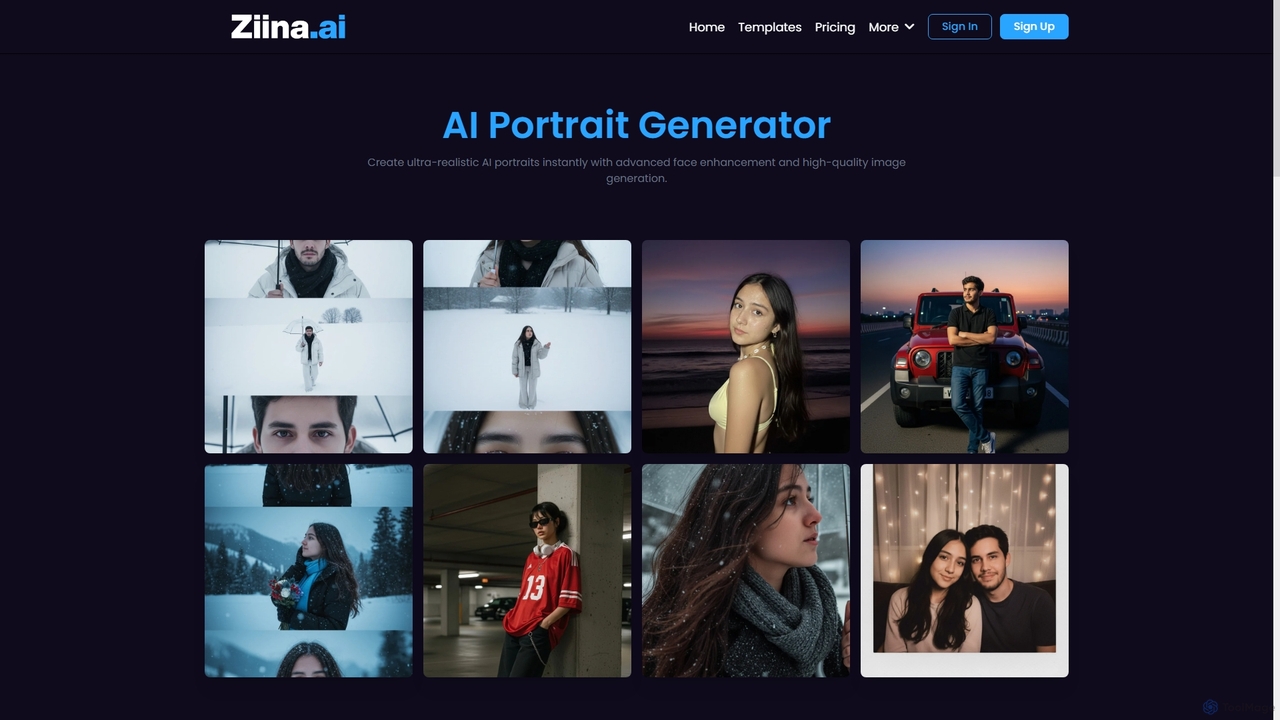
Ziina
Ziina is an advanced AI tool designed to generate ultra-realistic, studio-grade portrait images with unmatched speed, quality, and …
Ziina is an advanced AI tool designed to generate ultra-realistic, studio-grade portrait images with unmatched speed, quality, and simplicity. It offers intelligent face enhancement and multi-format export for various professional and personal uses.
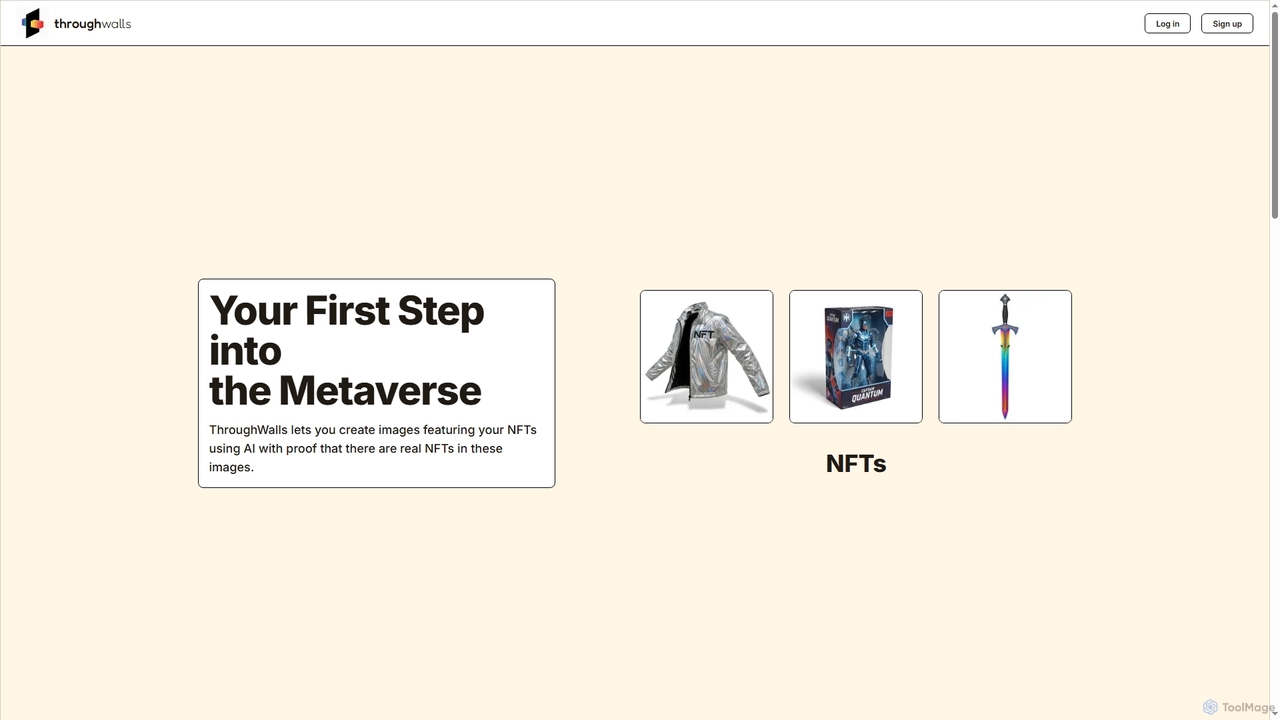
Throughwalls
Throughwalls is an innovative AI tool that empowers users to create unique images by integrating their NFTs or …
Throughwalls is an innovative AI tool that empowers users to create unique images by integrating their NFTs or generating entirely new visuals featuring verifiable digital collectibles. It bridges the gap between digital assets and creative expression within the metaverse.
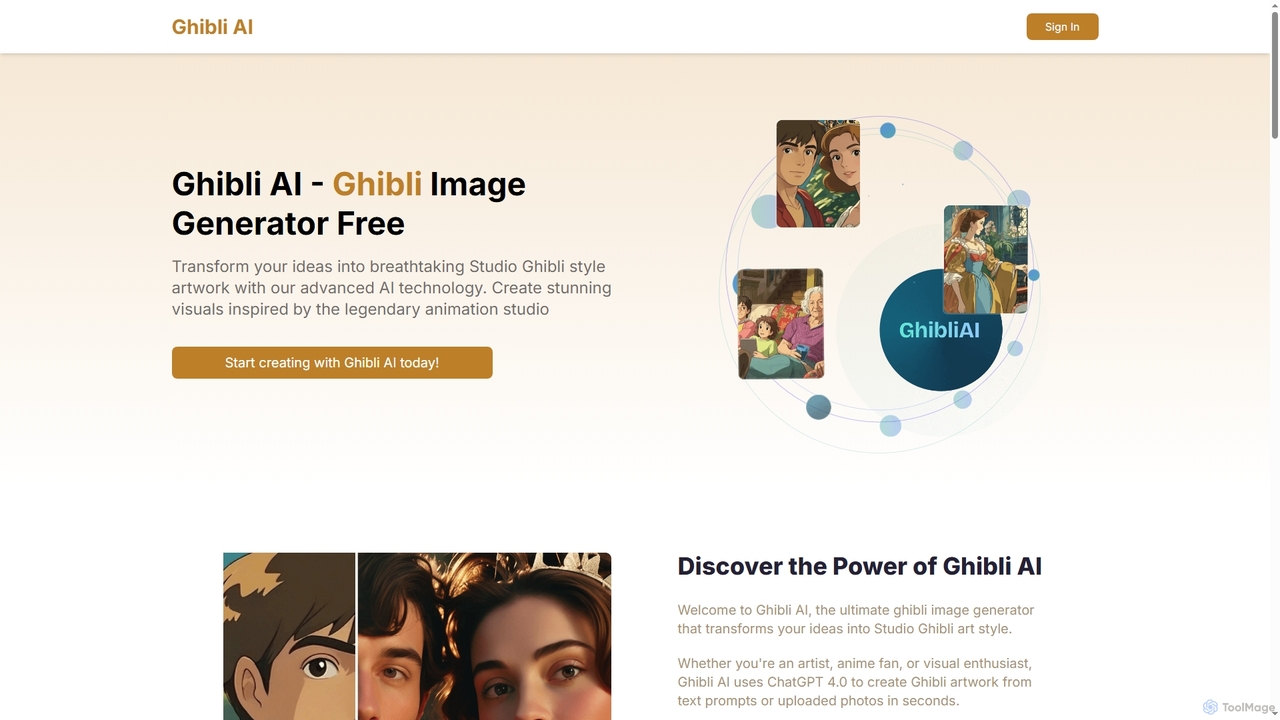
Ghibli AI
Ghibli AI is an advanced image generator that transforms your text prompts or uploaded photos into stunning Studio …
Ghibli AI is an advanced image generator that transforms your text prompts or uploaded photos into stunning Studio Ghibli-style artworks. Leveraging ChatGPT 4.0, it allows artists, fans, and professionals to effortlessly create enchanting visuals inspired by legendary animation, simplifying the process of crafting anime-style masterpieces in seconds.
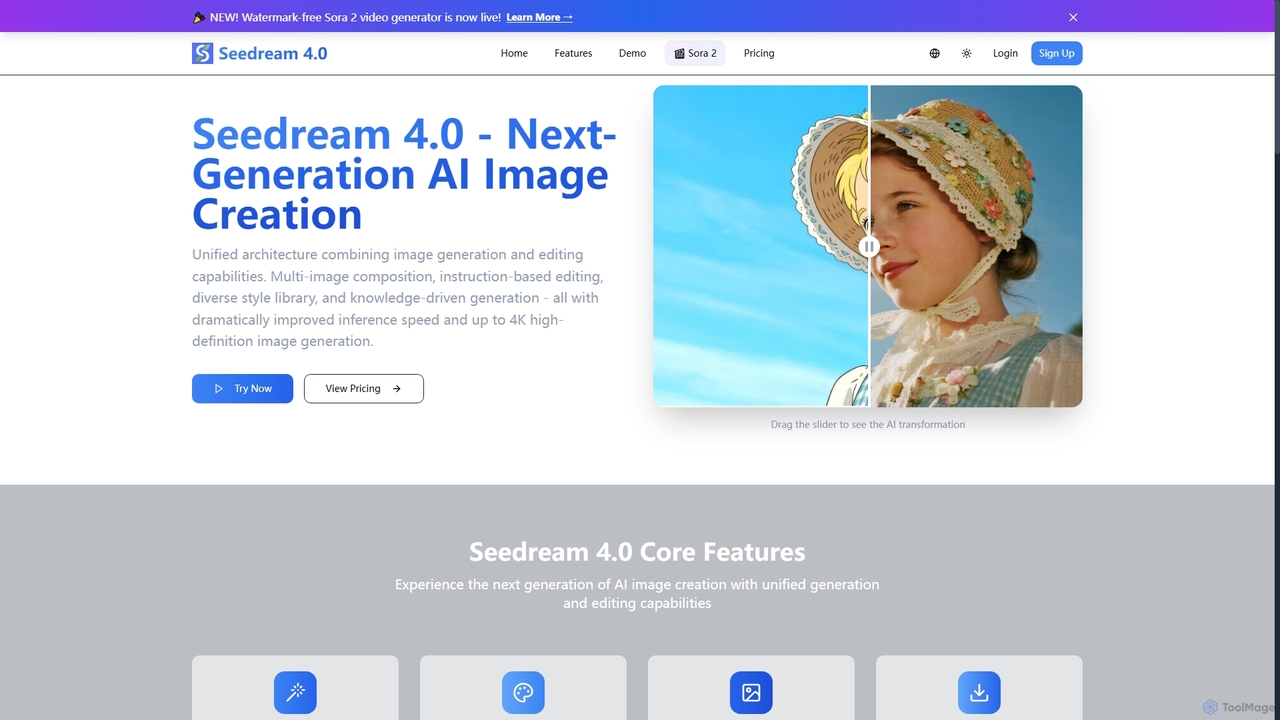
Seedream 4.0
Seedream 4.0 is a next-generation AI image creation platform that unifies image generation and editing. It features multi-image …
Seedream 4.0 is a next-generation AI image creation platform that unifies image generation and editing. It features multi-image composition, instruction-based editing, a diverse style library, and knowledge-driven generation. Users can create high-definition images up to 4K with dramatically improved inference speed, making complex visual tasks efficient and precise.
About Digital Art
AI Digital Art tools are a class of software that leverages artificial intelligence to assist in or fully automate the creation, manipulation, and enhancement of visual artwork. These tools primarily use advanced models, such as Generative Adversarial Networks (GANs) and diffusion models, to interpret text prompts or analyze existing images to produce novel visual content. They empower artists, designers, and creators to rapidly prototype ideas, explore unique aesthetic styles, and generate complex graphics with remarkable efficiency. This technology lowers the barrier to artistic creation and opens up new possibilities for visual expression that are difficult to achieve through traditional methods alone.
Core Features
- Text-to-Image Generation: Creates detailed images from simple or complex textual descriptions.
- Image-to-Image Transformation: Modifies an existing image based on a text prompt or the style of another reference image.
- Intelligent Editing & Retouching: Includes features like content-aware fill, object removal, inpainting (filling in parts of an image), and outpainting (extending an image's canvas).
- Style Transfer: Applies the artistic style of one image (e.g., a famous painting) to the content of another.
- AI Upscaling & Enhancement: Increases image resolution and sharpens details without significant quality loss.
Use Cases
AI Digital Art tools are widely used across creative industries. Concept artists in gaming and film use them to quickly generate character and environment ideas. Marketing teams create unique visuals for advertising campaigns and social media content. Additionally, architects and interior designers utilize these tools to produce realistic visualizations of their projects.
How to Choose
When selecting an AI Digital Art tool, consider your primary goal: are you focused on image generation, editing, or enhancement? Evaluate the tool's artistic style and the level of control it offers over the output, such as through detailed prompts or adjustable parameters. Also, consider the user interface's complexity versus your technical skill level and the platform's pricing model, which can range from free open-source options to subscription-based services.
Digital ArtUse Cases
Concept Art for Game Development
A concept artist working on a new fantasy video game needs to visualize a variety of character designs quickly. Instead of spending days sketching manually, they use an AI digital art tool. By inputting detailed text prompts like 'elven warrior with glowing silver armor, intricate filigree, holding a crystal spear, cinematic lighting,' the artist can generate dozens of high-quality visual concepts in minutes. This allows the art director and team to review multiple options, select a direction, and iterate on the chosen design by feeding the generated image back into the AI with further instructions, accelerating the pre-production pipeline significantly.
Generating Marketing and Social Media Visuals
A social media manager for a small business needs unique, eye-catching images for daily posts across multiple platforms. Hiring a photographer or buying stock photos for every post is not feasible. Using an AI art generator, the manager can create custom visuals that align perfectly with their brand's aesthetic. For a coffee shop, they might use prompts like 'cozy cafe interior, latte art in a ceramic mug on a wooden table, soft morning light, photorealistic'. This provides an endless supply of on-brand, royalty-free images, saving significant time and budget while maintaining a high-quality, consistent visual identity online.
Architectural and Interior Design Visualization
An interior designer is presenting a new concept to a client for their living room. To help the client visualize the final result, the designer takes a photo of the current space and uses an AI image-to-image tool. They can apply different styles by providing reference images or text prompts like 'in the style of Scandinavian minimalist design' or 'with mid-century modern furniture and warm tones'. The AI tool re-renders the room with the new decor in seconds. This allows for real-time collaboration and feedback, enabling the designer to showcase multiple design variations instantly without needing to create complex 3D models for each one.
Restoring and Enhancing Old Photographs
A genealogist is working with a collection of faded, low-resolution family photos from the early 20th century. Many are scratched or have lost significant detail. Using an AI digital art tool specializing in photo restoration, they can process these images in batches. The AI automatically colorizes black-and-white photos, removes scratches and dust, and uses upscaling algorithms to enhance facial details and overall clarity. The result is a restored collection of vibrant, clear photographs that bring family history to life, a task that would have previously required hours of meticulous manual work by a professional photo editor for each image.
Creating Unique Patterns and Textures
A textile designer is tasked with creating a new line of fabrics with organic, non-repeating patterns. Manually designing such patterns can be time-consuming and repetitive. The designer turns to an AI tool capable of generating seamless textures. By using abstract prompts like 'bioluminescent fungi patterns, intricate glowing lines, dark background, seamless tile', the AI produces a variety of unique and complex patterns that can be tiled infinitely without visible seams. The designer can then select the best options, fine-tune colors, and send them directly to production, dramatically shortening the design cycle and introducing novel aesthetics to their collection.
Prototyping Product Designs and Mockups
An industrial designer is in the early stages of designing a new smart speaker. To explore different forms and materials, they use an AI art tool. They can generate realistic product mockups by prompting 'futuristic smart speaker, minimalist design, made of light oak and brushed aluminum, on a modern living room table'. The AI can produce dozens of variations in different settings and lighting conditions. This process allows the designer to quickly visualize and evaluate many design directions without the need for time-consuming 3D modeling or physical prototypes, facilitating faster iteration and more creative exploration at the beginning of the design process.