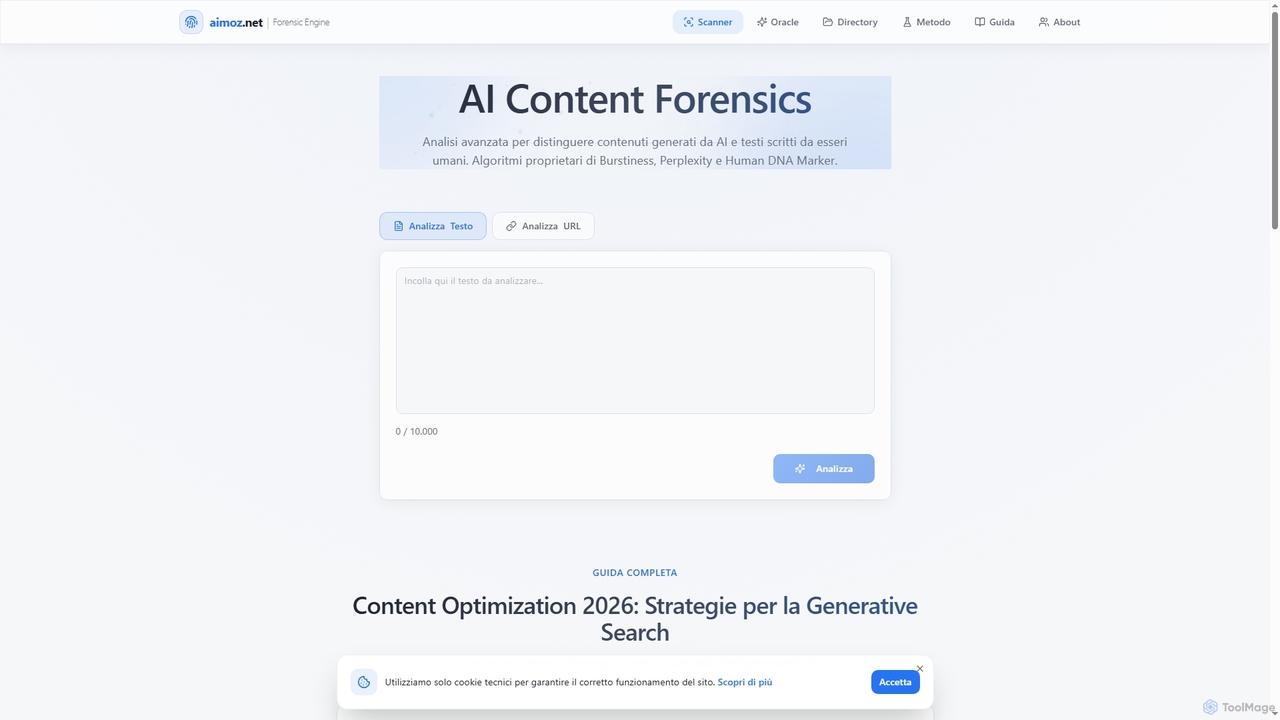
Aimoz
Aimoz is an advanced AI content forensics platform that helps creators and marketers analyze text and URLs to …
Aimoz is an advanced AI content forensics platform that helps creators and marketers analyze text and URLs to detect AI-generated content and optimize their writing for AI response engines. It uses proprietary algorithms like Burstiness, Perplexity, and Human DNA Marker to assess content authenticity and AI citability, guiding users to create content that stands out in the generative AI era.
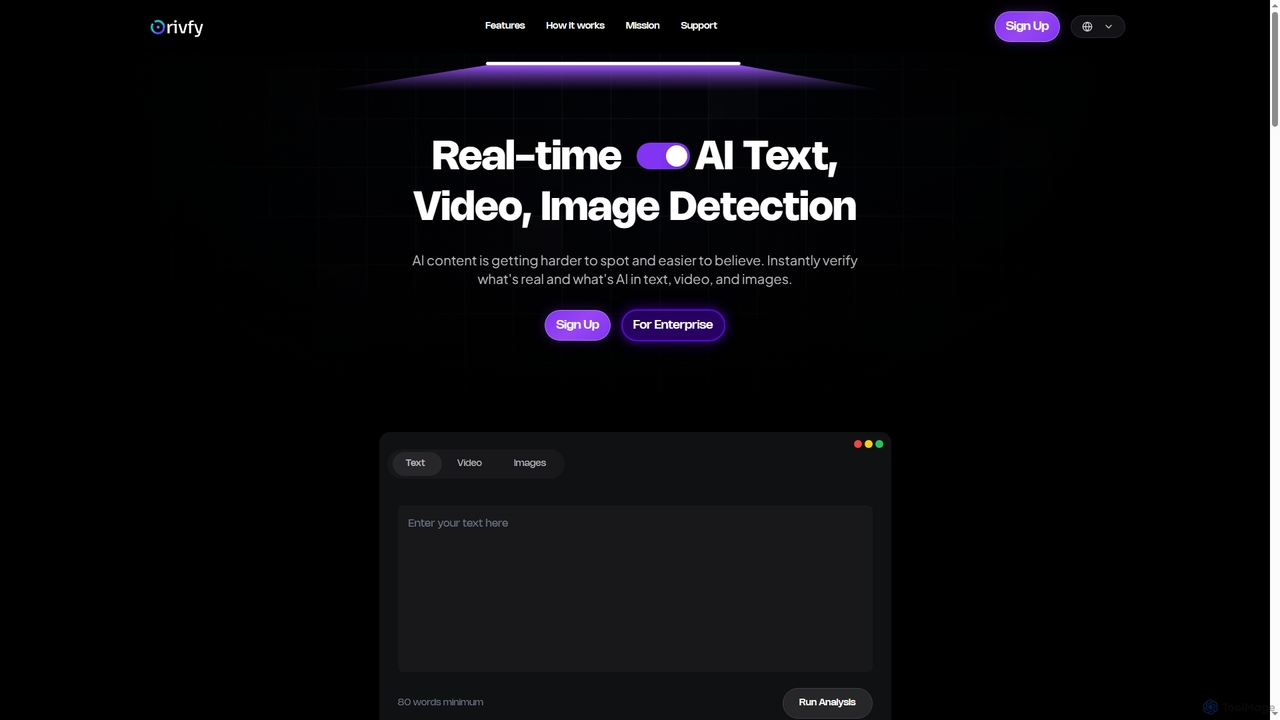
Orivfy
Orivfy is an advanced AI content authenticator and digital content police, designed to instantly verify whether text, video, …
Orivfy is an advanced AI content authenticator and digital content police, designed to instantly verify whether text, video, or images are human-generated or created by AI. It helps users navigate a world increasingly filled with synthetic media by providing real-time detection and detailed insights.
About Digital Forensics
Digital Forensics AI tools are advanced solutions that leverage artificial intelligence and machine learning to investigate, analyze, and preserve digital evidence. These tools automate complex data processing, identify patterns, and detect anomalies across vast datasets, significantly accelerating incident response and evidence collection. They are crucial for uncovering cyber threats, supporting legal proceedings, and ensuring data integrity in an increasingly digital world.
Core Features
- Automated Data Acquisition & Triage: Efficiently collects and categorizes digital evidence from various sources, prioritizing critical data for analysis.
- Advanced Anomaly & Threat Detection: Utilizes AI algorithms to identify unusual activities, malware signatures, and sophisticated attack patterns often missed by traditional methods.
- Evidence Correlation & Link Analysis: Connects disparate pieces of evidence, such as network logs, email communications, and file system activities, to reconstruct events.
- Malware & Ransomware Analysis: Automatically analyzes malicious code behavior, identifies its characteristics, and helps attribute its origin.
- Intelligent Reporting & Visualization: Generates comprehensive reports and visual representations of findings, making complex data understandable for legal and technical teams.
Applicable Scenarios
These tools are indispensable for cybersecurity teams responding to breaches, legal professionals conducting e-discovery, and internal audit departments investigating fraud. They provide rapid insights into complex digital environments, enabling swift decision-making and robust evidence presentation.
How to Choose
When selecting Digital Forensics AI tools, consider their compatibility with your data sources (cloud, endpoint, network), the breadth of their analysis capabilities (malware, memory, network traffic), scalability to handle large volumes of data, and adherence to legal and compliance standards. User interface intuitiveness and integration with existing security frameworks are also vital for efficient operations.
Digital ForensicsUse Cases
Cybersecurity Incident Response Acceleration
For cybersecurity analysts, AI-powered digital forensics tools rapidly process vast amounts of log data, network traffic, and endpoint activity during a breach. By automatically identifying indicators of compromise (IOCs), anomalous user behavior, and attack vectors, these tools significantly reduce the time to detect, contain, and eradicate threats, minimizing potential damage and recovery costs.
Streamlined E-Discovery for Legal Proceedings
Legal teams and paralegals utilize these AI tools to efficiently manage and analyze electronic stored information (ESI) for litigation. The tools can quickly sift through millions of documents, emails, and communications, identifying relevant keywords, sentiment, and relationships, thereby reducing manual review time and ensuring comprehensive evidence collection for court cases.
Proactive Insider Threat Detection
Security managers deploy AI digital forensics to monitor employee digital activities for signs of insider threats, such as data exfiltration or unauthorized access attempts. By establishing baselines of normal behavior and flagging deviations, the tools help proactively identify malicious or negligent actions, protecting sensitive corporate data and intellectual property.
Advanced Malware and Ransomware Analysis
Malware researchers and threat intelligence teams leverage AI to dissect and understand sophisticated malware and ransomware. The tools automate the analysis of file characteristics, execution patterns, and network communications, providing deep insights into threat capabilities, propagation methods, and potential vulnerabilities, aiding in the development of effective countermeasures.
Network Intrusion Analysis and Attribution
Network security specialists use AI digital forensics to analyze network flow data, packet captures, and firewall logs to detect and investigate network intrusions. The AI identifies suspicious traffic patterns, unauthorized connections, and data exfiltration attempts, helping to pinpoint the source of an attack and gather evidence for attribution and remediation.
Digital Evidence Preservation and Integrity Verification
Forensic investigators rely on AI tools to ensure the integrity and admissibility of digital evidence. These tools automate the creation of cryptographic hashes and maintain detailed audit trails during data acquisition and preservation, guaranteeing that evidence remains untampered and legally sound throughout the investigation process.