
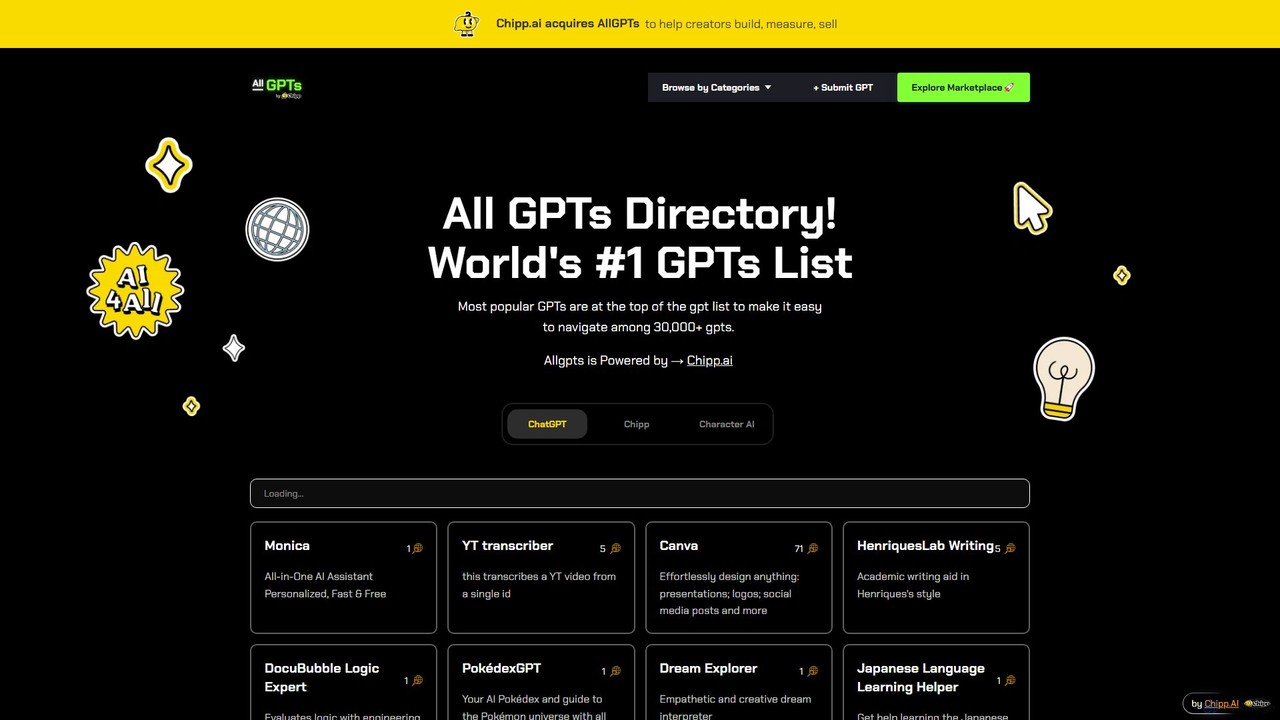
Discovery Best in category 1 results Gpts AI Tool

Popular AI tools in the Gpts field of Discovery include AllGPTs, etc., helping you quickly improve efficiency.

AllGPTs

AllGPTs

AllGPTs is the leading directory and discovery platform for custom GPTs. It offers a curated and categorized collection …

41.2K

About Gpts

GPTs are custom versions of ChatGPT that users can create for specific tasks or topics. These tools are built by combining specific instructions, expanded knowledge from uploaded files, and a selection of skills like web browsing or image generation. They function as specialized AI assistants, designed to provide more relevant and accurate responses within a defined domain. This customization allows them to serve niche purposes far more effectively than a general-purpose chatbot.

Core Features

  • Custom Instructions: Define the GPT's personality, response style, and operational rules with natural language.
  • Knowledge Base Integration: Upload documents, PDFs, or text files to provide a private knowledge source for answers.
  • Action Capabilities: Connect to third-party APIs to retrieve real-time information or perform tasks in other applications.
  • Built-in Skills: Leverage integrated tools like DALL-E for image creation, Code Interpreter for data analysis, and web browsing for current information.

Use Cases

GPTs are used across various fields to create highly specialized tools. For example, a marketing team can build a GPT trained on their brand guidelines to generate consistent ad copy. A legal firm might use a private GPT with case law documents for rapid research assistance. Individuals also create GPTs for personal productivity, such as a meal planner that considers dietary restrictions or a tutor for a specific academic subject.

How to Choose

When selecting a GPT from a public store, consider its purpose and creator. Evaluate the clarity of its description, user ratings, and the number of conversations, which can indicate popularity and utility. For GPTs that use Actions, review the required permissions to ensure data privacy. Also, check if the creator is reputable and if the GPT seems to be actively maintained or updated.

GptsUse Cases

1

Create a Brand Voice Content Generator

A marketing manager can build a custom GPT to serve as a content creation assistant. By uploading the company's brand style guide, successful past marketing campaigns, and target audience personas as its knowledge base, the GPT learns the specific tone, voice, and messaging rules. The manager can then prompt it to draft social media posts, email newsletters, or blog post ideas that are automatically aligned with the brand identity, significantly reducing the time spent on initial drafting and ensuring consistency across all channels.

2

Develop a Personalized Academic Tutor

A student can create a GPT to act as a personal tutor for a complex subject like organic chemistry. They can upload their course syllabus, lecture notes, textbooks, and practice exams into the GPT's knowledge base. When studying, the student can ask the GPT to explain difficult concepts in simpler terms, generate practice questions based on specific chapters, or simulate exam scenarios. This provides a highly tailored and interactive learning experience available 24/7, helping to reinforce understanding and prepare for tests more effectively.

3

Automate Internal Company Support

An HR department can build a private GPT to handle common employee inquiries. By feeding it the company's employee handbook, policy documents, and FAQs about benefits and leave, they create an instant resource. Employees can ask questions like 'What is the policy for parental leave?' or 'How do I submit an expense report?' and get immediate, accurate answers sourced directly from official documents. This frees up HR personnel from repetitive questions and provides employees with a confidential and always-available support channel.

4

Build a Creative Brainstorming Partner

A novelist or screenwriter can create a GPT to act as a brainstorming partner. They can provide the GPT with their story outline, character backstories, and world-building rules. When facing writer's block, they can ask the GPT for plot twist ideas, dialogue suggestions for a specific character, or descriptions of a fantasy setting consistent with their established world. The GPT can be instructed to ask thought-provoking questions rather than just giving answers, helping the writer explore new creative avenues without taking over the writing process.

5

Create a Code Refactoring and Review Assistant

A software development team can create a GPT specialized in code quality. They can upload their internal coding standards, style guides, and documentation on best practices. A developer can then paste a code snippet and ask the GPT to review it for compliance with team standards, suggest refactoring for better readability, or explain a complex function. By connecting it to an API for a static analysis tool, it could even provide real-time performance feedback. This streamlines the code review process and helps maintain a consistent codebase across the team.

6

Design an Interactive Travel Itinerary Planner

A travel enthusiast can create a GPT that functions as a dynamic trip planner. By using Actions to connect to APIs for flights, hotels, and local events, the GPT can provide real-time recommendations. A user could say, 'Plan a 5-day trip to Tokyo for two in May on a $2000 budget, focusing on food and culture.' The GPT would then query the APIs to find available flights and accommodations, suggest a day-by-day itinerary with restaurant and museum recommendations, and present it all in a structured format. This creates a powerful, personalized planning tool that goes beyond static travel guides.

GptsFrequently Asked Questions